For a middle power like India, such a world is more complex and offers many new challenges, and only imperfect answers or solutions. In the spirit of atmanirbharta, can India hope to ensure its security and sovereignty in such a world by producing all that it needs—as Bessent asked? Or not rely on others for critical inputs—something that even the major powers don’t attempt? Think of the major weapons platforms and technologies that are currently imported. Most obviously, what price strategic autonomy when 90 per cent of the country’s oil and half its gas needs are imported? And what price sovereignty in the face of penal tariffs and arbitrary trade sanctions?It is obvious that the goal in such a world has to be economic efficiency and competitiveness, and must also include the issue of vulnerability and ways to minimise it—without paying too great a price through higher costs that localisation often imposes, affecting competitiveness. Hence the current attempts at domestic chip manufacture and the setting up of data centres. Yet interdependence is written into the scenario and must be dealt with.The asymmetric conflicts in Ukraine and Iran pose their own urgent questions for the economy. Hundreds of missiles and drones (offensive and defensive) have been fired in a day, for days on end, in both theatres. Can India hope to develop such a supply capability, given its limited manufacturing base, or (as a more sensible alternative) turn civilian industrial units to military use in short order?Ukraine has also demonstrated the impossibility of territorial gain as an objective, with kill zones effectively freezing the line of conflict. Does that render futile the traditional approaches to armed strength, which eat up much of defence budgets? And Sindoor made clear that wars now are fought in the cyber-physical world. What are the capabilities needed to handle such conflicts? To what extent do we have them?Self-reliance has its limits
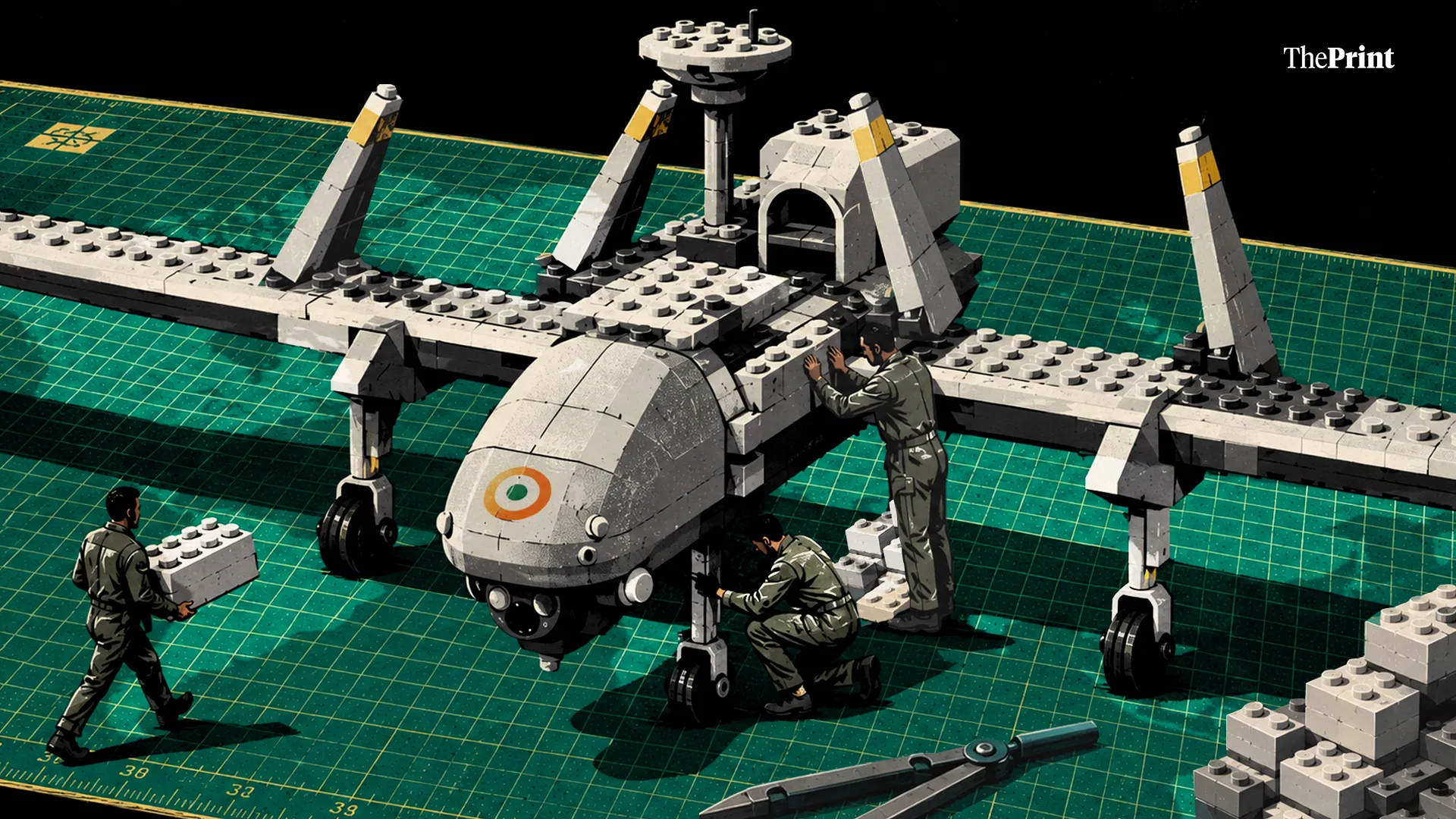
India's defence atmanirbharta needs a dose of realism—and a lot more drones
One of the issues in the last decade is that the government has not found it possible to provide generous defence budgets, despite the deteriorating security situation.
2,314 words~11 min read