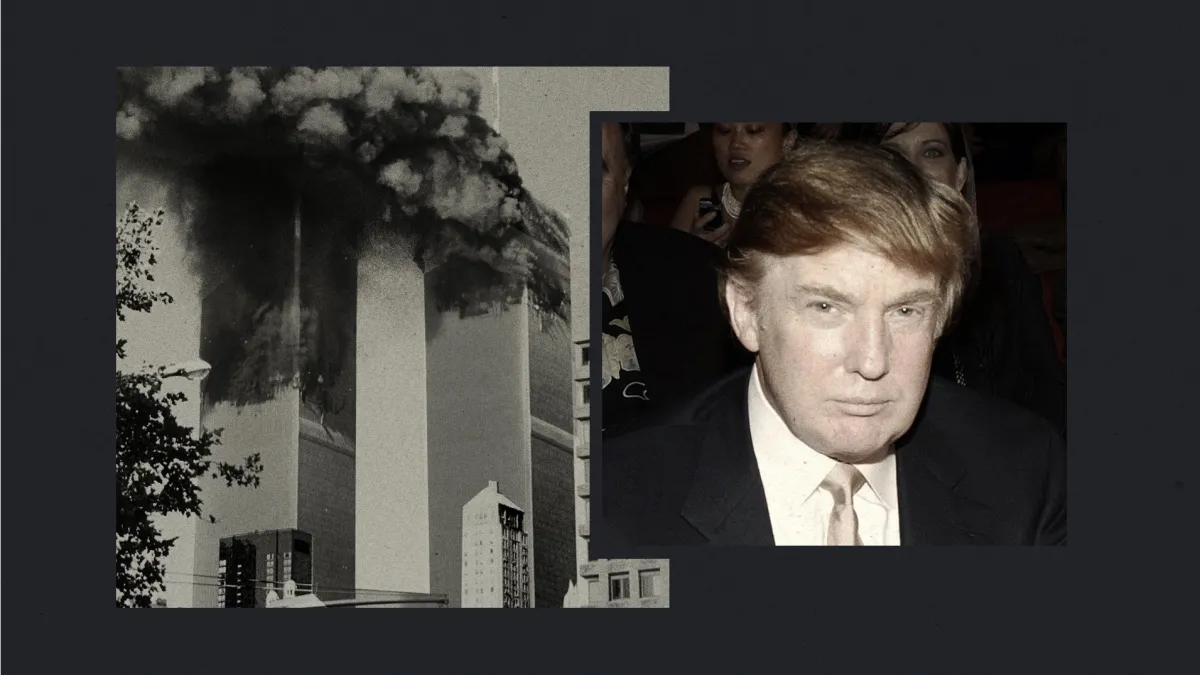
In the charcoal clouds that rose from the rubble of the twin towers on 11 September 2001, Donald Trump eyed a silver lining. One of his buildings, a short walk away from Ground Zero, he reckoned, had just become the tallest skyscraper in Lower Manhattan.
His property at 40 Wall Street, he told the New York radio station WWOR, “actually was the second-tallest building in downtown Manhattan, and it was actually, before the World Trade Centre, the tallest – and then, when they built the World Trade Centre, it became known as the second-tallest. And now it’s the tallest.”
Almost three thousand people had just been killed. America was experiencing a modern-day Pearl Harbour. Trump’s home city was in a state of collective trauma, and yet it appeared bragging rights were in the forefront of his mind: the boast – a false one, as it turned out – that his building stood taller than any other in a part of the city now covered in dust and debris.
Shorts
Nothing Trump said or did that day marked him out as a future president, though he had toyed with a run for the White House as early as the 2000 election. The New Yorker who rose to the challenge of that awful moment was the city’s former mayor, Rudy Giuliani, who would later become one of Trump’s most sycophantic loyalists.