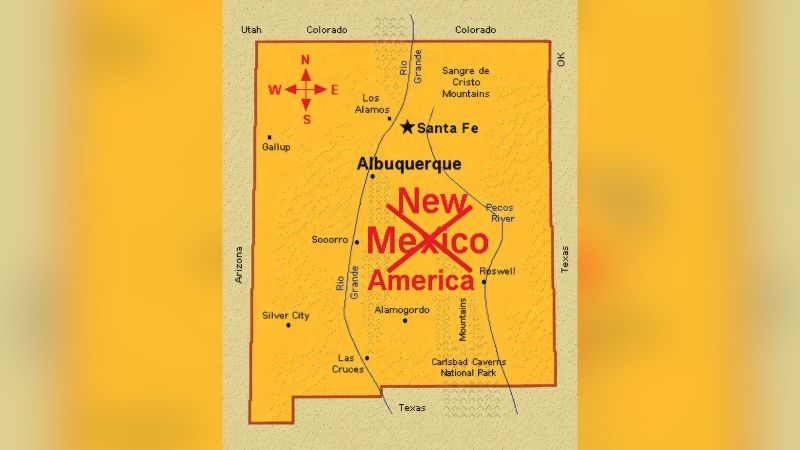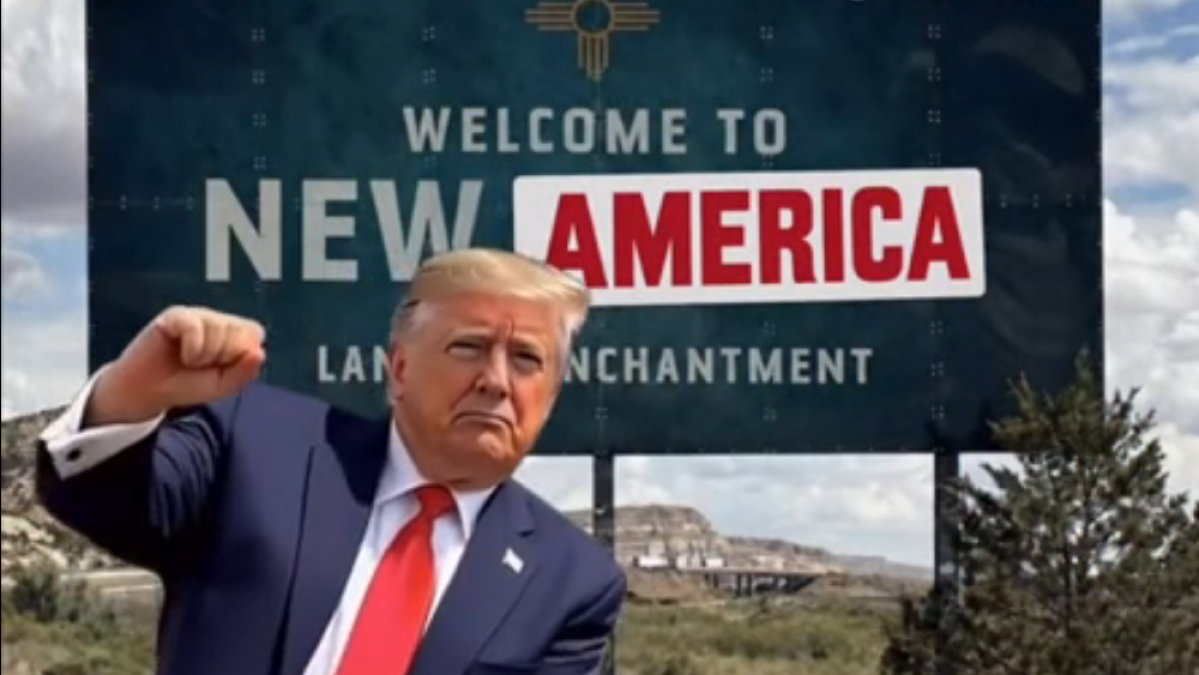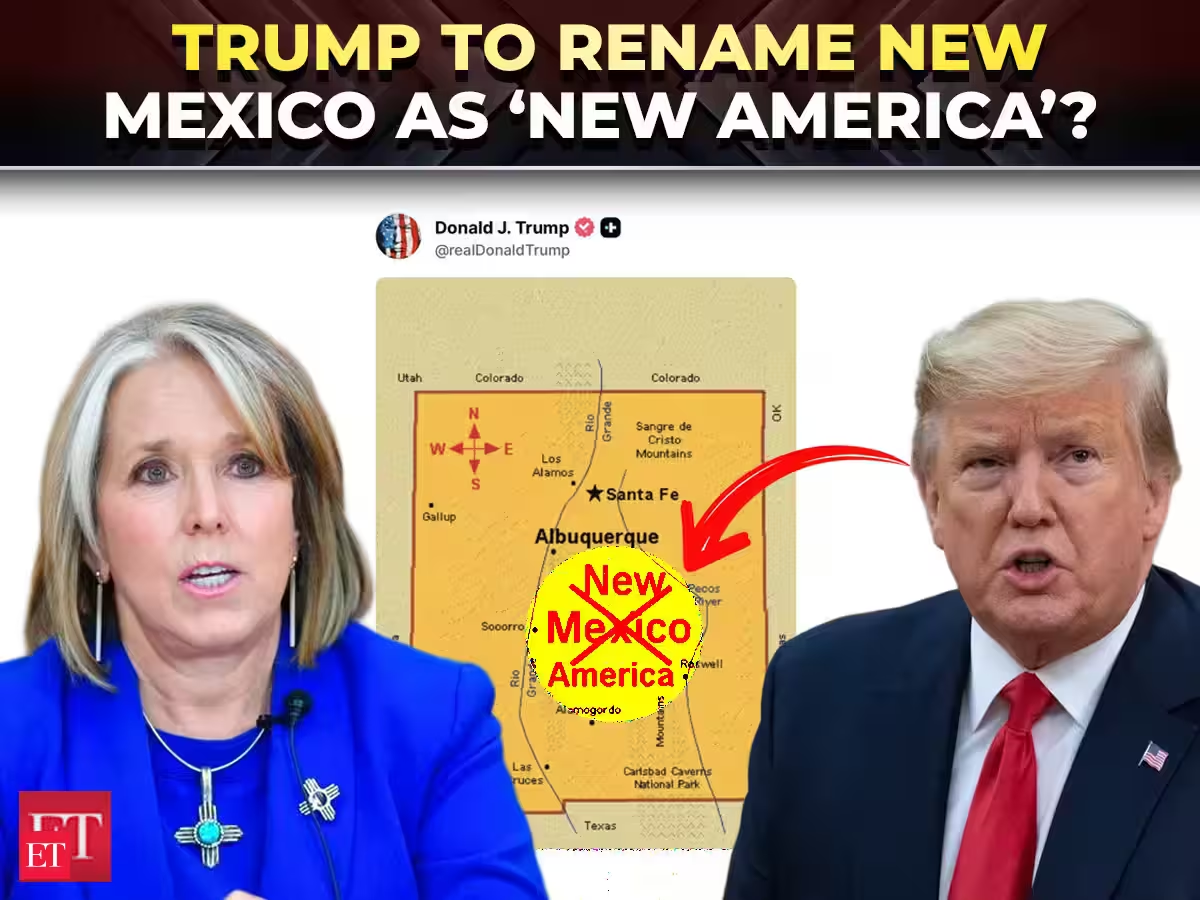
On Labor Day, President Donald Trump posted a series of maps to his Truth Social account with the state of New Mexico relabeled as “New America.”
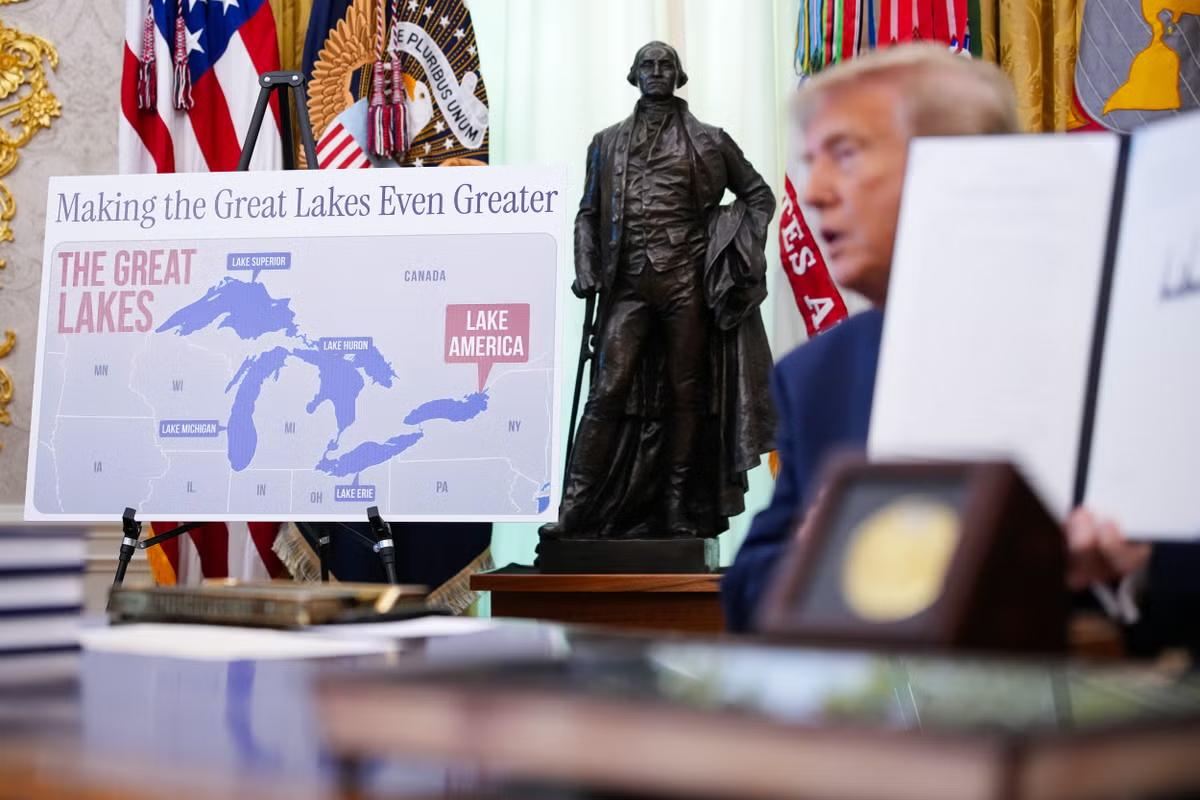
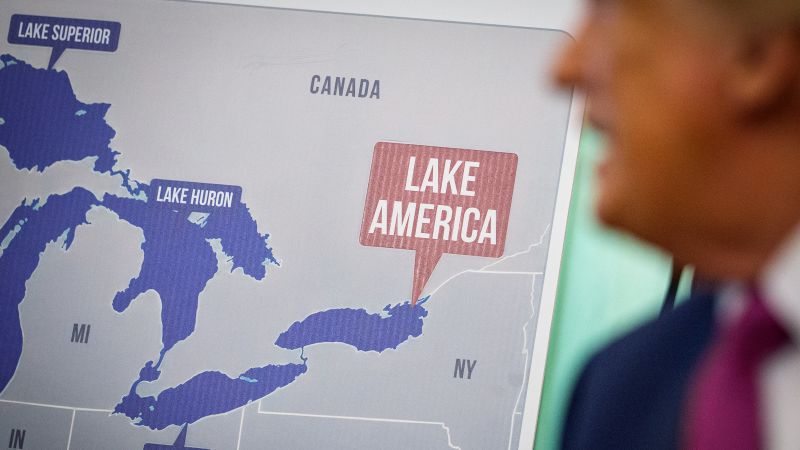
On the first day of his second term, Trump signed an executive order renaming the Gulf of Mexico the “Gulf of America.” Last month, after Canada refused to capitulate in a trade war he initiated, Trump ordered that Lake Ontario be renamed “Lake America.” That body of water wasn’t named for the Canadian province of Ontario and “Ontario” isn’t even a Canadian term, but the US Board on Geographic Names complied, and Google Maps and Apple Maps obligingly followed along for their US users.
Even as polls show that the renaming of Lake Ontario is even more unpopular than the previously unpopular renaming of the Gulf of Mexico, there’s reason to think the president might not be finished. Recently, he suggested that the Atlantic or Pacific oceans should also bear the name “America.”
Behind Trump’s current spree of geographic jingoism, there’s an older history of linguistic jingoism. Though “America” has been a shorthand for the United States of America longer than anyone around today has been alive, the two weren’t always synonymous. Before the US was established and about a century after, “America” — or “the Americas” — more commonly described the continental landmasses now known as North America and South America. The US takes up about a quarter of this collective landmass by area and accounts for about a third of its population. So when and how did the leaders of one part of the Americas claim “America” for themselves?