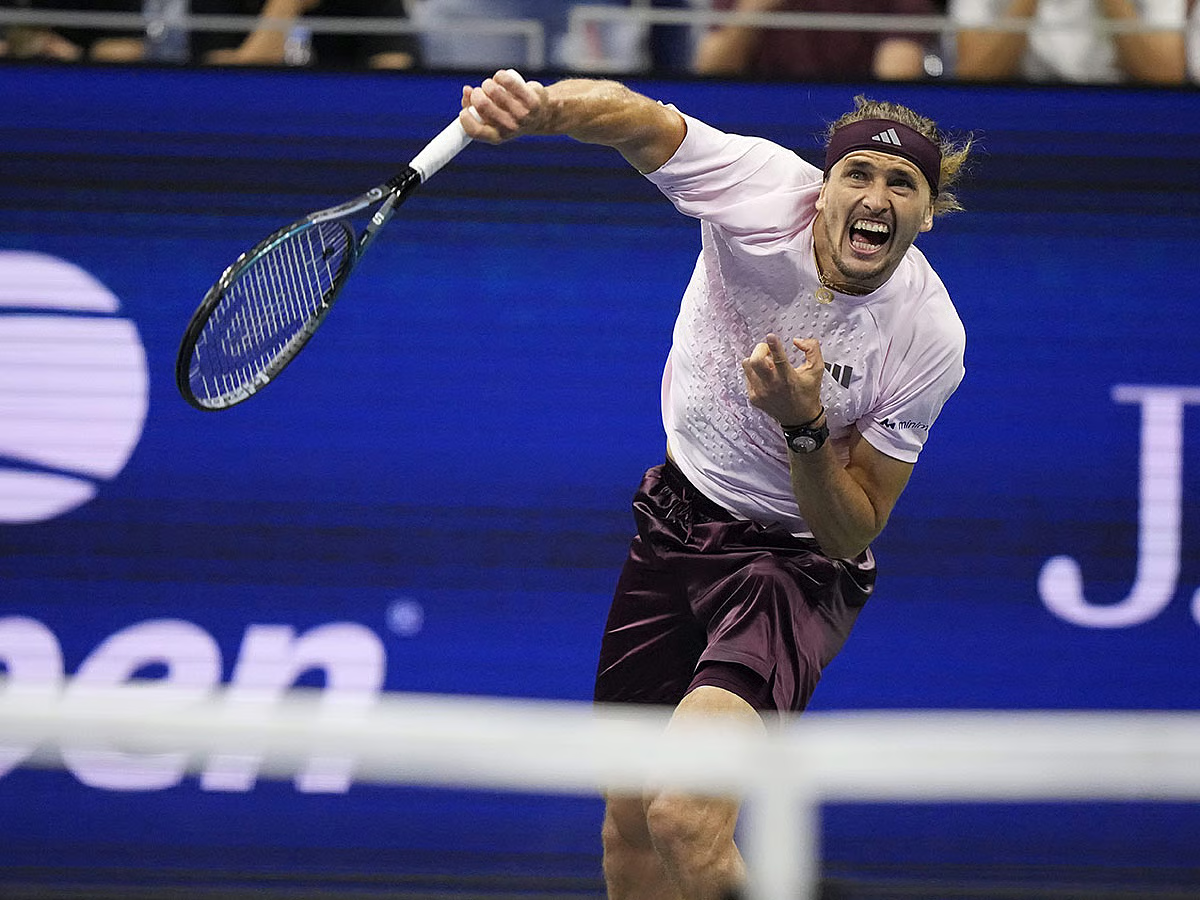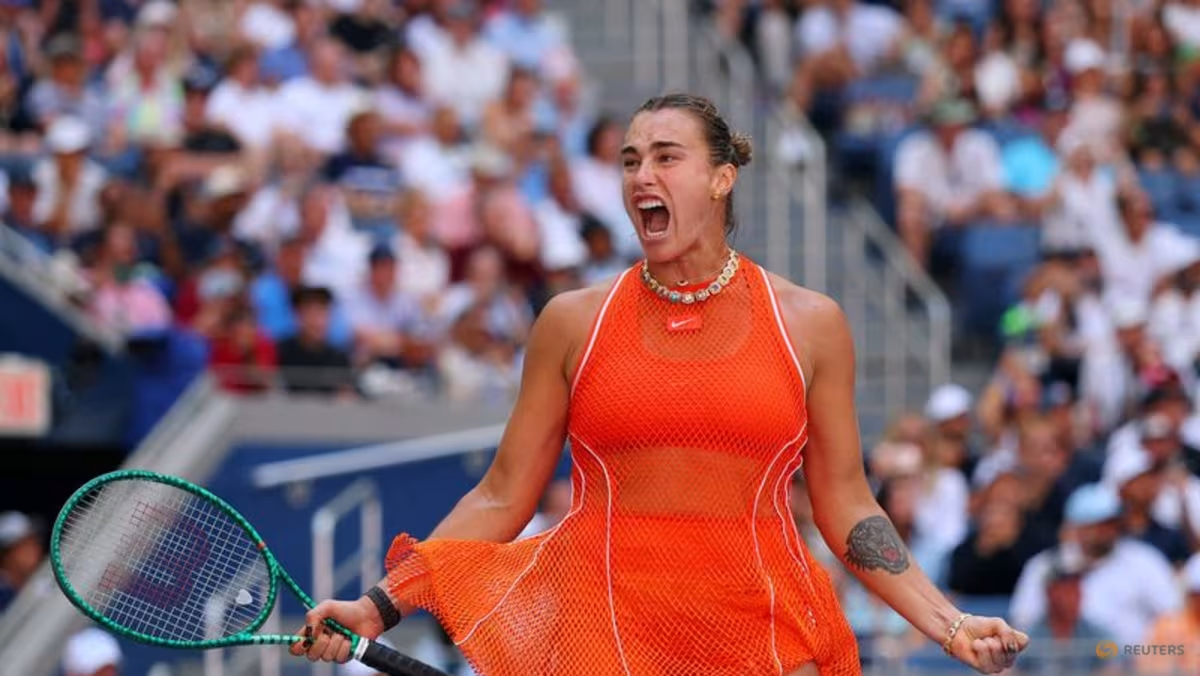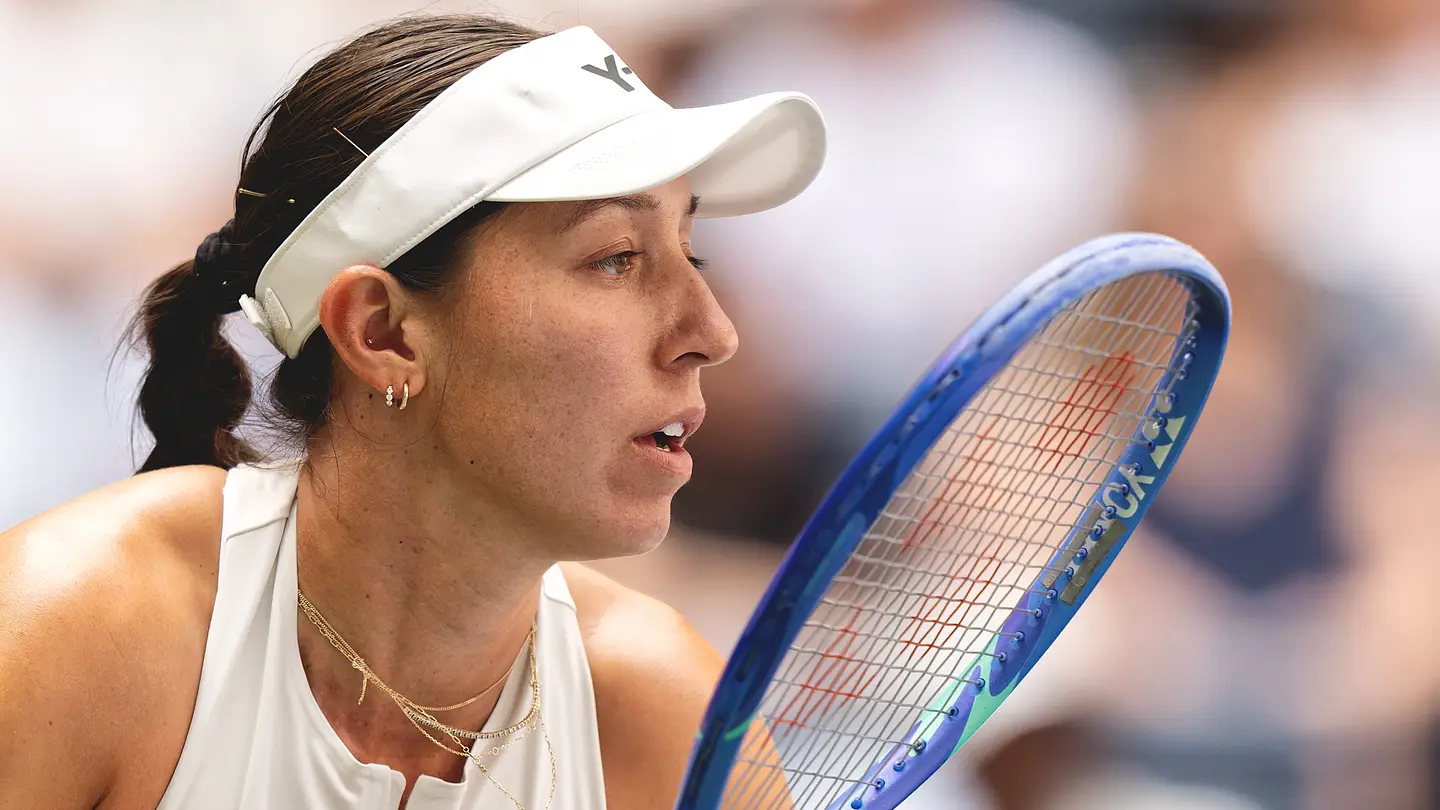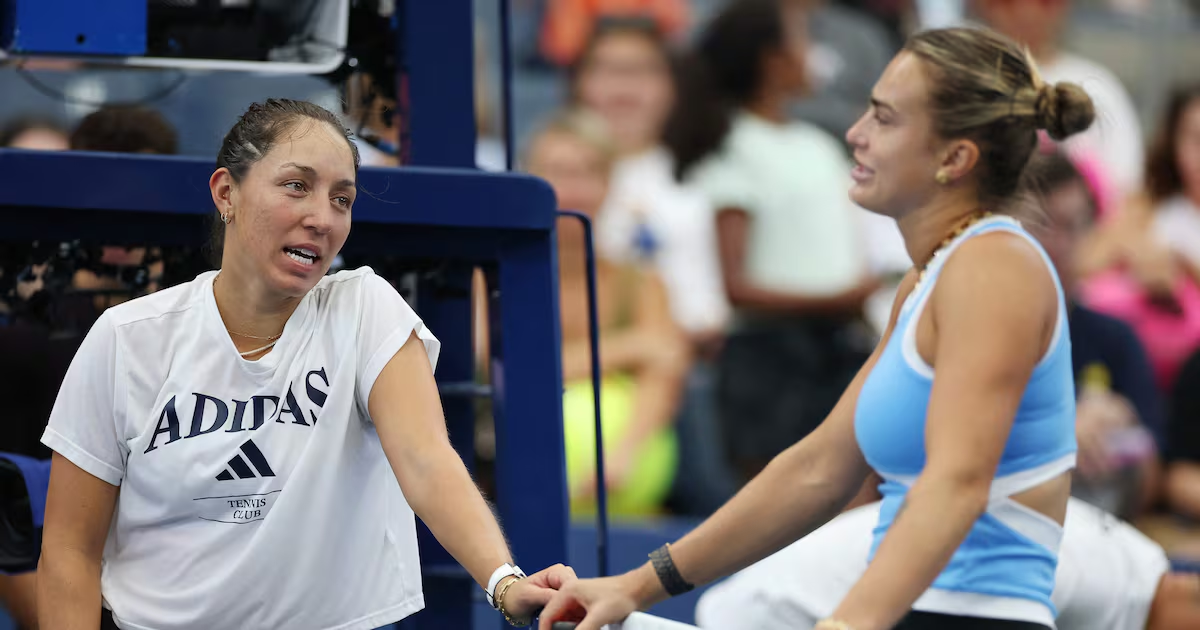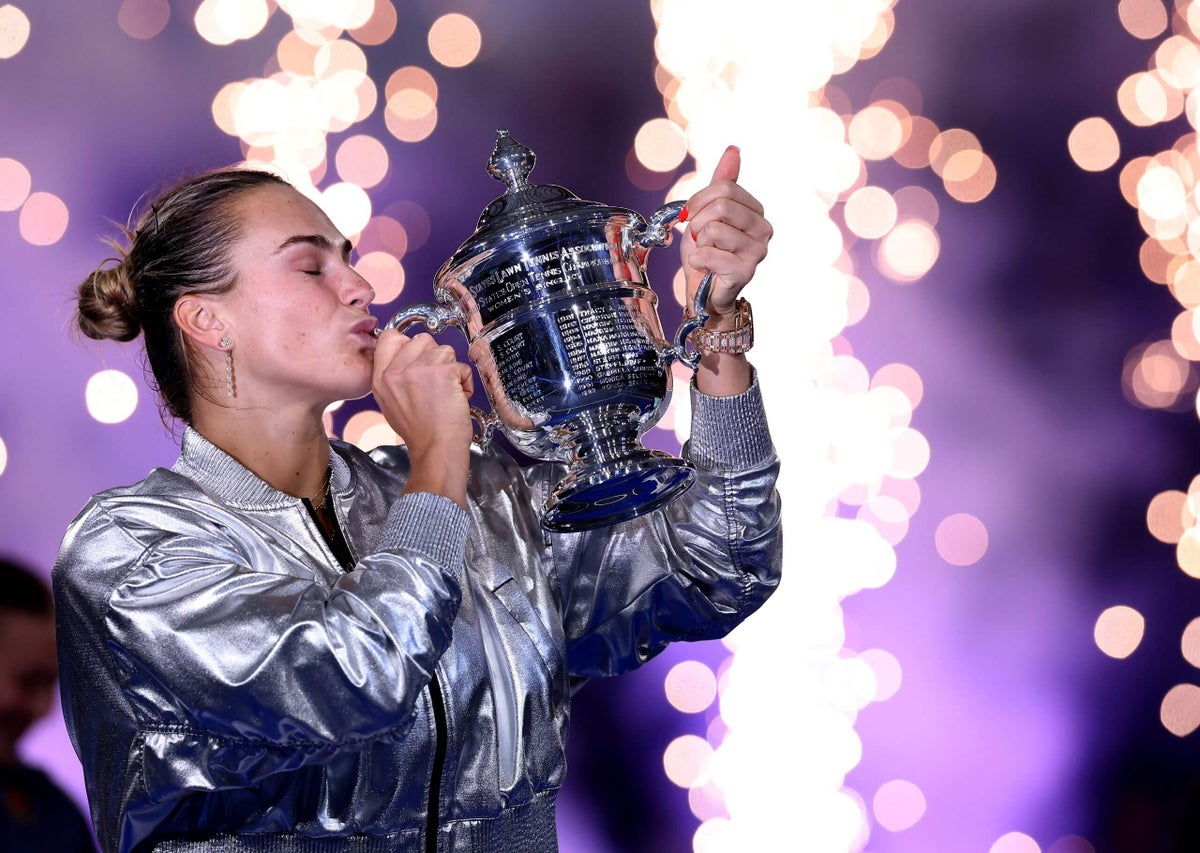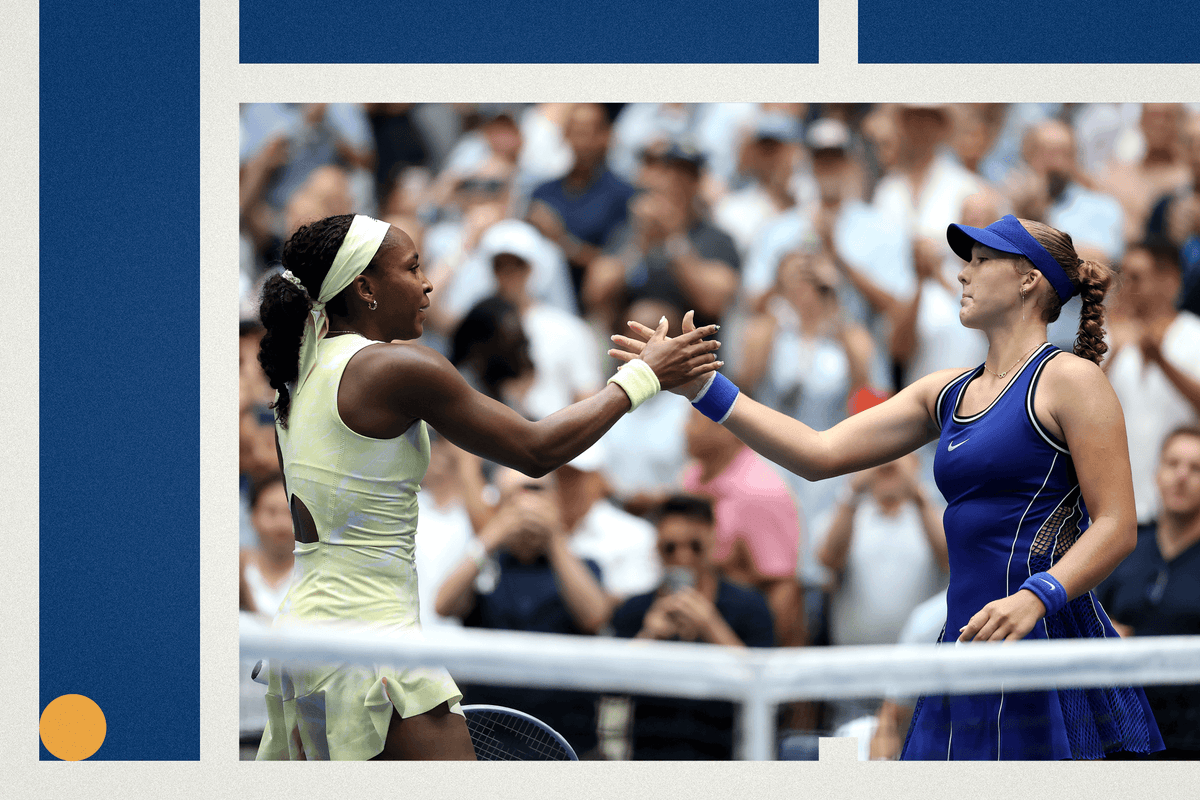
Follow The Athletic’s U.S. Open coverageWelcome to the U.S. Open briefing, where The Athletic will explain the stories behind the stories on each day of the tournament.On Day 10, a seriously chalky final four, losing learning lessons and and injuries biting back.How did the WTA Tour set a U.S. Open milestone?For all the issues the players at the top of the women’s tour were going through this year, the final weekend of the year’s final Grand Slam tournament is looking like a chalk-fest, in the most entertaining way possible.No. 1 seed Aryna Sabalenka will face No. 3 seed Jessica Pegula in the first semifinal Thursday and No. 2 seed Elena Rybakina will face No. 4 seed Coco Gauff in the second. Congratulations to the folks who had the good foresight (and fortune) to snag tickets to what is probably the best bang-for-your-buck session of the year!That marks just the second time in the Open Era (since 1968) that all top four women’s seeds have made the U.S. Open semifinals, the first being 1975. Those top seeds were No. 1 Chris Evert, No. 2 Virginia Wade, No. 3 Martina Navratilova and No. 4 Evonne Goolagong Cawley. Not too shabby.In the non-U.S. Open category, the most recent instance in which all of the top four women’s seeds were in the semifinals of a Grand Slam was 2009 Wimbledon — No. 1 Dinara Safina, No. 2 Serena Williams, No. 3 Venus Williams and No. 4 Elena Dementieva.That this year’s top-seeded women all survived to the end speaks to a resilience that is elemental to elite athletes. That word, resilience, tends to be over-used in sports-talk, but in this instance it seems spot on.Sabalenka has seemed unable to wrangle her emotions and her game on court at times. Rybakina went through a period where her forehand was suddenly wayward. Gauff had her service struggles, and Pegula — well, Pegula was mostly steady aside from when she ran into one of the other three players in a Grand Slam.All four dealt with their wobbles, absorbed what they needed to learn and ended up in the U.S. Open semifinals anyways. That’s part of what separates the elites of a sport from the rest.— Ava WallaceHow do tennis rankings work?Ava Wallace and Lia GriffinHow did a champion learn from losing?Linda Nosková was understandably subdued in her post-match news conference after losing to defending champion Aryna Sabalenka on Tuesday, despite how well she’d the quarterfinal.If there’s something she’ll take away from her best performance at a U.S. Open to date — she’d previously never made it past the third round — it’s existential, not about her tennis game.Playing this Grand Slam so well, and losing such an intense match so closely, helped her find the motivation she’d briefly lost after winning Wimbledon.“Yeah, definitely feel like I have that back. You know, it was a new Grand Slam, so I definitely stepped it up since the beginning of the tournament, which helped me to get into the flow, kind of,” she said in a news conference“Such loss is good for the motivation, but, you know, obviously bad itself. So I have to take some positives from it all.”Achieving her lifelong dream at 21 meant Nosková had to find her footing in the tennis world again. She who struggles to enjoy both wins and losses, she said in a news conference Tuesday, but feeling like her life changed after winning a Wimbledon title only for the world — and tennis calendar — to roll along was unsteadying for a time.The U.S. Open reminded her of who she is as a player.“I feel like especially after these matches when you’re so close to getting to another semifinal of a Grand Slam in one year or, you know, beating the best player in the world, it kind of reminds you of where you are standing or what position you’re in,” she said.“…I will just try to keep going, you know. I feel great on court, which is always my main point, and ranking doesn’t really matter. But it gets me to some cool places.”As for how she’ll recover from Tuesday’s loss, she plans to distract herself by hanging out in New York for a few more days, seeing friends, having a drink or two.“I’m going to get drunk and forget about this, I guess. I’m old enough to do that, thankfully,” she said, laughing.New York is good for that. There are opportunities to find comfort and get lost in the bustle of the city, in equal measure.— Ava WallaceHow did two American talents manage two heartbreaking defeats?Learner Tien and Alex Michelsen do just about everything tenniswise together. They are close friends who grew up training together in Southern California.On Monday and Tuesday, they lost five-set heartbreakers within about 20 hours of one another, Tien went down to Russia’s Karen Khachanov from two sets to one up; Michelsen lost to compatriot Frances Tiafoe, from two sets up and serving for the semifinals at 5-4. “The first three sets I was on top of him. I feel like he didn’t really — he wasn’t playing like Frances,” Michelsen said in a news conference. “Then after that, he was playing, you know, like Frances does on Ashe. After that, it was a dogfight. In the fourth set I wasn’t fully there mentally, but fifth set I’m super proud of myself the way I handled myself. I was playing every single point full. No complaining about anything to anyone. You know, I did everything right in the fifth. Just didn’t go my way.”No it did not, Tiafoe came alive and found the openings, as Khachanov did against Tien at the end of their match.Even though they know each other so well, Michelsen said he didn’t talk to Tien after the match. They give each other space in these moments. “We’re usually just sending memes to each other, that’s kind of our form of communication,” Michelsen said. “He has a lot of good people around him, so hopefully he was using them last night. Just like me, I’ve got good people around me, and I’ll try to use them tonight as well.”— Matt FuttermanWhy did a men’s quarterfinal slate go quicker than the draw’s earlier rounds?After a wild Tuesday of tennis, maybe it was inevitable that there would be fewer fireworks for the second set of quarterfinals., especially on the men’s side, where the matchups didn’t have much box office appeal for a local audience.That prophecy came true fairly quickly, with Belgium’s No. 28 seed Alexander Blockx taking on Russia’s Karen Khachanov while running on fumes.“Today my body just gave up,” Blockx said in a news conference after retiring down two sets and 3-2 early Sunday evening.Blockx had warned everyone that his body was failing in the fourth round against Francisco Cerúndolo. He nearly retired that day before winning in four sets.What was wrong? In a word, everything. Rib. Leg. A blocked nerve in his back. Blockx, just 21 years old, and could barely move at moments in the match. He spent time between points twisting and turning in every direction to try to stretch.Still, ths was Blockx’s best performance at a Grand Slam. Earlier this year, he made the semifinals of the Madrid Open. He’s played a lot of high-level tennis. His body has said enough — for now.Blockx said he found the whole situation pretty funny. Every time he moved, something else started to hurt. He tried shifting his motions on his strokes to try to mitigate the pain. It worked for a bit, and then it didn’t.Alexander Block’s best Grand Slam run took a toll on his body. (Pete Staples / Getty Images) He played on hoping for a miracle. When Khachanov went a break up, he decided to not risk further injury.“I couldn’t land without feeling pain, without feeling my back, my ribs. So I just didn’t want to maybe make it worse to miss the entire season,” he said. “I was feeling so bad on the court. Eventually, I felt like it was the right moment.”Khachanov will meet No. 1 seed Alexander Zverev in the semifinals, after Zverev defeated Botic van de Zandschulp 6-2, 7-5, 6-1. The victory means Zverev has reached the semifinals at all four majors in a single season, which only eight other players have ever done.Zverev, who went to the Wimbledon final and then had two rough losses at the Canadian and Cincinnati Opens between coming to New York, said he is taking nothing for granted.“I think the more often that you get to that stage, the more normal it becomes, which is something that you should never take for granted. I think it’s a very special feeling when it becomes normality,” the German said in a news conference.“I don’t take it for granted at all. I know it can change in a heartbeat in tennis. I think confidence is something that is incredibly important but also can go away quite quickly, and I found that out after Wimbledon where I didn’t play well throughout the two tournaments on the hard courts, and then I found it again here.”— Matt FuttermanShot of the quarterfinalsIt’s possible this has come up already, but what an angle of a stupendous all-court point between Ben Shelton and Carlos Alcaraz:(U.S. Open)Drop Shots📱 A week at the U.S. Open with two tennis fans coming of age in a sports betting world.📈 How Zheng Qinwen produced her rise back to the top of tennis.⏰ Why U.S. Open late-night tennis is happening earlier in the tournament.⚜️ World Team Tennis, the starry mixed league founded by Billie Jean King, announces its top players.Up next: Women’s semifinals🎾 Aryna Sabalenka (1) vs. Jessica Pegula (3)
U.S. Open quarterfinal recap: Women’s semifinals are all chalk as men’s draw opens up
The top four seeds on the women's side will contest the semifinals, with the men's draw comparatively open.
1,844 words~8 min read