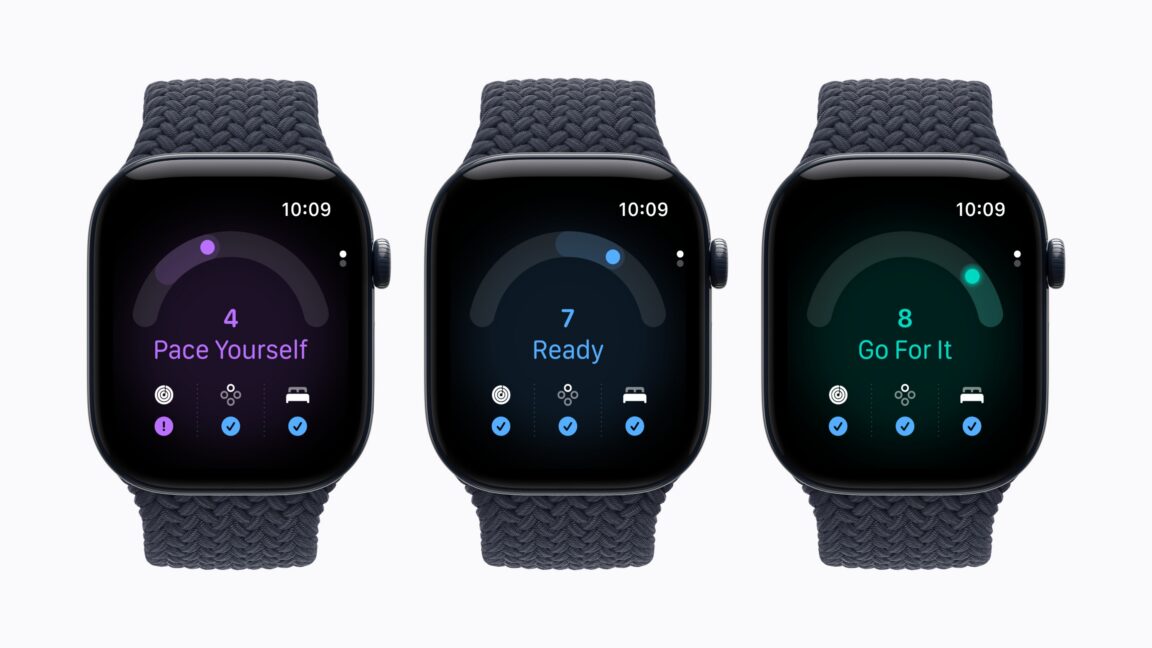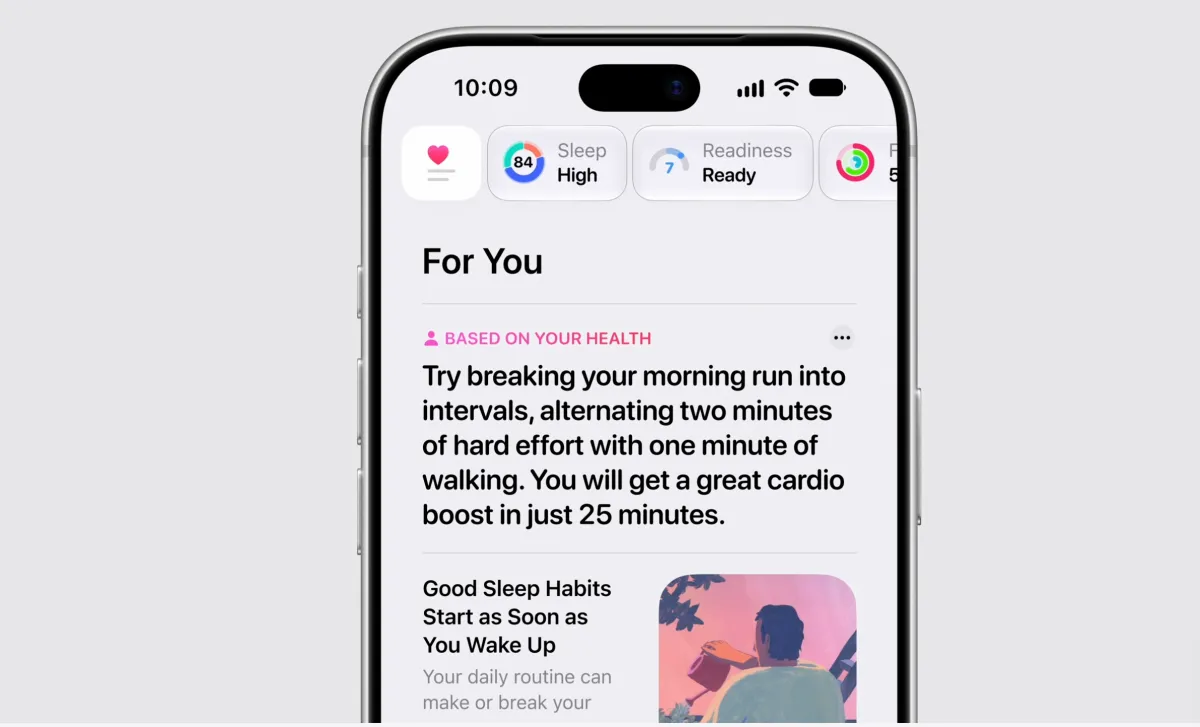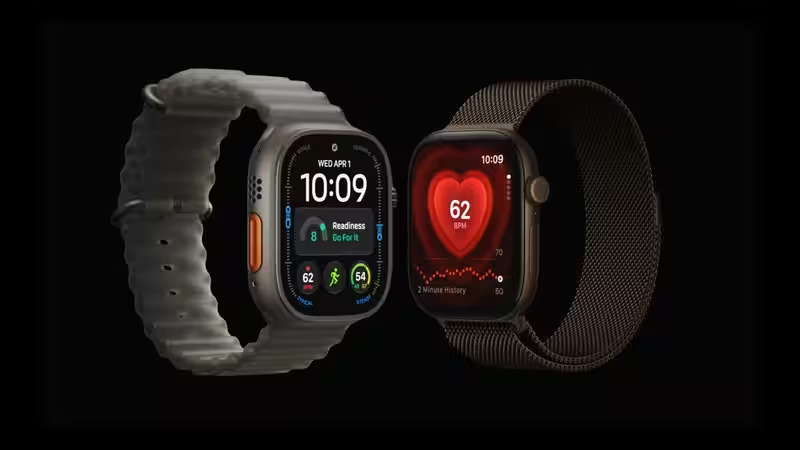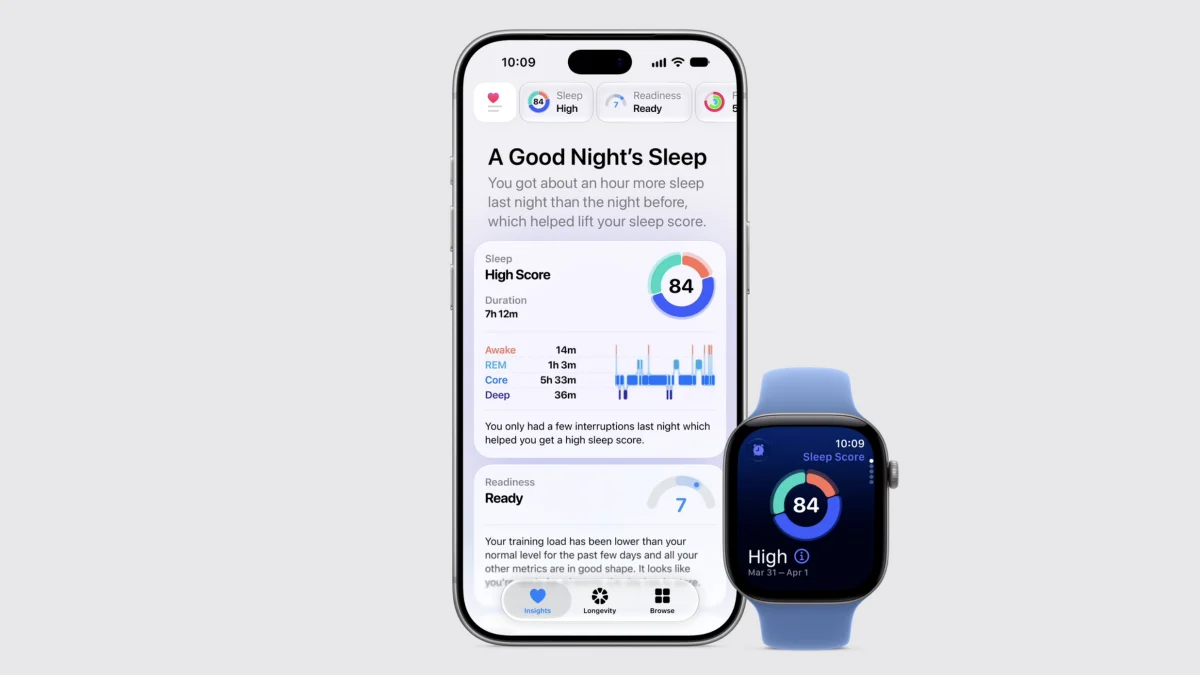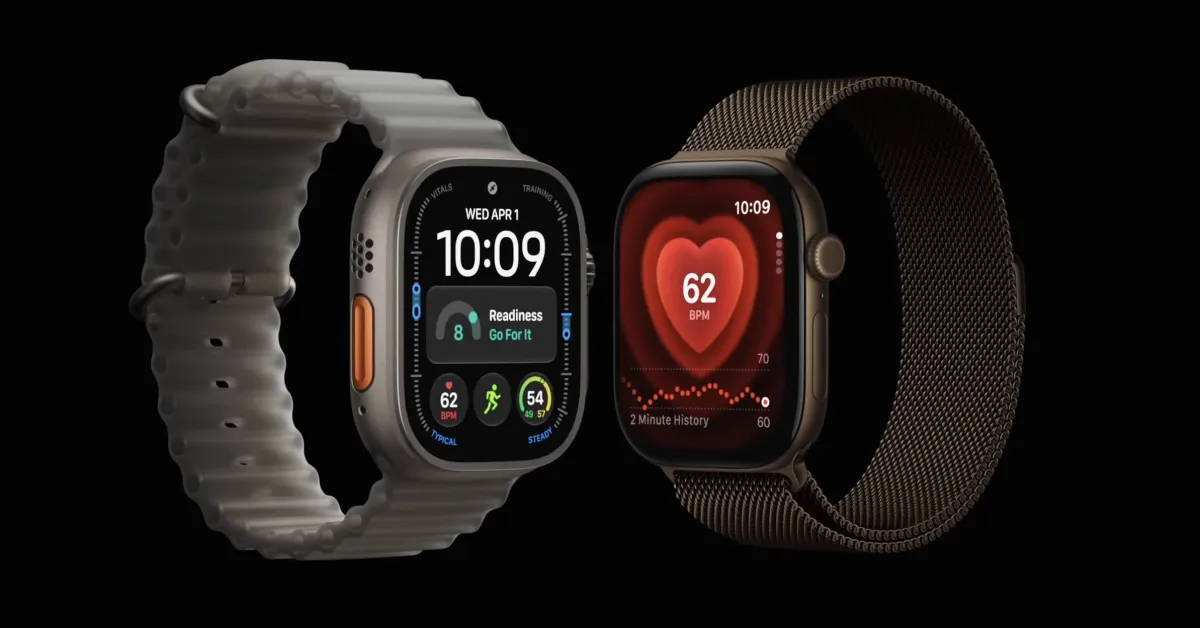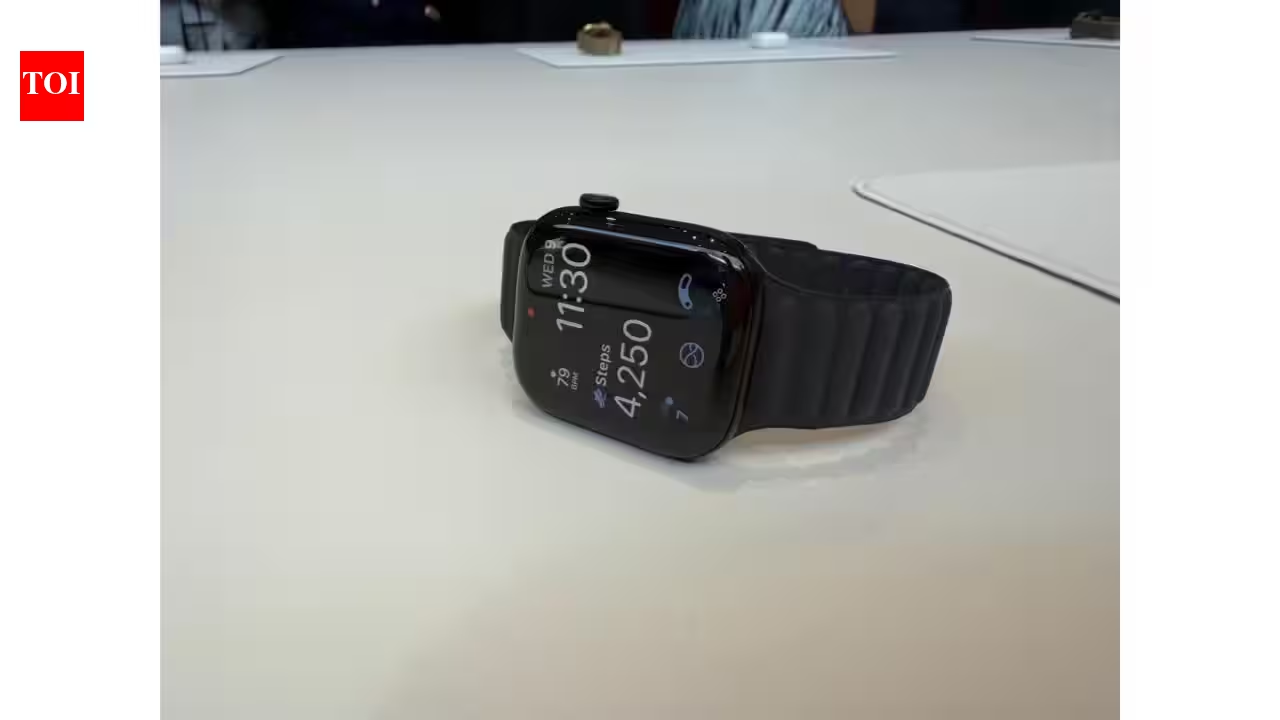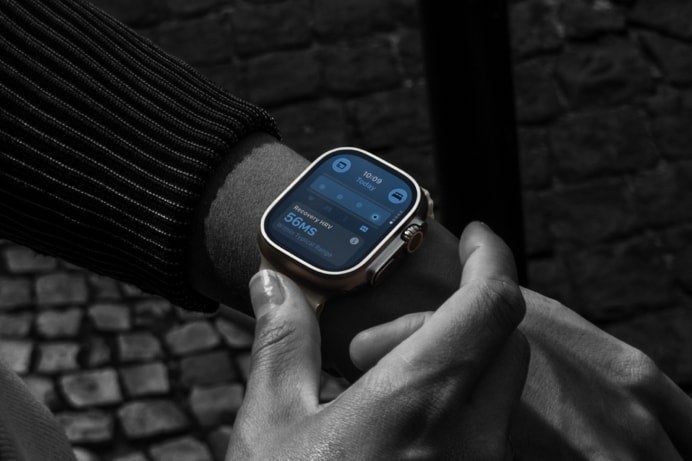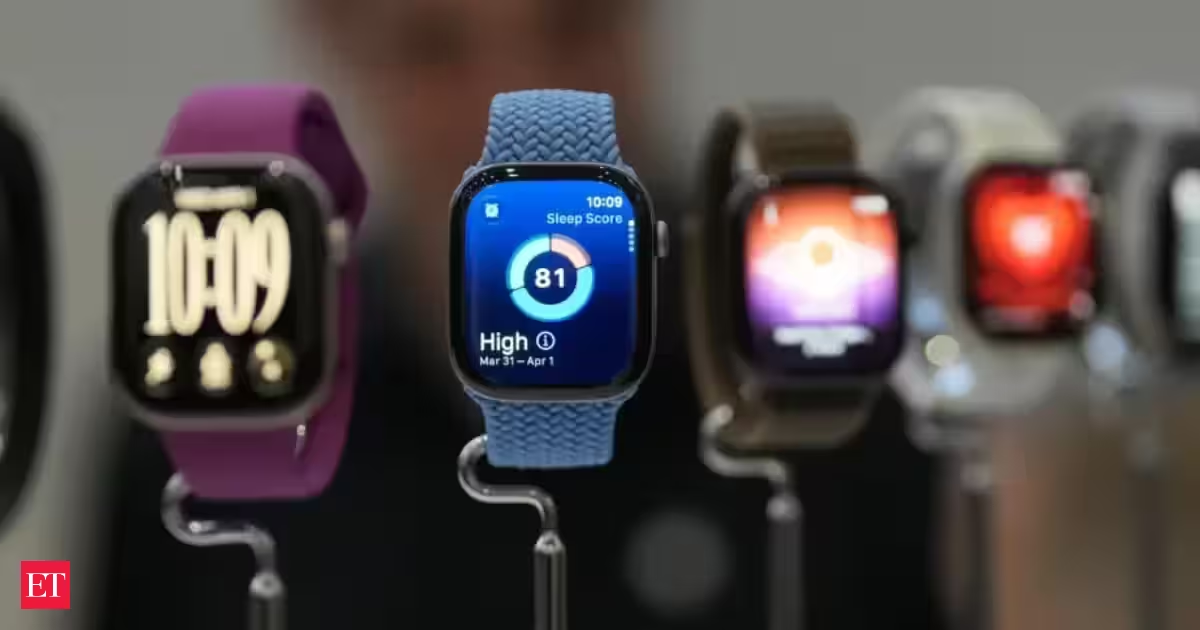
Apple is pushing the Apple Watch further into the health-tracking territory traditionally associated with devices such as WHOOP, with the new Apple Watch Series 12 turning a stream of health and fitness data into a single read on how ready a user is for the day.Launched on Wednesday, the new Apple Watch comes with a new Health Sensing System and S11 chip that allow it to measure heart rate every five seconds throughout the day. It also measures heart rate variability (HRV) more frequently and uses activity, sleep and vitals data to tell users how ready their body is for the day.The biggest addition is Readiness, a new score that rates a user's capacity for the day on a scale of 0 to 10.The feature looks at recent activity, training load, vitals and sleep score before giving users a simple recommendation — Recover, Pace Yourself, Ready or Go For It.The score can also change during the day as new data comes in. So, for instance, a hard workout or a shift in daytime vitals could change the recommendation.This is where Apple's new health pitch starts looking a lot like WHOOP. Rather than simply showing users data such as heart rate, sleep or HRV, the wearables are increasingly trying to answer “what should I do with that data?”Also Read: Samsung bets on new wearable form factors, says it will absorb rising costs to keep premium devices accessibleWHOOP's platform, for instance, is built around Sleep, Strain and Recovery, with its Recovery score designed to show how prepared a user is for the day based on physiological signals and recent behaviour. The company has also expanded into longer-term health with WHOOP Age and Pace of Aging, which use nine metrics including sleep, daily steps, VO2 max, resting heart rate and lean body mass to estimate physiological age and how quickly it is changing.This is also where WHOOP has an advantage over the Apple Watch: it is smaller, screen-free and far less distracting. You wear it and forget about it, rather than having another screen on your wrist competing for attention.But the lack of a screen is also its biggest limitation. For runners and other sports users, being able to glance at pace, distance, heart rate or splits during a workout can matter — something the Apple Watch can do that WHOOP cannot.Apple is also increasing the amount of HRV data it collects. HRV can now be measured up to 24 times more often, with the company separating it into recovery HRV and overall HRV. Overnight vitals will compare recovery HRV against a user's personal baseline, while a new daytime view will help users spot changes during the day.The focus on personal baselines is important. Rather than simply telling users whether a particular number is “good” or “bad”, Apple is trying to understand how their current readings compare with their own normal patterns.From readiness to ‘Health Age’Apple is taking the longer-term health tracking idea further with a new Health Age feature coming to the redesigned Health app on iPhone later this year.The new Longevity tab will show how certain health metrics are tracking relative to a user's actual age.That puts Apple in the same emerging territory as WHOOP, which already offers WHOOP Age — an estimate of physiological age based on six months of individual health data — alongside its Pace of Aging metric.The difference is that Apple is bringing these capabilities to a mainstream smartwatch that already combines health, fitness and safety features, including sleep tracking, ECG, heart-health notifications, sleep-apnea notifications and Fall Detection.Also Read: Apple Watch Ultra 4 Introduced with new Health Features - Priced at ₹1,09,900Apple is also increasing the amount of HRV data it collects. HRV can now be measured up to 24 times more often, with the company separating recovery HRV from overall HRV. Overnight vitals will compare recovery HRV against a user's personal baseline, while a new daytime view will help users spot changes during the day.Battery life remains at up to 24 hours for everyday use, while outdoor workout battery life rises to up to 10 hours. Apple says 15 minutes of charging can provide up to 12 hours of additional battery life.The Apple Watch Series 12 starts at ₹56,900 in India, which remains closer to last year’s Apple Watch Series 11 pricing that started at ₹₹46,900. However, the Watch Ultra 4 is launched at ₹109900 — a ₹20,000 jump from last year’s Watch Ultra 3.This places the Apple Watch models significantly higher than WHOOP's entry prices. WHOOP One costs ₹21,990, while its higher-end Peak plan costs ₹28,990. Both prices include the WHOOP 5.0 device and 12 months of membership.Another important difference is that WHOOP is ecosystem-neutral, working across both Android and iOS, while Apple Watch remains tied to Apple's ecosystem.
Apple Watch Series 12’s ‘Health Age’ takes on WHOOP’s health tracking
Apple Watch Series 12 now offers a Readiness score for daily preparedness. This new feature analyzes activity, sleep, and vitals data. The device also introduces a Health Age metric for long-term tracking. These advancements position Apple Watch against WHOOP's established health monitoring. The new models offer enhanced health sensing capabilities for users.
794 words~4 min read