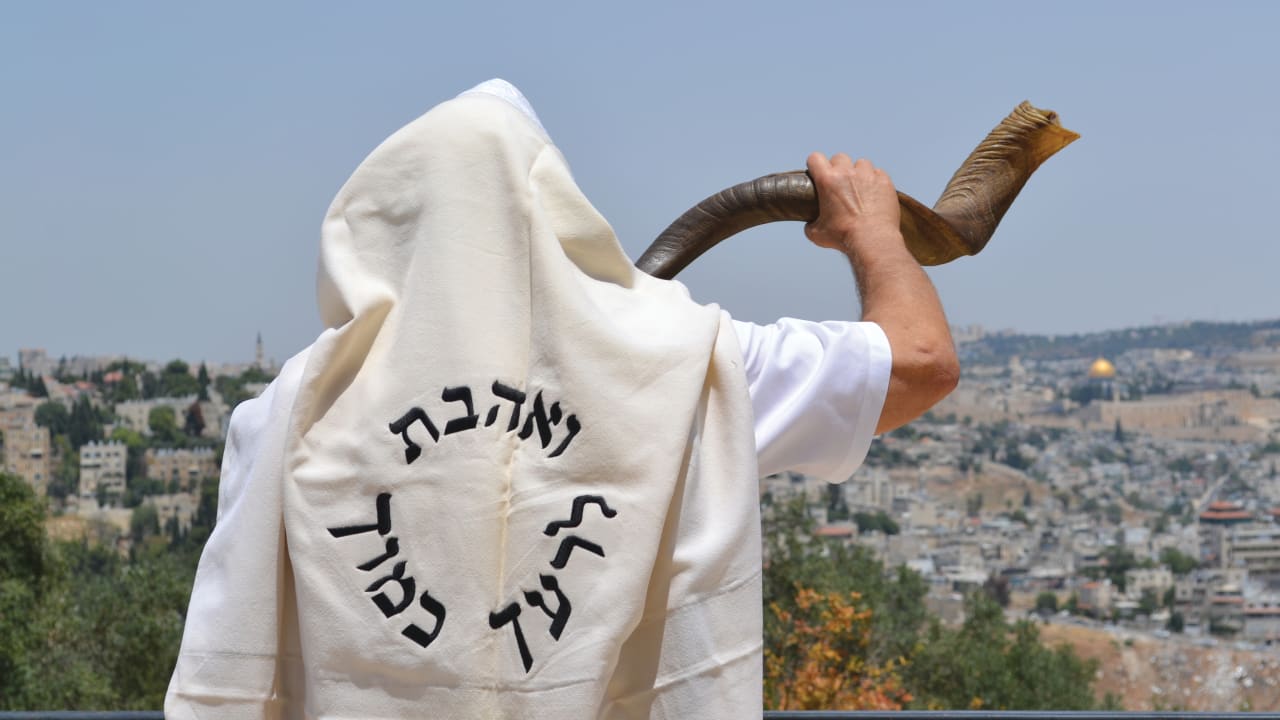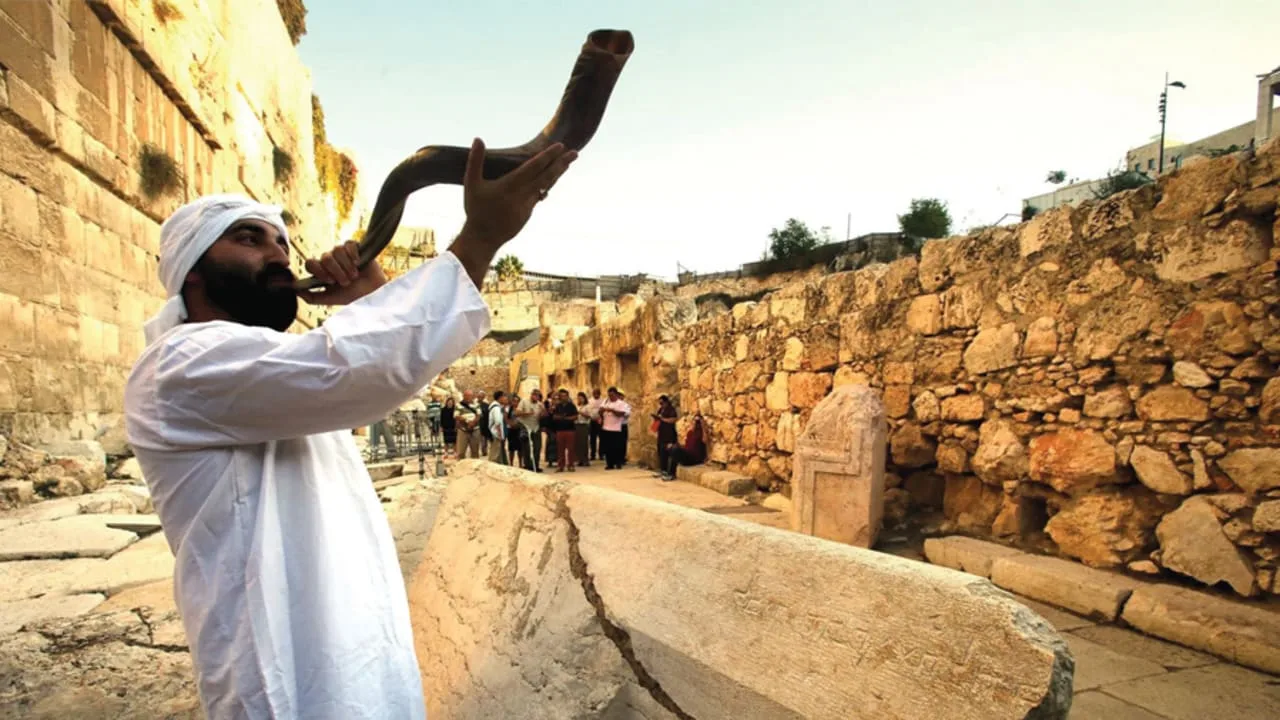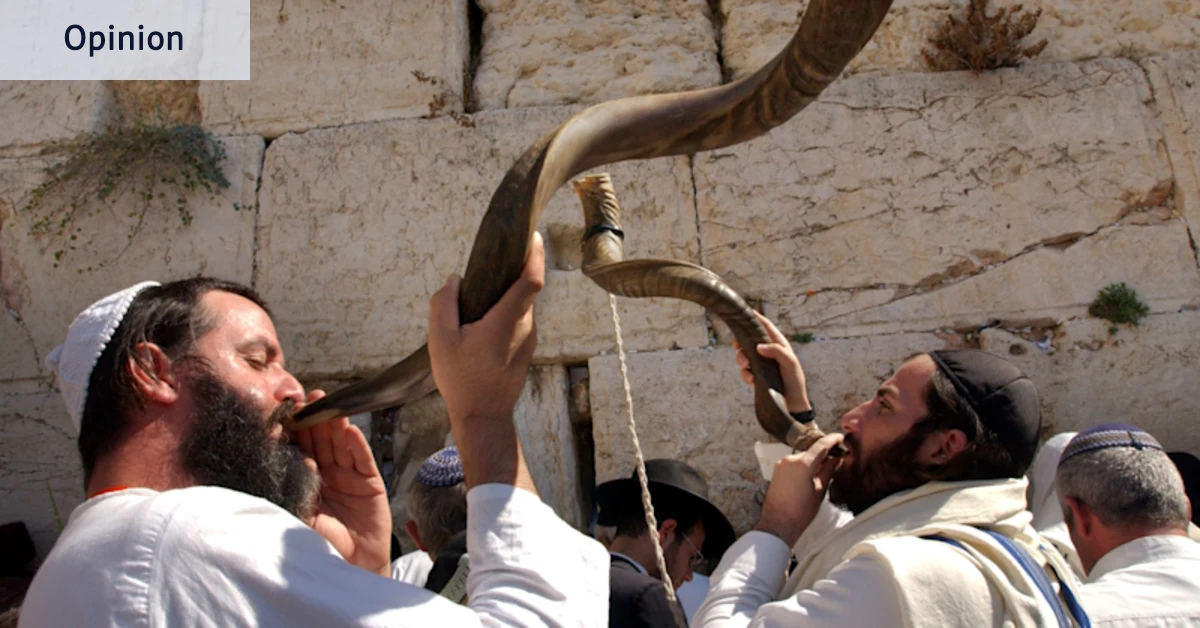
A new year invites us to set goals, change habits and turn over a new leaf, but Rabbi Isaac Arama suggests beginning with a different question: What is truly missing, what should be left behind and what should instead be preserved?Ziv Elul|Rosh Hashanah is a time that invites change. We sum up the year, examine what worked and what did not, set new goals and promise ourselves that this year we will do things differently. In organizations, too, this is a natural period for work plans, budgets, goals and changes.But sometimes the very desire to start over causes us to fall in love with change itself.(Illustration: Created with ChatGPT)There are managers who easily impress others. They are always in motion. Every quarter brings a new structure, every management meeting a different initiative, every few months the strategy is refined, job definitions are changed and “the next stage” is announced. The language is one of innovation, flexibility and leaving the comfort zone. From the outside, the organization looks alive and dynamic. But after a few years of this, employees do not always know exactly where they are moving.The problem, of course, is not change. An organization that cannot change will be left behind. The market changes, technology changes, needs change and what was an advantage five years ago can become a burden today. But in the world of management, a dangerous equation has sometimes emerged according to which movement necessarily means progress.Rosh Hashanah, through the interpretation of Rabbi Isaac Arama, author of “Akeidat Yitzhak,” offers a different distinction.Arama discusses the meaning of the sounds of the shofar and distinguishes between the tekiah and the teruah. He goes back to the use of trumpets in the desert: The teruah is associated with setting out and movement, while the tekiah is associated with gathering and a more settled state. From this he formulates a short and sharp statement: “For every movement indicates that something is lacking.”This does not mean that movement is negative. On the contrary, sometimes it is necessary. But it begins with a gap. We move because there is a distance between what exists and what we want. A person seeks to change because something in life does not satisfy them. An organization changes strategy because the existing reality no longer suits it.From this also emerges a deeper meaning for Rosh Hashanah. A new beginning is not an erasure of what came before. To truly renew, one must first know how to take stock.What worked this year and therefore should not be changed too quickly? What is no longer suitable? What did we try that did not mature because we did not give it enough time and what has truly reached the end of its path? Above all, what deficiency are we trying to solve through the next change?This idea recalls Aristotle’s concept of motion. In his philosophy, movement occurs in the transition from potential to realization. It exists because something has not yet reached its complete form. In that sense, change is not the goal. It is the path toward a state we seek to stabilize.This is a very important distinction for managers because many organizations today suffer not only from too little change, but also from too much of it.A new manager sometimes feels compelled to leave a mark. A structure that worked for years is changed. Then the goals change, followed by the measurement method, and later comes another “strategic refinement.” Each decision on its own may be justified, but when change becomes the permanent condition, the organization loses its ability to mature.A new beginning is not an erasure of what came before. To truly renew, one must first know how to take stock.Employees stop investing in the new method because they assume it too will be replaced. Middle managers wait for the next round before making decisions. Processes do not have enough time to become habits and organizational knowledge erodes. Everyone is moving, but it is hard to know whether they are progressing.Sometimes excessive change is even a way of avoiding the real problem. It is easier to carry out a reorganization than to admit there is a leadership problem. It is easier to replace a process than to say the team is not professional enough. It is easier to write a new vision than to confront the fact that the previous vision was simply never implemented.That is why the right question is not only “What will we change this year?” but first of all, “What did we learn from last year?”Here, the sequence of the shofar blasts becomes, in my view, a beautiful model for a management process: tekiah, rupture and movement, and then tekiah again.The first tekiah is the existing state. Not every routine is stagnation. An organization needs routine in order to accumulate expertise, build trust and allow people to know what is expected of them.Then come the shevarim and teruah. Something cracks. The market has changed, the product is no longer suitable, the structure no longer serves the strategy or the results indicate that it is time to move. This is the moment of change.But the teruah is not the end of the process. After it comes another tekiah.That may be one of the greatest failures in change management. We invest enormous energy in the decision to change, in the announcement, the presentation and in creating a sense of urgency. Far less attention is given to the moment when the change must become the new routine.It is easy to carry out a reorganization. It is difficult to reach the point where, six months later, every employee knows exactly where they belong. It is easy to launch a new system. It is difficult to get people to use it consistently. It is easy to announce a strategy. It is difficult to reach the point where it actually influences hundreds of small decisions every day.A good manager needs to know not only when to begin a change. They also need to know when to end it.I know this tension well from the startup world, too. In the early stages there is an almost sacred word: pivot. The ability to change direction is sometimes what saves a company. But it is also possible to fall in love with the pivot. Another version, another direction, another investment and another attempt. At a certain point, one has to ask whether we are still learning from reality or struggling to accept what it is already telling us. In the book “Avot HaNihul,” with Yaniv Fogel, we dealt at length with the question of when perseverance is a strength and when, instead, the courage to let go is the right move.A good manager needs to know not only when to begin a change. They also need to know when to end it.The real estate market also currently provides an interesting example of the difficulty in distinguishing between a change in trend and noise. On one hand, the TA Construction Index has lost about 15% since the beginning of the year, while the TA-35 has risen about 22%. On the other hand, three interest rate cuts are already behind us, there are expectations of further cuts and some see current prices as an opportunity. Meanwhile, in almost the same week, one can read analyses talking about a recovery, others warning against investment, some calling for government programs to be halted and others predicting price increases.There is not necessarily a contradiction here. It mainly reminds managers how easy it is to make a mistake when every small sign immediately becomes a “new strategy.” In periods of uncertainty, one must know how to respond, but also how to distinguish between a real trend and a temporary fluctuation.Rosh Hashanah gives us an extraordinary opportunity because it holds together two forces that seemingly contradict each other: reflection and renewal.On one hand, we look back. We take stock. We examine the past year and do not begin as though nothing happened. On the other hand, we believe it is possible to begin again.But healthy renewal is not an escape from the past. It is built from it.So before the new work plan, before the goals and before the major decisions for the coming year, I would suggest stopping and asking three questions: What should we preserve because it works? What must change because a real gap has emerged? And what will the “tekiah” after the change look like, meaning what is the new stable state we want to reach?Because not every quiet is stagnation and not every movement is progress. The management challenge is knowing when quiet reflects healthy stability, when it conceals erosion, when it needs to be disrupted and when it is time to stop changing and let the new thing become part of us.Perhaps that is also one of the tasks of the new year: not only to ask what we will begin, but what we will properly conclude, what we will leave behind, what we will take with us and what change we want to no longer feel like change by next Rosh Hashanah, but rather like the new way in which we live and operate.In the coming year-end review, it is worth examining every central area in the organization through three questions:First tekiah: What should be preserved? What worked this year, what habit or process has already become an advantage and what must not be destroyed simply because we want to demonstrate renewal.Teruah: What is truly missing? What is the gap that justifies change and what are the things we do only out of habit or because it is difficult to admit that reality has changed.Final tekiah: Where do we want to arrive? What does the state in which the change has been completed look like, what new habits need to take root and what will allow us to say that the organization is not merely in motion but has truly progressed.Rosh Hashanah does not ask us to choose between continuity and renewal. It invites us to do something more complex: take stock honestly, change where change is needed and build from that change a new beginning worthy of lasting.
Not every change is renewal: the management test of Rosh Hashanah
A new year invites us to set goals, change habits and turn over a new leaf, but Rabbi Isaac Arama suggests beginning with a different question: What is truly missing, what should be left behind and what should instead be preserved?
1,689 words~8 min read