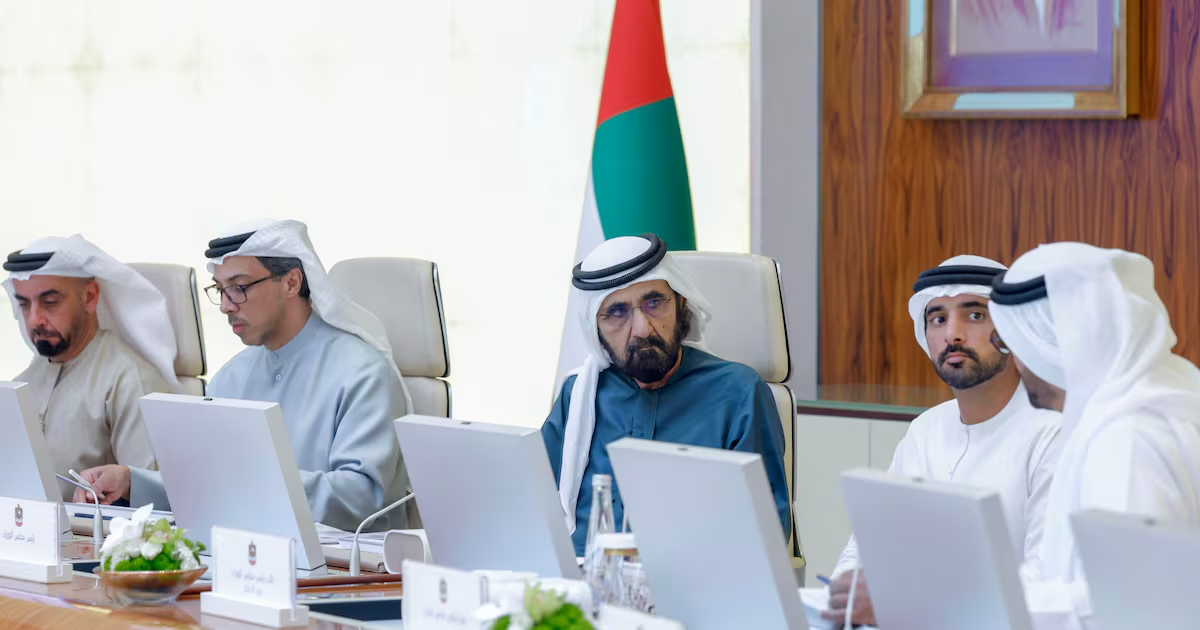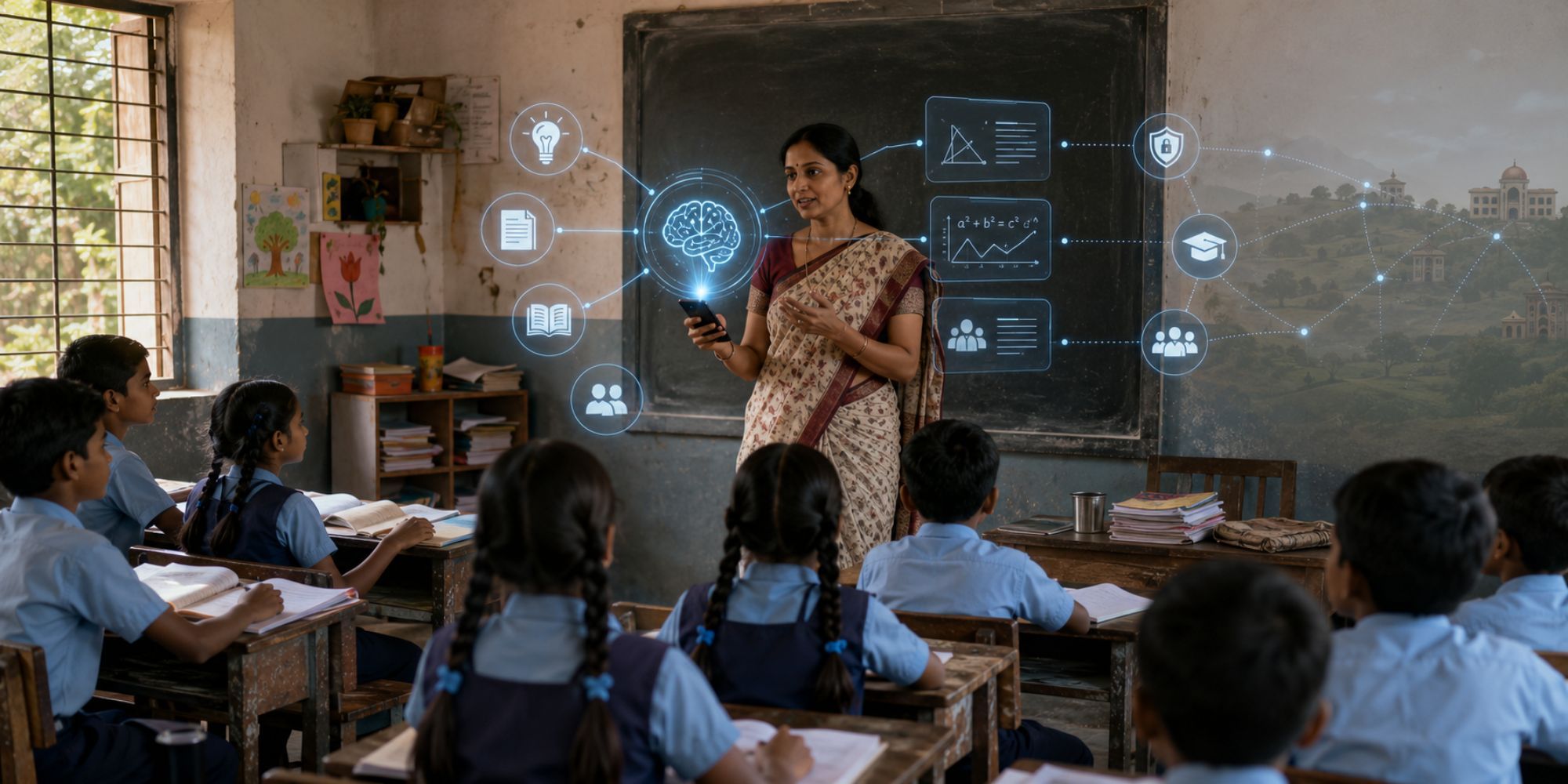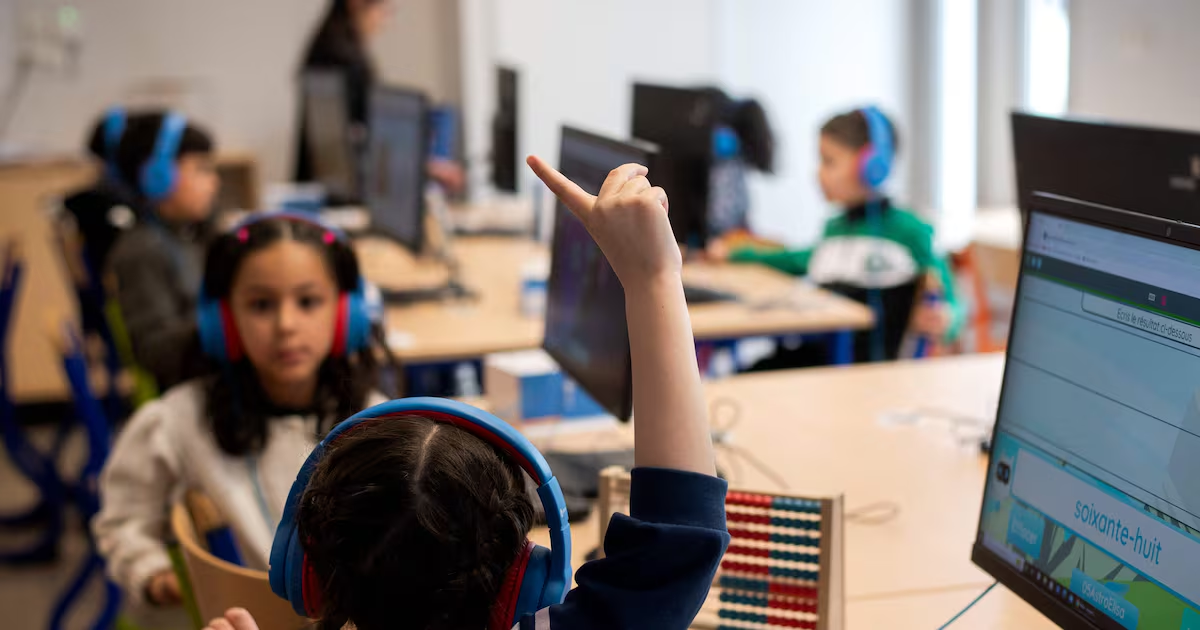
Children starting school in the UAE this year will study artificial intelligence before they can write a complete sentence. That may sound startling, but not when you know that AI already shapes their daily life. Algorithms influence what they watch, what they hear and what they discover, years before anyone explains how those choices are made for them. Schools are trying to catch up.The Cabinet’s decision to extend the AI curriculum across public and private schools, therefore, reaches far beyond the timetable. It gives every child the opportunity to understand the technology shaping their education, their future work and much of the world around them. It also raises a question that every education system now faces. When machines can produce the answers, what should education refine? The answer is human judgment.The design of the UAE curriculum shows why this matters. About a quarter of its lessons are devoted to ethics. Younger children will encounter AI through stories and play, while older students will study it more regularly and in greater depth. From the beginning, they will learn how to use the technology responsibly and when to question what it gives them.Sarah Al Amiri, the Minister of Education, described the reality facing schools when she explained that children will use AI tools at home even if their use is restricted in classrooms. Bringing AI into school allows teachers to guide that experience. They can help children question an answer, recognise an error and understand the risks of relying on information simply because it appears convincing. Without that guidance, many children will learn to use one of the most powerful technologies in their lives alone in their bedrooms.Play00:59The UAE is back to schoolTwo years ago, I wrote in these pages about the importance of critical thinking as AI becomes part of education. The need has only grown. AI can produce a fluent, confident answer that contains weak reasoning, false information and/or hidden bias. Young people must learn to pause, ask where an answer came from and decide whether the evidence supports it. Confidence has never guaranteed truth, and AI makes the two easier to confuse.Teachers will carry much of this responsibility. The commitment to prepare 22,000 educators deserves as much attention as the curriculum itself because education reform succeeds through what happens between a teacher and a student. Teachers need the professional capacity and confidence to ask students how they reached a conclusion, why they trusted a particular answer and what they would do if the machine were wrong. Their guidance will determine whether AI helps children think more deeply or simply makes it easier for them to stop thinking.The way we assess learning must also change. An essay completed at home can no longer show us, on its own, what a student understands. Schools and universities need more opportunities to see how students think through a problem, test an idea and change their minds when the evidence changes. Oral examinations, supervised problem-solving, collaborative work and portfolios can all help. A polished answer tells us very little when we cannot see how the student reached it. The path to the answer now matters as much as the answer itself.The next test will come after Grade 12. Students educated in this way will arrive at universities and workplaces with abilities that traditional admissions and recruitment processes may overlook. If universities continue to reward recall and employers continue to judge ability mainly through qualifications, progress made in the classroom will stop at the school gate.Across the Arab region, through our work at the Abdulla Al Ghurair Foundation, and globally through my role on Generation Unlimited’s board, I see how quickly technology is changing what young people need to learn and what institutions must be ready to recognise. Schools can begin developing judgment, while universities must deepen it and employers must value it alongside technical skill. The promise of this curriculum will be realised when that thread runs from a child’s first classroom into higher education and, eventually, the workplace.QuoteA curriculum tells us what a country values. Sharing it with the world shows how far the UAE believes those values can travelThis is why one of the least discussed aspects of the Cabinet’s decision may become one of the most important. The UAE plans to make its curriculum available to education ministries worldwide. The Arab region has one of the world’s youngest populations, and its education systems cannot all spend years building separate responses to the same challenge. By sharing what it develops and learns, the UAE can help other countries move faster while giving them room to adapt the curriculum to their own students, languages and priorities.A curriculum tells us what a country values. Sharing it with the world shows how far the UAE believes those values can travel.Education has always prepared young people for a future their teachers could only partly predict. Today’s challenge is sharper because AI can sound certain without understanding, and persuasive without being wise. Children must leave school able to use these systems confidently while continuing to think, question and decide for themselves.The UAE has decided that every child should understand AI. The next responsibility belongs to all of us who will teach, employ and build opportunities for this generation. We must be ready for young people who arrive asking better questions, and ready to give those questions the value they deserve.
The UAE wants to teach schoolchildren how to question AI | The National
Bringing AI education to every school is a visionary idea, but its success will depend on two very important factors
TL;DRAI
UAE mandates AI curriculum across schools with 25% on ethics; plans global distribution. Governance and critical thinking become core workforce traits—tech leaders must value judgment over pure technical skills in hiring.
893 words~4 min read