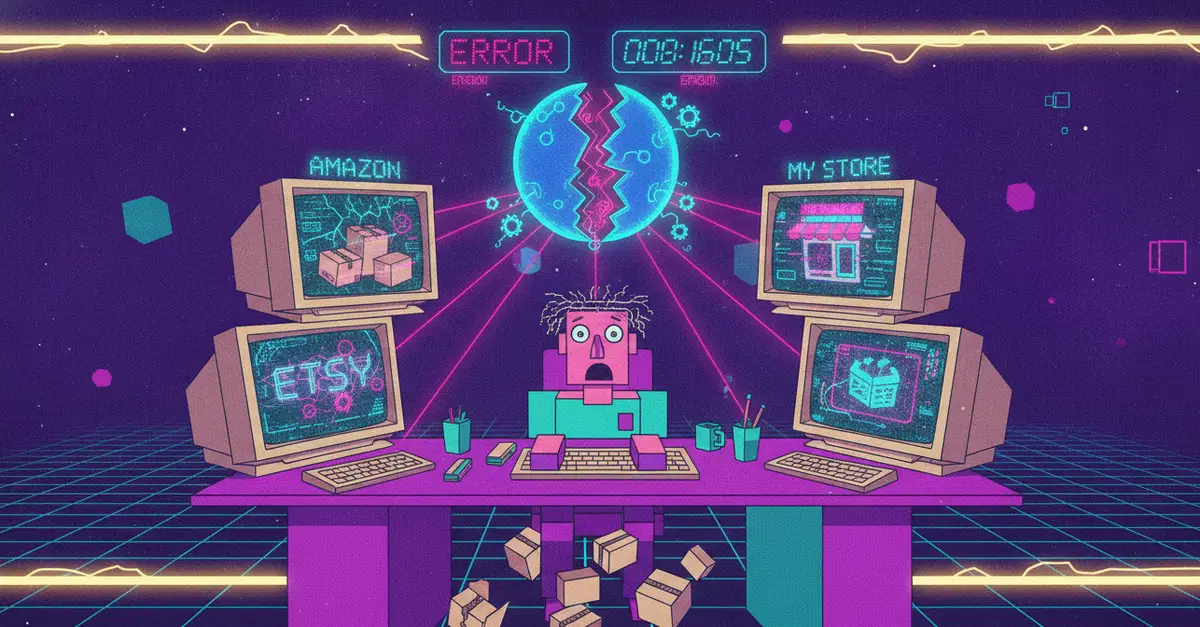
Multi-channel selling sounds simple on a slide: one product, listed everywhere, more customers. In practice, it's a distributed systems problem wearing a retail costume — multiple sources of truth, eventual consistency, third-party APIs with their own rate limits and quirks, and real money on the line when it goes wrong. Here's what actually breaks, and the patterns that hold up.
The Core Problem: You Now Have Multiple Sources of Truth
The moment you list the same product on your own store, Amazon, and Etsy, you have three systems that each believe they know the current stock level. Every sale on any one of them needs to propagate to the other two before someone else can buy a unit you don't have. The gap between "sale happens" and "everyone else knows" is where overselling lives.
There are two broad architectural approaches to closing that gap:
Single source of truth, push out. One system — usually your own store or a dedicated inventory service — owns the real stock number. Every channel is a read replica that gets updated via webhook or scheduled sync. This is simpler to reason about and is the right default for most small-to-mid catalogs.




 shopify.engineering