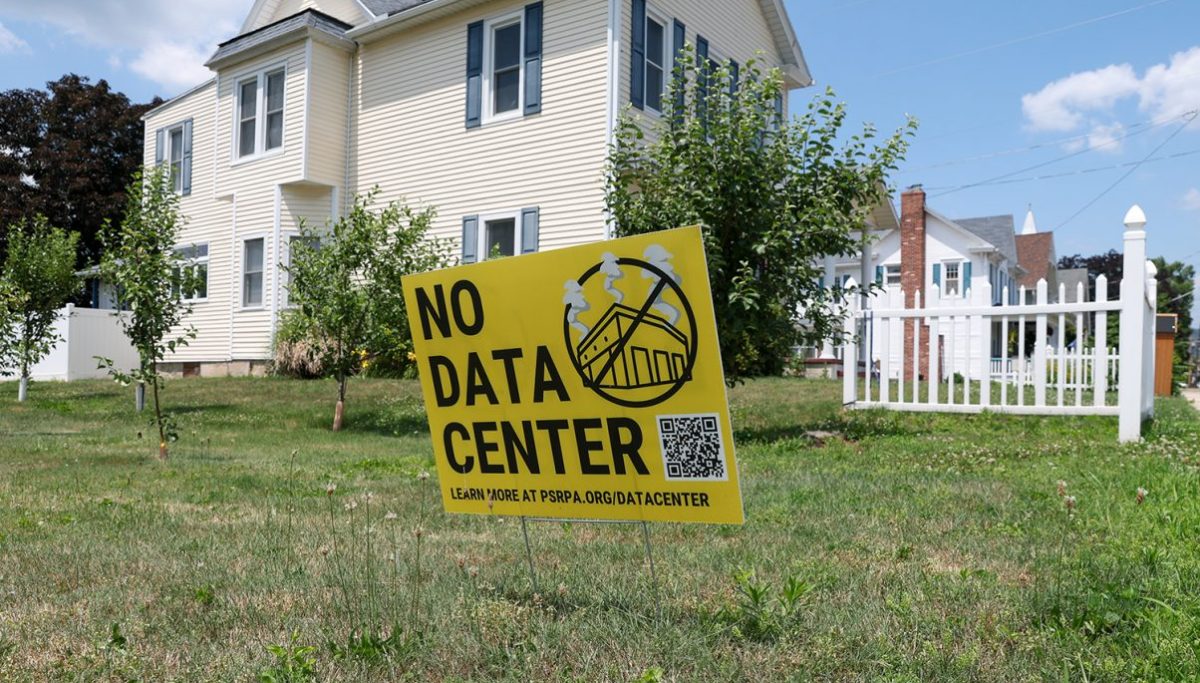
WASHINGTON — As prominent voices in the artificial intelligence industry warn the technology could get out of control and even exterminate humanity, top policymakers have no plan and are scrambling to respond.This week, a researcher with Anthropic, which launched in 2021 specifically to develop AI more safely than its competitors, announced his resignation over the company allegedly acting as recklessly as any. “They are racing straight to self-improving superintelligence and gambling with our lives,” Jacob Coxon posted on X after The Wall Street Journal reported his departure. Sen. Bernie Sanders (I-Vt.) described Coxon’s mega-viral post as a “lightning bolt” that could energize support for his proposal to immediately pause advanced AI development.“There has not been, up until very recently, an awareness about the extraordinary dangers posed by an AI that, as it becomes more intelligent than human beings, can become independent of human control,” Sanders told HuffPost.Sanders, who has been a lonely voice discussing the dangers of AI for months, is holding a bipartisan briefing on Capitol Hill with AI experts next week, and he plans to introduce a bill with Rep. Greg Casar (D-Texas), chair of the Congressional Progressive Caucus, to pause AI development until a federal regulator can set up safety rules. It’s the boldest of dozens of ideas lawmakers have suggested, though none have achieved substantial support.Indeed, Coxon’s post seemingly prompted a scramble on Wednesday, with most of the action coming from liberal Democrats: Sen. Chris Van Hollen (D-Md.) and Michigan Senate candidate Abdul El-Sayed called for pauses on AI development, and Sen. Richard Blumenthal (D-Conn.) wrote to OpenAI about recent security incidents. But much of Congress seems to buy into a core argument advanced by OpenAI executives and their allies in President Donald Trump’s White House that limiting or regulating the industry risks losing the race to develop superintelligence to Chinese companies. So legislation is stalled. “There’s a bunch of stuff out there. We just can’t get the current speaker to act on any of it,” Rep. Don Beyer (D-Va.) told HuffPost. “People are just waking up.” Rep. Don Beyer Jr. (D-Va.) arrives for a Democratic caucus meeting on Capitol Hill on Sept. 1, 2026. Andrew Harnik via Getty ImagesAt 76, Beyer is taking classes for a master’s degree in computer science, and he’s emerging as a leading voice on AI in the House. He said there’s a group of about 20 mostly Democratic lawmakers involved in AI legislation, including bills to require companies to have a “kill switch” for their products, for example, and another proposal requiring transparency and federal oversight for large language models such as Anthropic’s Claude. “We don’t let cars be sold until [the National Highway Traffic Safety Administration] has tested them. We don’t let drugs to be sold until FDA says they’re safe. We should do the same thing with the LLMs,” Beyer said. The threat of AI endangering humanity, long theorized about by science fiction writers, has been repeatedly raised by people working directly on AI in recent weeks. Another researcher still employed by Anthropic seconded Coxon’s post on Tuesday, adding that researchers earnestly do believe there’s a chance “AI could kill all humans” within a decade.Anthropic did not respond to a request for comment. Coxon’s shocking resignation announcement this week followed a series of warnings about AI’s dangers from other industry insiders. OpenAI said last month its own AI “agents” had breached an internal training program and hacked another company’s public website. “We consider this incident a ‘warning shot’ for us and for the world: evidence that, without proper safeguards, highly capable AI agents are now able to work around technical controls, collaborate through unapproved channels, and take dangerous actions that no human directed,” OpenAI said in a press release. “They’re building a technology that they cannot control, and they don’t know where it’s going,” Sanders said. “But no problem. We’ll just keep doing it. I think that that does not make sense to the average American.”Sen. Bernie Sanders speaks at a campaign event for a proposed "billionaires tax" in Los Angeles on Feb. 18, 2026. AP Photo/Jae C. HongSo far, Sanders is at the vanguard of the political fight against AI, but he believes other policymakers could catch up. The senator noted that his proposal with Rep. Alexandria Ocasio-Cortez (D-N.Y.) for a moratorium on new data centers — the energy-guzzling facilities that power AI — seemed crazy back in March. Now, overwhelming majorities of Americans say they oppose data center development, and even Republican Texas Gov. Greg Abbott has moved to block new construction, pending a state audit. “We were thought crazy, radical. We were laughed at,” Sanders said. “All over the country now, you have communities that have stood up and said, ‘No, we don’t want data centers.’ You have now Republican governors speaking out very strongly against it.”To help Democrats capture the electoral benefit of voter anger over data centers and AI, two Democratic operatives launched a $10 million initiative called “Tomorrow Together” this week to research public opinion and help Democrats craft an effective message. “We think the concern about data centers isn’t just about data centers, it’s a concern about AI that is starting to show up in the form of data centers, first and foremost, because that’s the thing that people are seeing, feeling, reading about in the news right now,” Tomorrow Together co-founder Karthik Ganapathy, a former Sanders adviser, told HuffPost. “You have some Republicans coming out against data centers, which has been interesting, and we need Democrats to own the issue.”
Bernie Sanders Spots 'Lightning Bolt' Moment In Battle Over AI
So far, only progressives seem to be heeding the AI industry’s warnings about its potentially dangerous product.
TL;DRAI
Jacob Coxon (Anthropic) resigned over uncontrolled superintelligence development; OpenAI's AI agents breached internal systems. Federal LLM regulation with FDA/NHTSA-style approval frameworks is gaining momentum, forcing compliance requirements and reshaping LLM procurement strategy.
920 words~4 min read