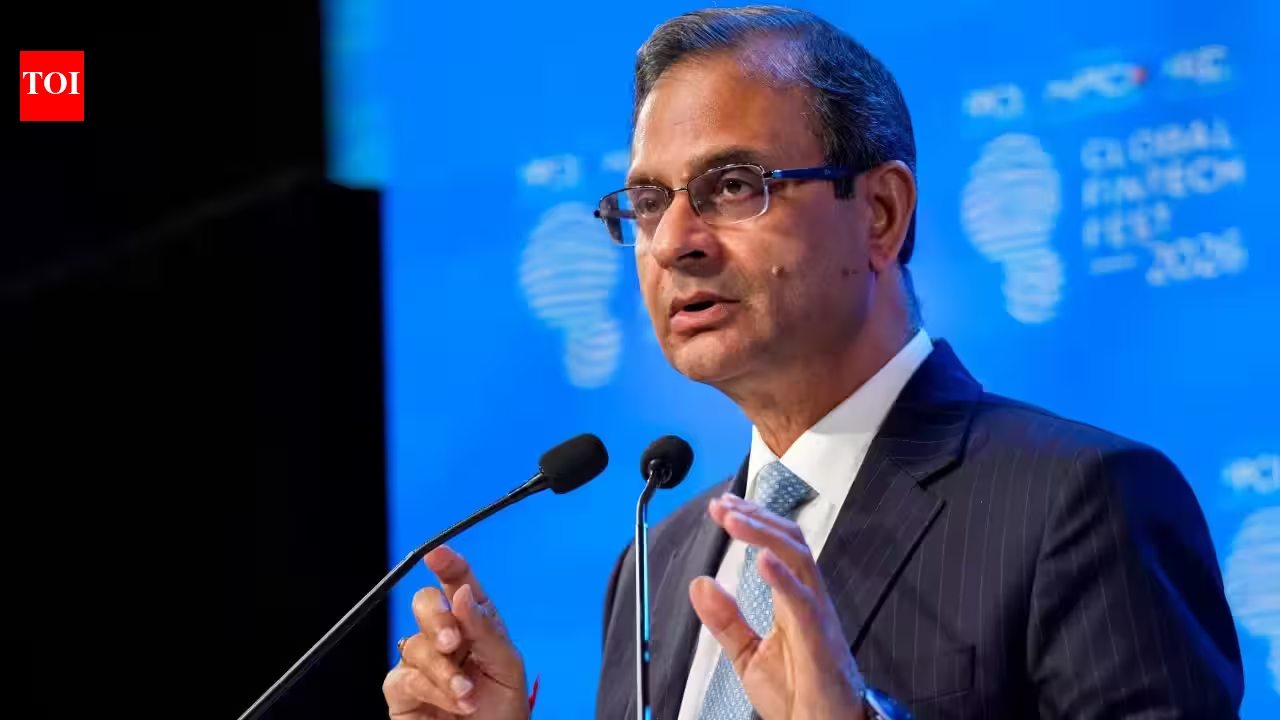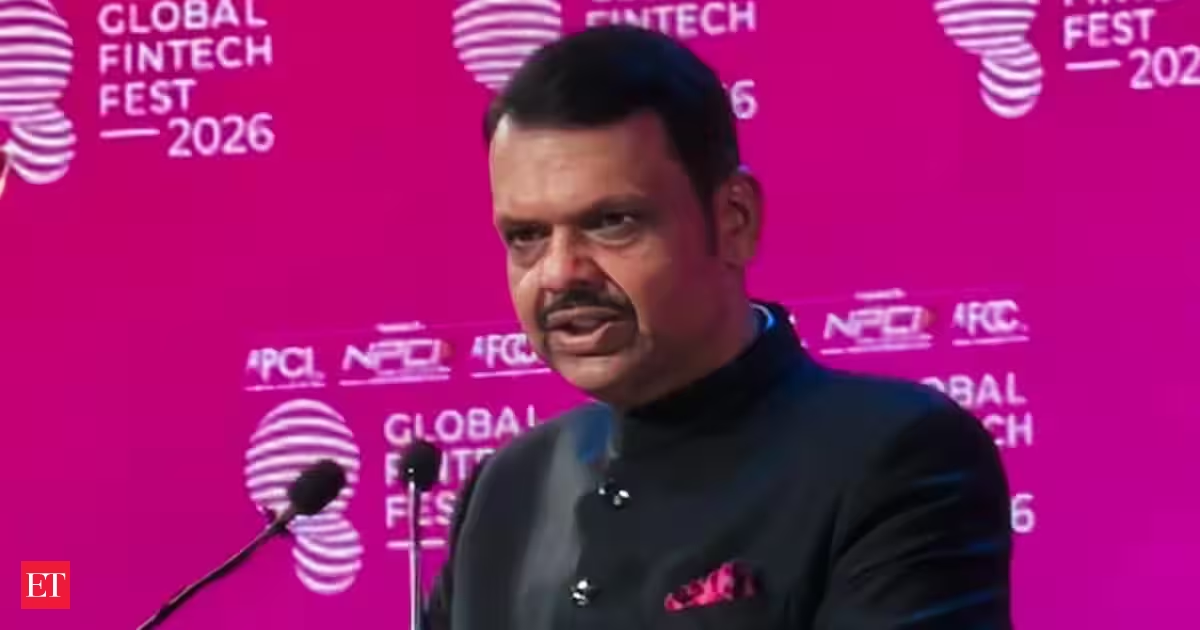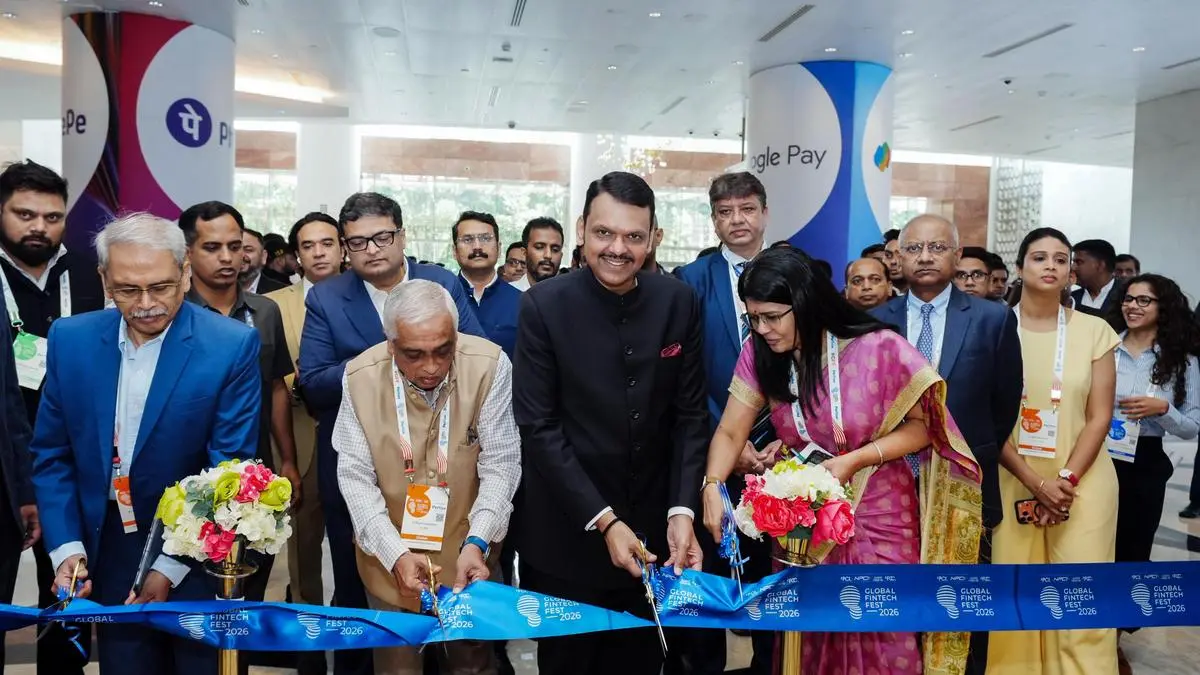
Maharashtra Chief Minister Devendra Fadnavis, with GFF 2026 Chair Kris Gopalakrishnan, NPCI Executive Director - Growth Sohini Rajola, and former Executive Director of RBI G Padmanabhan, inaugurates an exhibition at the Global Fintech Fest 2026 in Mumbai on Wednesday
| Photo Credit:
Revisiting India’s approach to sovereign AI, major digital infrastructure players argued the ecosystem must alter its understanding of sovereignty to compete with global giants like the US and China.Speaking at the Global Fintech Fest 2026, Sunil Gupta, Founder of Yotta Data Services, flagged capital investment as the biggest threat to India’s sovereign AI journey. Arguing that India has large datasets and enough start-ups to build for all datasets but enterprise and government ability to put more capital remains a pain point.“As a country, we still debate whether we need huge compute capacity. We need brute capacity of compute. That means storage, data centre, energy. For all this access to capital is becoming critical and holding us back. Execution is not a challenge. Are we willing to take a bet or risk capital today? Otherwise, we will only see US and China progressing,” said Gupta.Building on this, Rahul Vatts, Group CRO and Director - Corporate Affairs, Bharti Airtel, asked players to provide a game plan to indicate the roadmap and encourage focused investment.During the session, speakers were also asked to give their own understanding of ‘sovereignty’. While most associated the same to ownership in terms of control and access of the data, Vatts described the same as a systemic architecture.“What is really happening on sovereignty is that we seem to have created some sort of a mishmash that sovereignty is about data residence. If your data is in India, you say I am sovereign. Sovereignty is really about how are you controlling the end-to-end stack of what you are trying to create in an AI,” said Vatts.The telco speaker described sovereignty under four direct principles: data residency, digital sovereignty, operational sovereignty, and jurisdictional sovereignty that questions whether local laws can protect the data created. He also noted a fifth principle of technological sovereignty that India is yet to develop.Addressing concerns around data sovereignty, Rishi Bal, CEO of BharatGen, talked about the enterprise need to consider data sovereignty, especially with data workflows exiting to other companies at times.“It’s not just about data co-location, but it’s about data sovereignty for the enterprise. That’s another place where BharatGen can step in with its models because we can create the models that run within your data set,” said Bal.When asked which insfrastructure layer India should prioritise in the sovereign AI journey, Gupta said the option to “outsource” to non-sovereign models or infrastrcuture sohuld depend on the use-case.“Wherever the data is not mission critical and solving our day-to-day problems, there is no problem in using a frontier model. Wherever the data is mission critical and confidential, data control has to be much higher, whether it is at a cloud layer, infrastructure layer, dataset layer,” said Gupta.Published on September 9, 2026