WorldIran said Wednesday it had attacked 10 ships near the Strait of Hormuz after the U.S. sank five Iranian oil tankers, with the
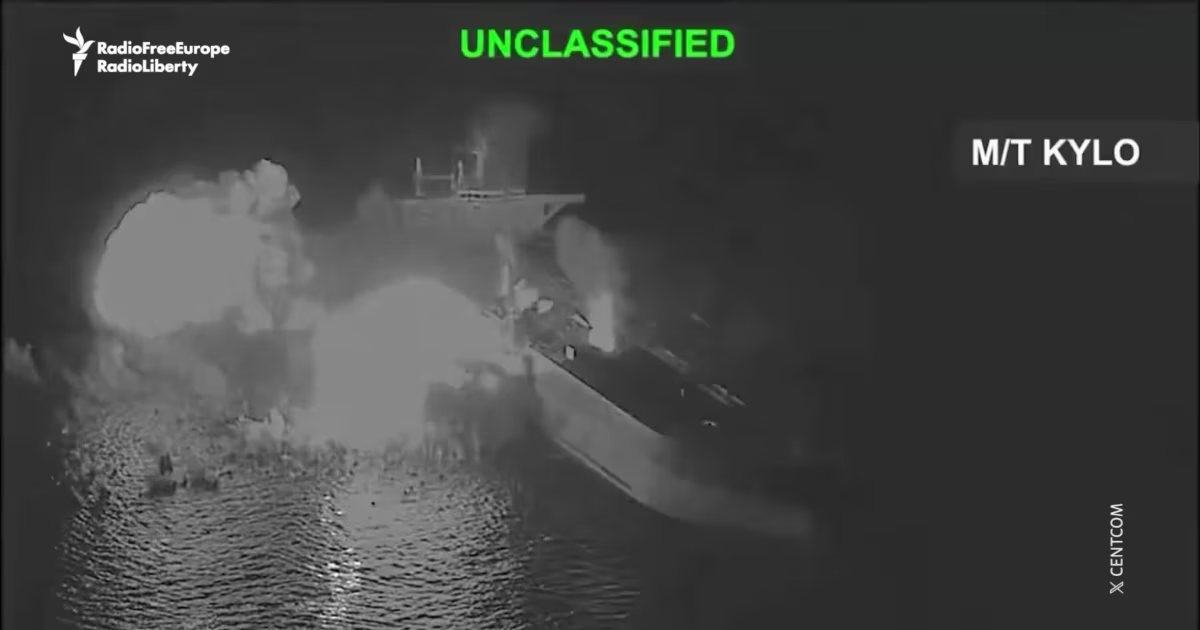
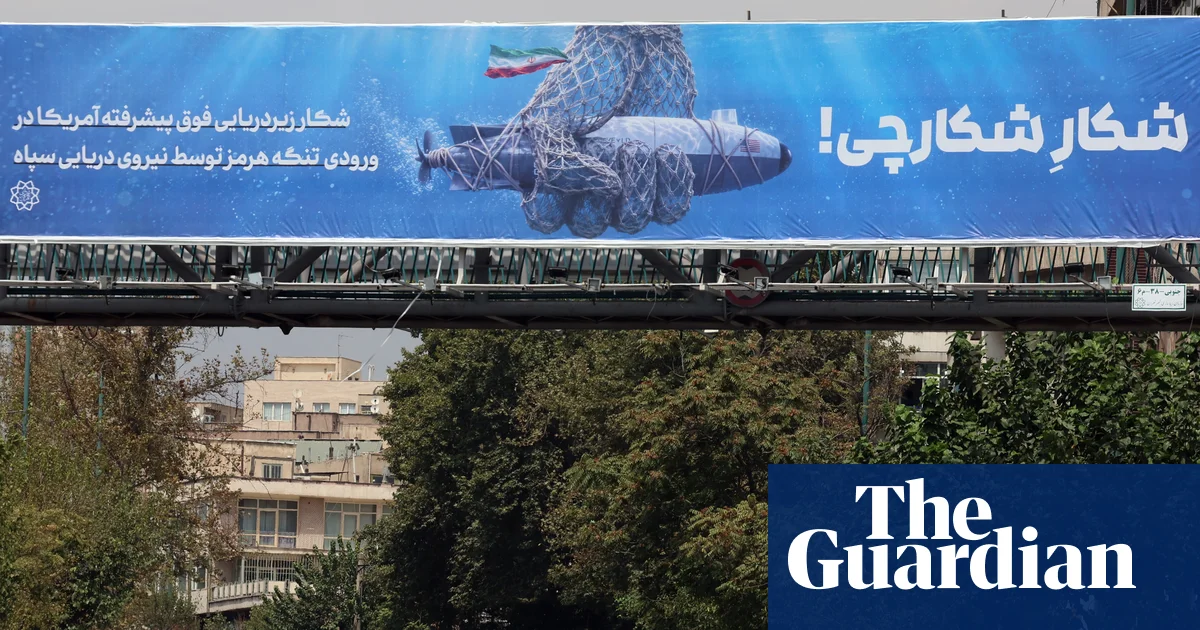
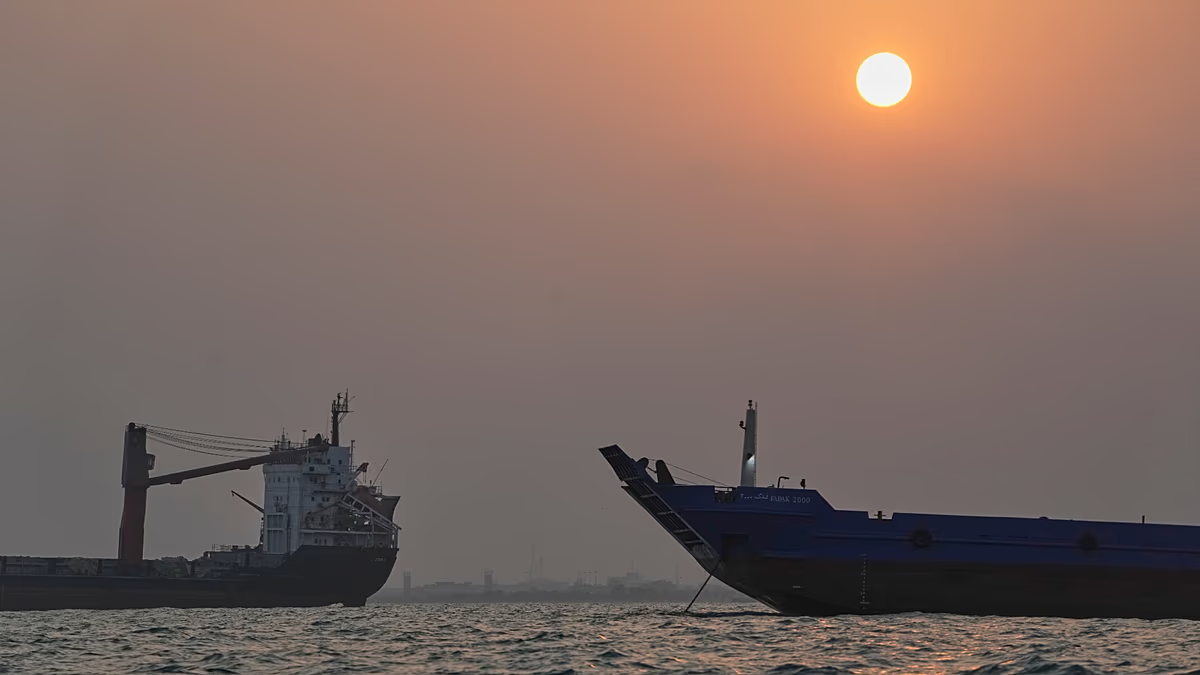
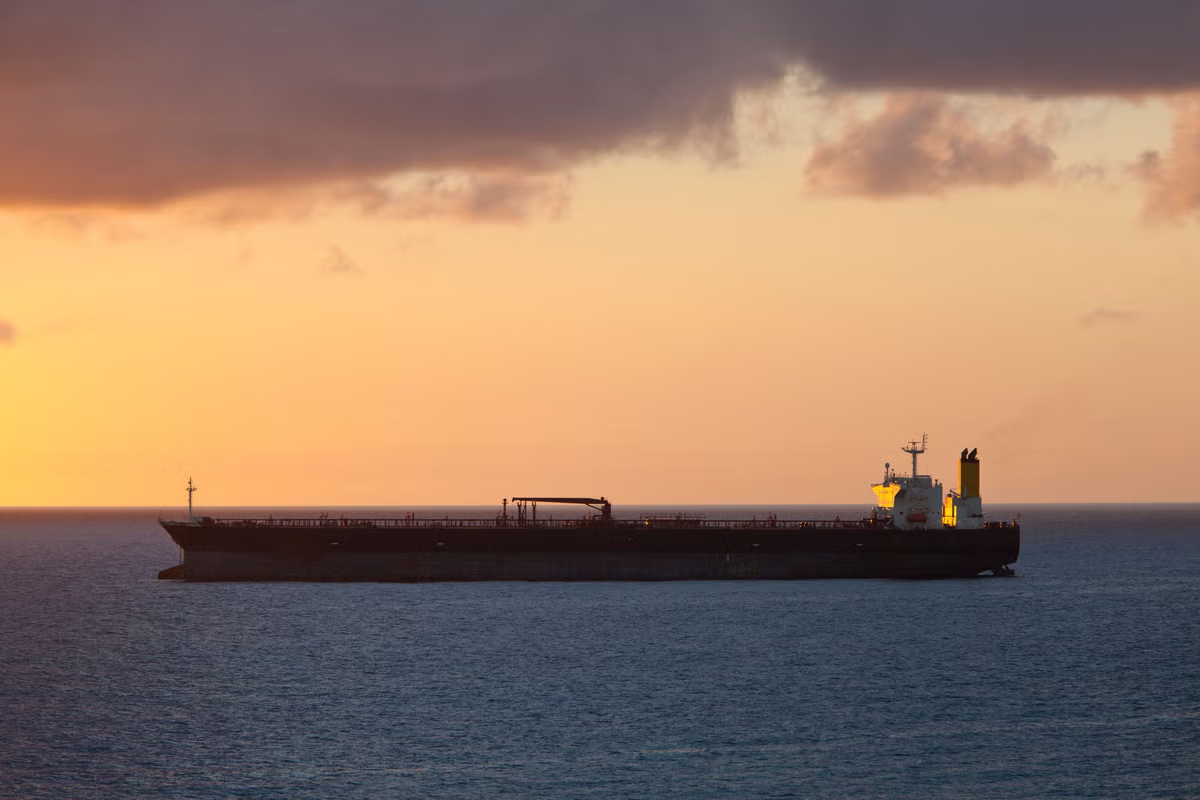
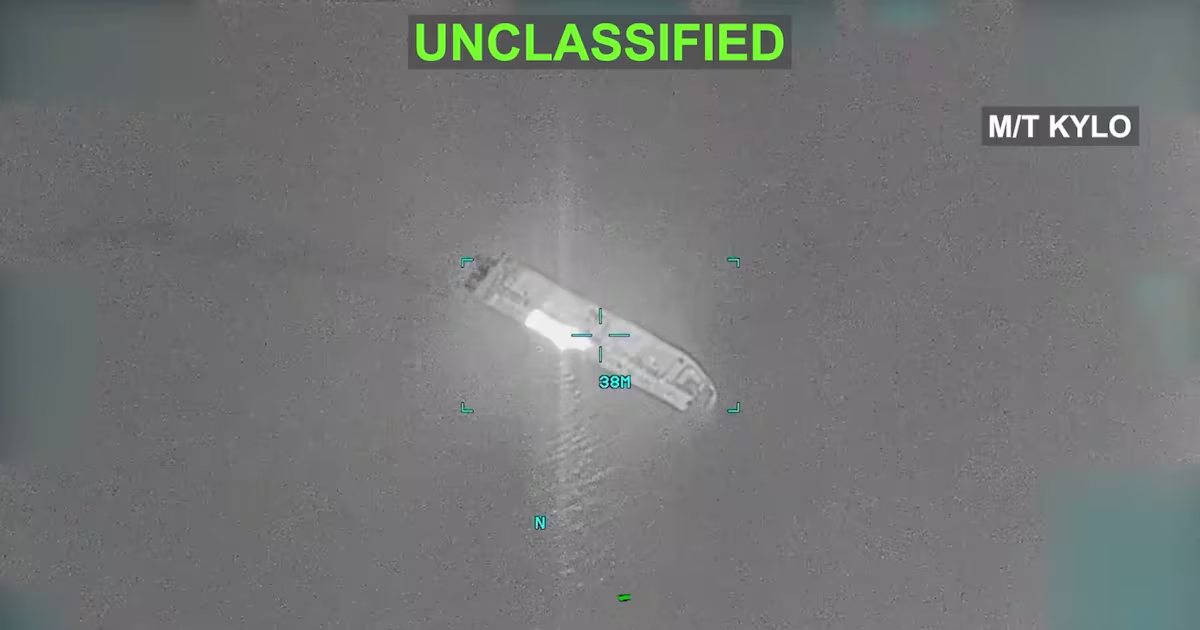
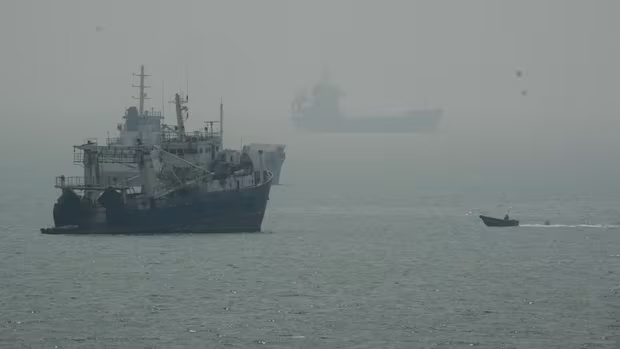
attacks in and around the vital waterway sending the international Brent crude benchmark over $100 US a barrel for the first time since July.In addition to attacks on the war, Iran fired missiles at base used by U.S. in JordanThomson Reuters · Posted: Sep 09, 2026 7:56 AM EDT | Last Updated: 1 hour agoListen to this articleEstimated 5 minutesThe audio version of this article is generated by AI-based technology. Mispronunciations can occur. We are working with our partners to continually review and improve the results.A motorboat travels past commercial vessels anchored amid haze in the Strait of Hormuz off Bandar Abbas, Iran, Monday, Sept. 7, 2026. (Vahid Salemi/The Associated Press)Iran said Wednesday it had attacked 10 ships near the Strait of Hormuz after the U.S. sank five Iranian oil tankers, in the biggest declared wave of tit-for-tat attacks on shipping by both sides since the start of the six-month-old war. Iran's Islamic Revolutionary Guard Corps (IRGC) said it had responded with a ballistic missile attack on a base used by U.S. forces near Al Azraq, in eastern Jordan, and had fired on two U.S. vessels and eight oil tankers attempting to cross an area of the Strait of Hormuz that it has declared off limits.The attacks in and around the vital waterway sent the price of oil surging, with the international Brent crude benchmark breaching $100 US a barrel for the first time since July. Since the war began, oil prices have been as low as $70, reflecting since-scuppered hopes that the U.S. and Iran would agree on a plan that would allow stranded tankers to move oil out of the Persian Gulf safely. Escalating combat between Saudi Arabia and the Iran-aligned Houthis that control most populated parts of Yemen has created additional uncertainty for energy markets. On Tuesday, the Houthis launched an attack on four cities in Saudi Arabia, causing huge fires at oil installations that were visible from space. Saudi authorities said 73 people were wounded.American consumers have felt the pinch at the gas pumps, a politically sensitive issue with less than two months before November midterm elections that threaten Republican control of the Senate and House of Representatives.A Shell station is shown in Monterey Park, Calif., on Tuesday night. California has seen some of the highest diesel prices in the U.S., above $6 a gallon in recent days in some locations. (Frederic J. Brown/AFP/Getty Images)A gallon of regular gasoline averaged $4.15 in the U.S. on Tuesday, up 26 per cent from a year ago, according to motor club AAA. Diesel, at $5.90 a gallon, cost 59 per cent more than the same day a year earlier."In our view, reaching a durable deal before the U.S. midterm elections is increasingly unlikely, and it could remain elusive even beyond that," Bank of America analysts said in a Tuesday research note. Average gas prices across Canada have also climbed since the start of the war, with increases between 25 and 40 per cent in most locations. The federal government announced an extension of the gas tax holiday as a result, until the end of January.Iran reveals area of restricted maritime zoneThe Americans said they destroyed five Iranian oil tankers overnight, releasing video of ships ablaze before they sank. The U.S. military's Central Command called its attacks a response to the IRGC targeting a U.S. Navy warship twice with ballistic missiles over the previous two days. "Iran continues to try to hit U.S. naval ships, and for every time they do that or try to do that, they're going to lose tankers," U.S. Secretary of State Marco Rubio told reporters during a visit to Colombia.Iran says it is imposing a wider off-limits zone around the strait and using new, more capable missiles to attack U.S. ships.Can Iran really launch sea mines from rockets? | About ThatAugust 31|Duration 2:56U.S. Central Command says it carried out fresh strikes on Iran, claiming it was retaliation for Iran preparing to launch sea mines from rockets into the Strait of Hormuz. Andrew Chang digs deeper into what may be Iran's novel ability to deploy underwater mines with missiles.