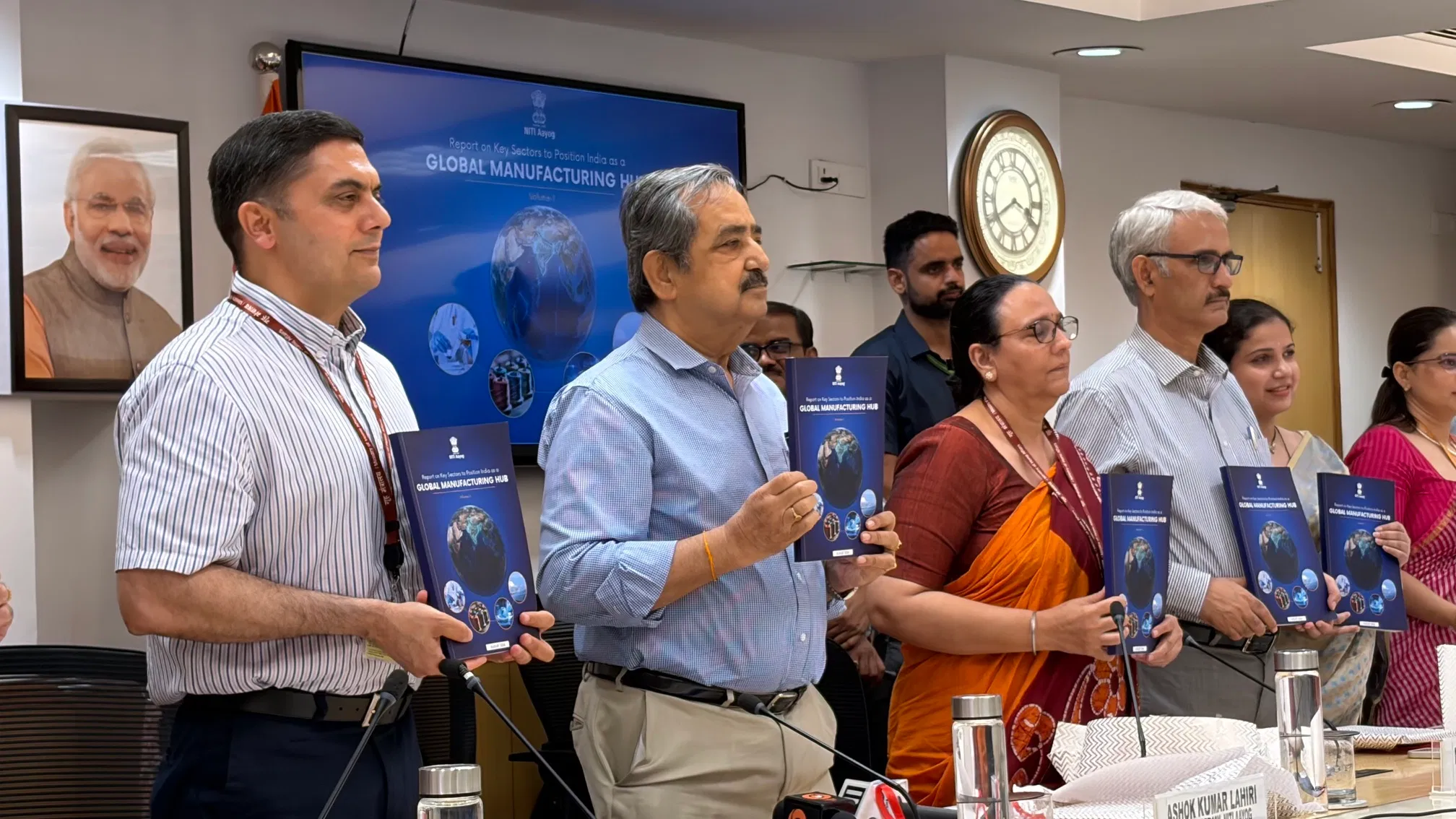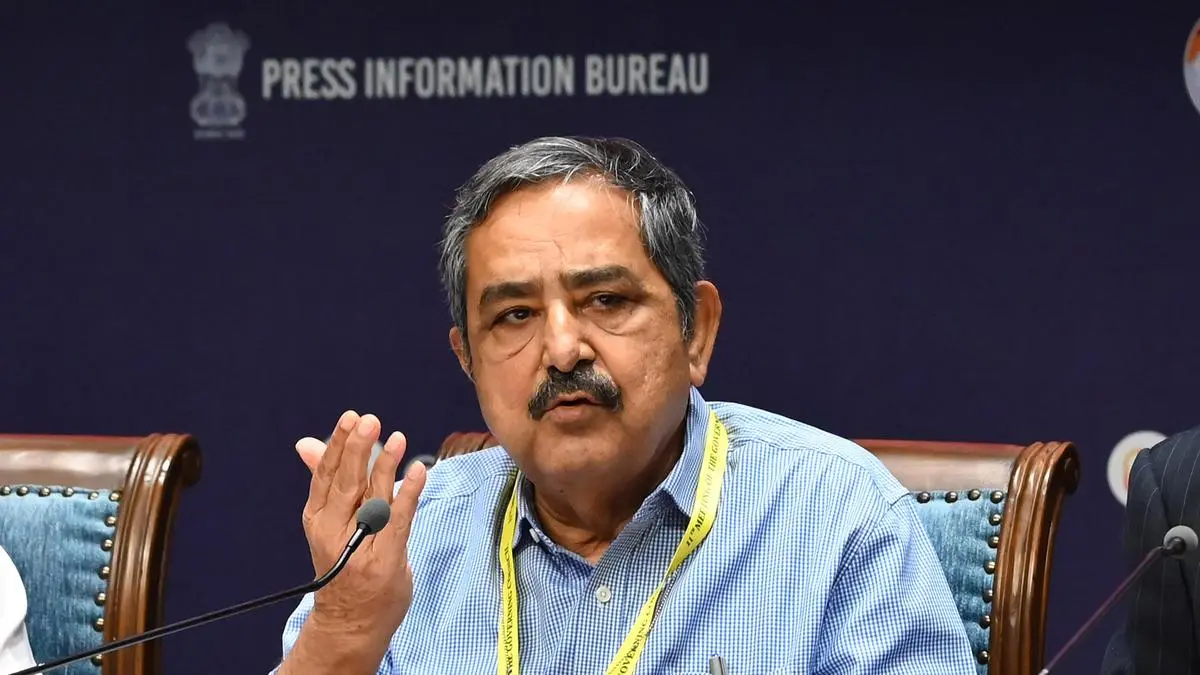
Ashok Kumar Lahiri, Vice-Chairman, NITI Aayog
| Photo Credit:
India’s next big economic challenge is not growth but manufacturing at scale, and achieving that will require a sharp increase in investment, deeper credit markets and greater integration with global value chains, NITI Aayog Vice-Chairman Ashok Kumar Lahiri said on Wednesday.While the Indian economy is “doing reasonably well”, Lahiri said the recent rise in manufacturing’s share of GDP is encouraging, but India needs to build manufacturing capacity on a much larger scale. “We need much more manufacturing with scale. When you look at China, the scale is enormous. We do not have that kind of scale and to acquire that, we need investments,” Lahiri said during a fireside chat at the event.He also stressed the need for India to plug more deeply into global value chains, pointing out that modern products such as mobile phones are no longer made in a single country. “We have to integrate ourselves into the global value chain,” he said.Believe in moneyLahiri flagged India’s shallow credit market as another constraint on investment. Credit-to-GDP is only around 53-55 per cent in India, compared with 150-170 per cent in economies such as China and Singapore, he said. “Going forward, investments have to be stimulated and for that, you need more credit and creditworthiness with proper evaluation of risk.”Lahiri also struck a pragmatic note on foreign capital flows, saying India should not be overly concerned about weak foreign investment in the current global environment. Businesses, whether domestic or foreign, ultimately invest where they see profits. “I am a firm believer in money. An investment, be it domestic or foreign, will come in search of profit. They will not come because they love India... They will come because there is money to be made,” he said.India, therefore, needs to focus on making the country more profitable for businesses, he added. At the same time, the current weakness in global investment flows needs to be viewed against heightened geopolitical and economic uncertainty, including the Ukraine conflict, tensions around the Strait of Hormuz, tariff wars, the weaponisation of tariffs, the weakening of the WTO framework and rapid advances in AI and digital technology.In such an uncertain environment, investors are naturally more risk-averse and may prefer to wait before committing capital, Lahiri said, adding that “this will go”.Pull your weightWhile FDI remains important, particularly for technology, global market access and integration into global value chains, Lahiri said the bulk of the investment push will ultimately have to come from within India. “The heavy lifting has to be done by the domestic investor,” he said.Investment as a proportion of GDP, at around 30 per cent, has now risen to about 34 per cent based on first-quarter data, Lahiri said, stressing that the increase needs to be sustained. Countries such as China and South Korea invest substantially more, and India will need to raise its investment rate if it wants to become a developed economy. That, in turn, will require higher domestic savings and a stronger financial sector to channel those savings into productive investment.And while a higher investment may appear to conflict with the need to sustain consumption-led demand, Lahiri argued that the two are not mutually exclusive. “Just as consumption creates demand, investment also creates demand,” he said.Published on September 9, 2026