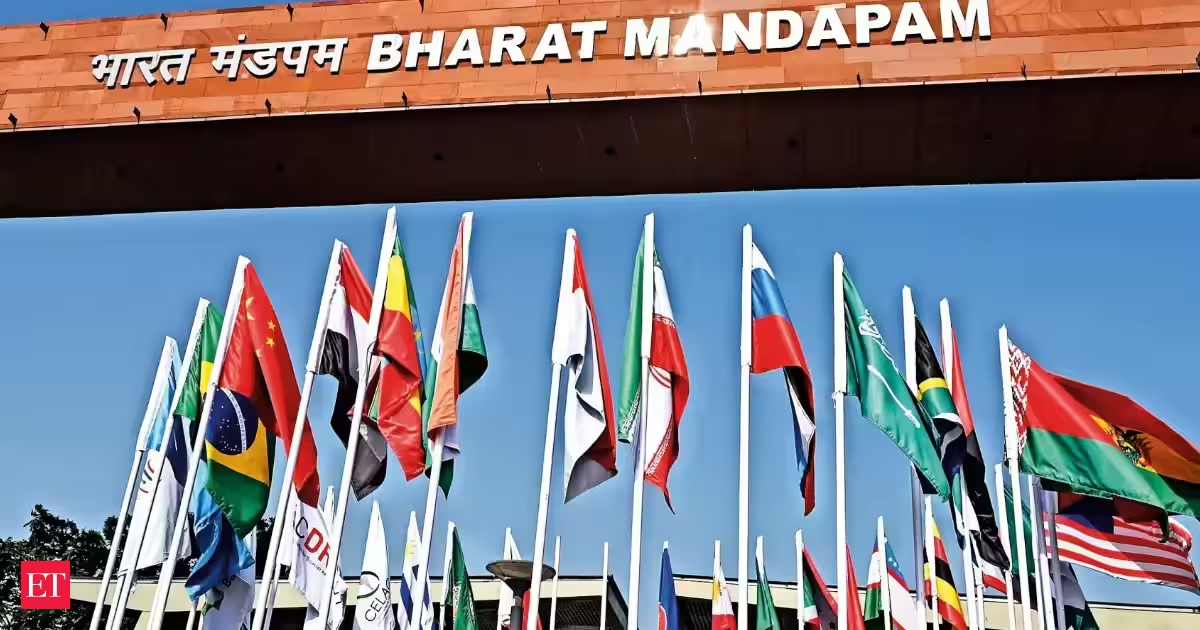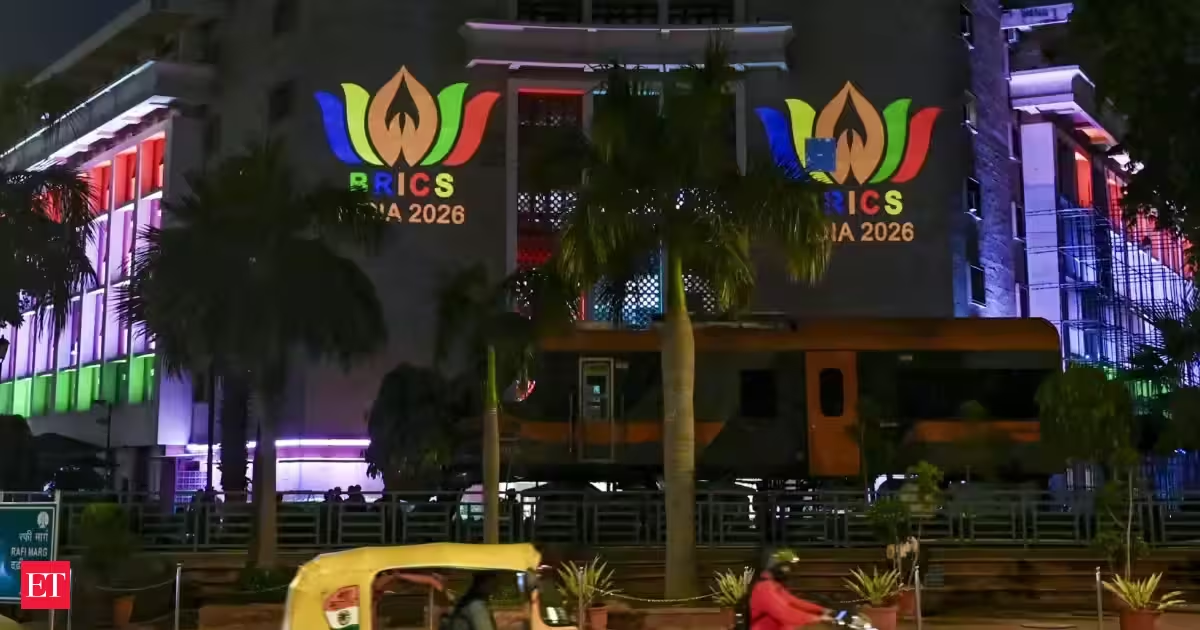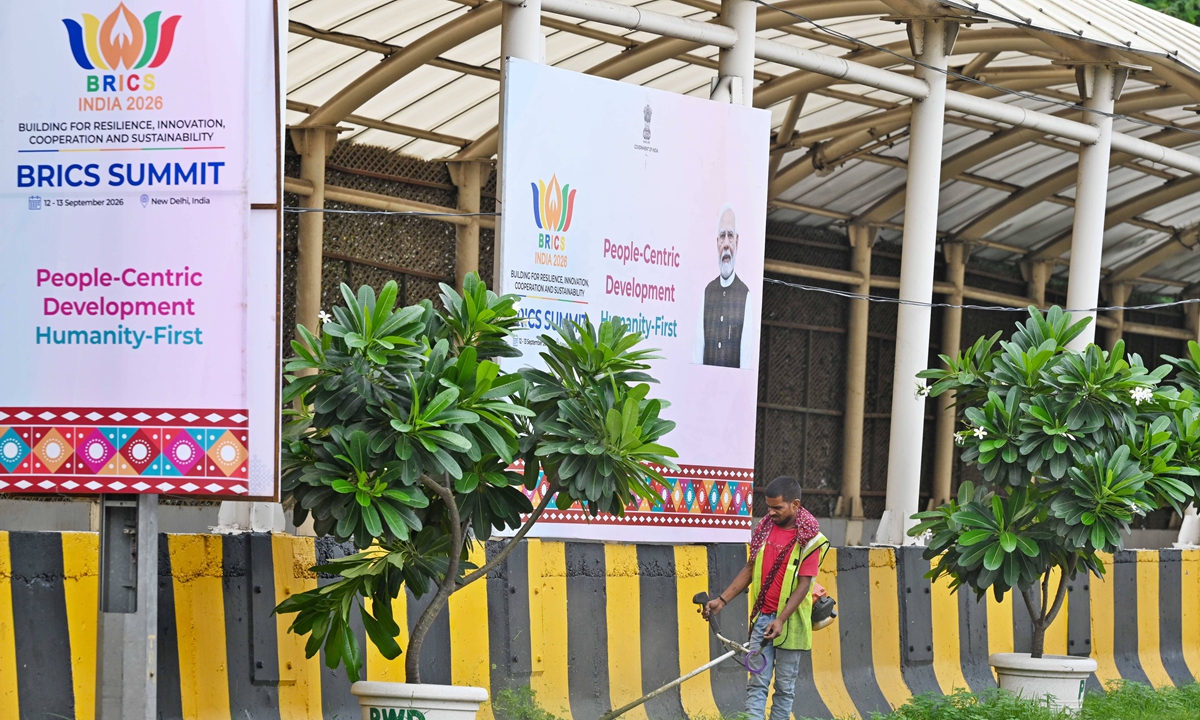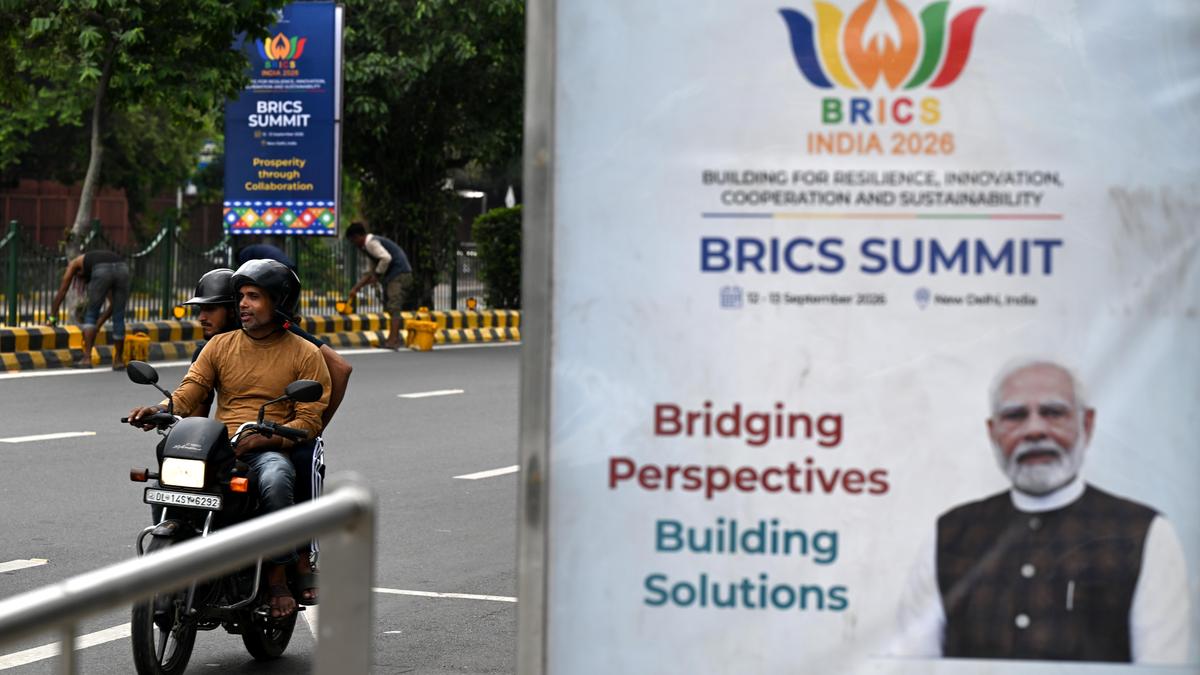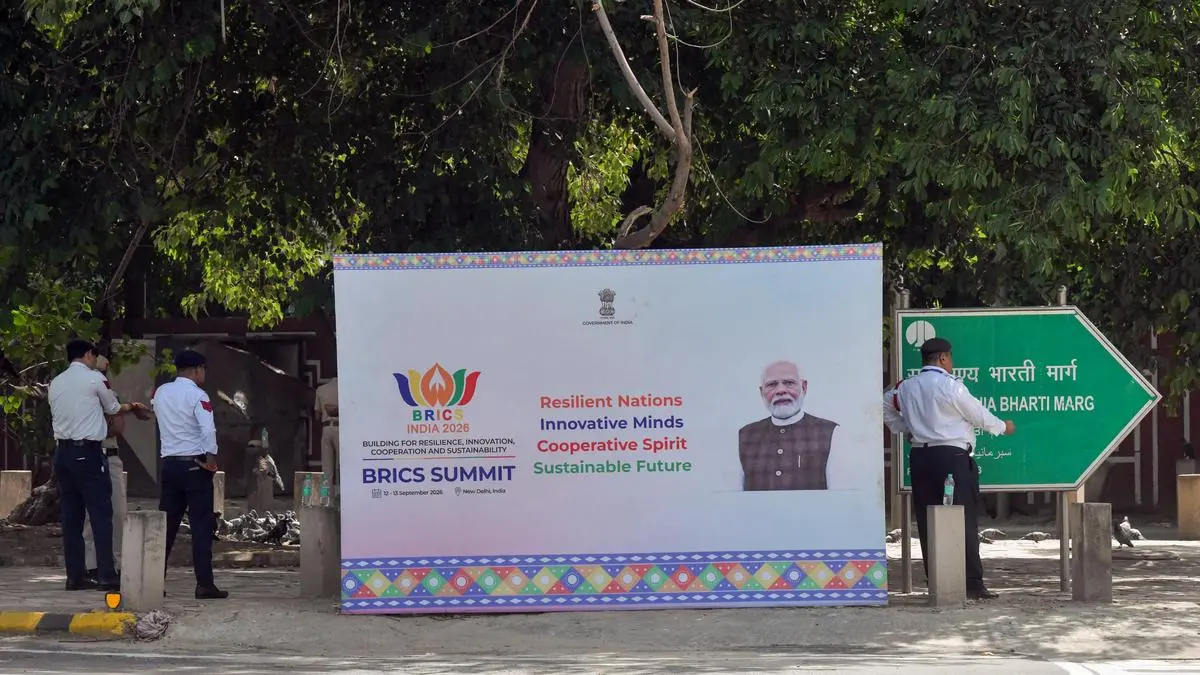
Banner of BRICS installed ahead of the BRICS Summit 2026 near Bharat Mandapam at Mathura Road, in New Delhi on Wednesday
| Photo Credit:
India has invited major groupings of developing and emerging economies, including the GCC, Asean, the Community of Latin American and Caribbean States (CELAC), the African Union and BIMSTEC, to the BRICS Summit in New Delhi, in a bid to widen the grouping’s engagement with the Global South and build a broader network of developing countries.“The invitation to regional and inter-regional blocs brings together economies from Asia, Africa, West Asia and Latin America and the Caribbean, giving India an opportunity to push for greater coordination on issues such as trade, investment, supply-chain resilience, development finance and reform of multilateral institutions,” a source tracking the matter told businessline.Partner nationsThe 18th BRICS Summit, to be hosted by New Delhi on September 12-13, will include leaders from all 11 member countries, partner countries as well as out-reach countries. With its recent expansion, the grouping now includes Brazil, Russia, India, China, South Africa, Egypt, Ethiopia, Iran, Saudi Arabia, the UAE and Indonesia. The 10 partner countries are Belarus, Bolivia, Cuba, Kazakhstan, Malaysia, Nigeria, Thailand, Uganda, Uzbekistan and Vietnam.“This week’s summit brings together a diverse group of developing and emerging economies from across the globe, thanks to an expanded membership and invitations to partner and outreach countries. The presence of various regional blocs makes this representation more inclusive and impactful,” the source said.The outreach is significant as India seeks to use its BRICS chairship to position the grouping as a platform for practical economic co-operation among developing countries, rather than as an alliance directed against the West, the source noted.“India aims to place the developmental priorities of the Global South at the very center of the BRICS agenda. Key highlights of India’s leadership include initiatives focused on human and economic growth, such as farmer-centric agriculture, people-centered urban development, and women-led development. The agenda also prioritizes building a future-ready mobility network, a highly skilled workforce, a vibrant start-up ecosystem, and the internationalisation of MSMEs,” the source said.The agenda also places emphasis on global resilience. “This includes strengthening global health architecture through integrative and traditional medicine, enhancing disaster risk reduction and securing resilient global value chains. The summit champions sustainability through smart grids, orderly energy transitions, a circular economy, and nature-based solutions for sustainable lifestyles,” the source said.Published on September 9, 2026