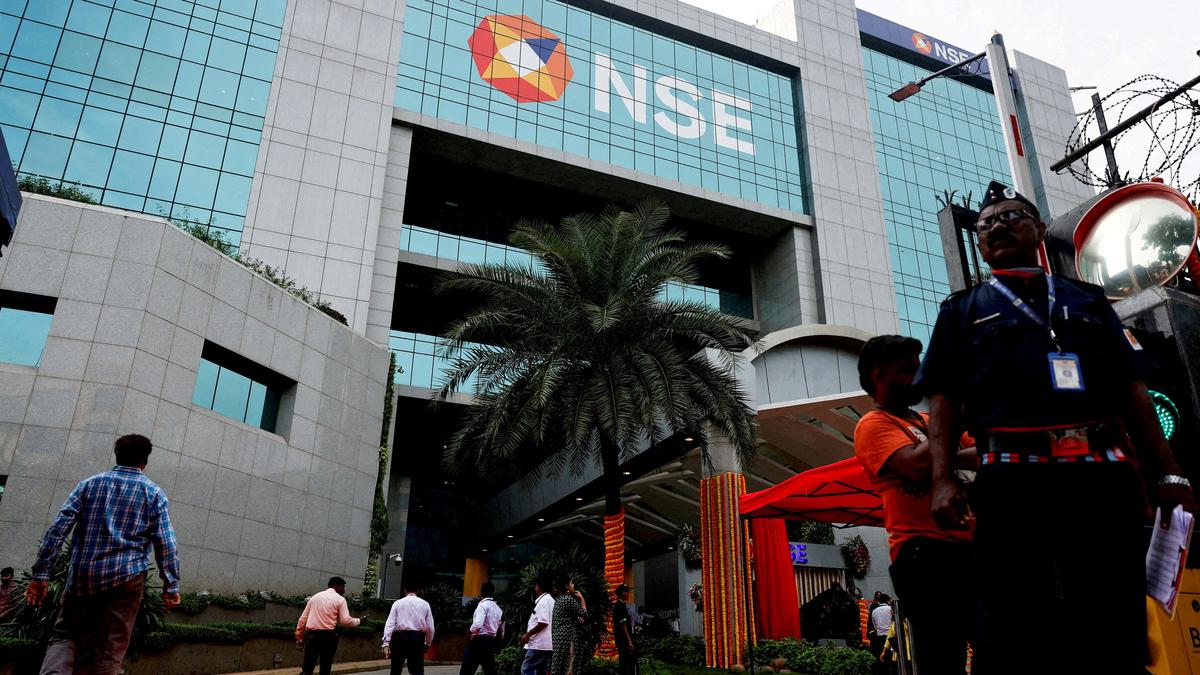
SynopsisNSE’s expected IPO price of Rs 1,700-1,785 could fall below its unlisted-market trading range, potentially leaving investors with notional losses. The listing, expected in September, will test private-market valuations and investor expectations surrounding India’s biggest exchange.AgenciesNSE’s upcoming IPO could be priced below unlisted-market levels, raising the risk of losses for investors who bought shares at higher prices.NSE's much-awaited IPO may leave many unlisted market investors staring at notional losses, with the exchange expected to price the issue below the levels at which its shares have traded privately over the past year.NSE is likely to price its IPO in the range of Rs 1,700-1,785 per share, Bloomberg reported. That is below the Rs 1,950-2,200 range in which NSE shares have traded in the unlisted market over the last one year.The IPO could open around September 18 and the stock may list by September 25, according to sources. The final price band and dates will be known once the exchange files its red herring prospectus.Unlisted investors face discount riskThe expected IPO pricing means investors who bought NSE shares in the unlisted market at higher levels may face losses if the stock lists close to the offer price or below their purchase cost.NSE has been one of the most active and widely tracked names in the unlisted market. Many investors entered the stock ahead of the IPO, betting that the exchange’s strong franchise, dominant position and long wait for listing would lead to a premium debut.But the expected pricing now suggests that the IPO may come at a discount to the private market price. This is not unusual in large IPOs, where issuers and bankers often prefer to leave some room for public market investors. But for those who bought shares at Rs 1,950-2,200, the discount could be painful in the near term.Also Read: NSE cuts IPO price range, giving up shot at India’s top listingThe issue also shows the risk of buying unlisted shares at rich valuations. Unlike listed stocks, unlisted shares trade in a less liquid market, where prices can move sharply on IPO expectations, limited supply and investor demand.IPO launch nears after long waitNSE’s listing has been one of the most-awaited events in India’s capital market. The exchange has been trying to go public for years, but the plan was delayed because of regulatory and legal issues.With Sebi approval now in place, the IPO has moved closer to launch. The IPO is also expected to the largest issue of 2026. NSE is India’s biggest stock exchange and plays a central role in the country’s equity, derivatives and market infrastructure ecosystem.The exchange has a dominant position in equity derivatives and is deeply linked to the growth of India’s capital markets. That is one reason why its unlisted shares attracted strong interest even before the IPO timeline became clear.Valuation test for marquee issueAt the expected price band reported by Bloomberg, NSE’s IPO valuation may be lower than what some unlisted market investors had priced in. In the unlisted market, shares trading around Rs 1,975 imply a valuation of nearly Rs 4.9 lakh crore.A lower IPO valuation will test whether years of anticipation pushed private market prices too high. It may also affect sentiment for other heavily traded unlisted shares, especially where investors have paid a premium only because an IPO is expected.Recent large IPOs have shown a similar trend, where public issue pricing came below unlisted market expectations. This can help attract institutional and retail demand during the IPO, but it also exposes late unlisted buyers to possible mark-to-market losses.Disclosure: This article has been written by Akash Podishetti, who is not a SEBI-registered Research Analyst or an Investment Adviser.Akash Podishetti and their ‘relative(s)’ (as defined under Section 2(77) of the Companies Act, 2013) do not hold any financial interest in the companies mentioned in this article as of the date of publication. The views/recommendations mentioned in this article, wherever applicable, are those of the respective SEBI-registered Research Analyst/brokerage and have been reproduced/reported with due attribution. They should not be construed as the views or recommendations of The Economic Times Digital or the journalist. Readers are advised to consider the original research report and make their investment decisions based on their own assessment. Brokerage disclaimers hereRead More News on(What's moving Sensex and Nifty Track latest market news, stock tips, Budget 2025, Share Market on Budget 2025 and expert advice, on ETMarkets. Also, ETMarkets.com is now on Telegram. For fastest news alerts on financial markets, investment strategies and stocks alerts, subscribe to our Telegram feeds .) Subscribe to ET Prime and read the Economic Times ePaper Online.and Sensex Today. Top Trending Stocks: SBI Share Price, Axis Bank Share Price, HDFC Bank Share Price, Infosys Share Price, Wipro Share Price, NTPC Share Price...moreless(You can now subscribe to our ETMarkets WhatsApp channel)Read More News on(What's moving Sensex and Nifty Track latest market news, stock tips, Budget 2025, Share Market on Budget 2025 and expert advice, on ETMarkets. Also, ETMarkets.com is now on Telegram. For fastest news alerts on financial markets, investment strategies and stocks alerts, subscribe to our Telegram feeds .) Subscribe to ET Prime and read the Economic Times ePaper Online.and Sensex Today. Top Trending Stocks: SBI Share Price, Axis Bank Share Price, HDFC Bank Share Price, Infosys Share Price, Wipro Share Price, NTPC Share Price...moreless
Are NSE unlisted shareholders staring at losses? Here's what IPO pricing indicates
NSEs expected IPO price of Rs 1,700-1,785 could fall below its unlisted-market trading range, potentially leaving investors with notional losses. The listing, expected in September, will test private-market valuations and investor expectations surrounding Indias biggest exchange.
881 words~4 min read