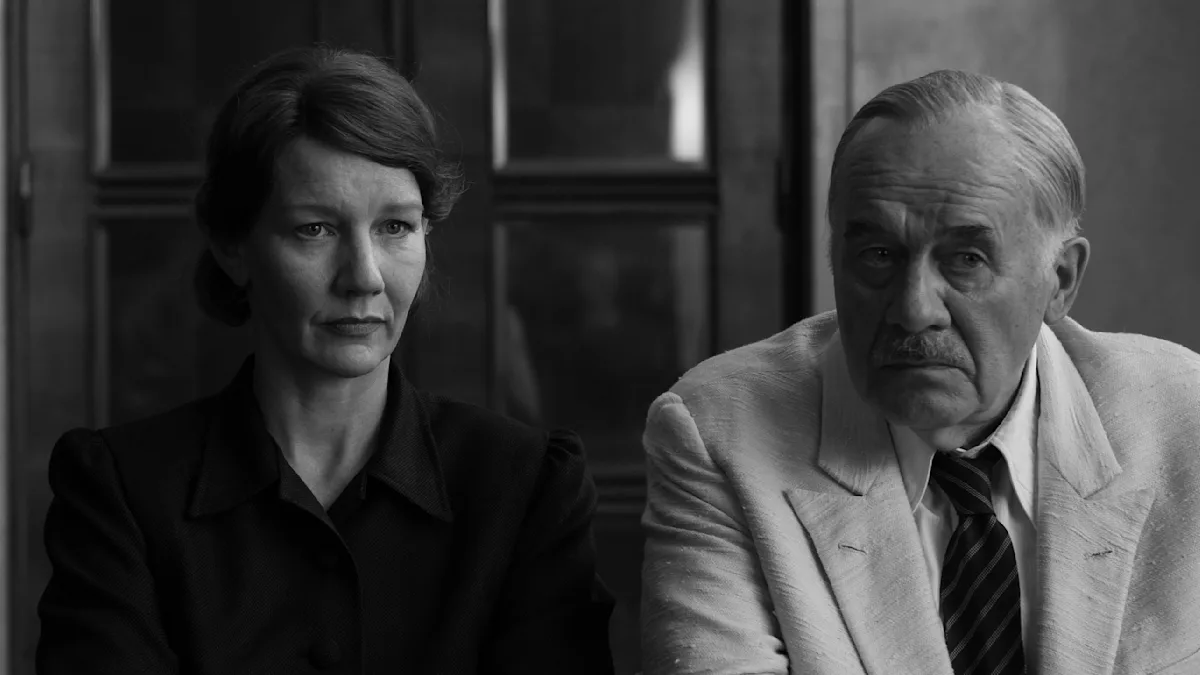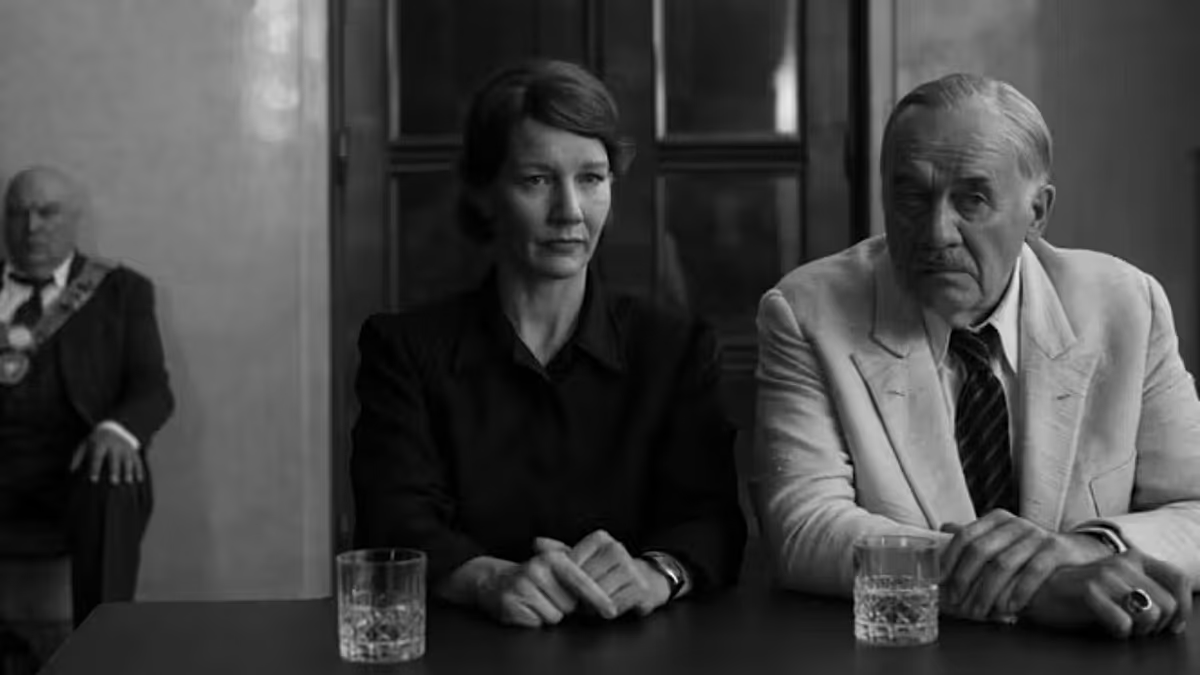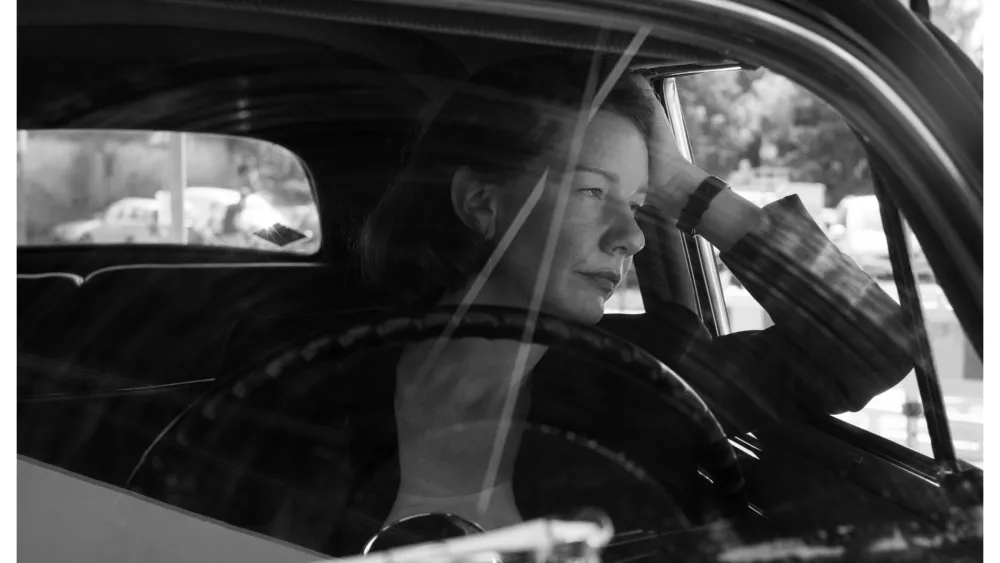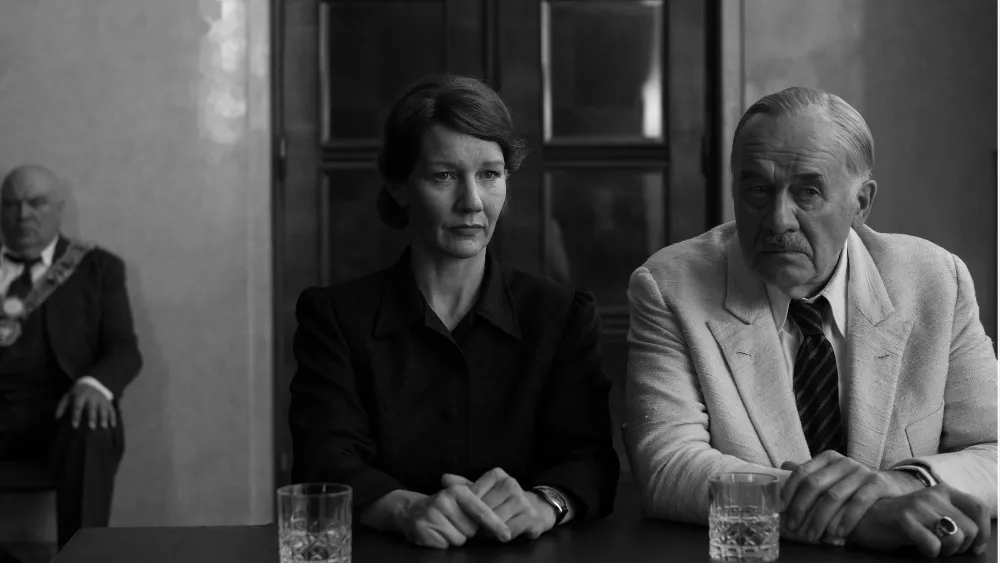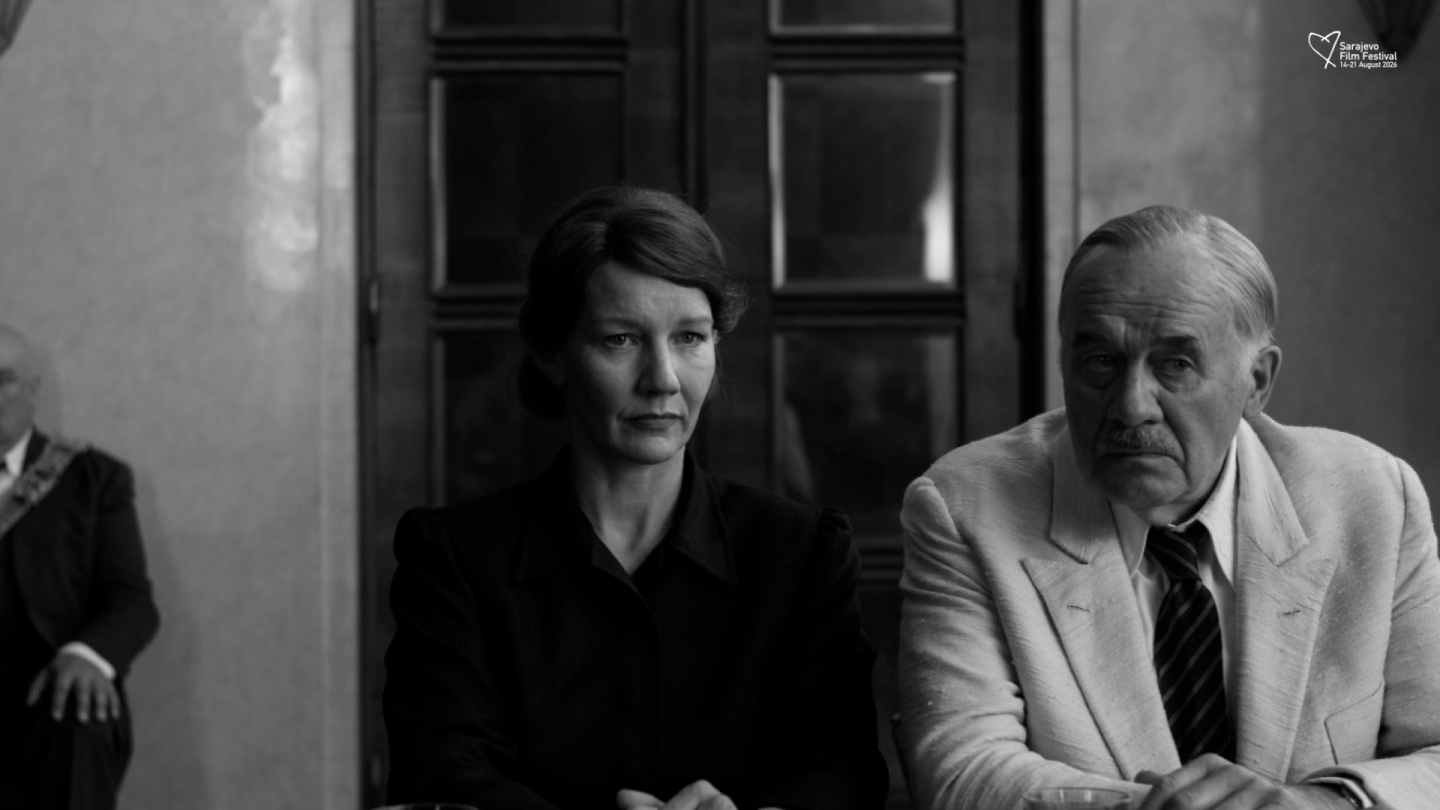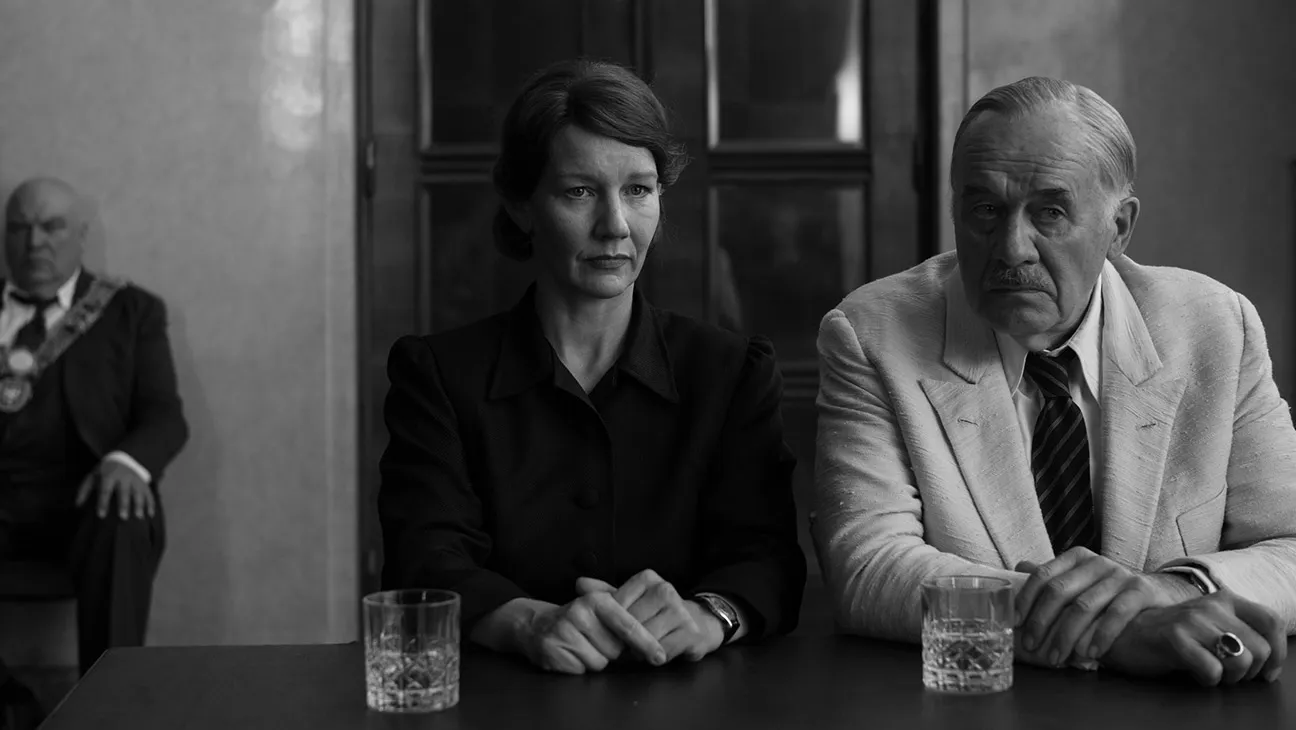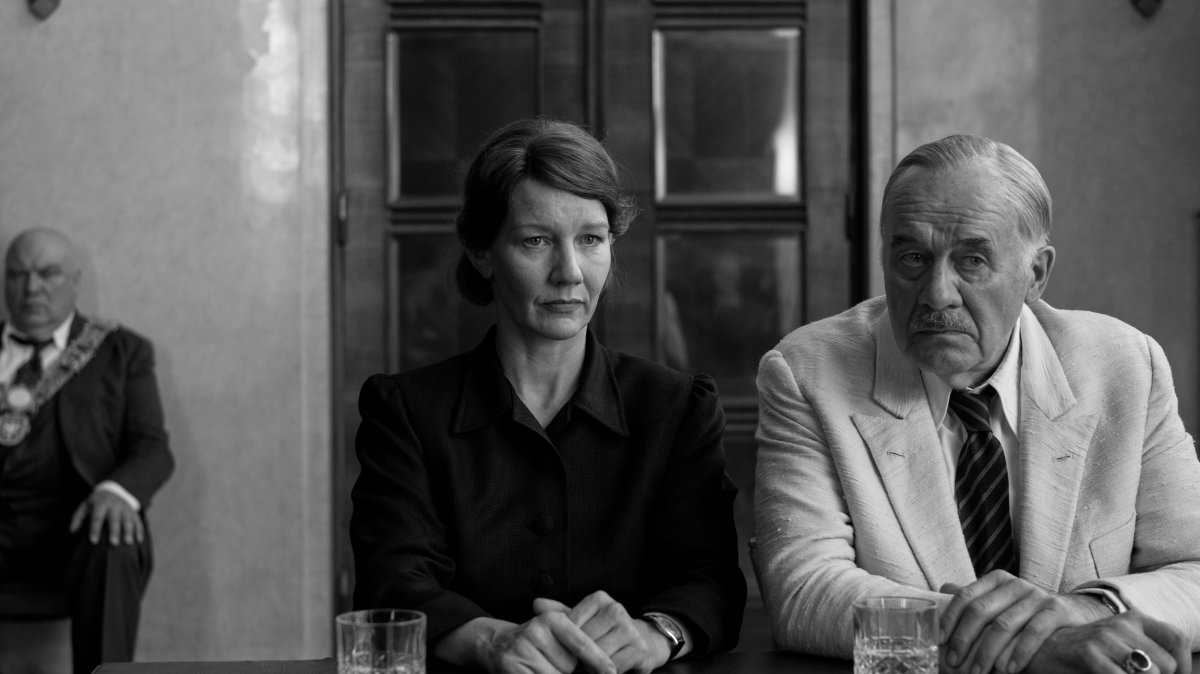
‘Fatherland’, Pawel Pawlikowski’s third black-and-white film in his post-war trilogy, won him the Best Director Award in Cannes. It was also the opening film at the 32nd Sarajevo Film Festival. Much of the film is shot in or from a car and in one of the earlier scenes we drive through a devastated, bombed-out Frankfurt. Watching it in Sarajevo, this proves one of the many mise en abyme moments, as it makes me think of the devastation the town endured during the wars of the 90s, with the destroyed and then restored library building just to the left of the open-air screen.
The film starts with the face of August Diehl, who, for me, can never put a foot wrong and here inhabits Klaus Mann to perfection. Another mise en abyme moment must have been felt in its world premiere in Cannes, when the world-weary Diehl/Mann is the first image to appear in the film, talking on the phone to his sister about how he wants to end it all, in Cannes.
The Manns are a sprawling clan. As a Ph.D. student in Germany, the first mug I bought featured the faces of a few of them. At the time I was only familiar with Thomas Mann, and had bought ‘Buddenbrooks’ in German, thinking I would go through all the Manns during my time in Germany. But Germany, in a trademark gesture, repelled all my attempts at getting close to it and possibly loving it. This, if I flatter myself, is the central theme in ‘Fatherland’. Two Germans return to Germany after they’ve left it because it had become unlovable, try very hard to love it again, but it keeps rejecting their attempts. And this is how Klaus haunts the narrative: he has already seen it’s undoable and has committed the ultimate rejection himself.