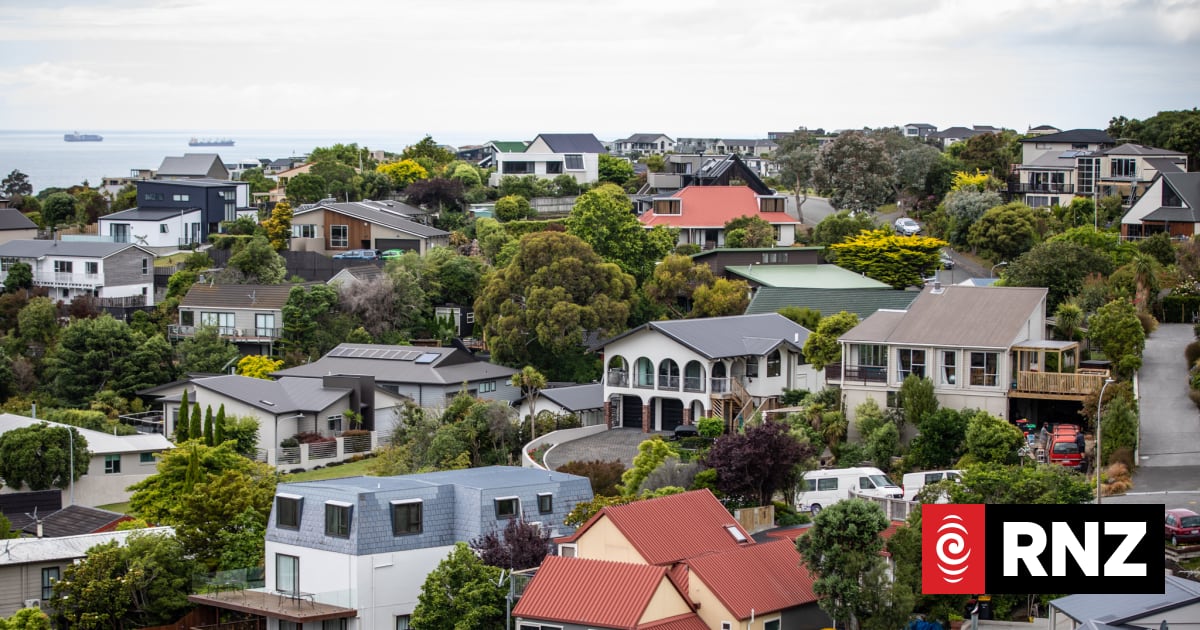
Depending on where you live in the country, house values in your suburb could have increased by 5 percent in the past three months, or townhouse values could have slipped more than 11 percent.New data from Cotality shows almost 80 percent of New Zealand's suburbs recorded falling standalone house values in the three months to September, and just under 75 percent experienced a drop in townhouse values.But in some suburbs, there were double-digit drops for townhouses, as increased supply in the market met sluggish demand.Cotality tracked 1422 suburbs in its latest update and said 750 recorded falls of more than 1 percent. About 300 suburbs had prices that were flat or increasing.For townhouses, 74 percent of suburbs had value drops and 22 suburbs recorded falls of more than 5 percent.Cotality chief property economist Kelvin Davidson described it as "broad-based sluggishness".Sales activity had been slow, he said, and the stock of available listings was high so buyers had the upper hand in negotiations.He said regions where property values were more affordable were the strongest performers when it came to the value of standalone houses.Median values rose by 2 percent or more since June in areas including Pukenui, up 5.1 percent, Waimamaku, up 2.9 percent, Makarewa, up 2.7 percent and Kennington, up 2.5 percent.Blackball on the West Coast was up 2.3 percent and St Arnaud in Tasman was up 2.1 percent. Townhouses increased in value most quickly in Paeroa, Castlecliff and Koutu, Rotorua.Davidson said regional areas were generally experiencing more value growth than Auckland and Wellington.Townhouses had dropped the most in areas such as Beachlands, where they were down 11.2 percent, Mangere, where they were down 9.9 percent, Wiri, down 9.8 percent, Kingsland, down 9.1 percent and Kelburn, down 10.7 percent."In general, our data is not showing that townhouse values are dramatically underperforming their standalone counterparts," Davidson said."But some particular terraced properties in these specific suburbs may be lagging due to characteristics such as unpopular floor/storey layouts or a lack of parking. Anecdotally, sales incentives are becoming more popular too, or unsold stock is sometimes being put out to rent."He said he was hearing about townhouses in the middle of three being trickier to sell, or those without parking or access. "It might be the same floor space spread over three storeys rather than two storeys so the internal layout could be a bit difficult."We hear of sales incentives going on for townhouses where you keep the list price the same but pay the buyer's mortgage for the first year or something."These sorts of things are not going to be picked up in sales records."He said in Auckland there had been a large increase in supply of townhouses but that was increasing supply of property overall for a fixed level of demand."People are still buying townhouses, first-home buyers have been pretty keen on them. That is the new stock, so you're getting around loan-to-value ratios and debt-to-income ratios."Herne Bay still had the country's most expensive houses, at a median $3.03 million and Stonefields had the highest townhouse median, at $1.3 m.Davidson said he expected the subdued conditions in the market to persist."With elevated economic uncertainty, higher mortgage rates, and a labour market recovery delayed until 2027, activity could stay subdued for at least another six months. However, improved affordability should help limit further downside risk."Even in parts of Canterbury, parts of Southland, it's not as if things are really screaming away. Even in so-called resilient markets, (the growth is still low by past standards, but it just looks quite strong compared to Auckland or Wellington) … it's just really difficult at the moment to see what turns this around. There's a real sort of holding pattern vibe to the housing market at the moment with buyers. Buyers do have the power in a lot of areas, but we're not seeing sort of mass layoffs or anything, so people with houses, with mortgages, are generally keeping their job."It's the new people coming into the labour force that are struggling to find work, but they won't have a mortgage probably."He said it could be another six months of "going nowhere".Sign up for Money with Susan Edmunds, a weekly newsletter covering all the things that affect how we make, spend and invest money.
Suburbs where house prices are rising and falling fastest
Depending on where you live in the country, house values in your suburb could have increased by 5 percent in the past three months, or townhouse values could have slipped more than 11 percent.
708 words~3 min read