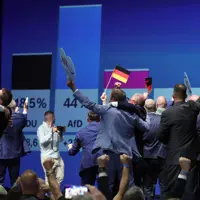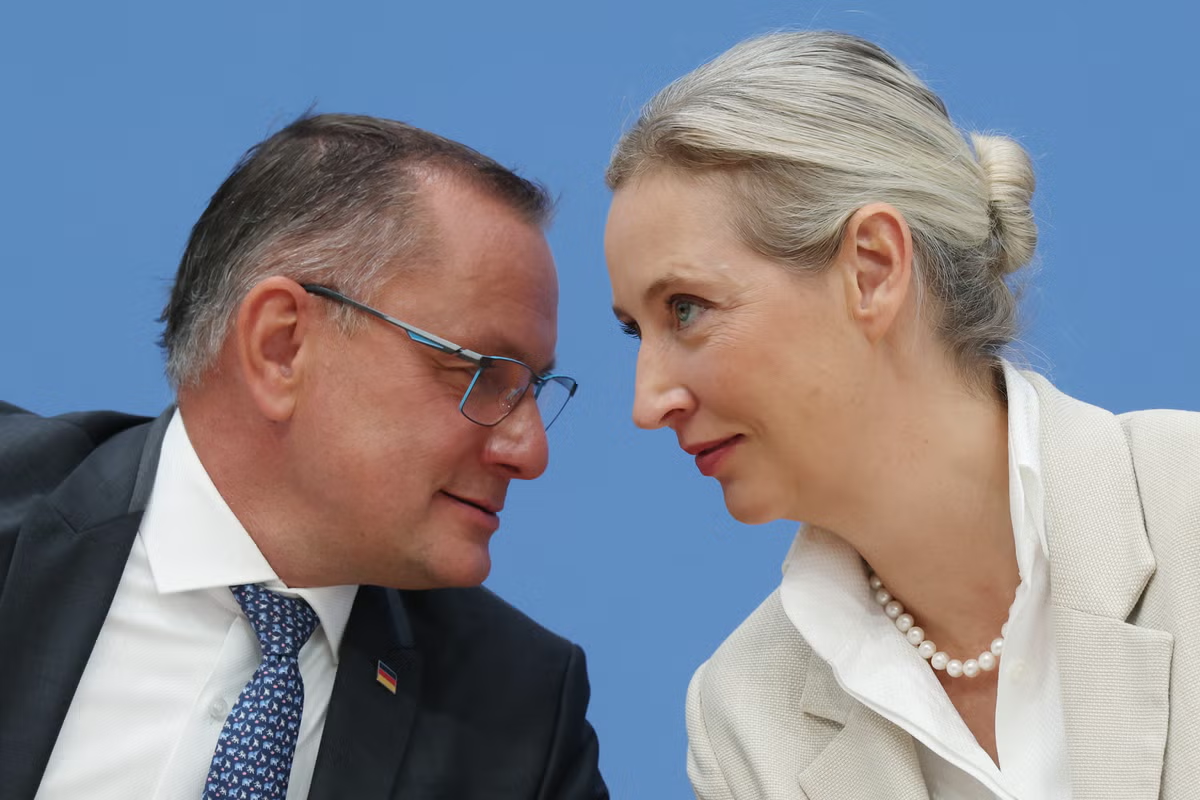
Germany’s far-right Alternative for Germany (AfD) has scored a stunning victory in a regional election, becoming the largest party in Saxony-Anhalt in the first far-right election win of its kind since World War II.Exit polls showed the AfD securing at least 44 per cent of the vote on Sunday, more than doubling its support since the last state election in 2021 and comfortably defeating Chancellor Friedrich Merz’s centre-right CDU, which plunged to 18.5 per cent.The result could give the AfD as many as 39 of the state parliament’s 83 seats, leaving it just short of an outright majority.“We have made history today,” AfD lead candidate Ulrich Siegmund told cheering supporters.National AfD co-leader Alice Weidel described the result as “sensational” and said voters had given the party “a very clear mandate to govern here”.But whether it can actually take power remains uncertain.Germany’s major political parties have maintained a “firewall” against the AfD, refusing to form coalitions with the party.The CDU has reiterated it will not co-operate with the AfD, meaning it may have to attempt to form an unwieldy coalition with several smaller parties to remain in government.The result immediately triggered protests in the state capital Magdeburg, with thousands of AfD opponents demonstrating against the party during the campaign.Banners carried messages including “life is better without Nazis”.“I am personally appalled by this election result,” said Josef Schuster, president of Germany’s Central Council of Jews.Germany’s domestic intelligence agency classifies the AfD’s Saxony-Anhalt branch, led by Mr Siegmund, as “right-wing extremist”, citing links to ethno-nationalist groups and think tanks.Several of Mr Siegmund’s staffers and party colleagues have also previously belonged to the now-banned neo-Nazi group Heimattreue Deutsche Jugend, or Patriotic German Youth.Mr Siegmund has defended his team, saying he was “not interested in what happened 20 or 25 years ago”.The 35-year-old has campaigned on a hard line anti-immigration platform, promising a “remigration and deportation offensive” targeting irregular migrants.The AfD also wants to remove rainbow flags from public schools, reduce the emphasis on Nazi Germany in history teaching and introduce “baby bonuses” to encourage families to have more children.The party has tapped into anger over the economic divide between former communist East Germany and the wealthier west, as well as nostalgia for life before German reunification.Mr Siegmund, a former entrepreneur with a huge social media following, has become a cult-like figure among supporters, who have been seen wearing T-shirts bearing his likeness.He has ambitions to use the state victory as a springboard for national power at the 2029 federal election.The shock result is also a major blow for Mr Merz, whose CDU has struggled in recent polling while his government faces growing frustration over the economy and immigration.“This will most likely trigger a period of serious and potentially noisy soul-searching within the CDU,” Berenberg economist Holger Schmieding said.Lars Klingbeil, co-leader of the centre-left SPD, called the result “saddening” and a “turning point” for Germany. – with AFP
‘Nazis’: Shock German election result
Germany’s far-right Alternative for Germany (AfD) has scored a stunning victory in a regional election, becoming the largest party in Saxony-Anhalt in the first far-right election win of its kind since World War II.
483 words~2 min read