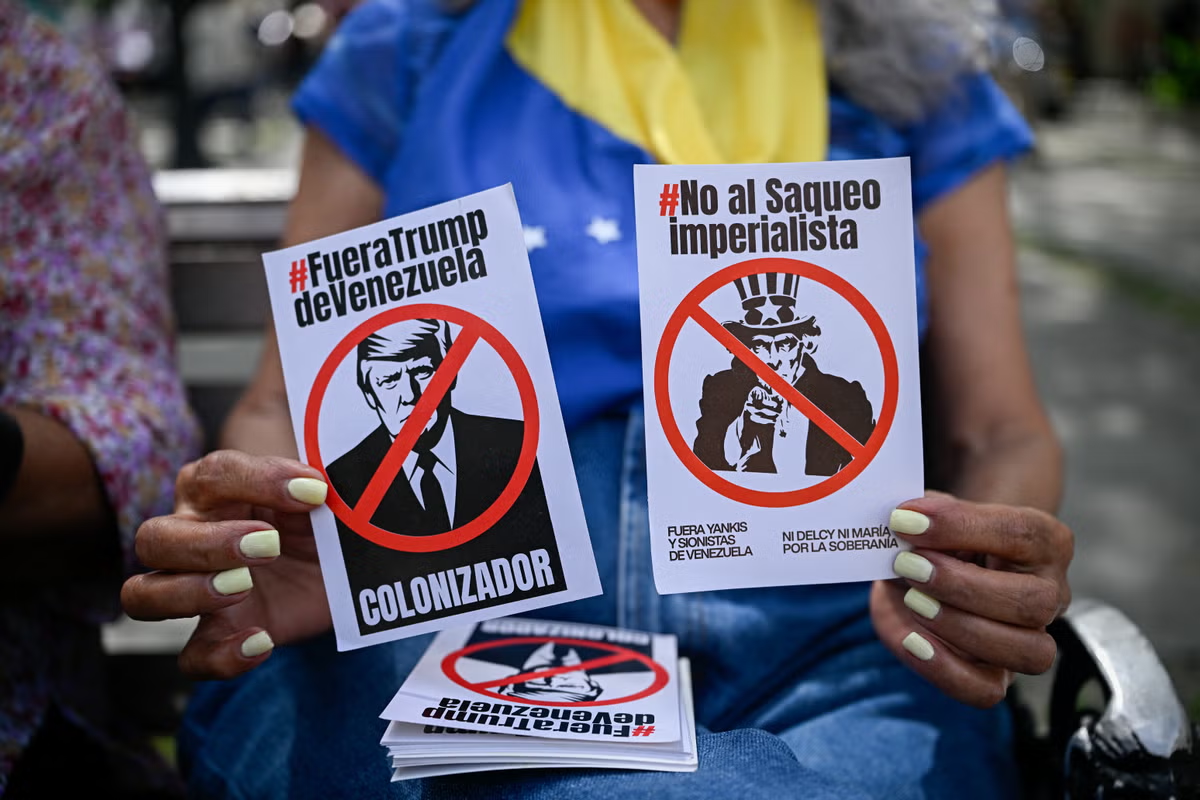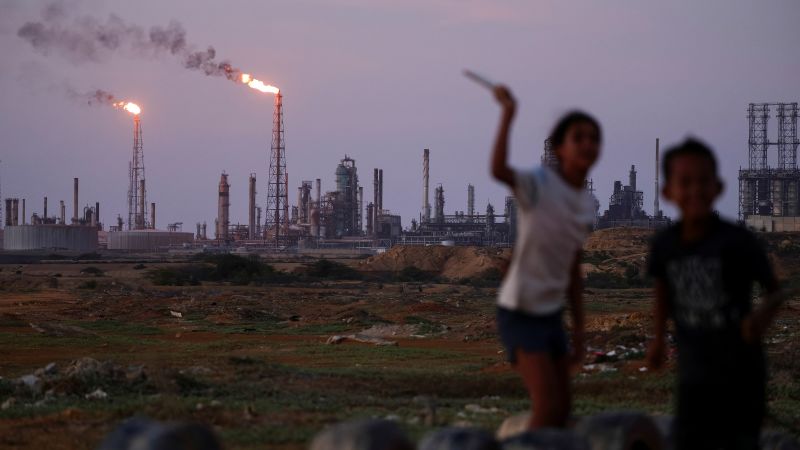
Unprecedented in nature and scope, the just-signed oil deal between the US and Venezuela's unelected president marks a significant escalation in US President Donald Trump’s economic interventionism. Trump's early claims after the shock ouster of then-President Nicolas Maduro in January that the US would be "in charge" of Venezuela's oil sector were met with significant skepticism — not least because of Trump's penchant for hyperbole, but also since it would amount to the biggest challenge to resource sovereignty this side of the 1991 Gulf War. While details remain thin, those that have been publicized present a deal without precedent — even for an industry with a history of resource colonialism. The US and Venezuela signed this week what appears to be the bilateral framework green-lighting the US government's stunning partnership with Venezuela's second-largest oil producer that will see the US Department of Defense take a passive 35% stake in privately held North American Blue Energy Partners (Nabep). Nabep has meanwhile secured rights to 17 additional oil fields that contain a claimed 65 billion barrels of proved oil reserves, or around one-fifth of Venezuela’s oil riches. The US' passive holding — akin to BP's stake in Rosneft or TotalEnergies' in Novatek — effectively grants Washington rights to "book" proportional oil reserves, production and profits, and receive dividends; the 22.75 billion bbl ascribed to the US' Nabep stake is roughly half the size of the entire US reserve base. Zero capital investment is required under a passive holding, in contrast to nonoperated positions in specific assets. The closest analog dates back to 1914, when the British government took a 51% stake in the Anglo-Persian Oil Co. to ensure sufficient oil supplies for the Royal Navy, via Persia/Iran. But that deal at least involved the British government purchasing its interest; with Nabep, the US government stake looks to be a free transfer.
Venezuela Deal Marks US Shift to Resource Colonialism
No matter how much investment ultimately flows, the unprecedented nature of the agreement — with the US accessing foreign reserves and discounted output — can't be overstated.
309 words~1 min read