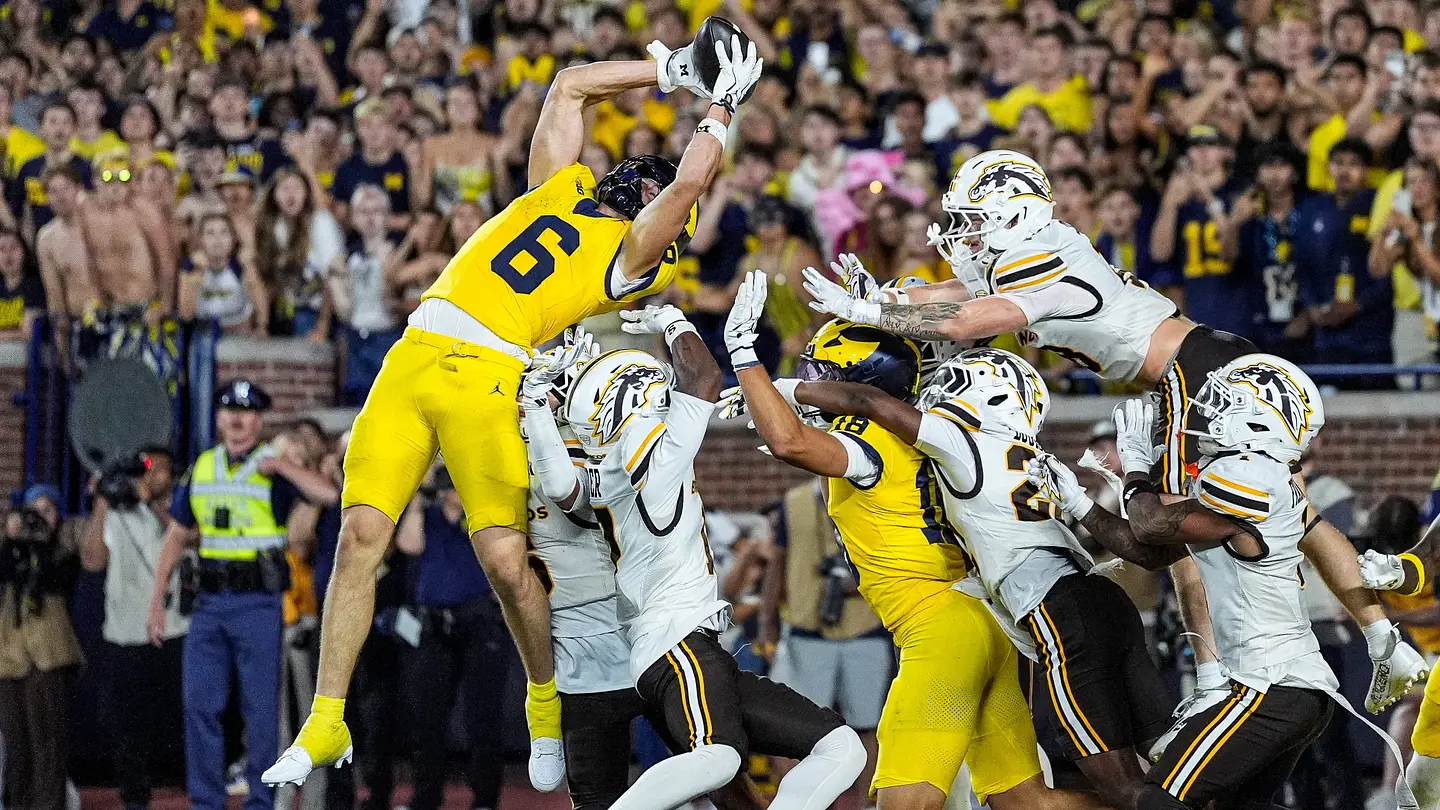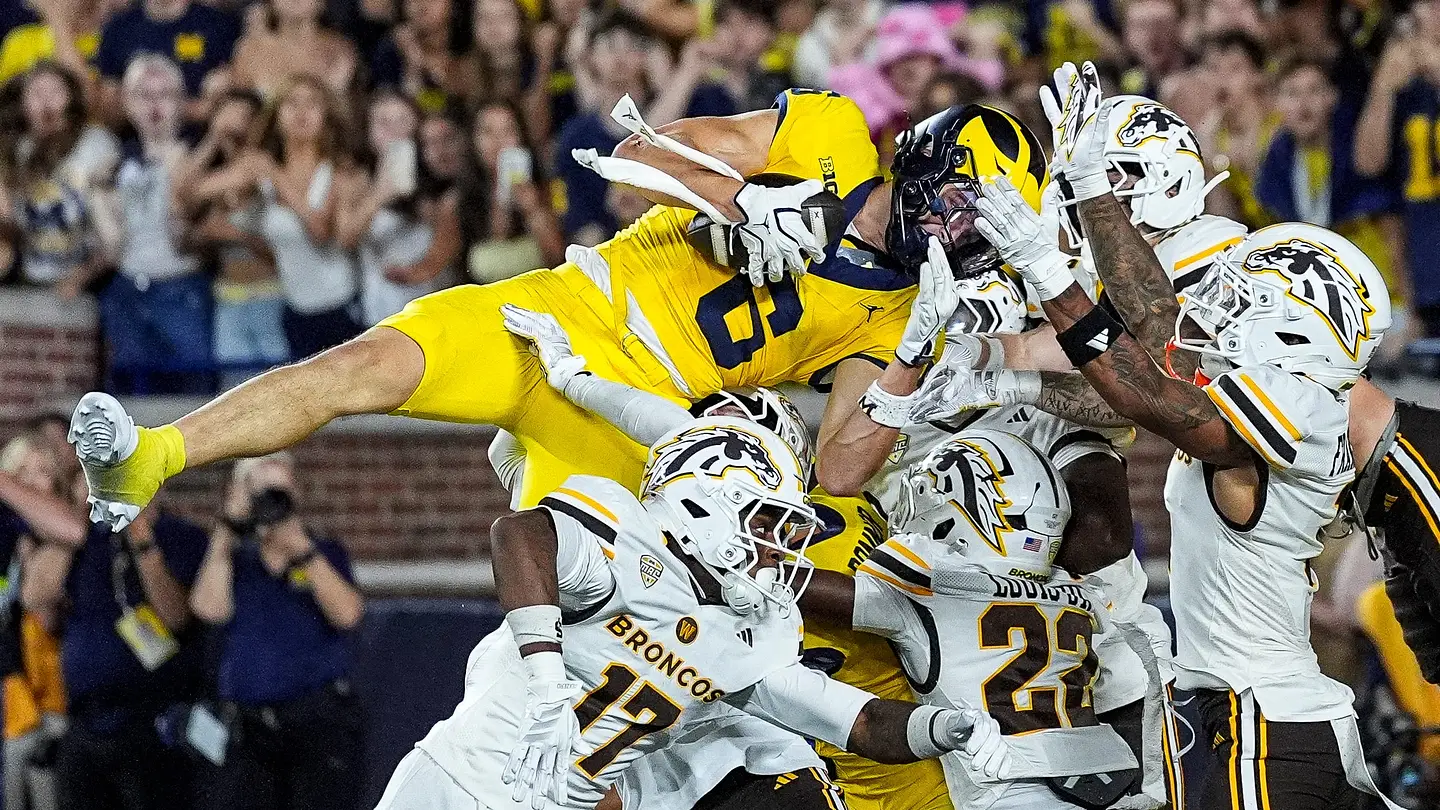
Well, that was definitely one of the weirdest Week 1s I can recall.I’m glad we got in a couple of fun games at the end in Ole Miss-Louisville and SMU-Florida State. Otherwise, I fear all anyone will remember is that one second in Ann Arbor.According to the Big Ten, there is a secret clock that is more accurate than the TV clock. Why don’t they let the networks have access to the more accurate clock so we can actually know how much time is left in the game? — Nick D.It speaks to just how clumsily this situation was handled by all involved that “secret clock” is now part of the college football lexicon. At this point, there’s probably no follow-up clarification anyone could offer that would put the genie back in the bottle. But I’ll try.There aren’t two clocks; there are two video feeds of the stadium clock — the one you see on TV and the one the Big Ten replay command center sees. And those feeds are supposed to be synced, but in this case, they were off. Probably only by a fraction of a second, but enough to change the outcome of a football game.And now we find out, three days after the fact, the replay officials are, in fact, supposed to use the TV version in this admittedly very specific situation.The Big Ten, you’ll recall, sent out a statement two hours after the Michigan game that included the exact video their officials were seeing from the back of the end zone, with a video of the clock at 0:01 matched up alongside it. It was the league’s way of saying, “See, we got it right. Not our fault NBC was showing the wrong time.”But on Tuesday, NCAA football secretary-rules editor Matt Young sent out an interpretation that said when officials are deciding at the end of a half whether time should be restored, “the replay official’s decision will be based on the embedded game clock contained within the (TV) program feed. If the broadcaster is unable to provide an embedded game clock, the replay official will use the game-clock graphic displayed as part of the broadcast feed.”(Note: I can tell you from my 15-minute stint in television at Fox, the “program feed” is the one that comes straight from the production truck, before it gets transmitted by the network to the public. Figured that would come in handy one day.)In other words, it ultimately didn’t matter which of the two feeds was “right,” because, based on this supposed protocol that no one had ever bothered to put in writing, they’re supposed to default to the TV version regardless. Information that really should have been brought to our attention YESTERDAY. (Well, Saturday in this case.)Maybe Western Michigan can print out the memo and hang it in its locker room.This whole maddening episode is the perfect convergence of every possible form of college football dysfunction.While I respect the Big Ten for trying to be transparent by releasing the video/audio, the lack of explanation for why the officials were seeing a different clock than the viewers at home introduced a new level of conspiracy theories.I blame NBC for going off the air that night without explaining anything, then going radio silent save for a two-sentence statement it had anchor John Fanta read on air the next day during the Apple Cup.And I blame the entire college football officiating enterprise for being so disorganized. It was the Big Ten’s own officials working the game. They apparently didn’t follow a national protocol. Though perhaps that’s not their fault, because said protocol was never written down anywhere and was apparently just an “understanding.”Just an all-out dumpster fire. And it’s only Week 1.The Big Ten replay protocol explainedBruce FeldmanI have asked this question for several years without an answer, maybe because the answer was too obvious. But is it finally time to do away with conference officials? Imagine the added outrage if it were NFC West officials who didn’t call pass interference against the Los Angeles Rams in the 2018 NFC Championship. — Steve M.A thousand percent, yes. It’s truly embarrassing this is still a thing in 2026. It’s one of the many college football governance things that have no logical explanation other than “that’s the way they’ve always done it.”The problem is that it would require the conferences to voluntarily give up control of something. Because, as we know, no one is truly in charge of college football, not even the NCAA. There is a national officiating coordinator, Ron Snodgrass, who tries to set national standards when it comes to administering and interpreting the rules, but then each conference hires, oversees and evaluates its own crews. Which inevitably leads to inconsistency and accusations of bias.In a story Chris Vannini and I wrote last year about the state of officiating, SEC coordinator John McDaid, whose purview also includes the Sun Belt, noted that his office alone has to evaluate the same number of crews as the NFL (17), so it would be impractical to expect one person or office to handle four to five times that many crews nationally. Fair point.But you’d think they’d be more motivated to figure something out, given the billions of dollars riding on the outcome of college football games. Nothing is more important than the officials’ credibility, yet they continue a practice that so obviously undermines their credibility, deserved or not.And if nothing else — why on earth are conference officials working non-conference games involving their own schools?? They’re lucky that game involved a MAC school, given the Big Ten and MAC have the same officiating coordinator. Can you imagine if that same thing happened in a Michigan-Alabama game where the Big Ten provided the officials? People would burn down the streets.College football is the nation’s second-most popular sport, enjoyed by tens of millions of people. Obviously, a game should never be decided by unsynced clocks. But if it does, the explanation should not come from the winning team’s conference in the form of a statement that looks like the opening credits of a mid-80s horror movie.
What happened with the Big Ten’s ‘secret clock’ and why are conference officials a thing?
The Michigan clock explanation only increased confusing and helped make Week 1 one of the strangest in recent years.
2,809 words~13 min read