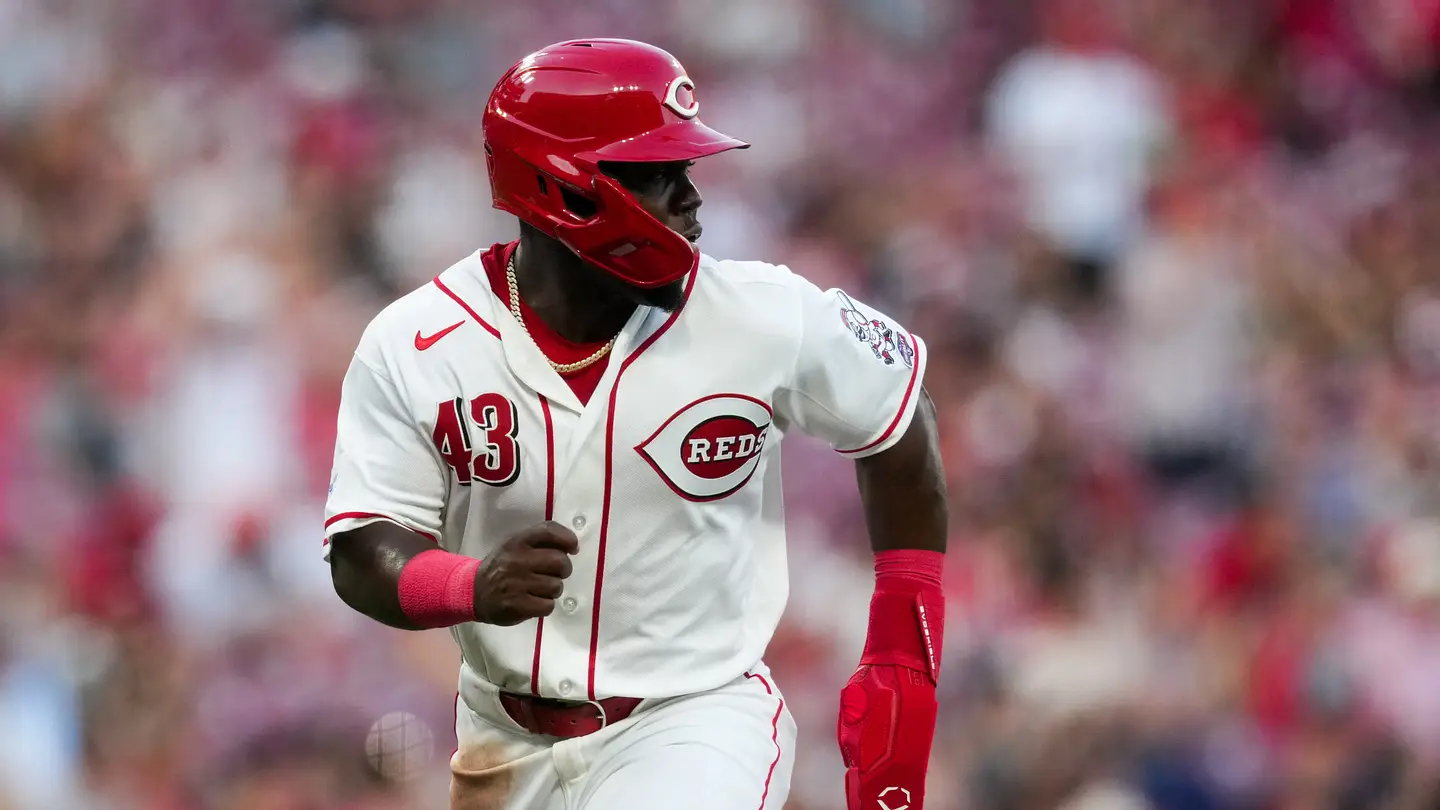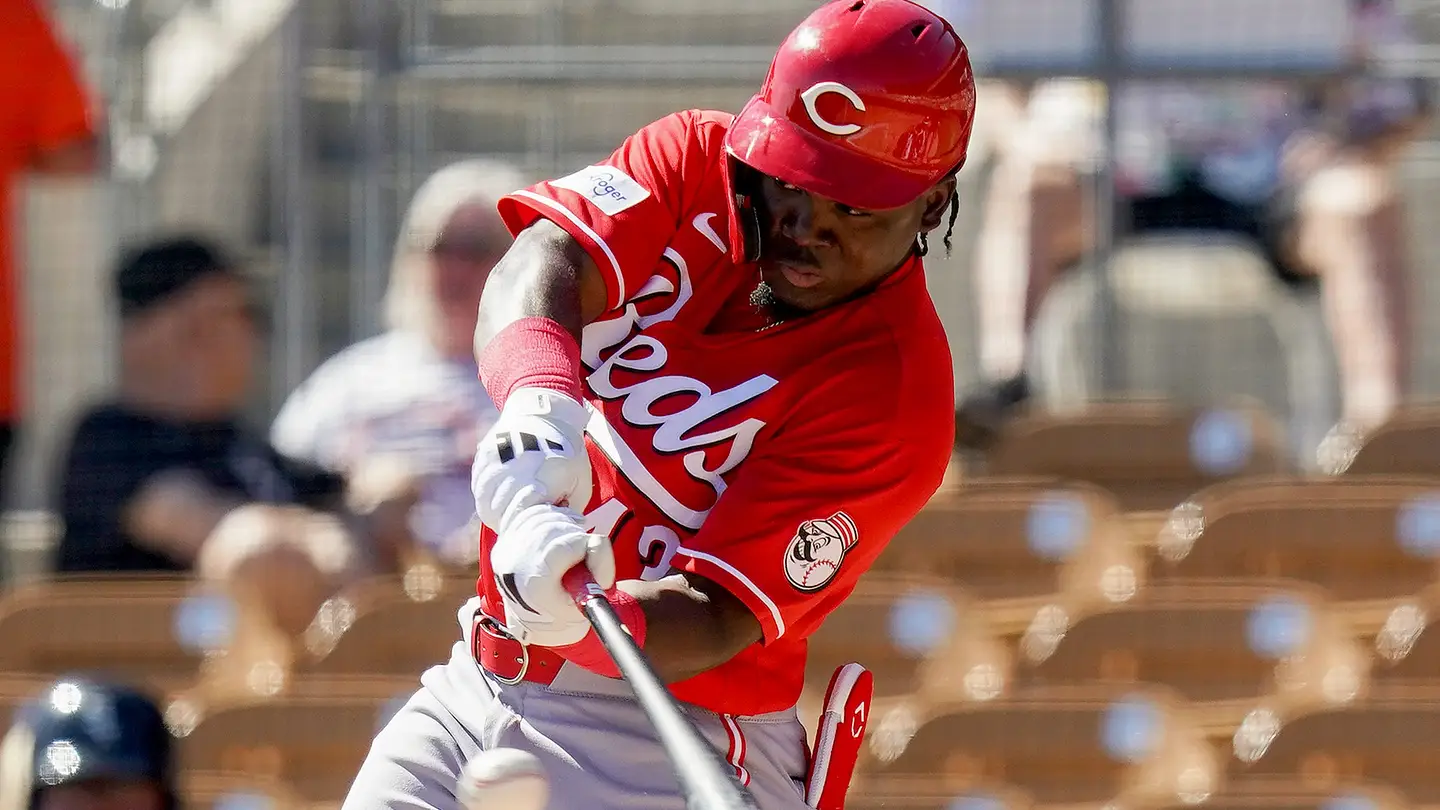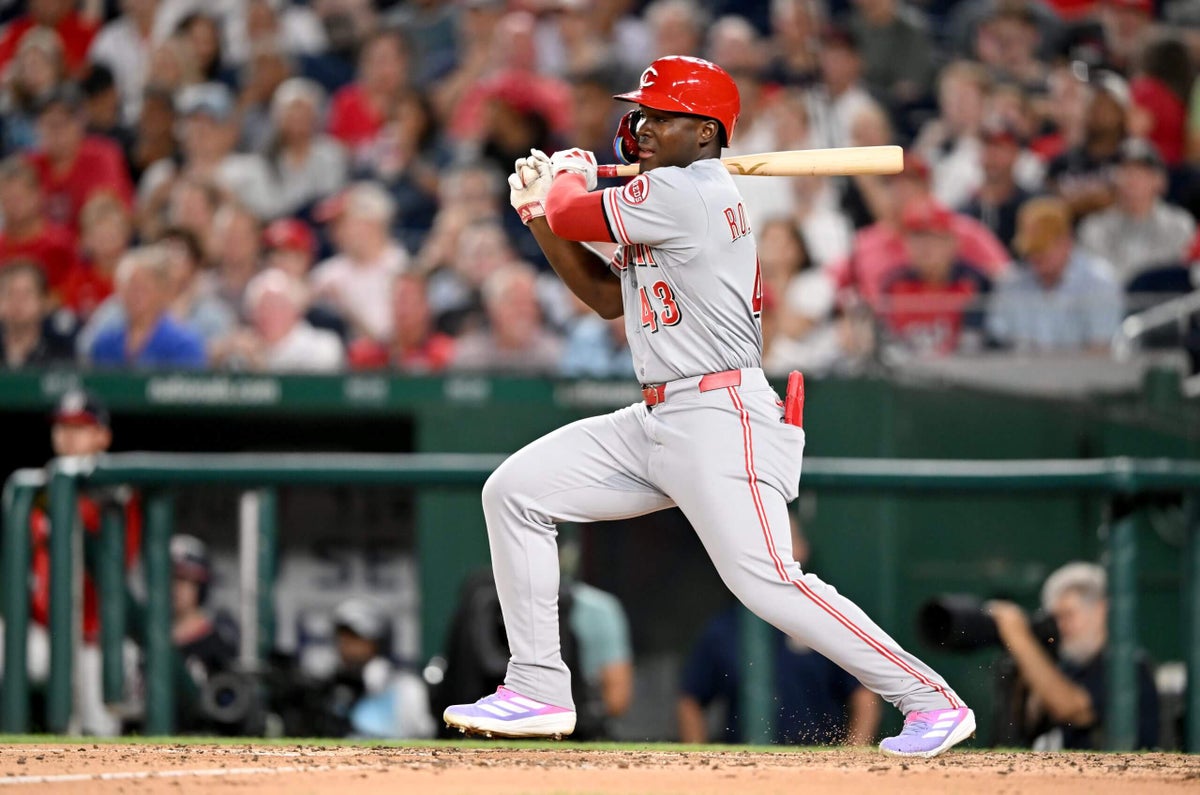
CINCINNATI — For Cincinnati Reds fans who are still wearing rose colored glasses amid a disappointing 2026, squinting in the direction of 22-year-old outfielder Héctor Rodríguez might conjure up visions of a future Hall of Famer.There’s the fire-hydrant physique, a flat bat path that stays in the zone longer than those of other hitters and lightning-quick hands that often prove to be the difference between making contact and doing damage.To Reds hitting coach Chris Valaika, who spent three years in the same role with Cleveland, the desire to compare Rodríguez to Guardians third baseman José Ramírez seems natural, even though the rookie has nearly 6,300 fewer at-bats and 1,700 games less in the major leagues.“I see it all the time — I double-take,” Valaika said. “I had José in Cleveland and the mannerisms, the way they go about it. The looseness, the freeness in the swing.”“When Hector gets off balance, he can still flick the ball to the outfield and the ball will jump off his bat,” Valaika said. “José’s made a career of hitting a changeup the other way, smoking something. It doesn’t have to be light-tower power, but José hits 30-plus homers a year. He knows how to get to his power and I think Héctor is going down that same path.”Reds manager Terry Francona, who managed Cleveland for the first 11 seasons of Ramírez’s career, chooses to see things differently, not necessarily due to his opinion of Rodríguez’s ability, but the esteem in which he holds Ramírez.“That might be a little premature for me,” Francona said. “What Héctor has is incredible hitters’ hands. There are some other things that he’s growing and hopefully going to get better. When he stays in his feet better, he’s going to have even better hands, which is exciting. But I wouldn’t go with the José thing.”Given that Ramírez is a seven-time All-Star with six top-five AL MVP finishes who is nearing 300 career home runs, that’s probably a fair concession at this stage of their respective careers. But there are enough early similarities to make Reds fans wonder “what if.”Rodríguez, like Ramírez, wasn’t a top prospect early in his career, in part because of his height (5-foot-10) and stocky body — Ramírez is now 5-foot-8 and 190 pounds, but weighed nearly 50 pounds less when he was signed at 17 for $50,000 following a showcase against higher-regarded players from Cleveland’s Dominican academy in November 2009.The Reds acquired Rodríguez at the trade deadline in 2022 in a flurry of moves that brought in several more heralded youngsters to the Reds organization, including infielders and top-100 prospects Noelvi Marte and Edwin Arroyo as well as infielders Spencer Steer and Christian Encarnacion-Strand. Rodríguez, then an infielder in Class A for the New York Mets, was acquired along with right-hander Jose Acuña for outfielder Tyler Naquin and lefty Phillip Diehl. At the time, it was seen as a deal for a pair of lottery tickets.Rodríguez, though, turned out to be more than a $1 scratch-off as he, like Ramírez before him, just continued to hit at the minor-league level.As Rodríguez moved through the minor leagues, he started comparing himself to Ramírez. Others then followed suit.“I hear it all the time,” Rodríguez said this weekend through Reds interpreter Randy Escabi. “He’s a tremendous player on and off the field. The way he goes about his work, his discipline — tremendous player. But I always have confidence in myself. That’s someone I look up to a lot.”Before the 2024 season, Rodríguez got to watch Ramírez up close as his teammate with Leones del Escogido in the Dominican Republic, both players’ home country. Rodríguez said that not only did he listen to every word Ramírez said, he also watched him constantly — how Ramírez prepared, how he played the game and how he handled himself off the field.“He’s a game changer,” Rodríguez said of Ramírez. “The way he goes about his work is amazing, and the vibe he brings to the clubhouse and the guys is incredible.”Rodríguez dominated Double A in 2025 and, as expected, saw his numbers dip in Triple A, but he then hit .301/.375/.504 in 31 games for Escogido. Valaika said that experience helped get Rodríguez ready both for his first big-league spring training and his eventual transition to the majors, where he debuted last month.“Playing in those environments helped that transition to this level and playing in front of big crowds, the urgency to win every day and the pressure this level causes,” Valaika said. “I’ve been really pleased with it. I’m excited to keep watching and coming up from Triple A and then throwing him right in the leadoff spot. He’s done a great job for us.”Although Rodríguez had an OPS of .881 in Triple A with 27 homers this season, that success didn’t immediately translate to the big leagues. A free-swinger, Rodríguez had two walks before he got his first big-league hit — a double against the Washington Nationals on Aug. 8. He had as many walks as hits (three) through his first 11 games.Around that time, Valaika told Rodríguez he didn’t have to try to be anything that he wasn’t or live up to anyone else’s expectations. Yes, Rodríguez’s teammate Sal Stewart was well on his way to winning the National League Rookie of the Year this year with his advanced approach at the plate, knowing the pitchers and how to work a count and taking his walks when they were there. That, at least at first, is what Rodríguez thought he had to do immediately in the big leagues.“We saw him in spring training and he definitely had a free-swinging profile, but he’s done that through the minor leagues and the numbers have been pretty stable,” Valaika said.Rodríguez had his first walk before his first hit and through his first 11 games, he had three walks and three hits, hitting just .097.“I think there was a little hesitation where he didn’t really want to chase — he was trying to be more selective,” Valaika said. “We just kind of freed him up, told him he was here for a reason — go play. If you chase, we’ll deal with it then. But don’t come up here and try to be something that you’re not to try to fit in at this level.”In his last 15 games before Tuesday’s game in Los Angeles, Rodríguez has been on base in each game and recorded 22 hits and has more home runs (five) than walks (four) while hitting .367/.415/.650.“It was something that I needed because everything was going so fast,” Rodríguez said, according to Escabi. “It was something that I actually truly needed to hear and it slowed down the game a little bit more.”The left-handed-hitting Rodríguez has been put in the leadoff spot in seven of his first 24 big-league starts. The Reds have been searching for a hitter at the top of the lineup almost all season, ultimately putting shortstop Elly De La Cruz there for the majority of the year, even if that’s not the place that Francona would like to see his superstar shortstop.Rodríguez, who has above-average speed, isn’t the prototypical leadoff man who sees a ton of pitches and works counts, but if he can get on base like he has so far in his career, how he does it isn’t as important as being there for De La Cruz and Stewart behind him.While Rodríguez’s bat is what got him to the big leagues, the other parts of his game will need to improve for him to stick around and be the player the Reds hope he can. That’s where Ramírez comes in as a role model.Ramírez is more than just a hitting savant, he’s an all-around player — an excellent fielder, one of the best baserunners in the game and a team leader. Rodríguez, so far, has shown that he has plenty of room to grow defensively and on the bases, getting thrown out trying to stretch a single into a double twice in the same game last weekend against the Milwaukee Brewers.Rodríguez has speed and a strong arm, but he’ll need to improve his defense to stay in the team’s lineup or hit enough to be a designated hitter, which would limit his value to the team.But at the plate, Rodríguez has done enough to keep the comparisons to his fellow Dominican coming. Ramírez was moved between the big leagues and minor leagues early in his career, but Rodríguez’s late-season foray is showing that he may be able to stick with his bat and work on the other parts of his game in the meantime.“(Ramírez) has 13 years in the big leagues of perfecting his craft and learning — he’s learned to embrace that and he’s refined it,” Valaika said. “It’s not that he took away his aggression, it was just knowing the times to use it. Other times, you listen to the game. The game has a heartbeat that’s going to ask something of you in every situation and José’s gotten to that point. Héctor is going down that same path.”The Athletic’s Zack Meisel contributed to this story.
Want the best-case future for Reds rookie Héctor Rodríguez? Look at José Ramírez
Rodriguez doesn't even have 100 major-league at bats to his name, but his swing is already conjuring familiar visions.
1,523 words~7 min read