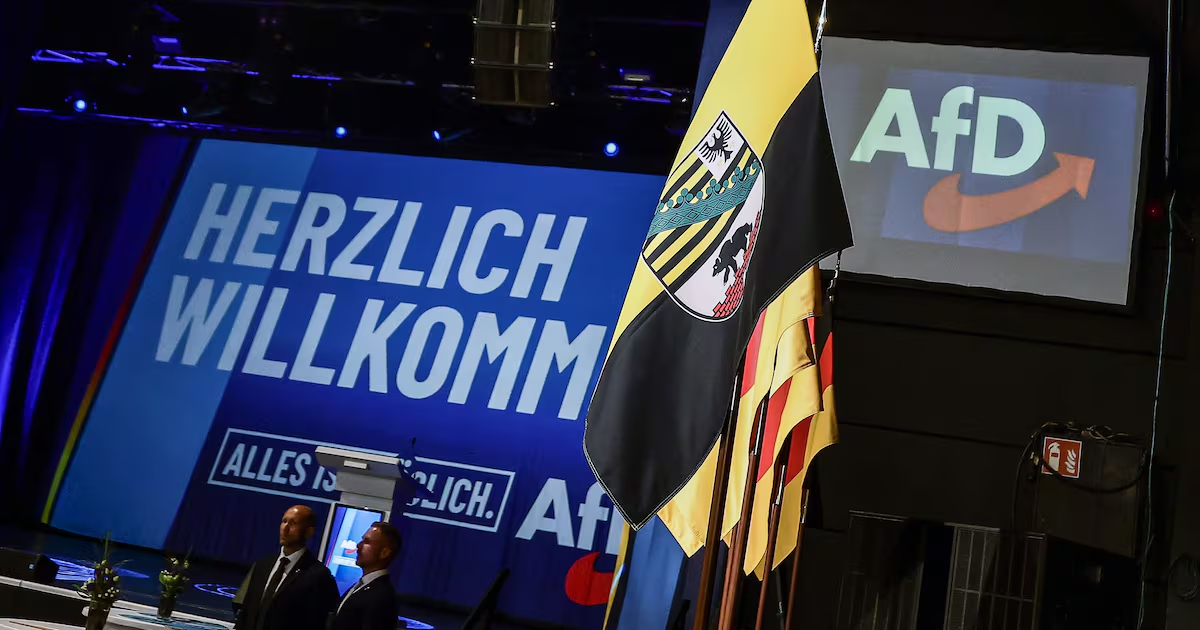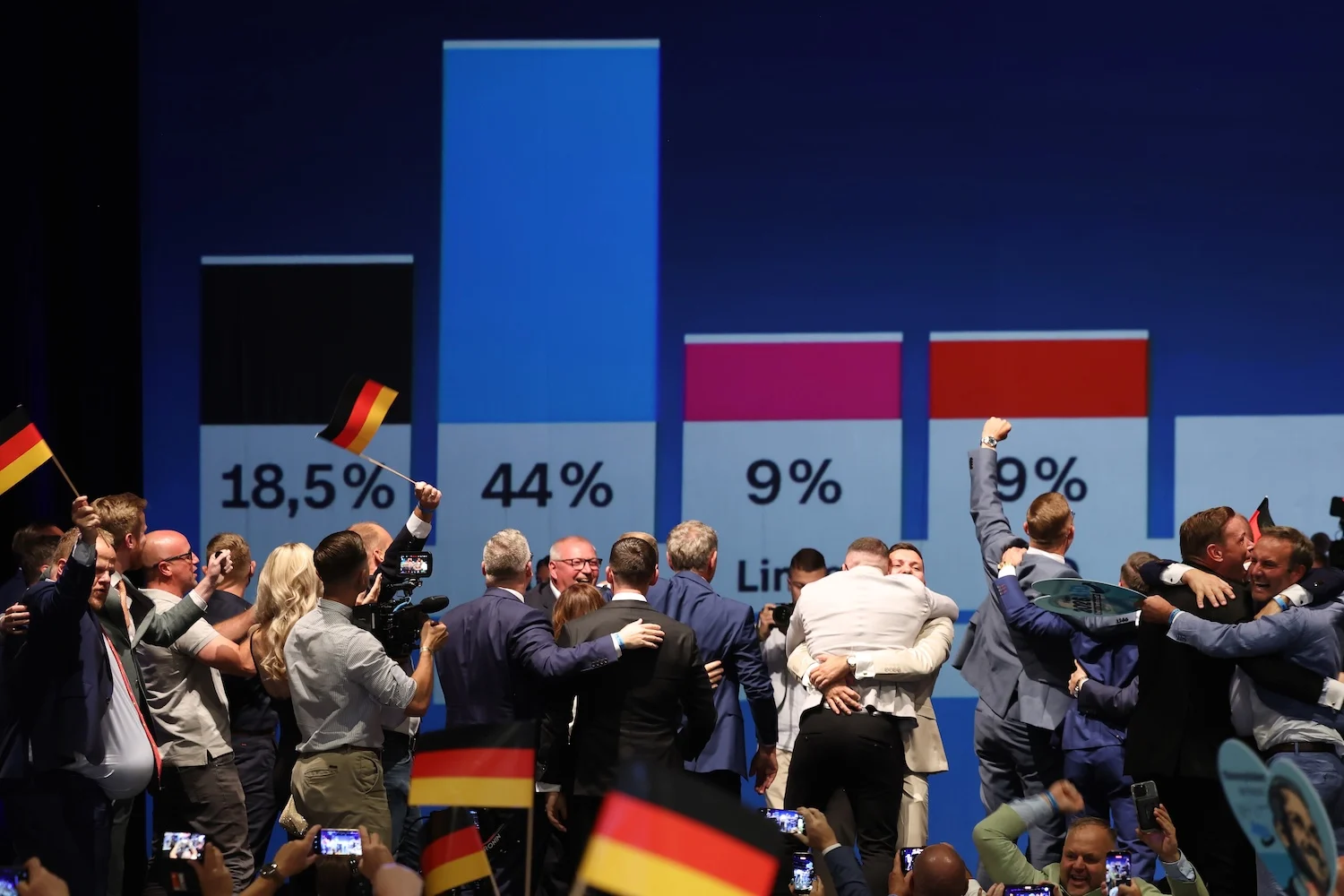
Has a small, largely elderly, left-behind pocket of Germany struck a fatal blow against its postwar liberal democracy? That is the question many are asking after Sunday’s election in the eastern state of Saxony-Anhalt, which saw the Alternative for Germany (AfD) trounce the mainstream parties to stand on the verge of power—the first time a far-right party would do so in Germany since the fall of the Nazi regime.
As has been the case when other tsunamis have struck—Donald Trump’s presidential election victories in the United States, Brexit in the United Kingdom, to name but two of many around the world—the response of those in the political center has ranged from fury to consternation to despair. But most of all, a sense of dumbstruck paralysis. They could see it coming; they took some action, but they were swept away. And now, as they face the consequences, so the recriminations begin.
Has a small, largely elderly, left-behind pocket of Germany struck a fatal blow against its postwar liberal democracy? That is the question many are asking after Sunday’s election in the eastern state of Saxony-Anhalt, which saw the Alternative for Germany (AfD) trounce the mainstream parties to stand on the verge of power—the first time a far-right party would do so in Germany since the fall of the Nazi regime.