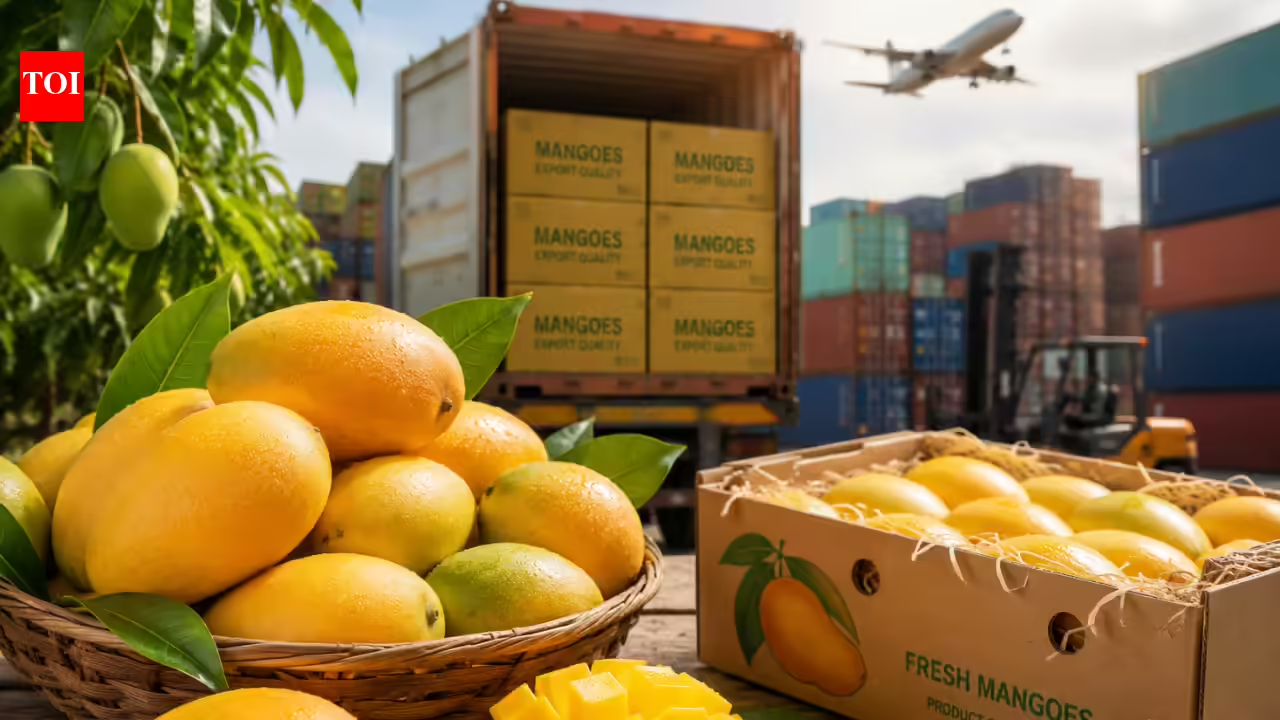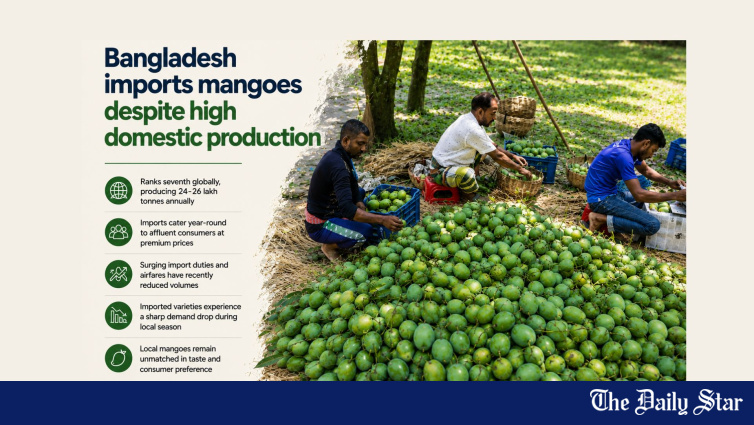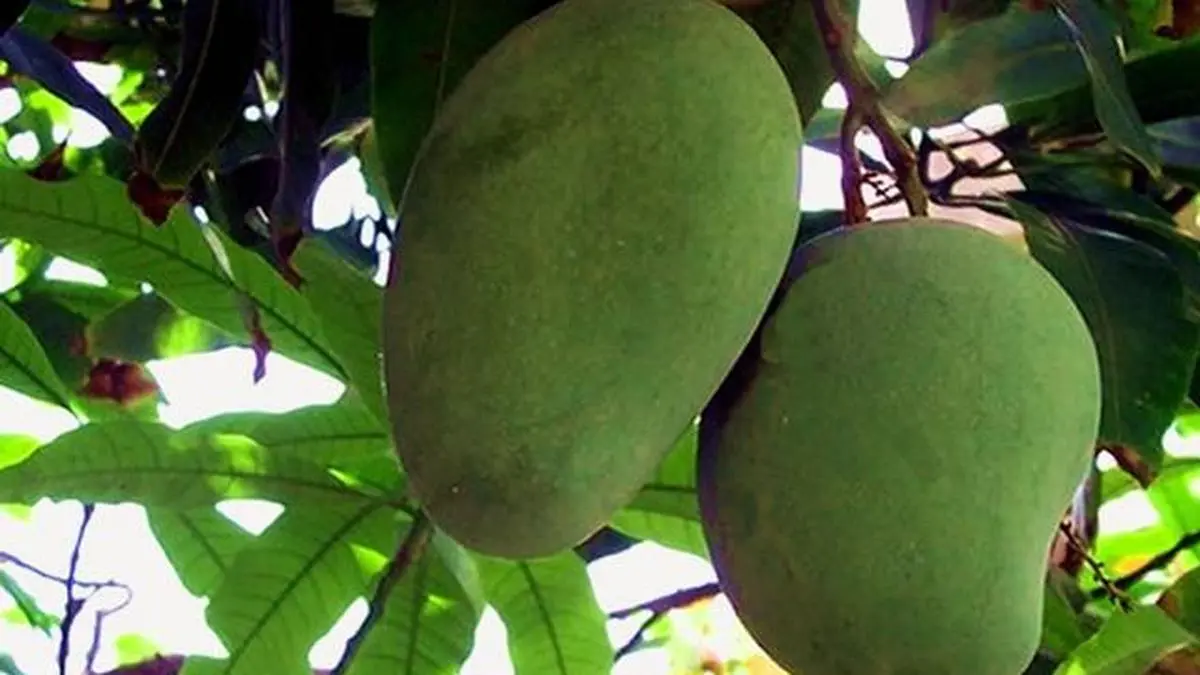
In June 2026, Amrapali mangoes grown by tribal women farmers reached the UK and the United Arab Emirates for the first time
| Photo Credit:
mail pics
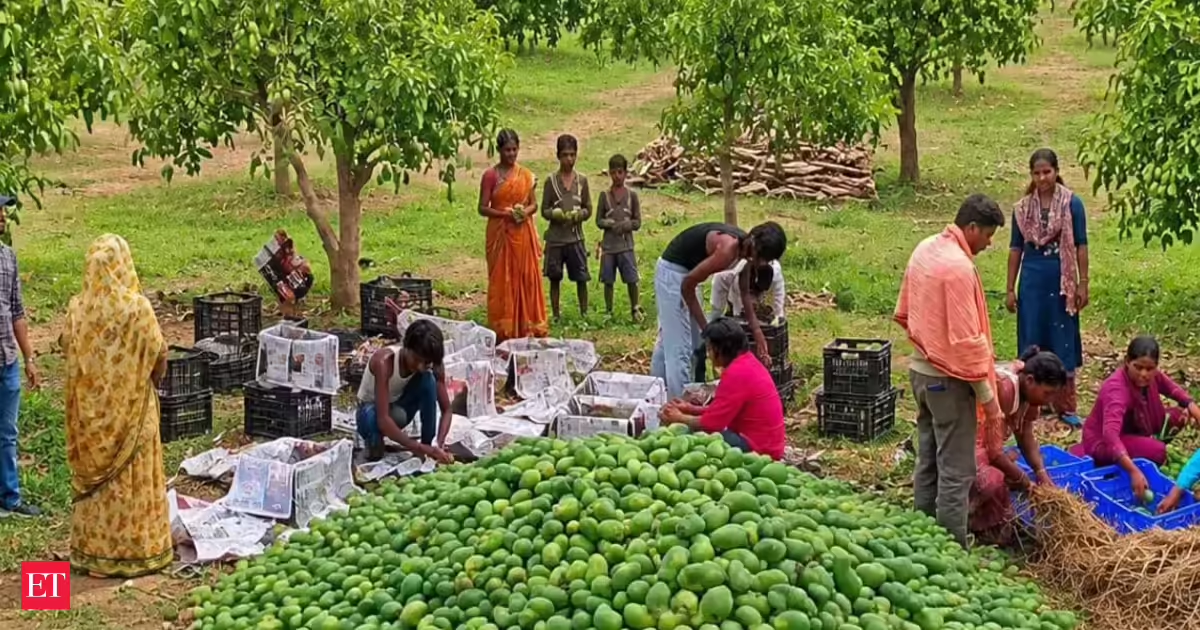
India remains the world’s largest mango producer, contributing 40-45 per cent of global output, with more than a thousand commercial varieties. Most of the harvest is consumed at home, yet the commercial value of the fruit stretches far beyond local markets. Fresh mango exports still form only a tiny share of total production, often less than one per cent, but they bring in foreign exchange. Processed forms like pulp, juice and concentrates add further economic weight. In a world where demand for tropical fruit is rising, mango gives India a genuine strategic opening for agricultural exports, rural incomes and soft power.Holding on to that position, however, has never been easy. Importing countries impose strict phytosanitary rules, especially around the risk of fruit flies. Even small slips can shut markets with little warning. The clearest recent reminder came in 2026, when Japan suspended imports of Indian mangoes for the first time in nearly 20 years. Japan had already banned Indian mangoes for two decades from 1986 over similar fruit-fly worries. The ban was lifted only in 2006 after India invested heavily in treatment infrastructure. The 2026 suspension showed once again that sheer production volume is not enough. Competitors from Mexico, Peru, Thailand, Pakistan and Vietnam are quick to step in, and repeated compliance failures damage long-term credibility.Against this background of repeated setbacks, a quieter success story has taken shape in the tribal districts of Jharkhand. In June 2026, Amrapali mangoes grown by tribal women farmers reached the UK and the United Arab Emirates for the first time. The Dubai shipment alone brought participating farmers nearly 180 per cent higher returns than local market prices. These exports grew out of a carefully built institutional framework under the Birsa Harit Gram Yojana.The scheme was designed as a convergence model to turn barren and fallow land into productive orchards with sustainable livelihoods for tribal households. Beneficiaries were first identified through Gram Sabhas. MGNREGA then provided the crucial link: wage work through pit digging, land preparation and fencing. Because fruit trees take years to start yielding, the Jharkhand State Livelihood Promotion Society (JSLPS) brought in its trained Bagwani Sakhis, women who give regular technical advice on orchard care at the community level. To keep the process transparent and timely, Transform Rural India Foundation introduced a digital monitoring system. Field data, geo-tagged photographs and beneficiary details were recorded through a mobile application used by the Sakhis.Once the trees began to bear fruit, the focus shifted to markets. APEDA organised capacity-building sessions at the village level so that farmers and their producer companies could comply requirements of overseas buyers. APEDA also helped forming formal supply chains. The outcome was the first commercial consignments of Jharkhand Amrapali to the UK and UAE, sourced directly from tribal women farmers organised under JSLPS-promoted companies.Community extensionThis chain of institutions, through community extension and digital tracking to APEDA-led export readiness, shows how local systems can bring fortune.Future programmes must focus on digital monitoring, traceability training beyond cultivation to link markets and compliance with destination-country rules.India’s mango advantage is real, but it does not sustain itself. Periodic market closures, whether in Japan or elsewhere, expose the limits of production volume without institutional strength. Strengthening local institutions, Gram Sabhas, livelihood missions, community cadres, offers a practical way to build resilience. When the same hands that dig the pits also meet global quality standards, the country’s position in the mango trade becomes more secure.The writer is Associate (Agribusiness), APEDA, New Delhi. Views are personalPublished on September 9, 2026