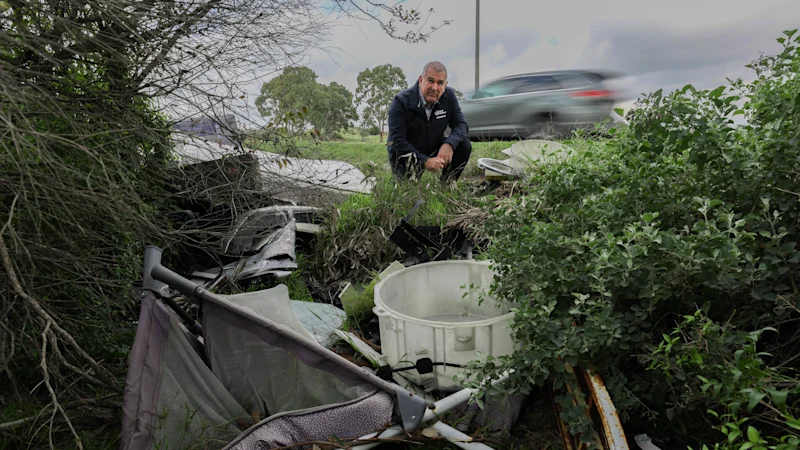
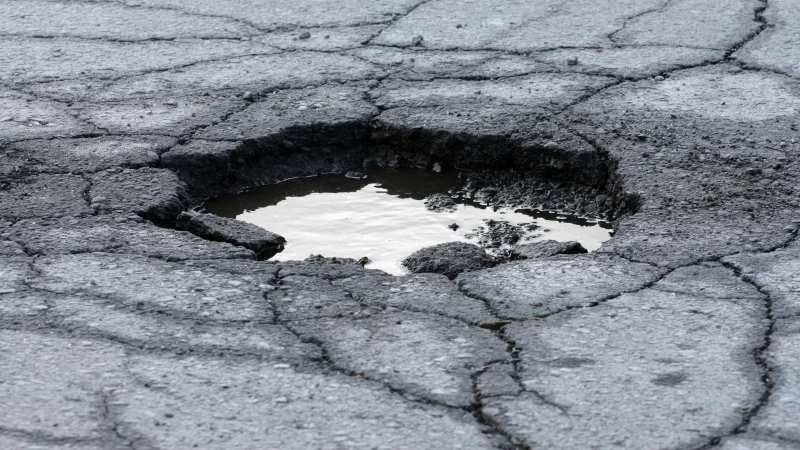
September 9, 2026 — 10:43amAlmost half of the state’s government-managed roads are in poor or very poor condition, with decline outpacing repairs, according to a new report from the Victorian Auditor-General’s Office.Tracking the deterioration of Victoria’s state roads – major arterials owned and operated by the Department of Transport and Planning which span 23,000 kilometres – the report released on Wednesday found current government funding to maintain or improve state roads was insufficient.A report by the Victorian auditor-general has found state roads are deteriorating faster than repairs are made. Joe Armao“This has meant it [funding] focuses more on reactive and safety-critical repairs rather than preventative works,” it said.The condition of roads is on course to worsen in coming years unless the government radically increases spending on maintenance. Funding pledges by the government and the opposition fall well short of the $3 billion a year the Department of Transport and Planning says is needed.Roads and potholes have become a flashpoint in the lead-up to the November 28 state election as thousands of motorists battle car damage and delays due to poor road quality – especially in rural and regional areas.About 48 per cent of state roads were considered in poor or very poor condition in 2024 – jumping by almost a quarter from 39 per cent in 2021. The vast majority of state roads are in regional Victoria, and carry most of the state’s traffic and freight vehicles.The 2024 data reveals more than a third of state roads have just five years of “useful life” left before they deteriorate so severely they cannot be used safely without introducing reduced speed or vehicle load limits. Another 10.5 per cent have between five and 15 years remaining on their useful life.Conditions are worst in regional Victoria, where 69 per cent of state-run roads in the Loddon Mallee are in poor or very poor condition. In Hume, the figure is 57 per cent, and 48.6 per cent in the Grampians.There are currently 8049 unrepaired potholes listed around Victoria, and the worst-affected areas are all in the regions. Towong (445), Moyne (386) and Mornington Peninsula (382) are the most impacted in the state, and outer-suburban Melton is the worst area of Melbourne (250).The auditor-general’s report also noted that between January 2025 and January 2026, the gap between the number of defects recorded and the number repaired more than doubled.“Renewal spending is not keeping pace with deterioration, and defects are appearing faster than they are repaired,” the report said.The Department of Transport and Planning’s 2026-27 business case estimated it would cost the state government more than $3 billion a year to maintain road-pavement conditions at their current level while replacing ageing assets but, “recognising fiscal constraints”, only sought minimal funding.The department’s road maintenance funding in the most recent state budget was $1.04 billion, but Premier Ben Carroll recently committed an additional $352 million to repair 500,000 potholes this year – double its original target.Roads Minister Paul Hamer said the government’s extra funding was a clear indication Labor would deliver needed improvements on roads.“We’ve had record investment over the last few years … but we need to do more. We’re not shying away from that.”The opposition has its own $5 billion plan to repair and rebuild Victorian roads over four years, including fixing a million potholes.Shadow roads minister Danny O’Brien said Coalition road spending was more than Labor’s, but would not commit to meeting the department’s $3 billion figure.“We’ve got a plan that will actually reduce the wastage, get more efficiency, and more accountability for the work that’s done, making sure we’re getting better value for money,” O’Brien said.Under Labor, potholes were creating “potentially catastrophic” safety issues for vulnerable road users like motorcyclists, he said.“The state of the roads, the road surface, the road furniture around it, all of that plays a part in road safety. And this Labor government is failing on that in this report,” he said.Rob Amos, chair of Rural Councils Victoria and Campaspe Shire councillor, said the government needed to urgently increase its funding on state roads. Rural Councils Victoria – which represents 35 regional shires – has previously called for an extra $500 million over four years.“We know the government has fiscal constrains and so on … what people need to think about though, is if they don’t spend more money than we’re just kicking the can down the road, and it will become more and more expensive,” Amos said.Matt Golding Labor has also pledged that if re-elected it would bring road maintenance back under government control.Surveillance by the transport department found one in eight routine maintenance works carried out by government contractors were defective and required extra work. The government hopes that by bringing road maintenance in-house, works will be carried out to a consistently higher standard. Start the day with a summary of the day’s most important and interesting stories, analysis and insights. Sign up for our Morning Edition newsletter.From our partners
Almost half of Victoria’s roads in poor condition, as decline outpaces repairs
A new report has found that state government-managed roads around the state are deteriorating faster than they’re being fixed, as parties scramble for solutions before the election.
822 words~4 min read