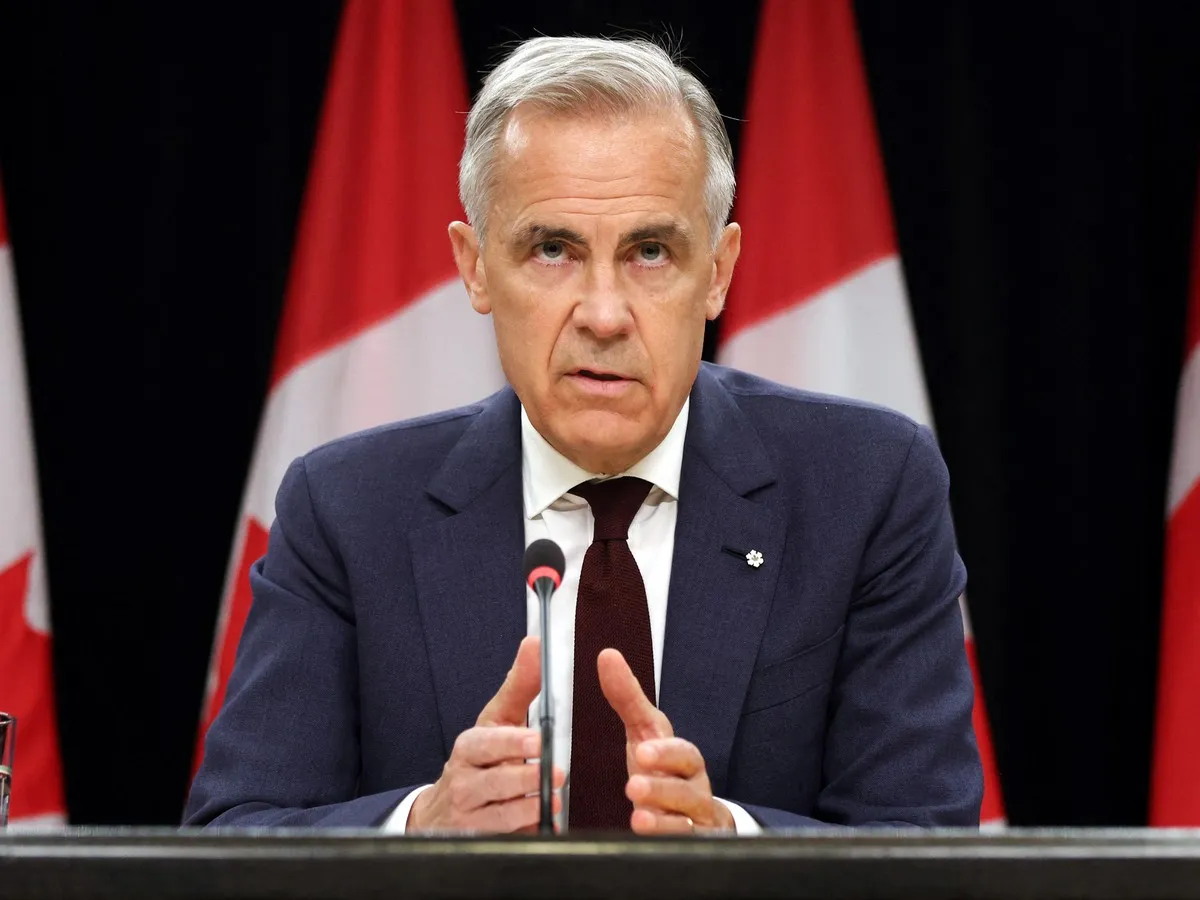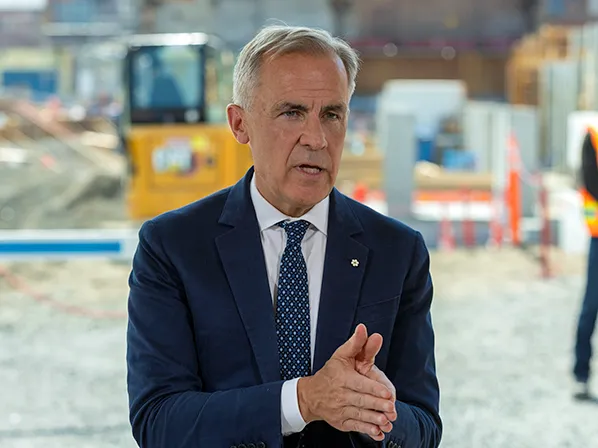
Skip to Content Subscribe My Account Manage My Subscriptions FAQ Newsletters Canada Canadian True Crime Canadian Politics Health World Israel & Middle East Financial Post NP Comment Longreads Puzzmo Diversions Comics NP News Quiz New York Times Crossword Horoscopes Modern Life Eating & Drinking Style Sponsored Play for Ontario Travel Travel Canada Travel USA Travel International Cruises Travel Essentials Culture Books Celebrity Movies Music Theatre Television Business Essentials Advice Lives Told Tails Told Shopping Buy Canadian Home Living Outdoor Living Kitchen & Dining Tech Style & Beauty Personal Care Entertainment & Hobbies Gift Guide Travel Guide Deals Savings National Post Store More Sports Hockey Baseball Basketball Football Soccer Golf Tennis Driving Vehicle Research Reviews News Gear Guide Obituaries Place an Obituary Place an In Memoriam Classifieds Place an Ad Celebrations Working Business Ads Archives Healthing Epaper Manage Print Subscription Profile Settings My Subscriptions My Offers Newsletters Customer Service FAQ Newsletters Canada World Financial Post NP Comment Longreads Puzzmo Diversions Modern Life Shopping Epaper Manage Print Subscription HomeNP CommentJohn Ivison: Carney’s arms-procurement czar isn’t quitting in frustration… yetIf Doug Guzman concludes busting up the old model was not feasible, it would be a major blow to the prime minister's grand designLast updated 16 hours ago Former CEO of Defence Investment Agency Doug Guzman at CANSEC in Ottawa on Wednesday, May 27, 2026. Photo by HYUNGCHEOL PARK /PostmediaThe departure of Doug Guzman as the chief executive officer of the new Defence Investment Agency is taken as a matter of fact in Ottawa.Enjoy the latest local, national and international news.Exclusive articles by Conrad Black, Barbara Kay and others. Plus, special edition NP Platformed and First Reading newsletters and virtual events.Unlimited online access to National Post.National Post ePaper, an electronic replica of the print edition to view on any device, share and comment on.Daily puzzles including the New York Times Crossword.Support local journalism.Enjoy the latest local, national and international news.Exclusive articles by Conrad Black, Barbara Kay and others. Plus, special edition NP Platformed and First Reading newsletters and virtual events.Unlimited online access to National Post.National Post ePaper, an electronic replica of the print edition to view on any device, share and comment on.Daily puzzles including the New York Times Crossword.Support local journalism.Create an account or sign in to continue with your reading experience.Access articles from across Canada with one account.Share your thoughts and join the conversation in the comments.Enjoy additional articles per month.Get email updates from your favourite authors.Create an account or sign in to continue with your reading experience.Access articles from across Canada with one accountShare your thoughts and join the conversation in the commentsEnjoy additional articles per monthGet email updates from your favourite authorsSign In or Create an AccountorIt was first reported in the Globe and Mail that Guzman, a former deputy chair of the Royal Bank of Canada, is expected to leave the agency after growing frustrated with the slow pace of government defence procurement.The story was not denied by the Prime Minister’s Office and is now reported as a fait accompli.Except, defence industry and former military contacts I spoke with have told me Guzman is not going anywhere for the moment.The National Post newsletter that doesn’t hold back, giving readers the unvarnished truth on media, politics and culture.By signing up, you consent to receive the above newsletter from Postmedia Network Inc.A welcome email is on its way. If you don't see it, please check your junk folder.The next issue of Right? will soon be in your inbox.We encountered an issue signing you up. Please try again“Apparently, the government convinced him to stay. But who knows what that looks like?” said one senior veteran.I reached out to a senior official in the Carney government who said Guzman is not quitting, though his role could “evolve.” It has been suggested that Guzman may want to join the new Defence, Security and Resilience Bank that Canada is backing and hosting.“His golden parachute is into that bank. It’s just a question of when and under what circumstances,” said one source, although this was denied by the official I spoke with.My sense is that the story of Guzman’s departure is premature, rather than inaccurate.What no one is denying is that the bureaucracy is struggling to match the prime minister’s ambition.It would be a first in government if a senior executive from the private sector joined the public sector and was not frustrated at a manner of operating that fixates on process, not outcomes.The story is important because it goes beyond the career path of one man: it is at the core of the Carney government’s economic plan.Last February, the government released its defence industrial strategy, at the heart of which was the Defence Investment Agency.The plan proposed to increase the share of defence acquisitions made in Canada to 70 per cent from 30 per cent; to increase defence industry revenues by 240 per cent; and defence exports by 50 per cent.These were ambitious targets, but they were accompanied by a dramatic rise in the planned defence budget: an additional $80 billion over five years, with a targeted expenditure of 3.5 per cent of GDP on core defence activities by 2035. That’s an effective tripling of spending to around $132 billion a year in today’s dollars. Prime Minister Mark Carney, joined by now-former CEO of the Defence Investment Agency Doug Guzman, left, and Secretary of State (Defence Procurement) Stephen Fuhr, right, at a press conference in May 2026. Photo by HYUNGCHEOL PARK /PostmediaThat is considered by most observers to be an impractical outlay, given it would be close to what Ottawa spends on transfers to other levels of government, unless the surge in spending results in a significant multiplier effect on the broader economy. For the plan to pay for itself, the C.D. Howe Institute estimated nominal GDP growth would have to be around 6.3 per cent every year, far in excess of the forecasts in the last budget of 3.7 per cent over the next five years.To have any chance of success, the new investment agency has to overcome what Guzman referred to as “the triangle of inertia” — the Department of National Defence; Innovation, Science and Economic Development (ISED); and Public Services and Procurement Canada (PSPC), which have managed military equipment purchases to this point.As the Parliamentary Budget Office noted, between 2017-18 and 2023-24, Ottawa failed to spend an average $2.68 billion of its procurement budget every year, raising questions about its capacity to manage such a huge increase in capital allocation.Eugene Lang, a former chief of staff to two Liberal defence ministers and now an associate professor in the School of Policy Studies at Queen’s University, wrote recently that it is one of Ottawa’s worst-kept secrets that many in the public service and the military bureaucracy do not share the Carney government’s enthusiasm for reforming procurement.If Guzman had reached the conclusion that busting up the old model was not feasible, it would be a major blow to Prime Minister Mark Carney’s grand design, and it would not commend the job to future applicants.We are not at that point yet. But things are clearly not going smoothly. The legislation to create the Defence Investment Agency, Bill C-31, remains mired in the House of Commons legislative process.The new agency has set up shop in government offices at Kent and Laurier streets in Ottawa, cramming hundreds of staff from PSPC’s defence and marine branch alongside dozens from ISED’s Industrial and Technical Benefits Department and some dedicated workers who were hired by the agency. By all accounts, it is not a particularly happy marriage and certainly not a union that is living up to Carney’s mantra of “building with greater speed and ambition.”“(The Defence Investment Agency) is still stuck trying to manage the legacy structure, the same authorities and processes that led to this problem in the first place,” said one senior former soldier.He said the hope is that the obstacles are temporary and will ease once the legislation passes and the organization beds in.“We have come further than anything I’ve seen in my career. We’re definitely on the right track, and anyone who thought this could be fixed in 12 to 18 months was being incredibly naive to begin with. I don’t think the success of this is dependent on one individual,” he said.National Post Join the Conversation This website uses cookies to personalize your content (including ads), and allows us to analyze our traffic. Read more about cookies here. By continuing to use our site, you agree to our Terms of Use and Privacy Policy.
John Ivison: Carney’s arms-procurement czar isn’t quitting in frustration… yet
If Doug Guzman concludes busting up the old model was not feasible, it would be a major blow to Prime Minister Mark Carney’s grand design.
1,420 words~6 min read