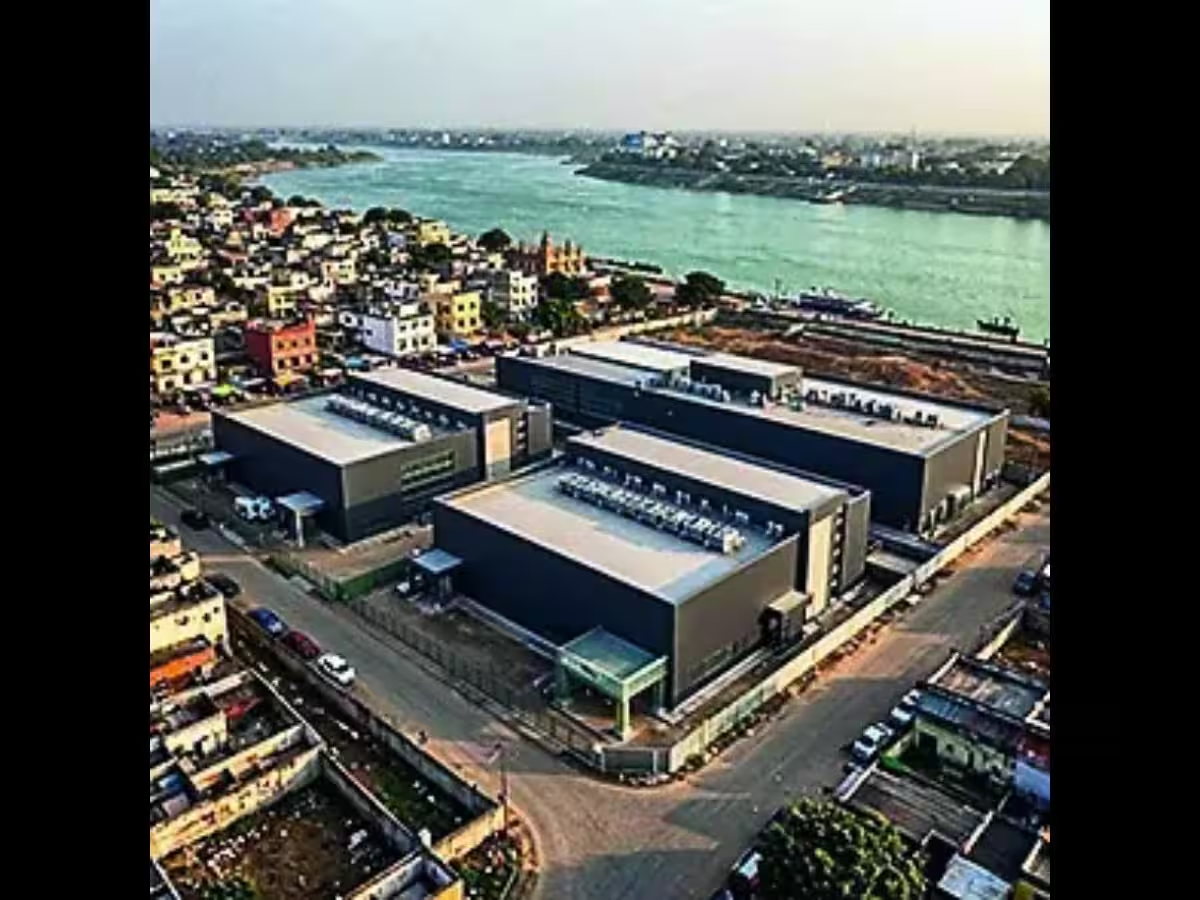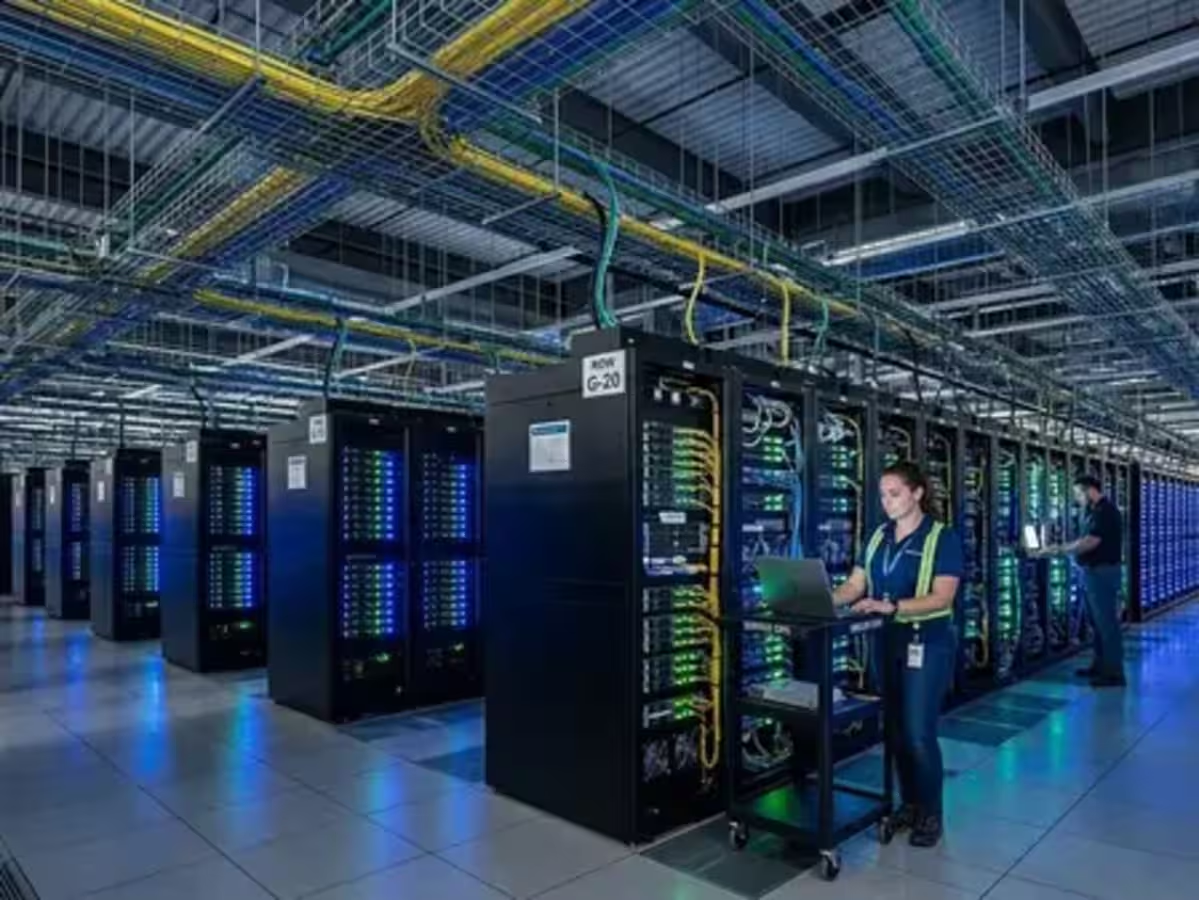
SynopsisIndian firms are making significant investments in data centre infrastructure tailored for artificial intelligence. Major players like TCS, RIL, and Adani are constructing extensive facilities designed to enhance AI capabilities. This strategic growth intends to decrease dependency on foreign technologies while fostering local innovation. However, India must address challenges related to energy and water requirements imposed by these facilities to successfully evolve into an innovator-driven economy.TCS subsidiary HyperVault's planned data centre campus in Hyderabad is among India's more ambitious steps to build sovereign AI infrastructure capacity. The 1 GW facility will support high-density GPU deployment for AI hyperscalers. India ranks 6th globally in hosting data centres handling domestic digital as well as AI workloads. Dedicated infra for AI at scale is limited. This has held back its contribution to AI development, and the country has acquired the tag of being a technology consumer. Work has begun on building local LLMs, and a ramp-up in domestic AI infra investment could alter dynamics. GoI and states have rolled out heavy policy support for digital infrastructure, but heavy dependence on imported equipment limits value retention from the global AI infra boom. Heavy energy and water demand of data centres also works as effective resource constraint in India.TCS joins a growing group of Indian companies that have committed investments to giant data centres. RIL is building a 1.5 GW facility, while Adani and Airtel are collaborating with Google to set up its largest AI hub outside the US. With these and other investments, India has entered the GW race in AI infrastructure. The capacity coming online should be able to train models for Indian AI needs, which is imperative with a dual-use technology. It will also help India transition from a consumer to an innovator economy.AI represents a technology pathway for India to make quantum jumps in economic productivity. The country is an exception in manufacturing-led development and must rely on digital services to be able to bridge the gap. The intensive AI resource question is open: can gains from the technology offset the demands it exerts on power and water? Data centre construction is evolving to become less dependent on natural resources, and being a late entrant helps in that regard. The AI conversation has moved beyond who develops the models and where the compute resides. Indian corporate investment in AI infrastructure has a long runway ahead. ...moreElevate your knowledge and leadership skills at a cost cheaper than your daily tea.Subscribe Now
Put money where their AI mouth is - The Economic Times
Indian firms are making significant investments in data centre infrastructure tailored for artificial intelligence. Major players like TCS, RIL, and Adani are constructing extensive facilities designed to enhance AI capabilities. This strategic growth intends to decrease dependency on foreign technologies while fostering local innovation. However, India must address challenges related to energy and water requirements imposed by these facilities to successfully evolve into an innovator-driven economy.
409 words~2 min read