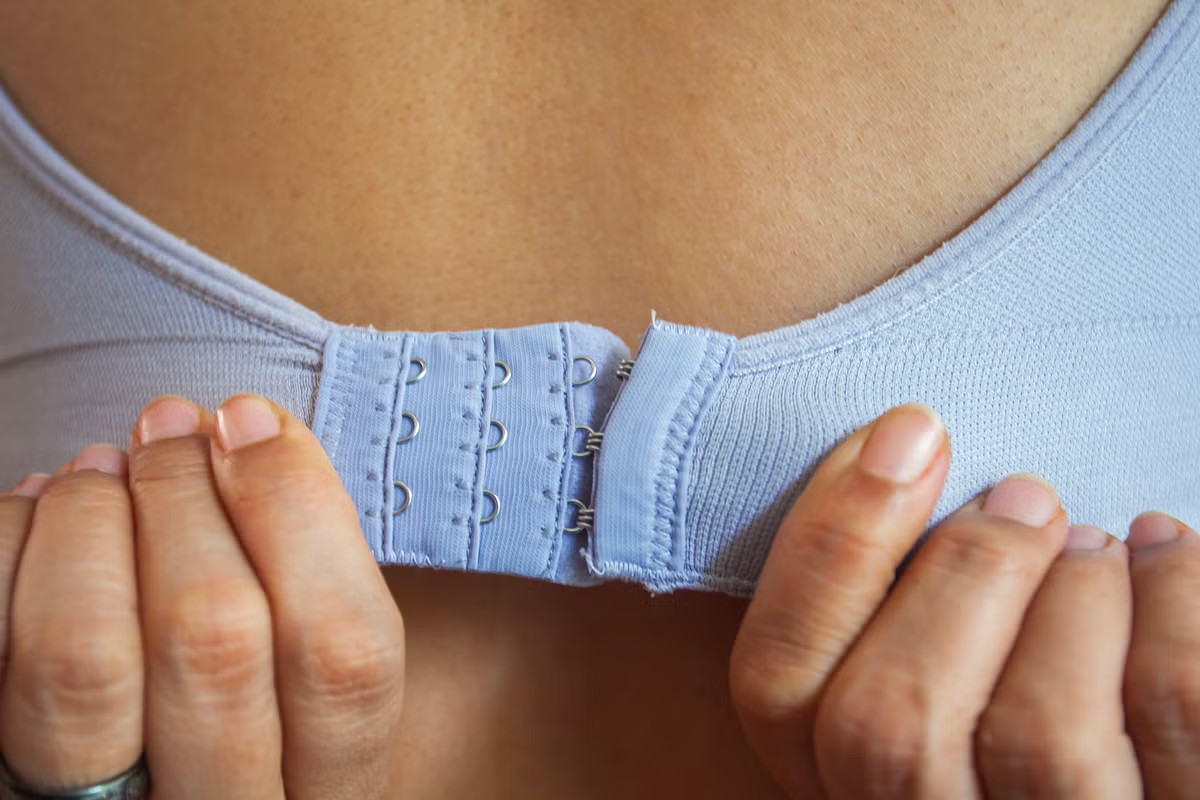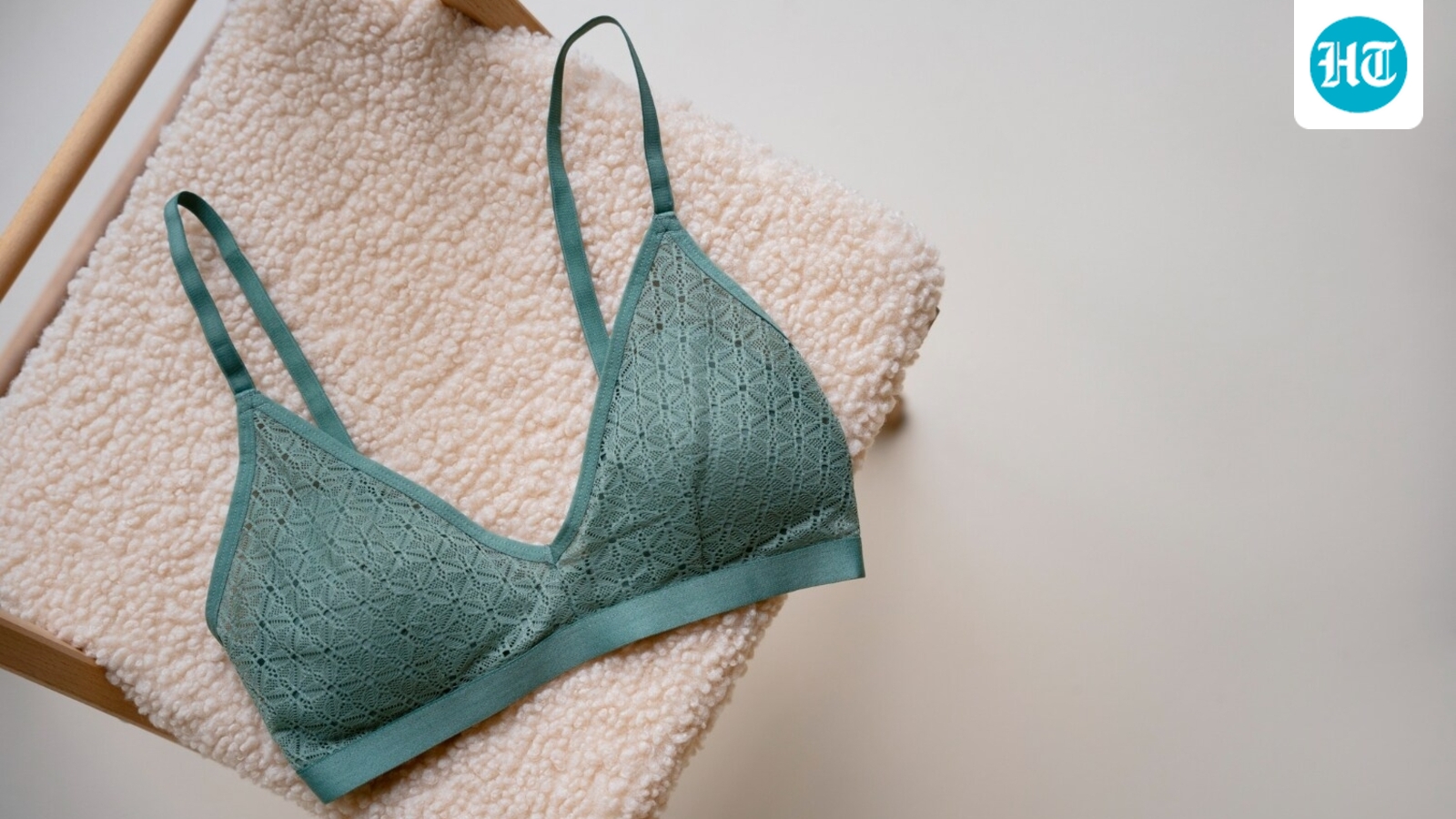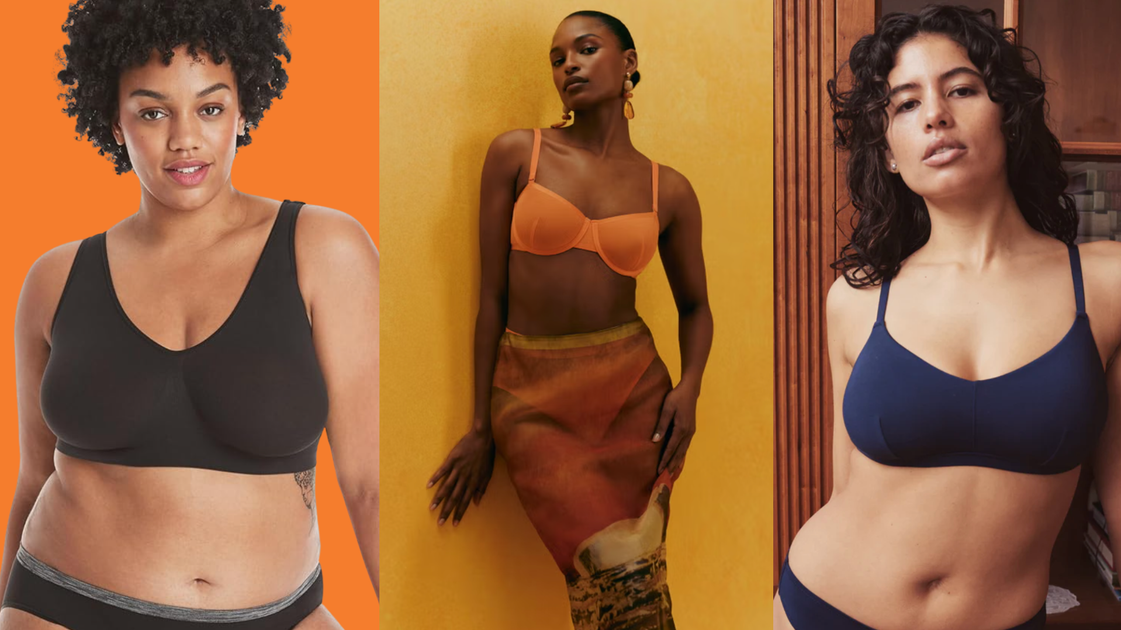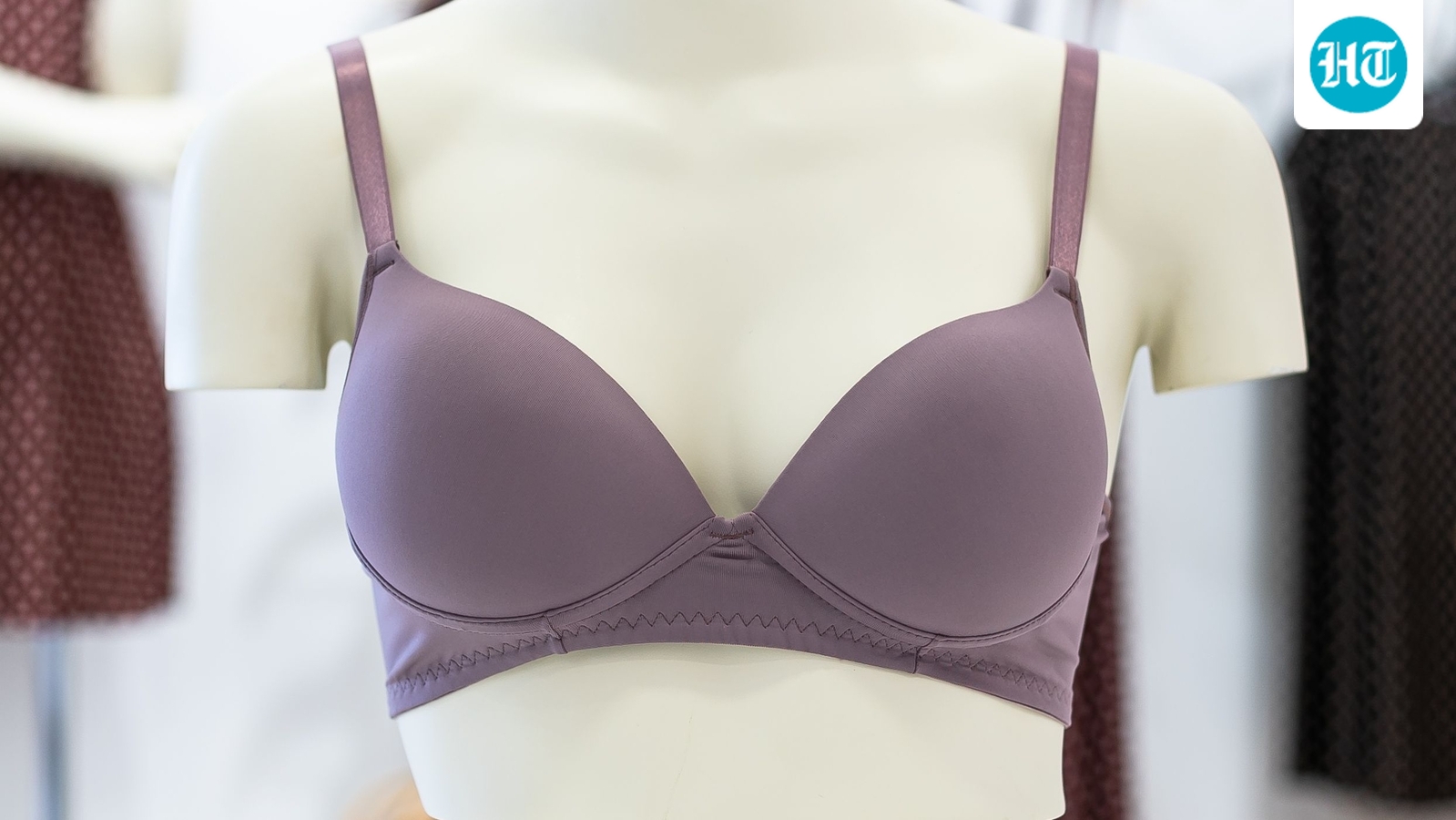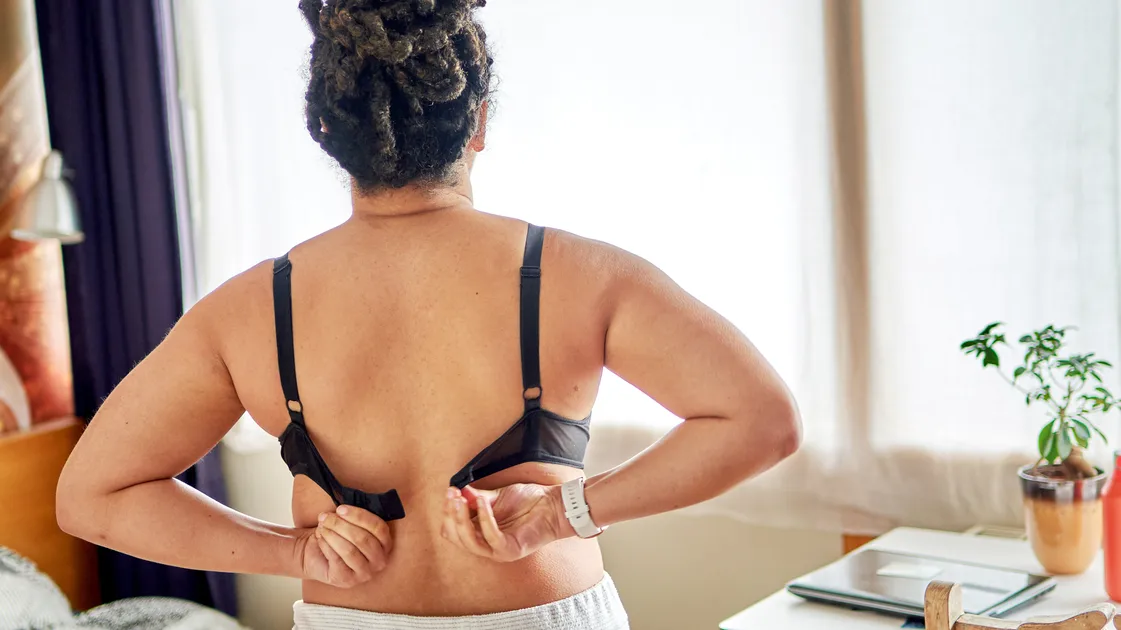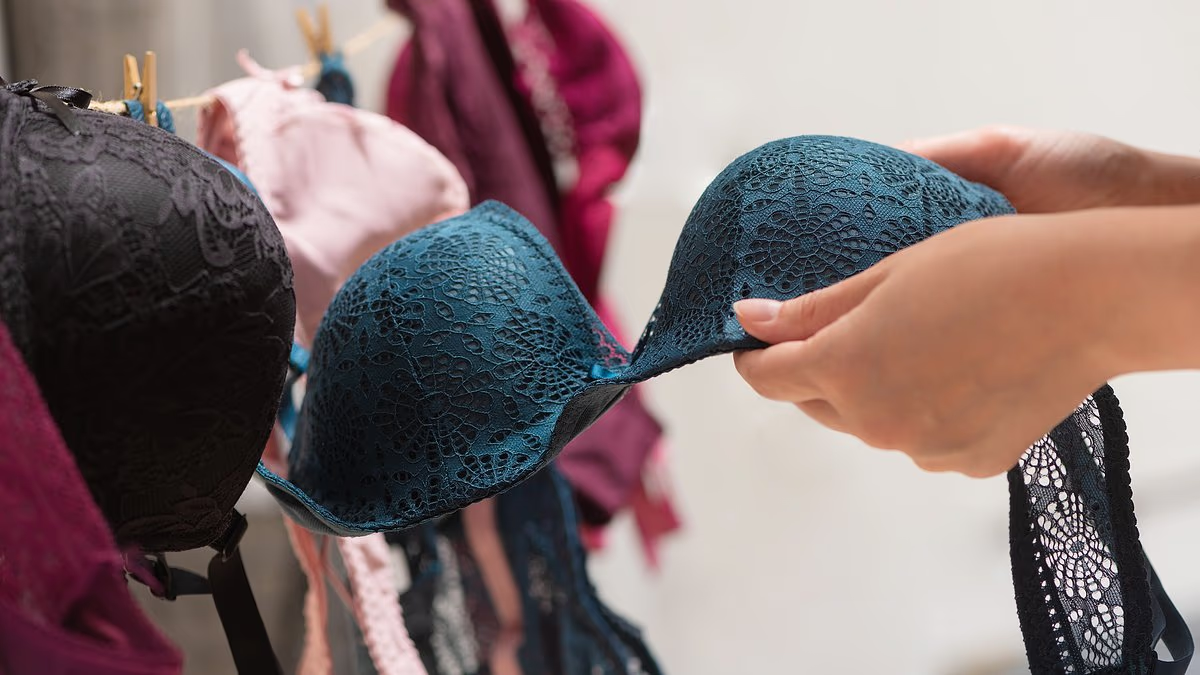
Taking off your bra after a long day is one of life’s little luxuries. But if you’re spending your day in pain and discomfort, counting down the hours until you can unclasp yourself, then you’re probably wearing the wrong sized bra.And you wouldn't be alone. Around 80 per cent of women are wearing the wrong-sized bra, with most wearing one that’s too small.But an ill-fitting bra can cause more than just discomfort according to Tara Vooght, a research associate in breast biomechanics at the University of Portsmouth. From neck and back pain, to permanent indentations, ensuring you’re wearing the right sized bra is vital not only to day-to-day comfort but to health and wellbeing.Neck and back pain'One of the main issues is neck and back pain,’ says Vooght.Beyond causing pain and discomfort, Vooght says that these neck and back issues can lead to an affected posture and even affect walking style.So find a bra that fits and you can walk with your head high (quite literally!).Permanent deep bra furrows'Permanent deep bra furrows can appear over time if the shoulder straps are too tight.’ says Vooght. Permanent deep bra furrows can appear as a result of wearing a bra that's too tight.She says she's even seen permanent indents from women who have spent years wearing a bra that’s too tight.The under band should provide the majority of the bra's support, but when it's too loose the bra's straps can put more pressure on the shoulders, further contributing to neck and back pain.Damage and deformation of breast tissueShe says: ‘If the underwire is too small then it can dig into the tissue and deform the surrounding structure, including lymph glands.’And with most people’s breasts coming out a lot wider than you’d think (actually stopping around the armpit), it’s something to pay special attention to.Vooght says, ‘It’s really important that none of the underwire is digging into any breast tissue.’ Breast pain and discomfort‘Many larger breasted women are seeking breast reductions because they are so uncomfortable with their breasts. Lots of women are also refraining from physical activity because they don’t feel confident enough with the sports bra they’re wearing.’The problem is such an issue that many women are seeking breast reductions to alleviate the pain and discomfort. Many women are seeking breast reduction surgeries to alleviate pain and discomfort.But while wearing the correct bra size is important to our health, for most of us, checking your bra size is at the bottom of a very long to do list. It brings back cringe teen memories of standing awkwardly while getting your first bra fitted; a humiliation that doesn’t seem to have faded as we age.So, for those who might be uncomfortable attending a formal bra fitting, Vooght shares the University of Portsmouth's five step guide to finding your bra size.1. Under band‘The under band should be level around the whole body. If it’s too tight, the under band will rise at the back instead of sitting flush all the way around,’ says Vooght.She says it should be a snug fit, only about a five centimetre gap when pulled away from the body. When buying a bra, Vooght suggests you choose the under band that fits you on its loosest setting, that way when the bra loosens over time, it can be adjusted and tightened.2. CupsIt's important to make sure that your breasts are fully enclosed in the cups, with no bulging or gaping at top or sides. Vooght says it's important to note that most people’s breast tissue stops at around their armpit, coming round a lot further than you’d think.She says: ‘If you’ve got too big of a cup, then you’ll see a gap between the breast and underwire.’3. UnderwireThe underwire should follow the natural crease of the breast, with none of the wire digging into any breast tissue.4. Centre frontThe centre front of the bra should sit flat against the body. Vooght says: ‘If it’s raised and lifted from the chest, I’d imagine you’d need to up your cup size.’5. Shoulder strapsShoulder straps are important for keeping the bra in place but shouldn’t be used as a form of main support. Another thing to note is that the left and right straps might not be the same length, with most women having one breast bigger than the other.Vooght says, ‘You should be able to fit two fingers underneath the straps, they shouldn’t be tight and digging in, but not too loose that they’re slipping off.’She adds: ‘The good thing about straps is that they’re usually the most adjustable part of the bra, so you can leave that step to last.’ Shoulder straps shouldn't provide the majority of a bra's support.Her final tip is to consider 'sister sizing', a good solution if you find that the under band is a good fit but the cup sizing is too big.For many women bras have become a barrier to exercise, with many women put off by either chafing or a lack of support.So, Vooght says that your sports bra (yes that dusty thing at the back of your wardrobe) requires a similar kind of sizing to your regular day-to-day bras.‘People get embarrassed by the amount their breasts move and not feeling supported enough during exercise,’ says Vooght.But finding the right sized sports bra can be especially tricky given that most manufacturers produce them in sizes Small, Medium and Large without paying attention to under band and cup size.You should be looking for a snug fit, without the straps digging into your shoulders. If it’s too tight, the bra can cause chafing and shoulder strain, and too big can leave you with a lack of support.You should also be able to move your arms without the sports bra moving too. When trying on a sports bra, Vooght’s top tip is to do some star jumps in the changing room; ‘That way you can see how the bra moves on your body.’
Your bra could be affecting your health - 5 signs it's the wrong size
Taking off your bra after a long day is one of life's little luxuries. But if you're spending your day in pain and discomfort, then you're probably wearing the wrong sized bra.
987 words~4 min read