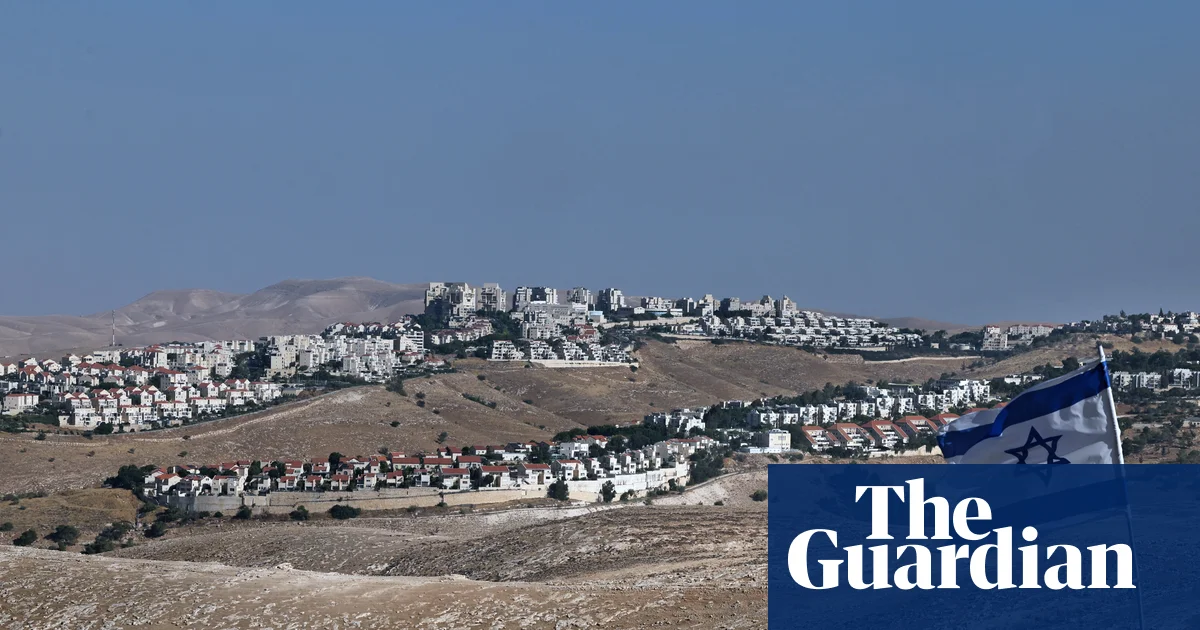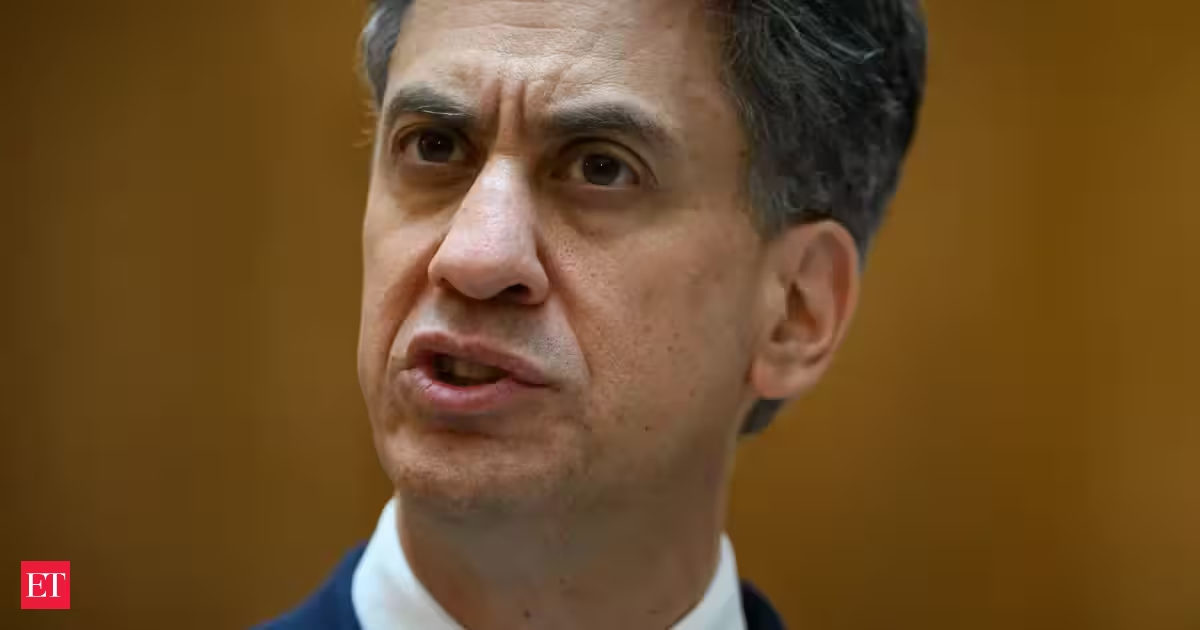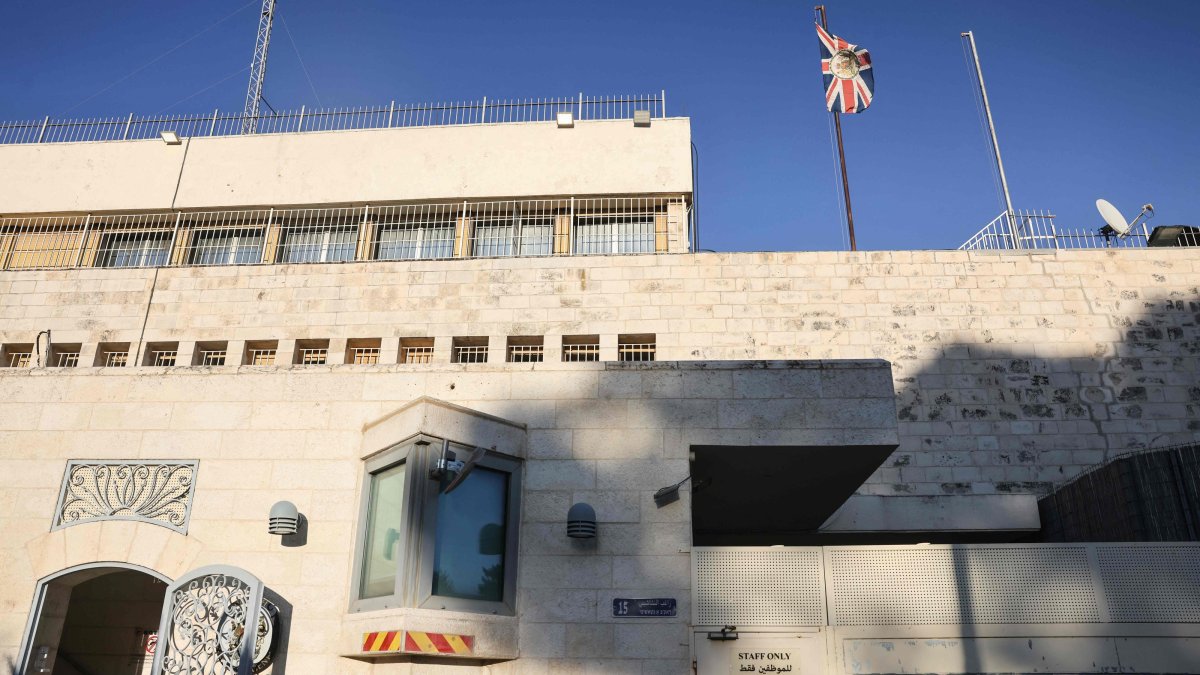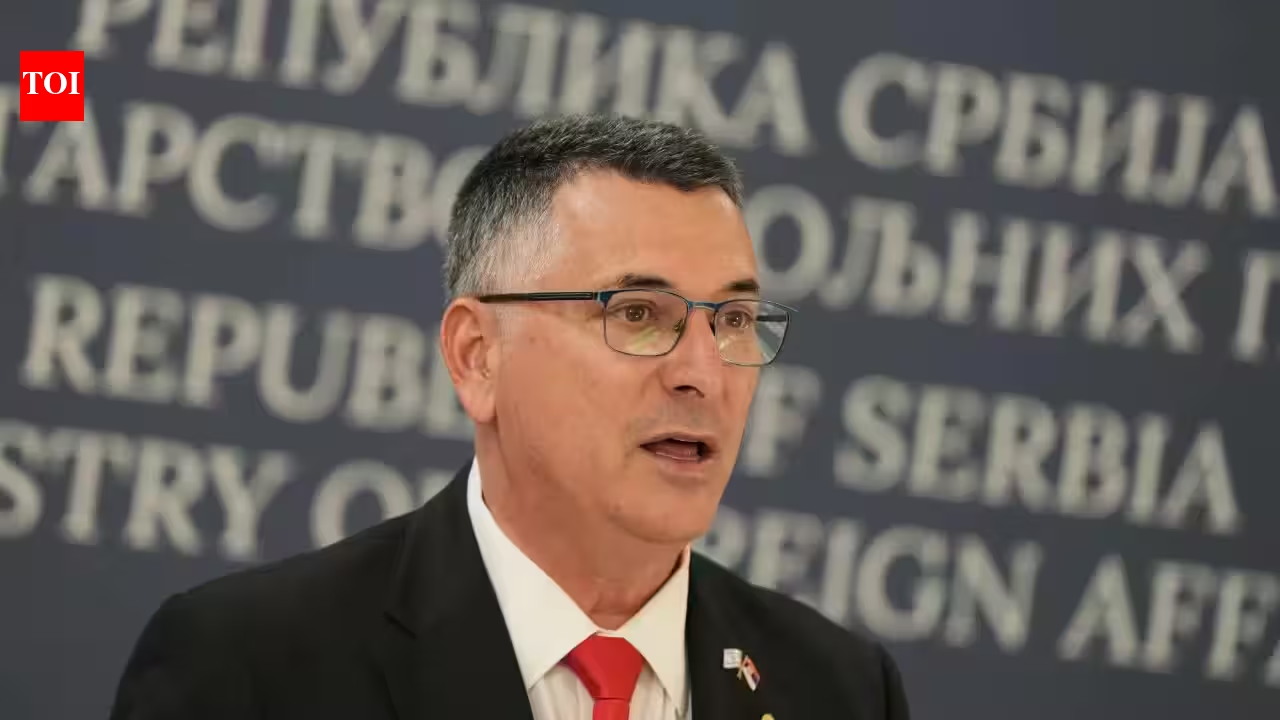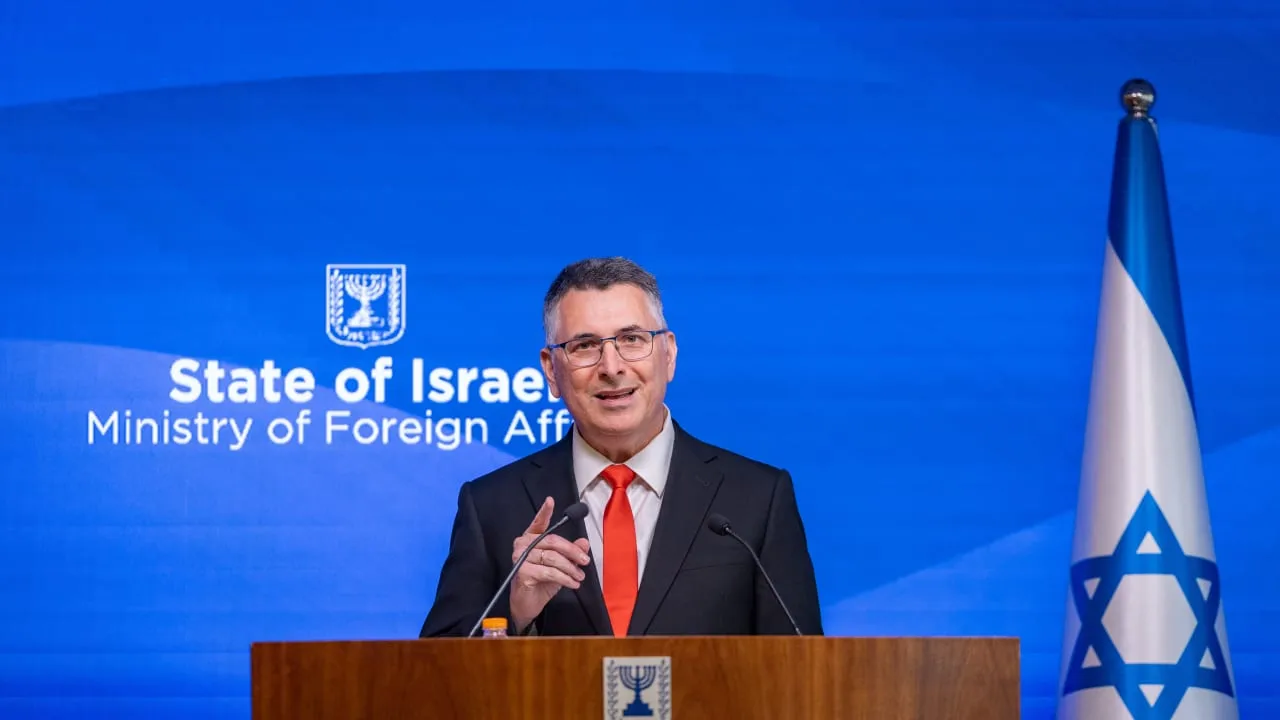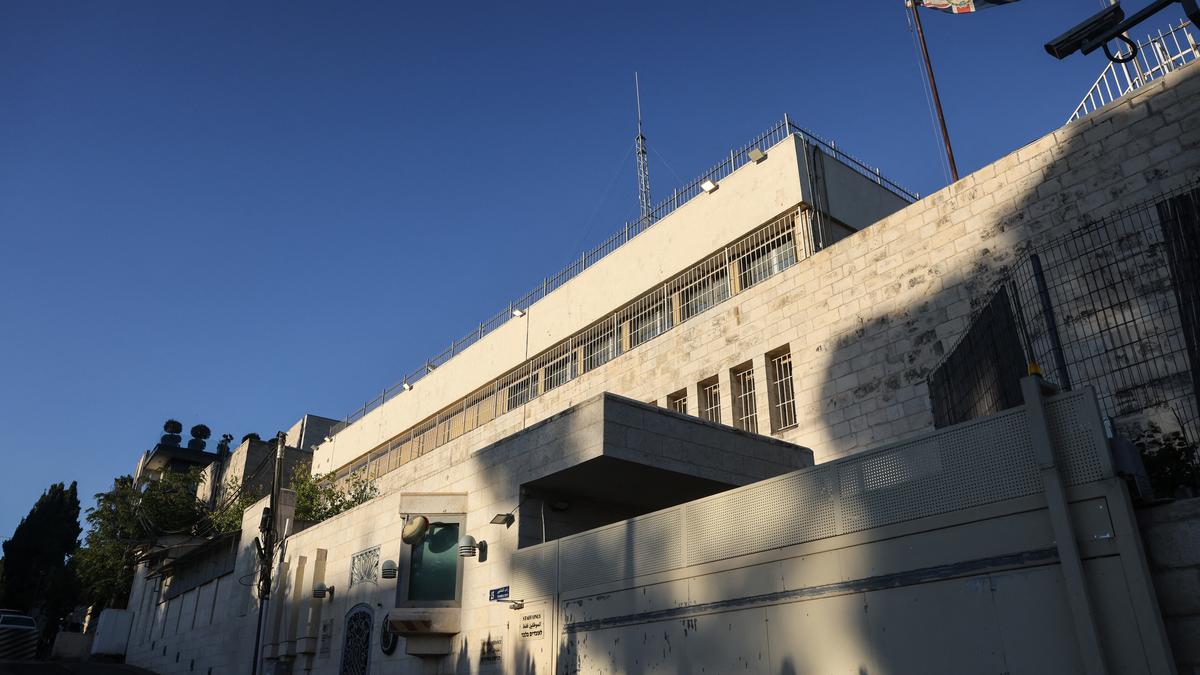
Israel’s Foreign Minister Gideon Saar said his country will close the UK consulate in East Jerusalem after Britain's Labour government on Tuesday imposed sanctions on Israeli settlements.The move is a major escalation of the diplomatic breakdown between Israel and some of its most important western allies.The consulate comprises dozens of staff and is the centre of the UK’s engagement with Palestinians in the occupied territories, ranging from consular matters to political engagement with the Palestinian Authority and aid programmes.Mr Saar also announced Israel would remove British military and security personnel who train PA security officials based in a mission in Ramallah, remove British officials from the Civilian-Military Co-ordination Committee overseeing the aid and reconstruction process in Gaza, and bar 12 British MPs from entering Israel and the occupied West Bank over “anti-Semitic and anti-Israel activity”.Play00:37UK leads new sanctions against Israeli settlersMr Saar did not mention any measures to be taken against 11 other western nations who have declared a similar stance to Britain, such as France, Canada, Denmark and Poland. After UK Foreign Secretary Ed Miliband announced the sanctions in a speech in the House of Commons, Mr Saar accused the British government of “racism” and of engaging in “blatant interference in the affairs of a sovereign state and in its electoral process”. One of the most important election campaign seasons in Israeli history is already under way, as the ultranationalist government of Prime Minister Benjamin Netanyahu approaches the end of its current term next month.“The Israeli public overwhelmingly supports the communities in Judea and Samaria, and overwhelmingly opposes the establishment of a Palestinian terror state in the heart of our land,” Mr Saar said, referring to the occupied West Bank by a biblical term widely used in Israel. “This is something that the Labour government is attempting, through measures that are doomed to fail, to force upon Israel. It will not work.“We did not return to our land after 2,000 years only to lose it under pressure from jihadists, Islamists, anti-Semites, far-leftists and wokes. Not only will you fail to harm us, you will harm yourselves and your own influence,” he added.The British consulate in Jerusalem. ReutersShow caption: The British consulate in Jerusalem. ReutersThe British politicians Israel banned include former Labour leader Jeremy Corbyn and veteran Labour politician Diane Abbot.Israeli settlers condemned the UK's measures. Yisrael Gantz of the Yesha Council, an umbrella organisation for West Bank settlements, said: “Our message to Britain and anyone joining the boycott is clear: You will not succeed in driving the Jews out of Judea and Samaria. We will respond to every attempt to harm the settlements with more construction, more communities, and greater Israeli sovereignty.”Amid growing expectation that the UK would announce significant measures against the settlements, Finance Minister Bezalel Smotrich, who is himself a settler, called on Monday for the expulsion of Britain's ambassador.“We will not be a doormat trampled by an antisemitic government, in a country conquered by radical Islam, trying to save itself from economic and social decline by attacking Jews and the State of Israel,” he wrote in a post on X.Hours before Mr Miliband's announcement, National Security Minister Itamar Ben-Gvir, also a settler, said he had appealed to Mr Netanyahu to close the British Consulate in East Jerusalem. “This must be Israel's resolute response to British audacity,” he wrote on X.Britain's move was welcomed by several Israeli peace organisations. “The UK government’s recognition that ethnic cleansing is taking place in the West Bank, alongside the growing move by governments from condemnation to concrete action, must mark the beginning of a broader shift in how the international community acts to stop Israel’s crimes,” Rights group B’Tselem said. Peace activist Maoz Inon, whose parents were killed in the October 7 attacks by Hamas fighters, posted on X that “it was about time” the UK made the decision. “Thanks for your leadership,” he said.The Palestinian Presidency also welcomed the move, calling it “an important step toward confronting Israel’s colonial settlement system and its violations against the Palestinian people.”
Israel to close UK consulate and bar some British MPs over sanctions on settlers | The National
Israeli measures announced soon after Britain banned imports of goods from West Bank settlements
668 words~3 min read