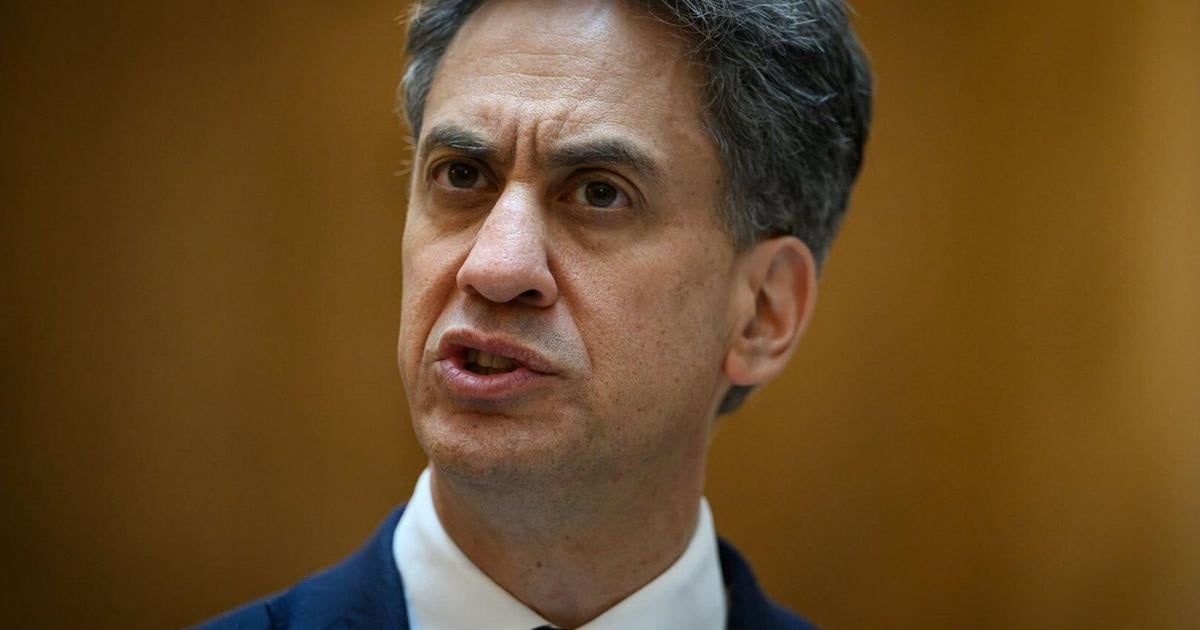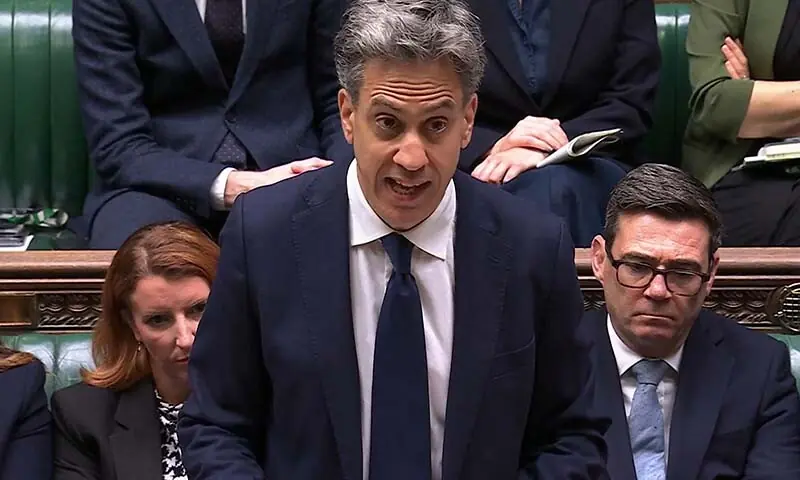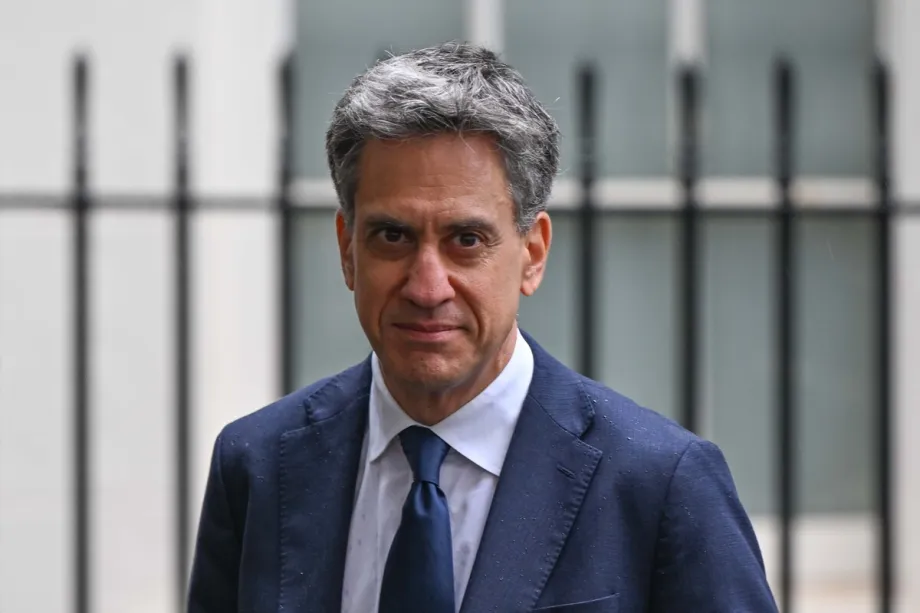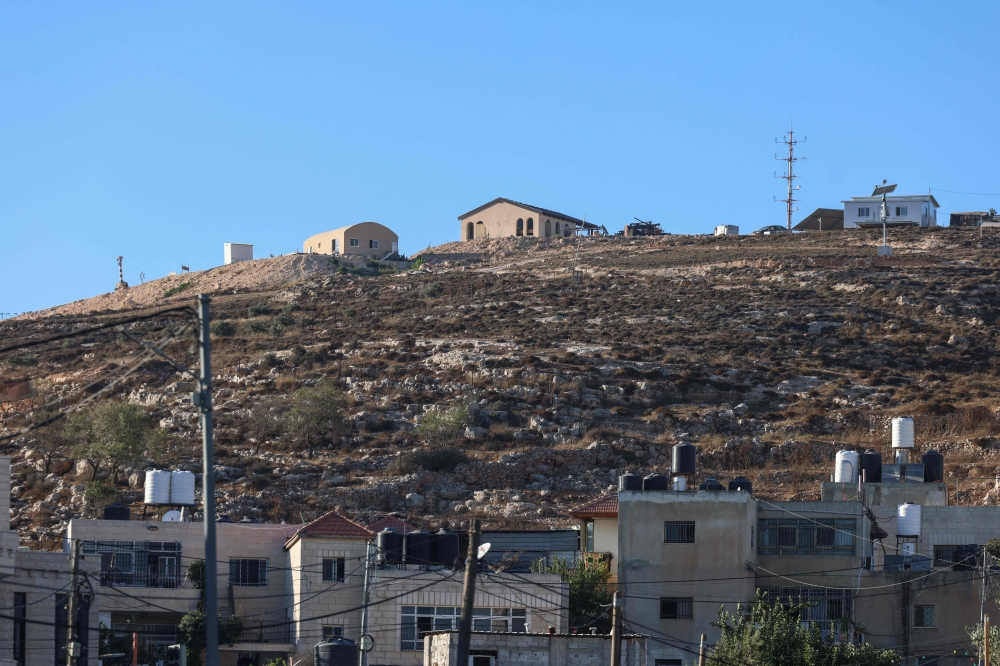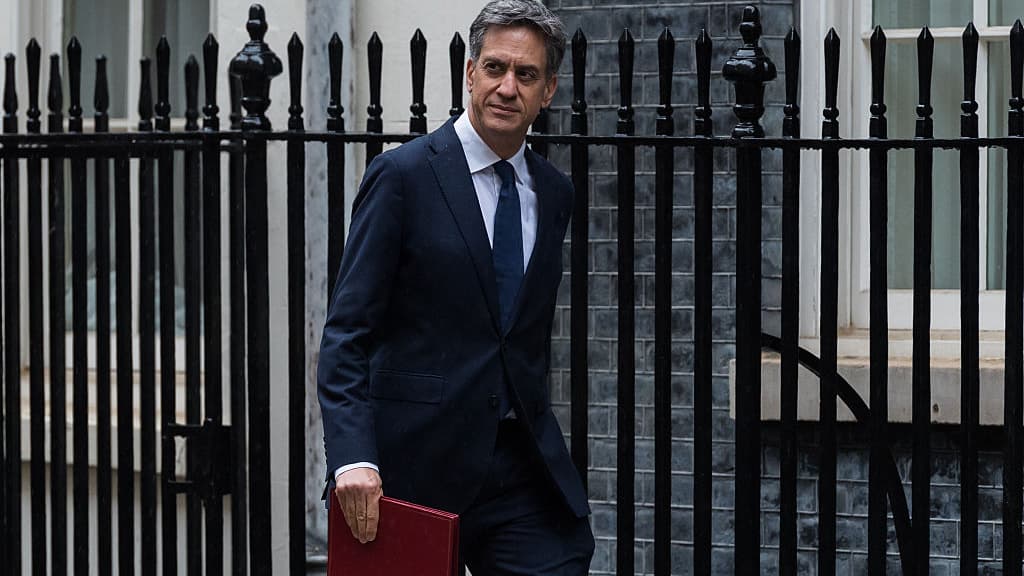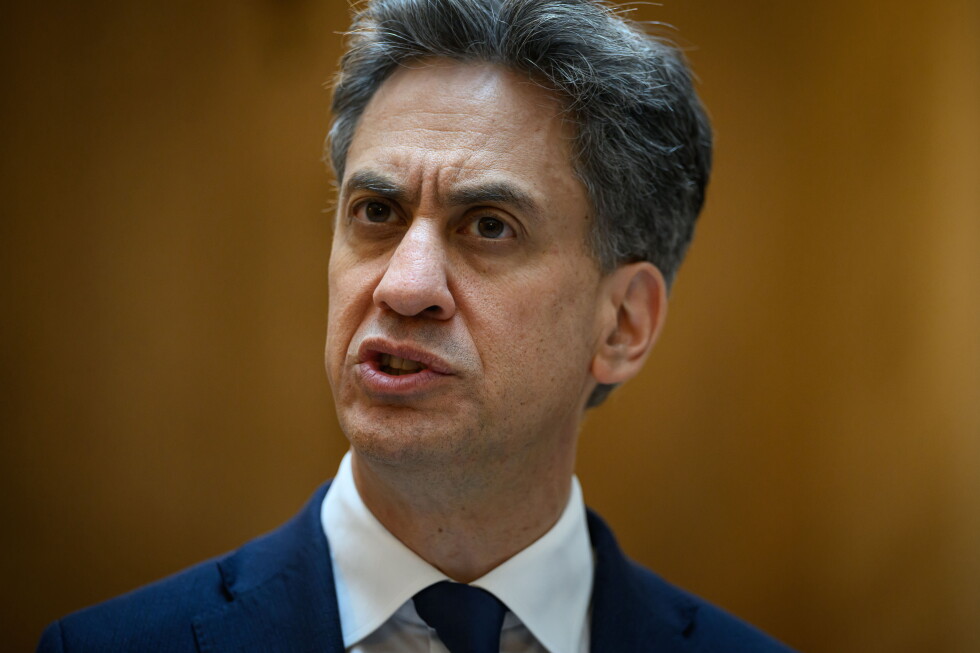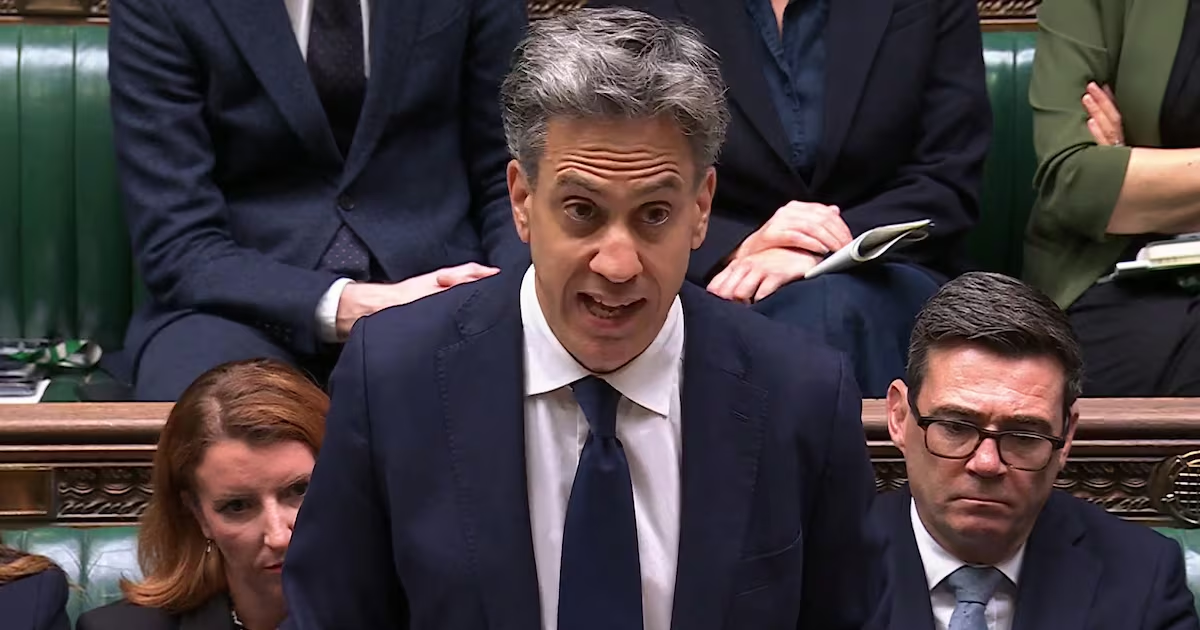
The UK Foreign Secretary Ed Miliband has accused Israel of “ethnic cleansing” in the occupied West Bank as a dozen countries backed restrictions on trade with settlements in response to rising attacks on Palestinians.Mr Miliband said the ban would be introduced through a “comprehensive sanctions regime”, as he described Israel’s illegal expansion into the West Bank as “ethnic cleansing”.“We will take action against specific companies and individuals who provide services such as construction, infrastructure, financing, or real estate for settlement expansion,” he told parliament on Tuesday.Israel responded by closing the British consulate in Jerusalem and expelling British diplomats from the International Gaza Support Centre in Kiryat Gat. Foreign Minister Gideon Saar said the sanctions represented “blatant meddling in Israel’s elections” and “racism” as he announced his country's response.“We have nothing against the British people. We know that we have many friends in Britain. Unfortunately, a hostile Labour government is in office, systematically acting against the state of Israel,” he said at a press conference.The Palestinian presidency welcomed the measures as an “important step towards confronting Israel’s colonial settlement system and its violations against the Palestinian people”, and called on all European countries to “follow the British position”.Occupation declared 'unlawful'The UK government now considers Israel's occupation of the Palestinian territories to be unlawful, Mr Miliband added.“The British government has rightly said settlements are illegal, but we have remained silent on the question of the legality of the occupation as a whole, which in 2024 the International Court of Justice concluded was unlawful,” he said.“Today, I announce that the official view of the British government is that the occupation is unlawful because of Israel's entrenchment of its control, its intention to extend permanent sovereignty, and its expansionist agenda via illegal settlements,” he said.A masked Israeli settler stands near the Kaabneh Bedouin community east of Taybeh, near Ramallah. AFPShow caption: A masked Israeli settler stands near the Kaabneh Bedouin com…Joint actionA statement from the UK Prime Minister Andy Burnham, French President Emmanuel Macron and Canada's Prime Minister Mark Carney pointed out the move came a year after co-ordinated recognition of Palestine as a state. “The time has come to take further action to uphold our commitment to protect the two-state solution, our interests and to stand up for our values, before it is too late,” the leaders said. Marco Rubio, US Secretary of State, ruled out Washington joining the initiative. The group of 12 countries said on Tuesday that they would back or consider restrictions on trade in goods with Israeli settlements in the West Bank that are illegal under international law. French Foreign Minister Jean-Noel Barrot said the West Bank was “close to exploding”.“Why are we doing this? Because the West Bank is close to exploding – there is frenzied expansion of the settlements, a flare-up of violence against Palestinians by extremist settlers, and acts of terror which have been attacked by Israeli authorities themselves,” said Mr Barrot.The joint statement pledged ongoing efforts to raise pressure on Israel. “Today, Canada, Denmark, Finland, France, Iceland, Ireland, Norway, Poland, Portugal, Spain, Sweden and the UK confirm their intention to introduce national and/or support European restrictions on trade in goods with settlements which are illegal under international law, or that they are actively considering these and other measures, in accordance with their national procedures,” it added.Mr Miliband said the move brings the UK in line with the International Court of Justice’s advisory opinion, and that he hopes the measures can be a “prelude to justice”.“The British government agrees that there is ethnic cleansing of Palestinians in areas of the West Bank, perpetrated by settler terrorists,” he said. “All too often the Israeli government has turned a blind eye to this and worse, members of it have made statements and taken actions to support the forced displacement of Palestinians.”He said the UK’s suspension of more than 30 arms licences used by the Israeli military in Gaza would be extended to include “all licence applications for arms and other exports that materially contribute to the occupation”.“In effect, a double lock against arms sales. This means the ban on such exports will now remain in place as long as the occupation persists,” Mr Miliband said.He stressed that the sanctions would be against only illegal settlements, not Israel, and spoke of his opposition to the Boycott, Divest and Sanctions movement (BDS). He spoke of his “gratitude” to Israel for giving his widowed grandmother, a Holocaust survivor, a home, and of his memory of picking oranges on the kibbutz where his cousins lived.“My personal story and that of thousands of British Jews is one of the many reasons why I say to anyone here or around the world who questions Israel’s right to exist as a homeland for the Jewish people: you are wrong, and we will call you out,” he said.The new Israeli outpost settlement Maale Arugot near the Palestinian city of Bethlehem. EPAShow caption: The new Israeli outpost settlement Maale Arugot near the Pal…Iran nuclearThe UK government will reimpose “major economic sanctions” on Iran, “in line with the EU and the United States”, Mr Miliband said on Tuesday. It will also be reporting Iran to the UN Security Council this week “for its nuclear violations”, he added.The Iran-backed Lebanese militia Hezbollah's financing arm, Al Qard Al Hasan, will also be subject to sanctions, Mr Miliband said. He stressed that the UK would continue to support Israel in its fight against Iran and its proxies.“Tackling these important threats is just one of the important shared national security interests we have with Israel and with which we continue to co-operate,” he said.Overdue measuresThe sanctions on settlement goods are the UK government’s most serious step to date, and come after growing pressure on the Labour government to do more to hold Israel to account.To date, the UK has sanctioned around two dozen organisations and individuals linked to settler violence, and has excluded settlement goods from the preferential trade tariffs applied to Israeli products. Supporters of the ban say that the measure is long overdue. Hussam Zomlot, Palestine's ambassador to the UK, said the “courageous” ban “follows naturally” from the UK's recognition of a Palestinian state last year. But he also called on further measures to end the UK's involvement in the occupation, including a full arms embargo, and sanctions on Israeli agencies and institutions that support illegal settlements.“Protecting the Palestinian people from illegal occupation, annexation and apartheid, ending the ongoing genocide in Gaza and holding to account those who have committed war crimes: these are essential for making the recognition real, meaningful and enduring,” he said.Almost half of the UK (46 per cent) supports a ban on trading with illegal Israeli settlements, compared to 18 per cent according to polling by the European Council on Foreign Relations, published on Tuesday. That support rises to nearly three quarters – 72 per cent versus 28 per cent – when excluding those who did not voice an opinion. Implementation challengesThere are still questions about how the ban will be enacted.One major concern is how the government will distinguish between Israeli goods and those originating from illegal settlements. This concern is shared by both backers and critics of the ban.Labour MP Sarah Champion, who heads the International Development Committee, highlighted that up to 40 per cent of Israeli settlement goods are mislabelled when imported to the UK.“British consumers should not be placed in a position where their everyday purchases may unknowingly support illegal settlements,” she wrote in a letter to the Minister for the Middle East, Stephen Doughty, earlier this week. Likewise, the group Labour Friends of Israel fear that the ban on settlement purchases could lead to a “de facto boycott” of all goods from Israel, because many Israeli companies have financial links to settlements.Many of the exports that originate from West Bank settlements are agricultural. Israel has constructed illegal farms, vineyards, olive tree groves and date farms on occupied Palestinian land. Other settlement goods also enter the UK and EU markets. In June, UK health and beauty retail giant Superdrug blocked the Ahava skincare line from its website after suspicion that the company owns a facility in the West Bank.The UK will also need to balance its trade sanctions with support for the Palestinian economy in the West Bank, which is linked to Israel and the settlements. Ms Champion also called on the government to challenge the restrictions that the Israeli occupation imposes on Palestinian goods.Some campaigners would also like to see the ban extended to goods from Israeli settlements in the Golan Heights, the Syrian territory that Israel has occupied since 1967.Liberal pro-Israeli campaign groups in the UK have also argued that punishing Israel could embolden the far-right before elections in October.Labour MP and former businessman Steve Yemm told The National there was a need to get the “technical questions right” before putting the sanctions into action. “There are difficulties around mixed supply chains, being able to properly understand the origin of goods at companies that operate in a number of geographies in Israel,” said the Labour MP. He was also concerned that it could lead to great anti-Semitism in Europe and the authorities needed to be “incredibly vigilant about that”. Cross-party agreementThe former Conservative cabinet minister Kit Malthouse questioned why it needed to take nine months for the sanctions to begin, but also told The National that he welcomed the move, because “some sanity and regulation needs to be brought to what is currently a savage wild west” in Israel. He argued that the decision demonstrated Britain was not “ineffectual and therefore irrelevant” in the Middle East. “It is an assertive approach towards international law and all of our security lies in the impartial and rigorous application of international law,” he added. The Labour MP Kim Leadbeater told The National that it was an “extremely powerful statement” that had consensus in parliament. “This is about certain ministers within the Israeli government; it's not about Jewish people anywhere around the world,” she said. “I think there is an international feeling that we can't go on as we are, and the things that happened over the summer, some of the comments that were made by Israeli politicians, were wholly unacceptable.”
UK leads 12-country ban on illegal Israeli goods over 'ethnic cleansing' of Palestinians | The National
France and Canada also part of joint action to tackle expansion in West Bank
1,697 words~8 min read