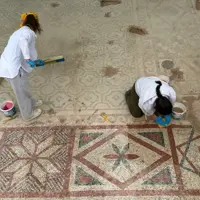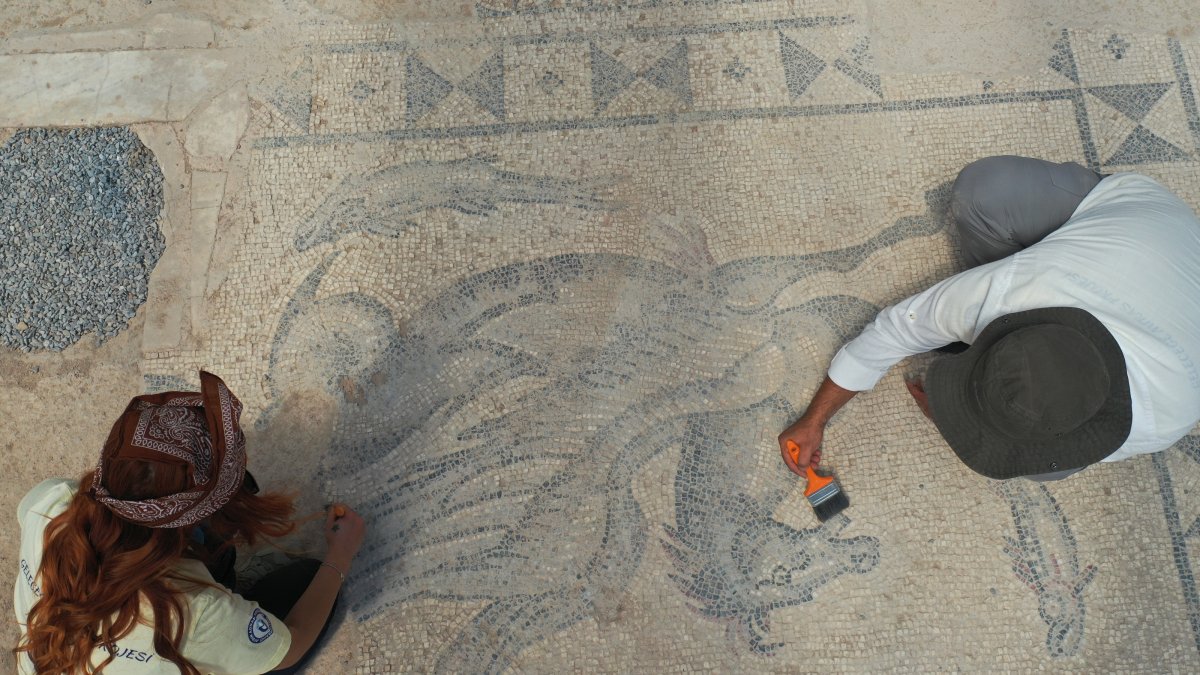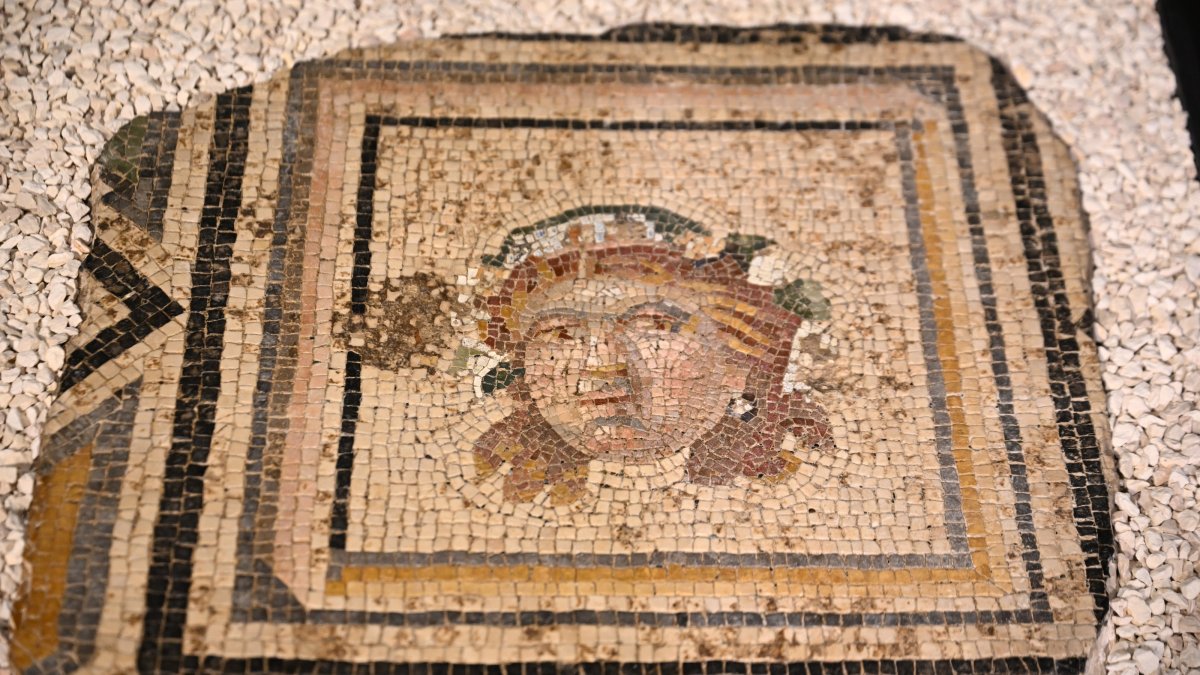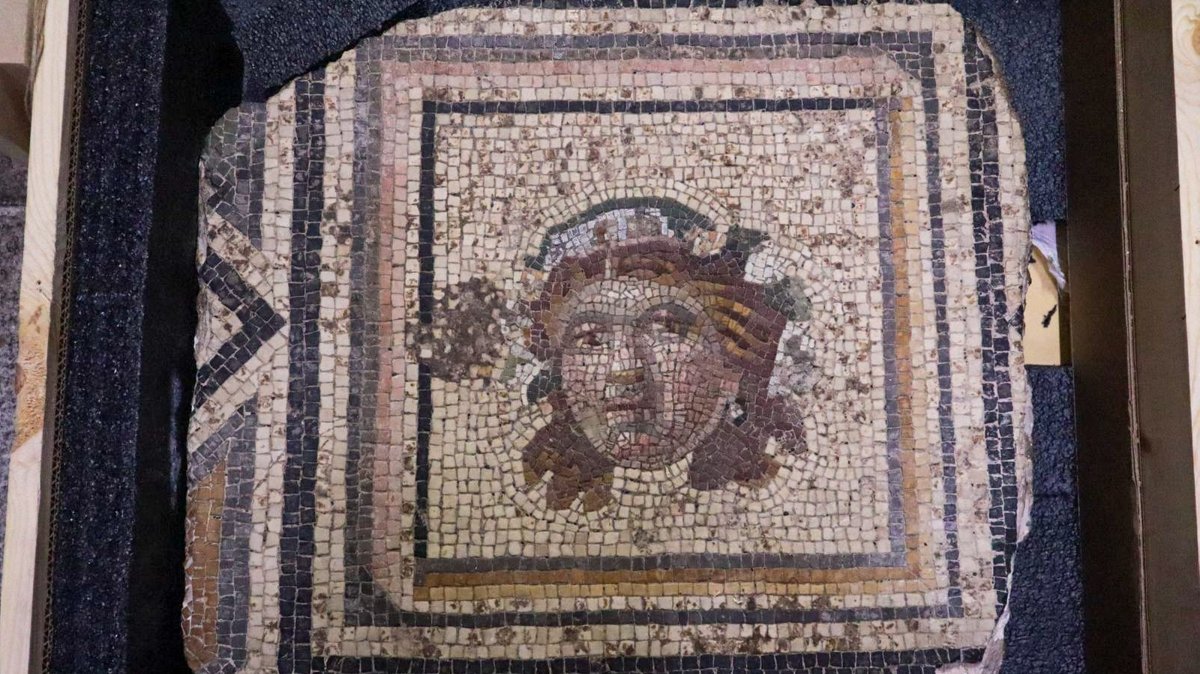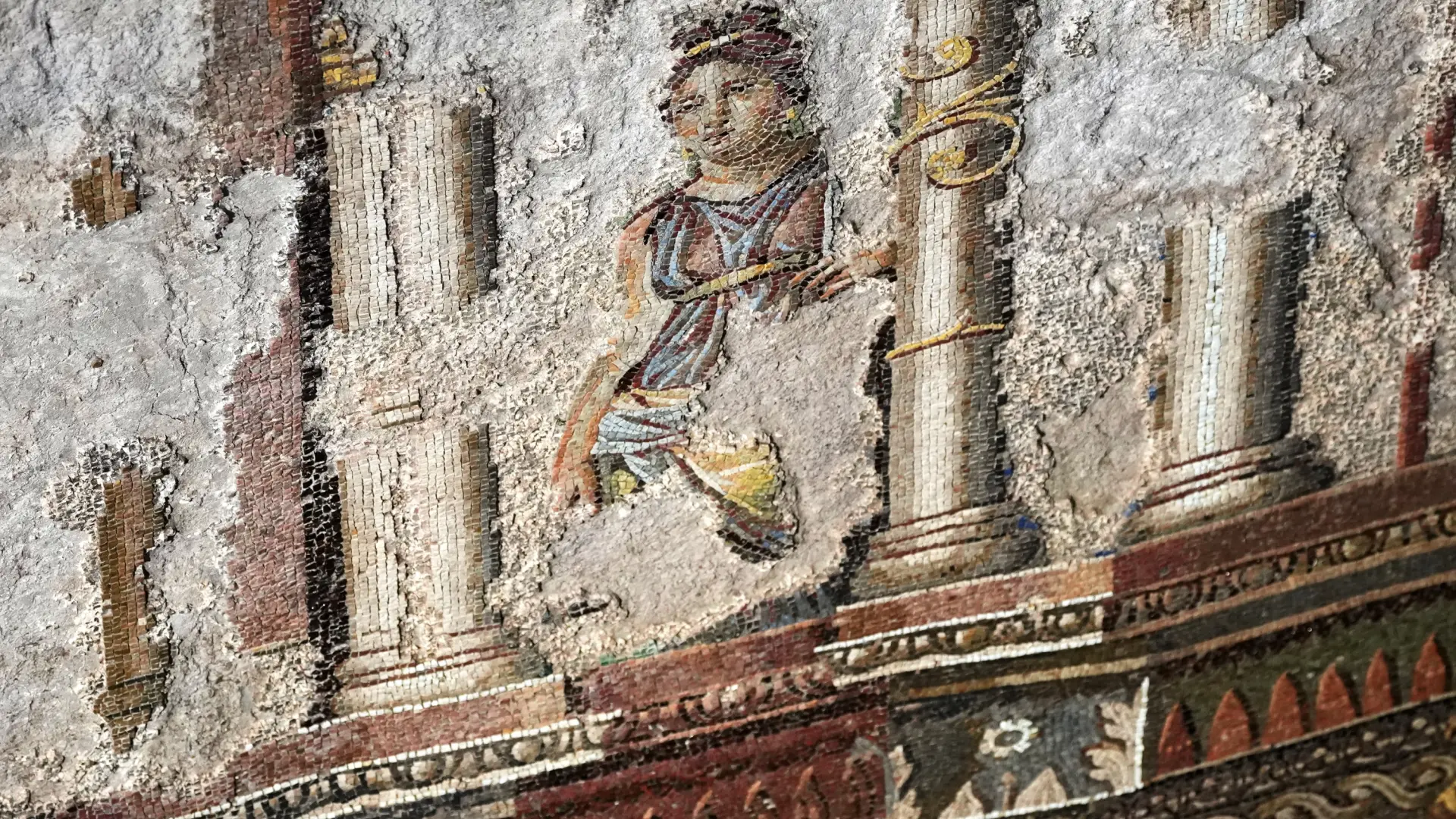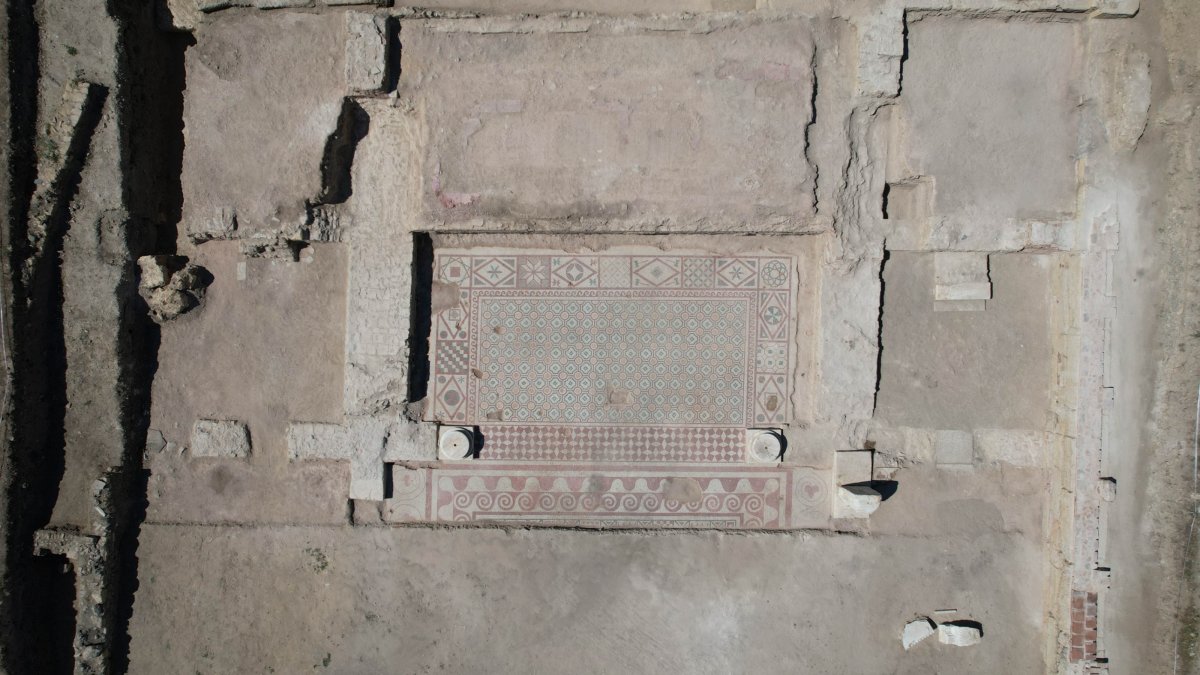
Türkiye's Culture and Tourism Minister Mehmet Nuri Ersoy has said archaeologists excavating the ancient city of Pompeiopolis in the Taşköprü district of Kastamonu have uncovered about 105 square meters (1,130 square feet) of well-preserved floor mosaics dating to the fourth century A.D., along with a head of Eros believed to date to the second half of the second century.
Ersoy made the announcement in a social media post on Tuesday about ongoing excavation, documentation and conservation work at the ancient site in the Black Sea region.
He said new traces spanning the Roman Imperial period through Late Antiquity were being uncovered at Pompeiopolis, highlighting discoveries made in the central nave of the site's basilica.
"We have uncovered approximately 105 square meters of very well-preserved floor mosaics dating to the fourth century A.D. and featuring geometric compositions," Ersoy said. "Moreover, the entire mosaic floor in the central nave has not yet been uncovered. Our excavations continue."
A head of Eros, the Greek god of love, discovered during excavations at the ancient city of Pompeiopolis in the Taşköprü district of Kastamonu, northern Türkiye, Sept. 8, 2026. (AA Photo)