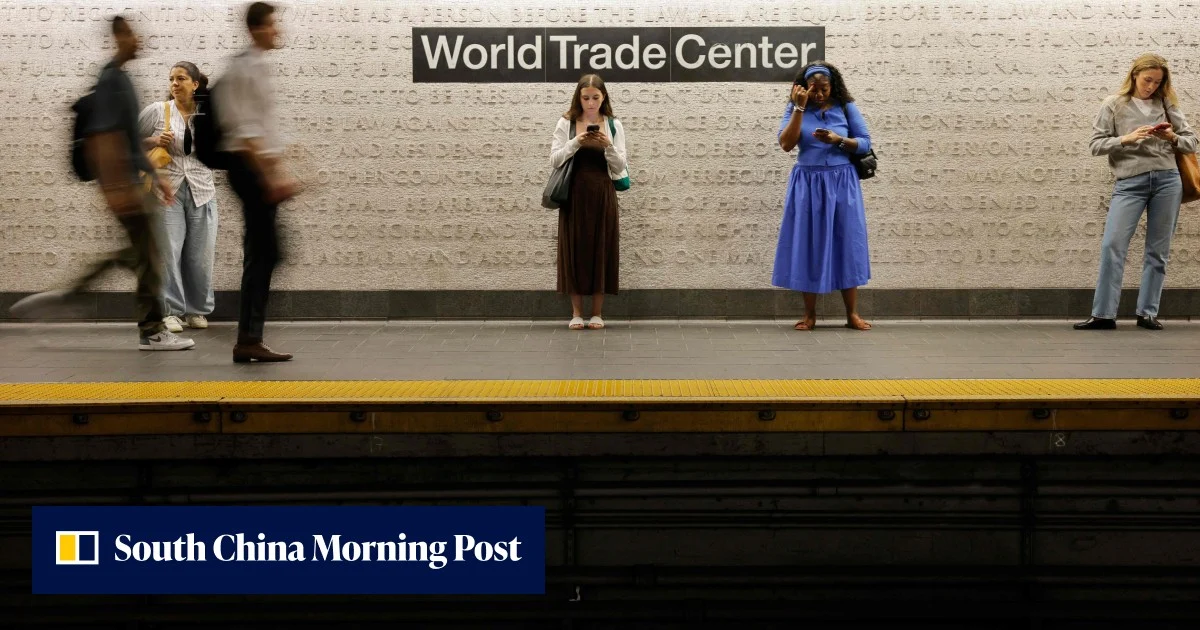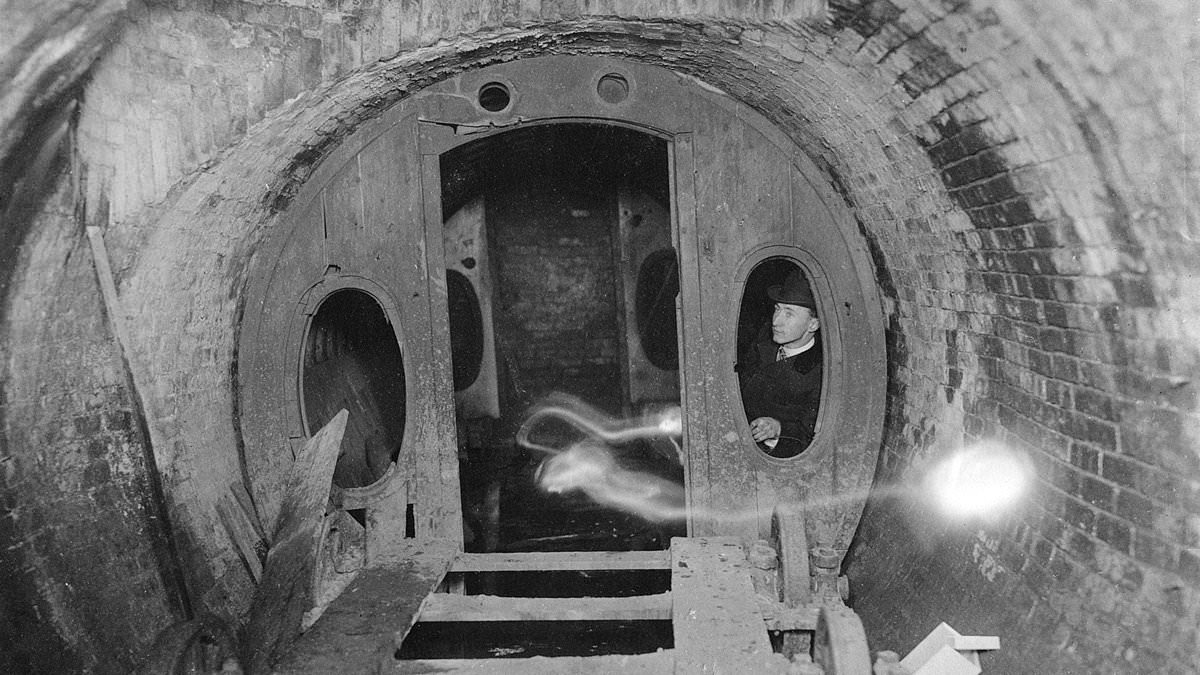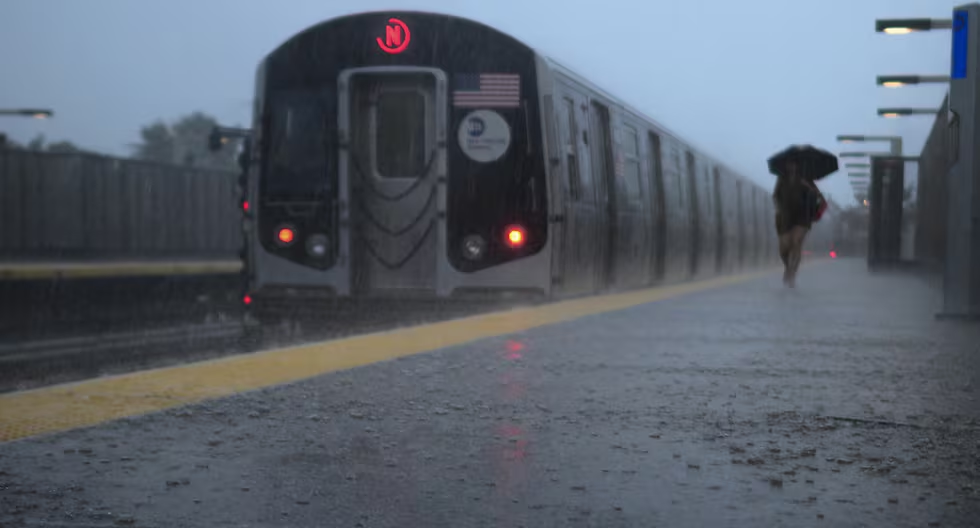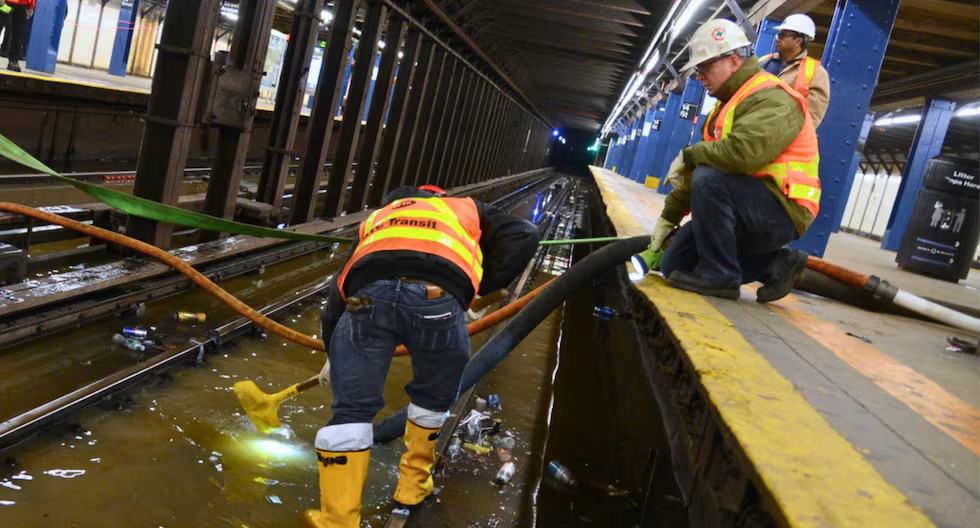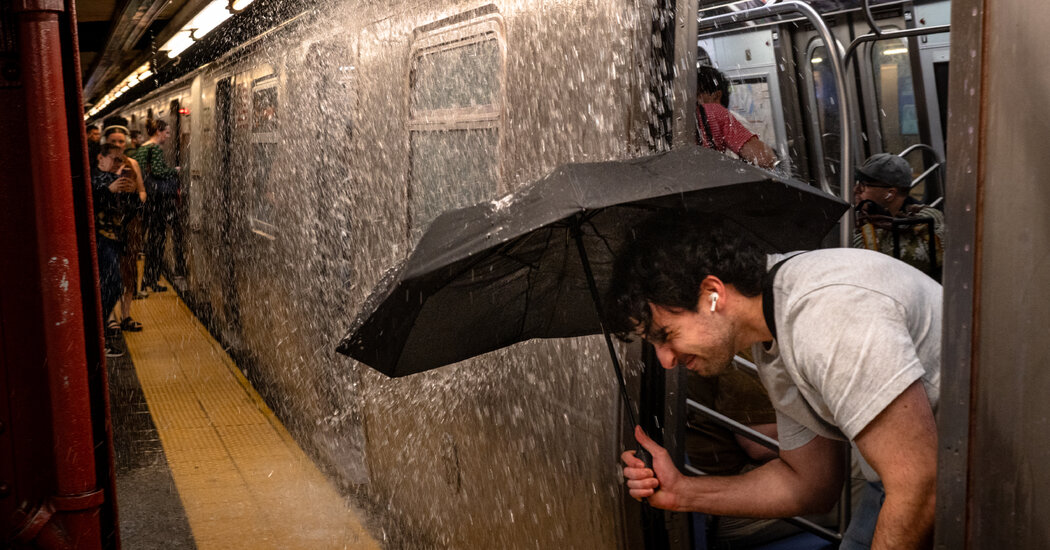
You have a preview view of this article while we are checking your access. When we have confirmed access, the full article content will load.On a baking hot day in July, I took the 2 train to the 116th Street station at Malcolm X Boulevard in Harlem. The station’s name shone from the wall on ocean-blue tile, along with glass mosaics of jazz musicians and civil rights leaders. The place looked, unsurprisingly, a little worn; paint was flaking around a gash in the subceiling and off some of the green platform columns, and the Langston Hughes mosaic panel was stained brown from dripping water. Water also glimmered in the tracks, mixed with trash. I was there to meet some of the top construction executives for the Metropolitan Transportation Authority, the entity that runs the subways, to see what it would take to floodproof the system.ImageFlooding in Penn Station, Aug. 20. New York City is no longer dealing just with the usual water challenges of the past century. The rain has become worse — a lot worse.Credit...Hilary Swift for The New York TimesThe 116th Street station was shipwrecked during Hurricane Ida in 2021, which dumped a record-breaking 7 to 9 inches of rain across the city — a total liquid weight of some 160 million tons. Sheets of water from the ceiling cascaded onto one of the platforms — engulfing the green columns, obscuring some of that mosaic tile and drowning the tracks below. If the water hadn’t been dirty and underground, it might have looked like a water park attraction, the trains like logs speeding through a flume. The water came down from air vents cut into the sidewalk, which became funnels when enough water gathered on the surface.The station is among the oldest and most flood-prone in the city. The area’s former state senator — and later New York governor — David Paterson remembers it being a problem zone as far back as the late 1970s. “If you wanted to start working out, and you wanted to maybe do some swimming, all you had to do was go to 116th Street-Lenox Avenue,” Paterson told me. “By the time you got to the bottom of the stairs, you’d be immersed in water.”The conditions of the station’s construction explain why subway flooding is so hard to stop. More than 120 years ago, the first portions of the transit system were built mostly by hand. The Manhattan schist bedrock was hard and expensive to cut through, so stations like 116th Street were formed in shallow trenches — meaning that rain never had to travel very deep to cause chaos. Water periodically seeped up from below too, as tunnel workers uncovered ancient underground streams while excavating; since then, holes have been periodically plugged and patched with concrete and grout. Again and again, the M.T.A. has been forced to jury-rig solutions.Even as construction technology advanced over the years, these problems persisted. The subway was largely locally funded for decades, predating the strong 20th-century federal government that opened its checkbook for more-modern mass transit in Washington and San Francisco. Cue eternal financial issues, which breed political and operational ones. Underground, there is always something else to fix.Thank you for your patience while we verify access. If you are in Reader mode please exit and log into your Times account, or subscribe for all of The Times.Thank you for your patience while we verify access.Already a subscriber? Log in.Want all of The Times? Subscribe.AdvertisementSKIP ADVERTISEMENT
New York’s Subways Weren’t Built for This
In an era of heavy rain, a transit system with 47,000 openings is bound to leak.
579 words~3 min read