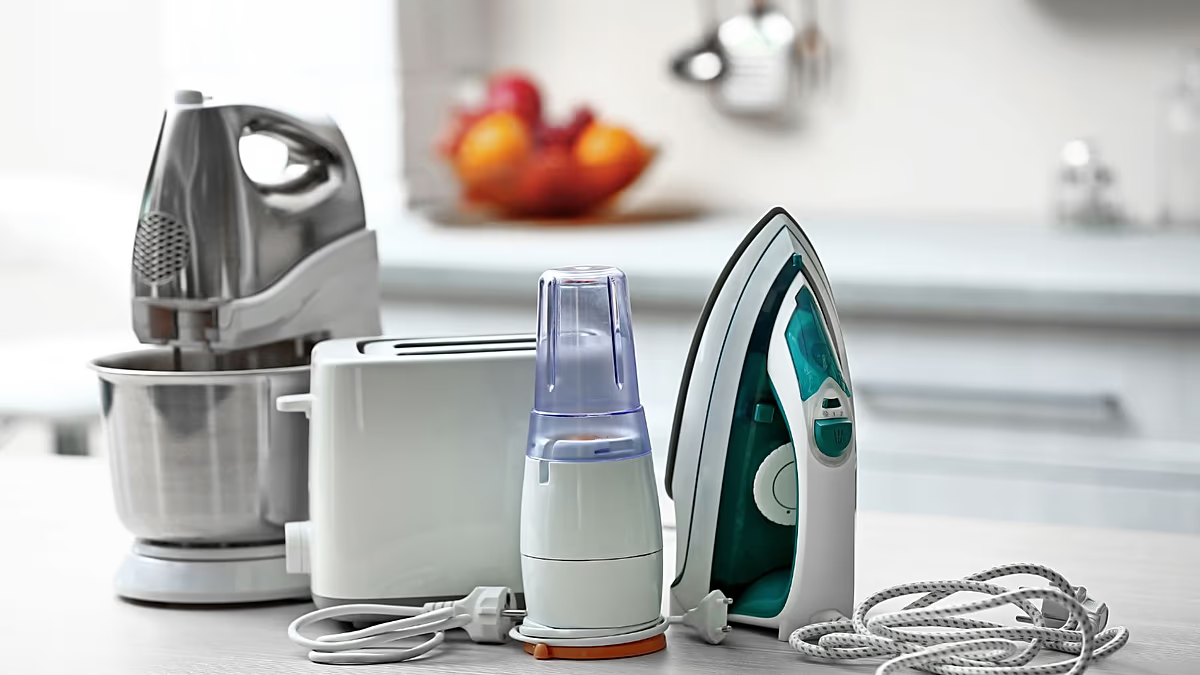
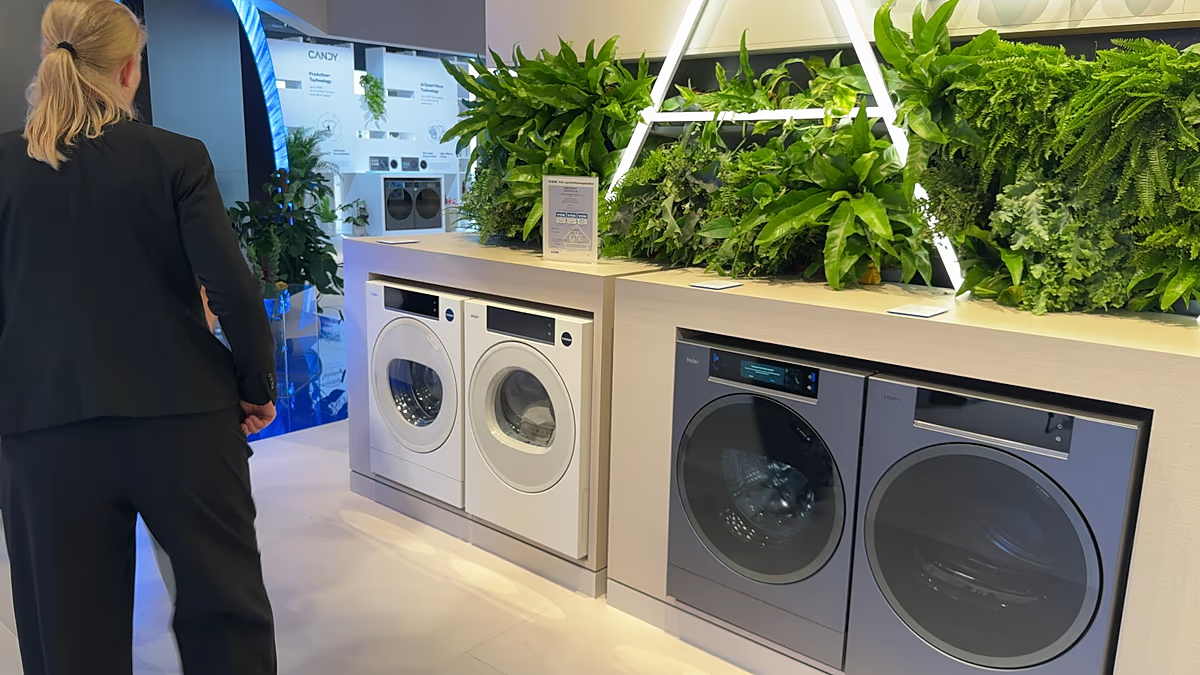
Europeans create 35 million tonnes of waste each year by throwing away broken appliances. France and Belgium have repair rates of 18% and 15%, respectively. Of roughly 28 million household breakdowns a year, only 5 million result in a technician fixing the device.
Some 77% of citizens would rather repair products than replace them. Yet only 5% of washing machines and 33% of vacuum cleaners are priced at a point where professional repair makes economic sense. Most fall into a “borderline” or “unviable” zone, where a new machine is cheaper than the spare parts.
“Access to repair is not the main bottleneck. The price is,” said Alex Bunodiere, a PhD researcher in KU Leuven’s Life Cycle Engineering research group.
The European Union wants to change this through new “Right to Repair” laws, forcing manufacturers to provide affordable spare parts, tools and manuals while banning software blocks. The aim is to give Europeans transparent quotes and independent local repair options, making it easier to fix rather than buy new.
Built to be replaced