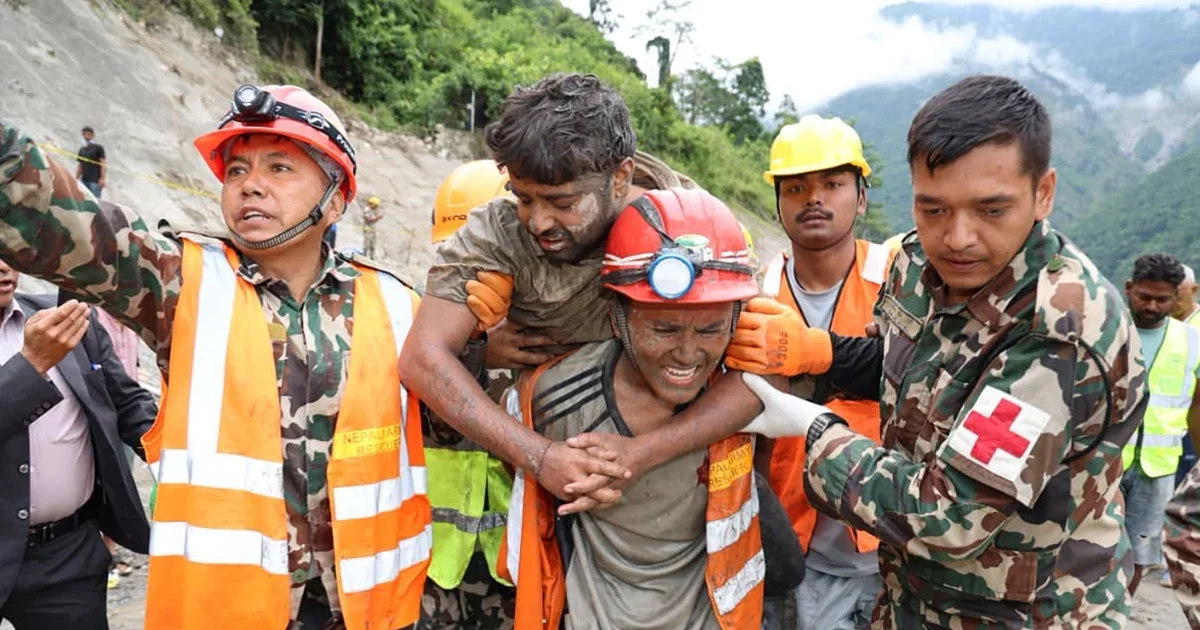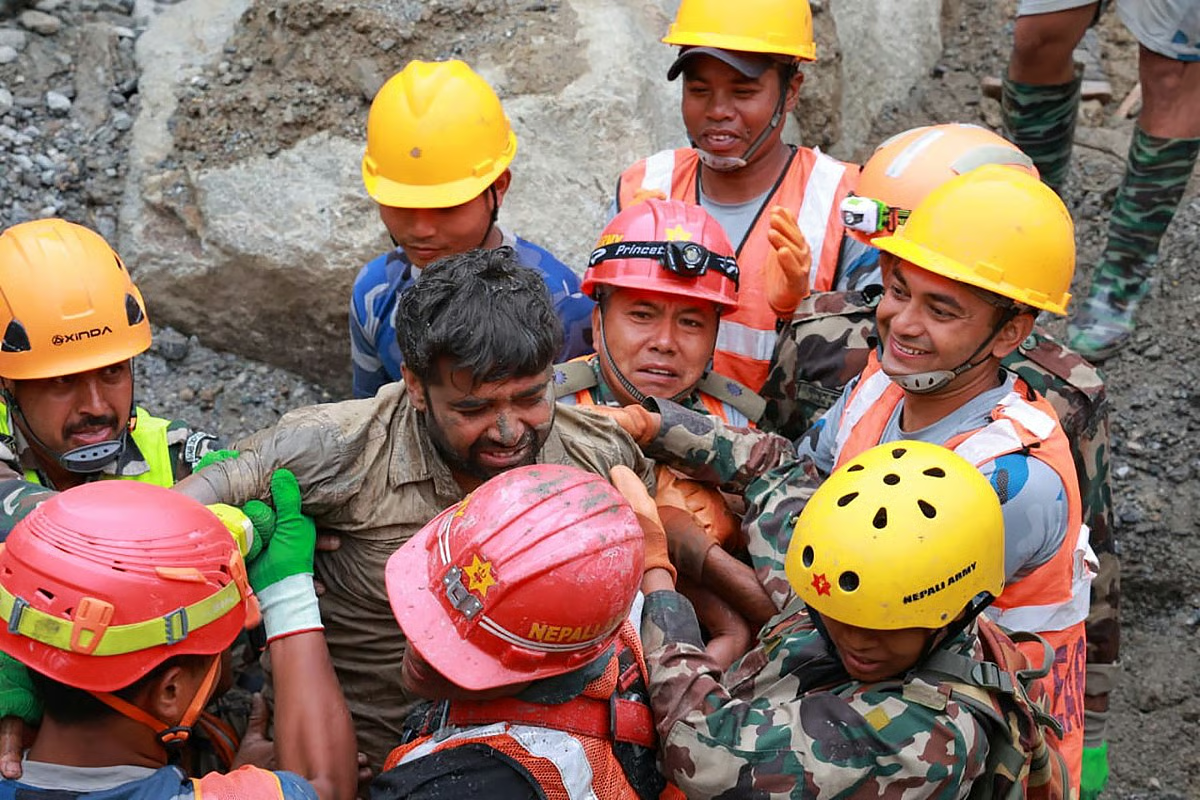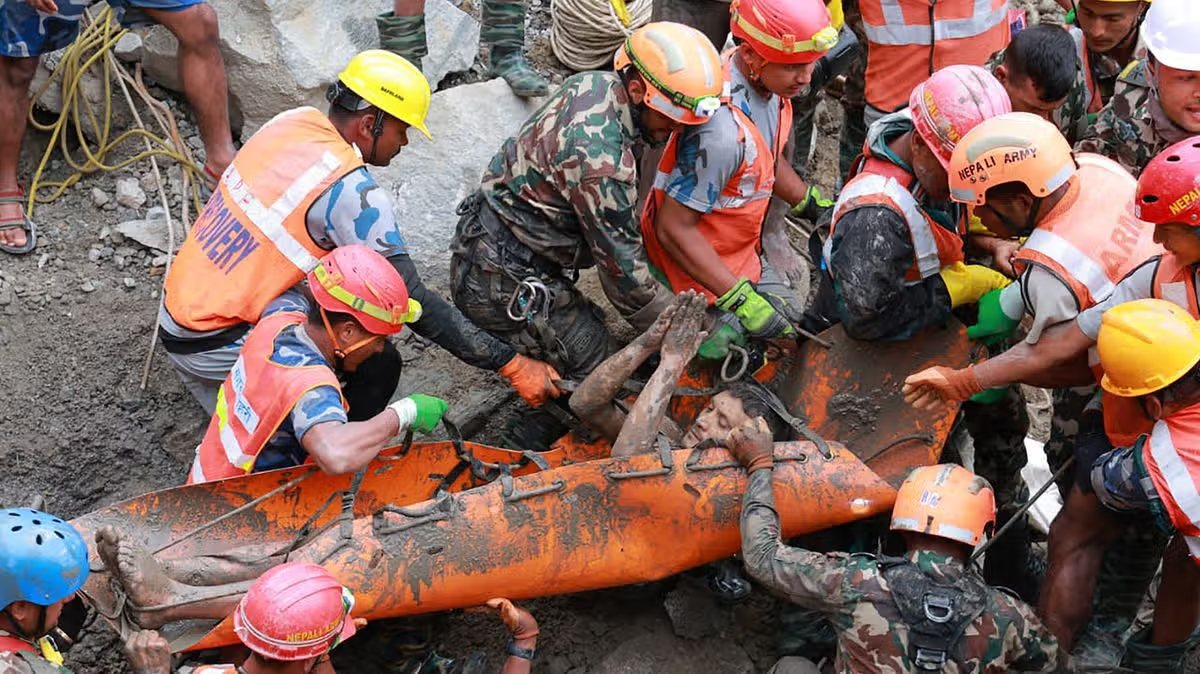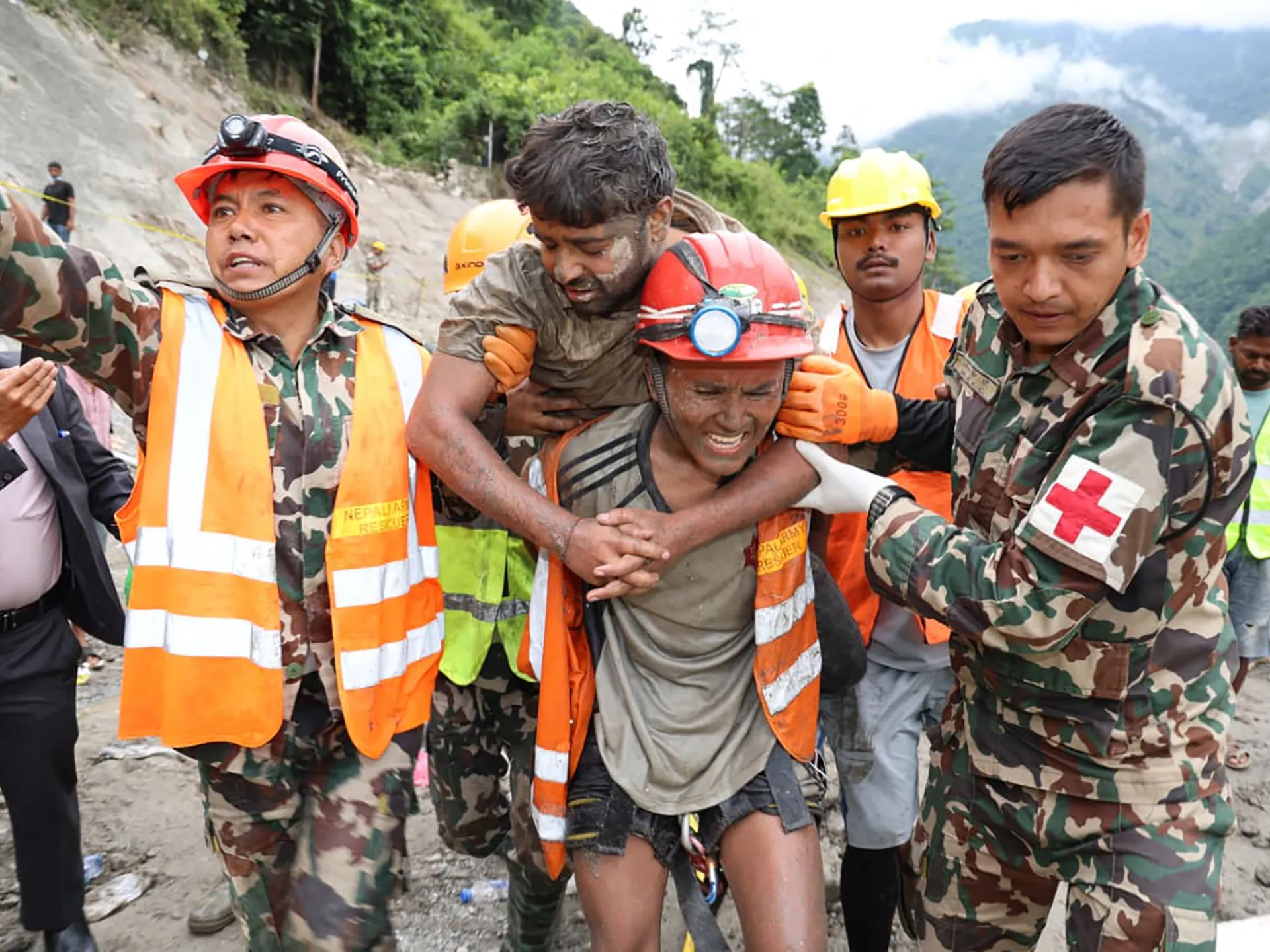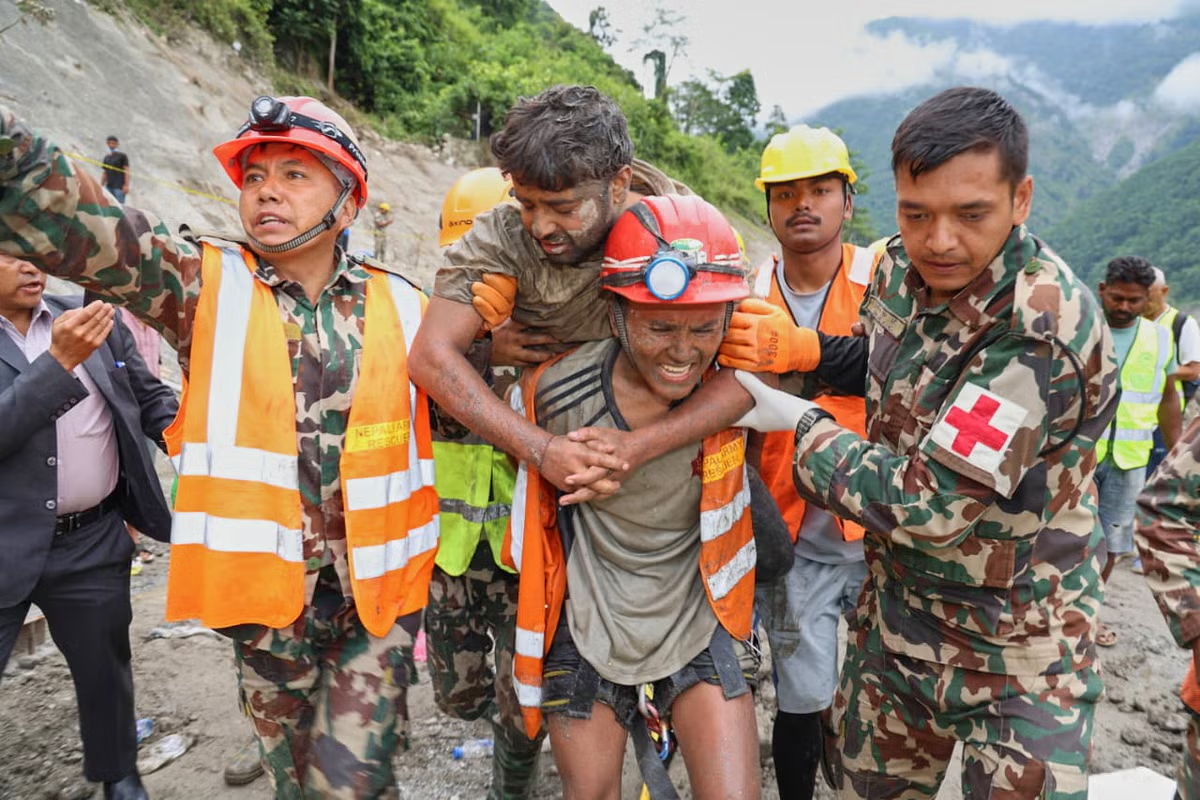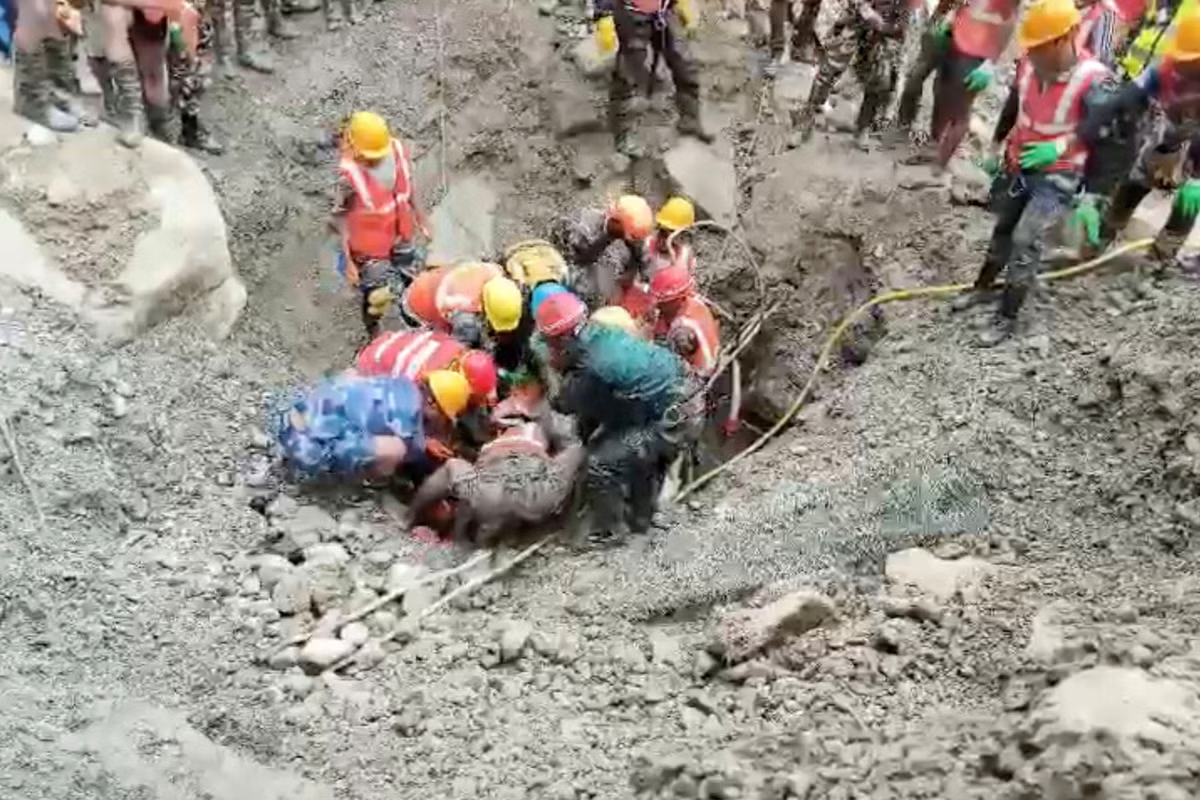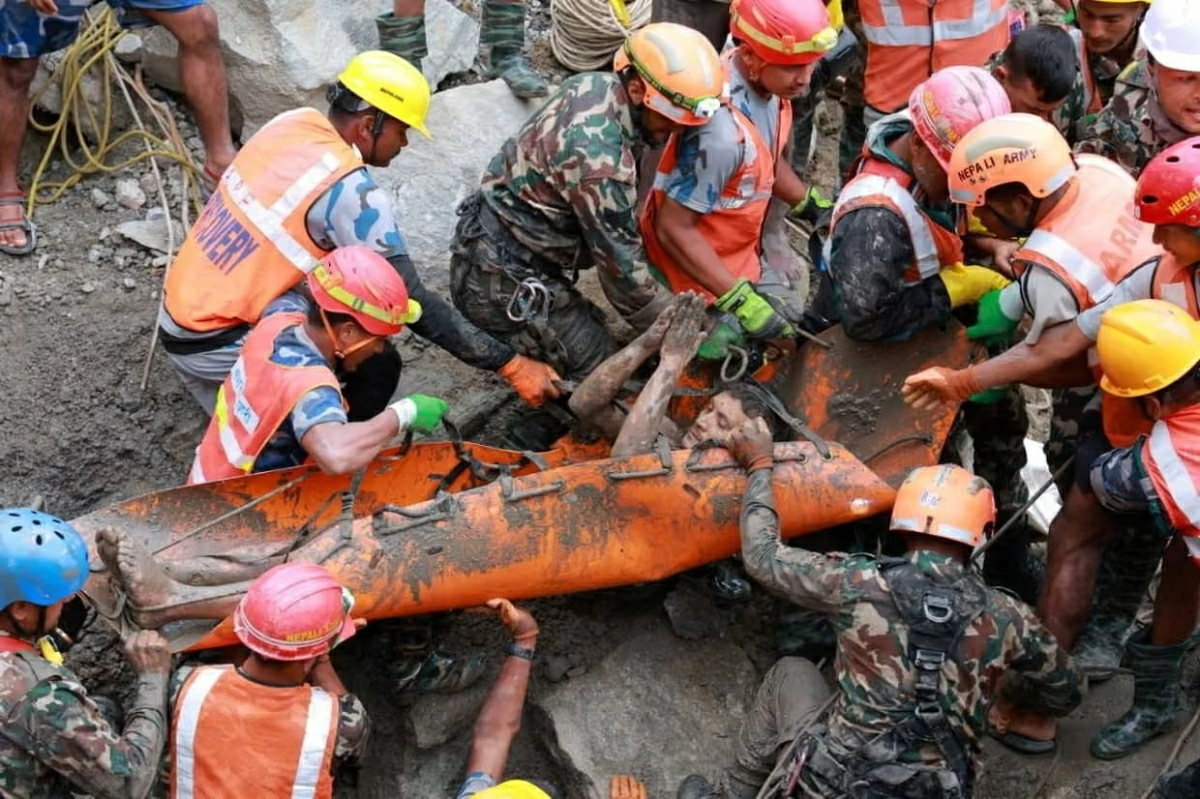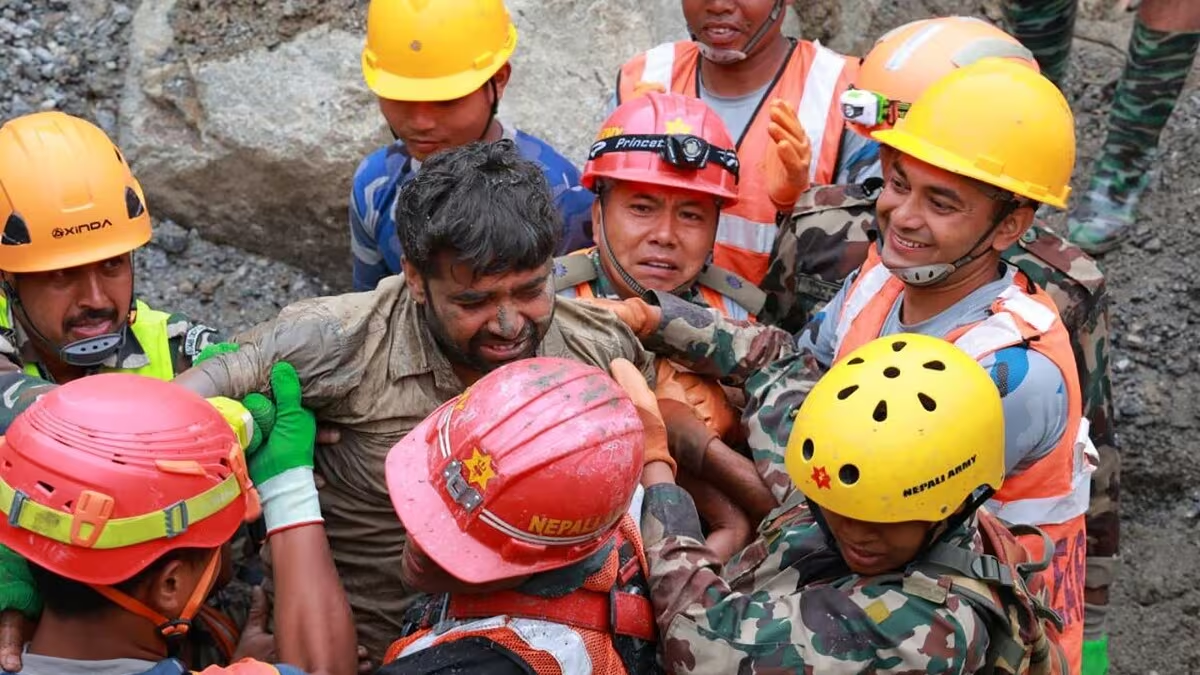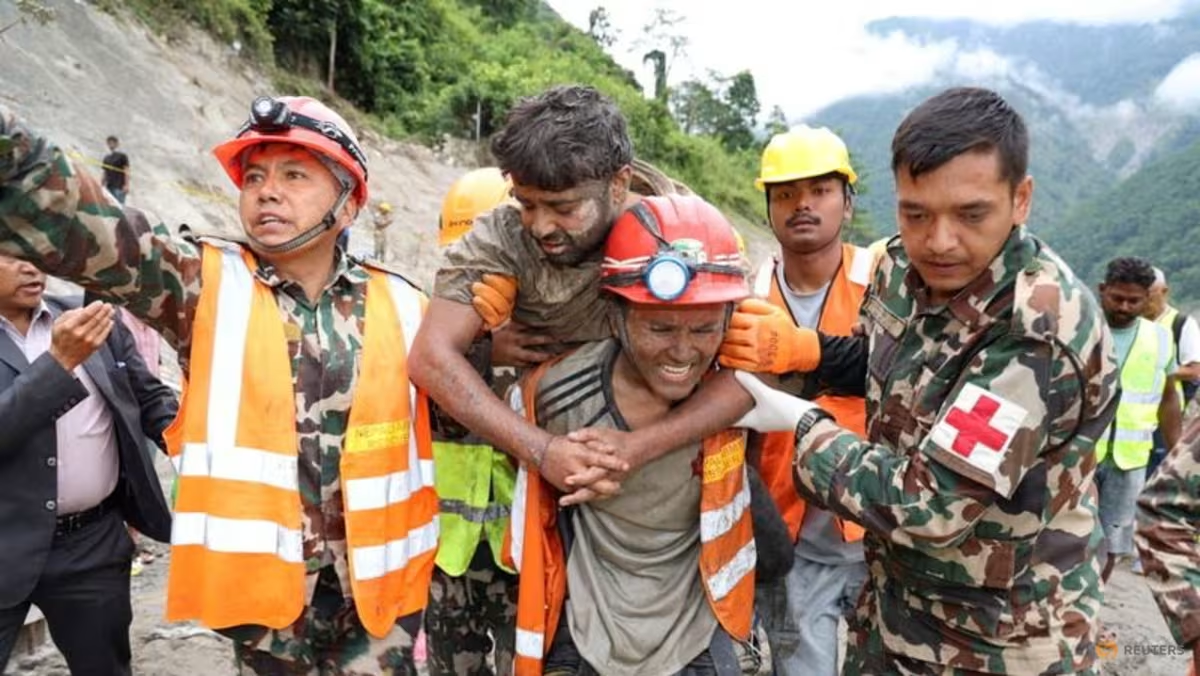
NUWAKOT, Nepal: A delirious Kabir Maharjan drifted in and out of consciousness in a pool of muddy water in complete darkness, trapped for nine days in a tunnel beneath the wreckage of Nepal's worst flood disaster in decades.When he finally awoke at a hospital after a miracle rescue, he did not recognise his wife. Confused, he asked her why she had not given him a bed sooner.Maharjan was one of hundreds of hydropower workers believed to have been buried when a glacier collapsed above Nepal's Trishuli valley on Aug 26, unleashing a wall of mud and water that killed more than 1,300 people and left thousands missing across Nepal and neighbouring Tibet.He and mechanical foreman Sanjay Sah survived in an air-filled chamber, said lawmaker Shri Ram Neupane, a veteran tunnel engineer who helped lead the rescue effort.
Their rescue against the odds has given hope to search teams working at the sites along the devastated valley that some of the 121 workers still believed to be trapped in tunnels as of Monday (Sep 7) are still alive.Reuters has reconstructed the full story of the men's survival and the frantic effort to save them through exclusive interviews with a dozen people, including the previously unreported accounts shared by relatives, engineers, government officials and rescuers directly involved in the operation and a review of site documents, maps, and internal conversations between rescuers.THE MORNINGAt 7.30am local time on the day of the disaster, Maharjan called his wife before his shift at the Upper Trishuli 3A hydropower project.“I have to go inside the tunnel,” he told her. “There won’t be any network inside.”Around 60 minutes later, a glacier collapsed at the Langtang Lirung mountain some 25 miles upstream, causing a landslide so powerful that it formed a wall of water that flattened villages and submerged a network of 12 hydropower projects with nearly 900 workers inside.In the capital Kathmandu, electricity department officials were monitoring the projects' power supplies on their screens. Then the fields started going blank — one after another, stations disappearing from the control panels, falling like dominoes.Suraj Dahal, an engineer at the Nepal Electricity Authority who led parts of the rescue effort, said he was not immediately alarmed because "floods are normal" in Nepal.They soon understood otherwise. Because the 3A station manager was abroad, it took officials two extra minutes to reach out on call to the roughly 40 workers estimated to be inside. By then, at least two hydropower projects upriver had already been hit.