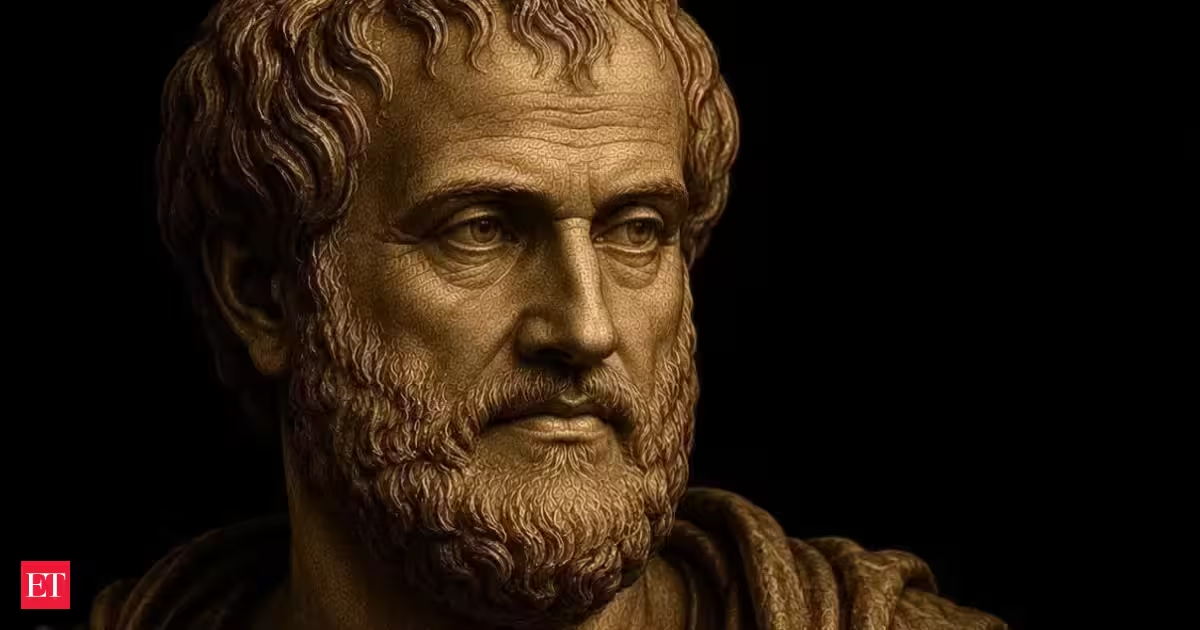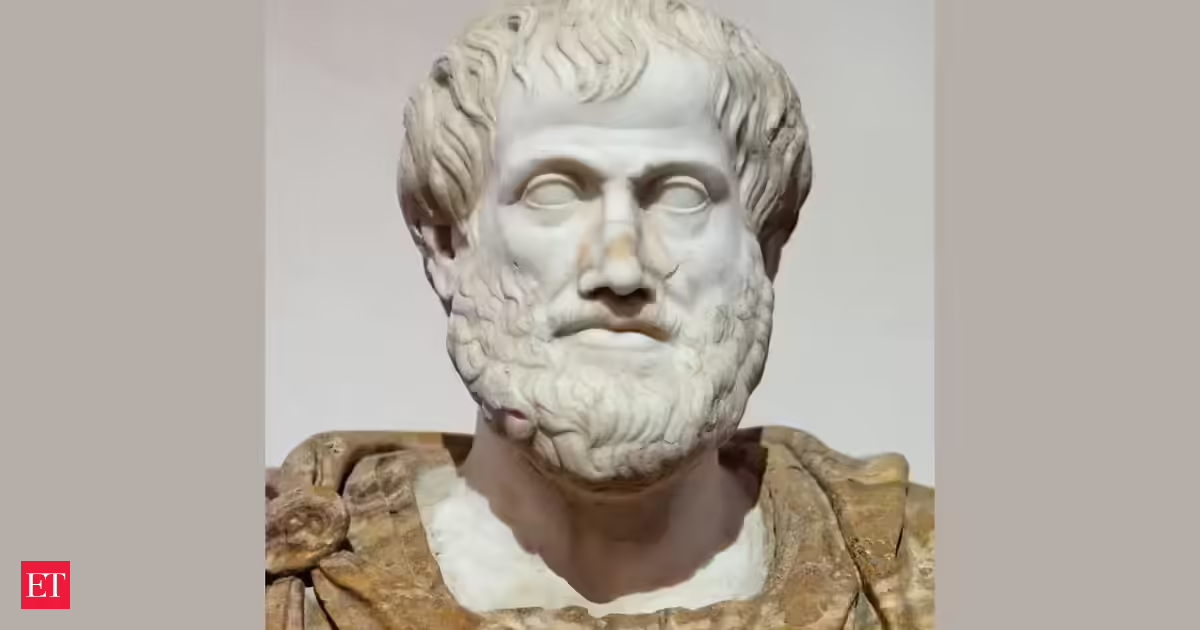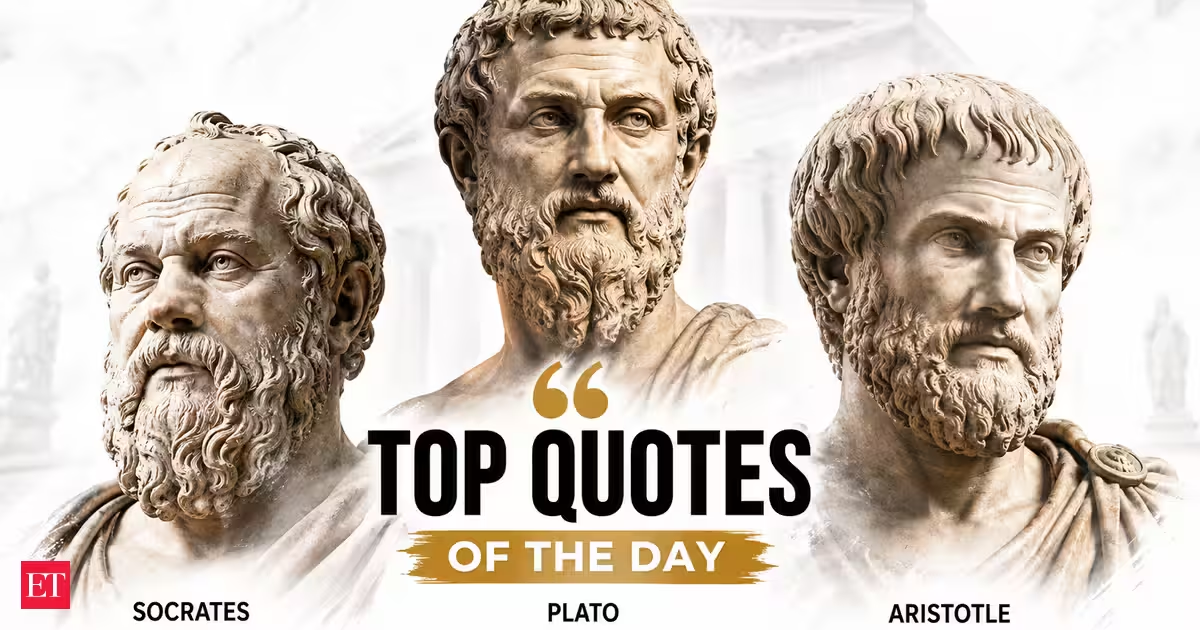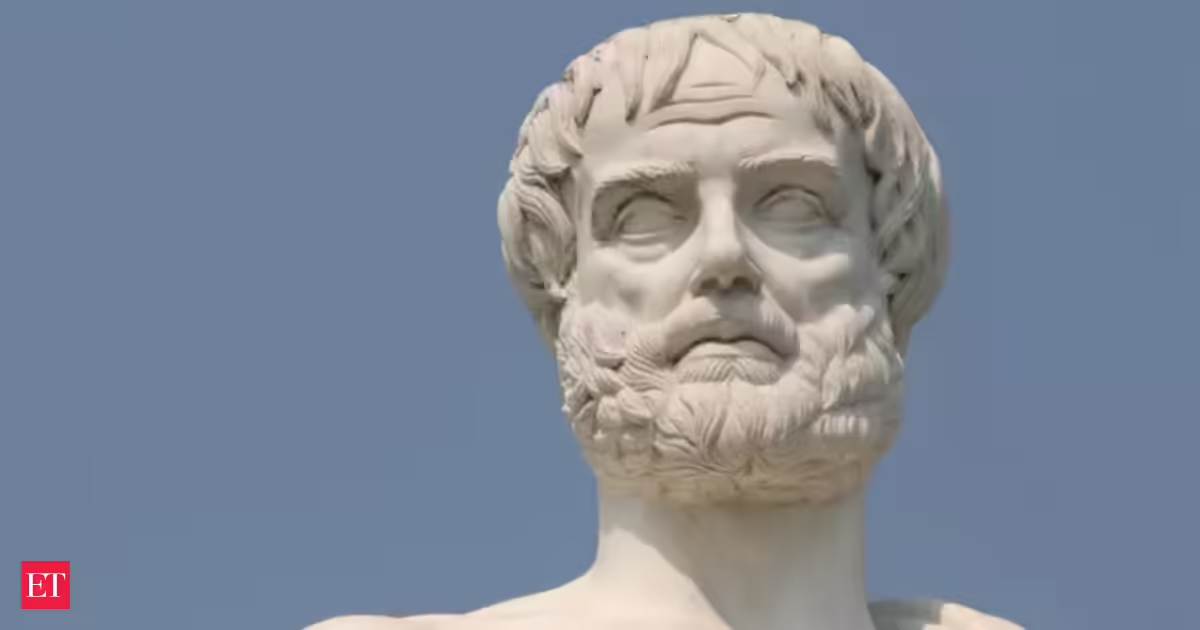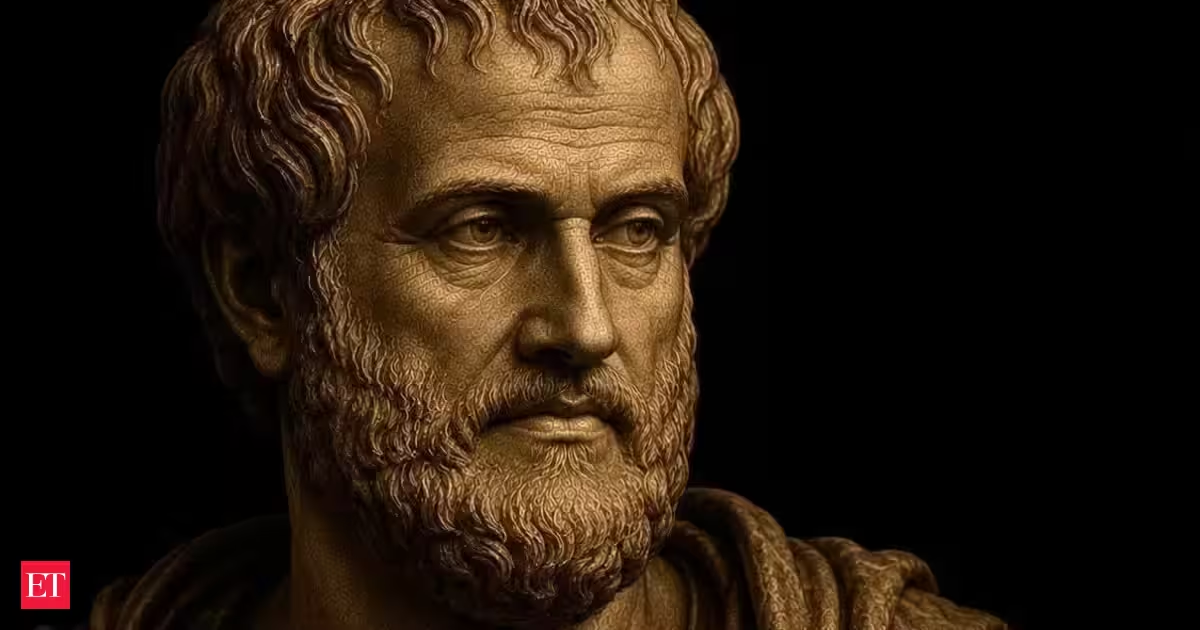
Quote of the day by Aristotle says, “Be a free thinker and don't accept everything you hear as truth. Be critical and evaluate what you believe in.” The saying is shared online as advice about independent thought and critical thinking. It tells people not to accept every statement or rumor without checking it. It also encourages people to examine evidence and use reason before forming beliefs. However, there is an important fact about its origin. The supplied information states that this quote is falsely attributed to Aristotle and does not appear in his surviving works. The wording reflects modern language rather than classical Greek philosophy.The quote is,“Be a free thinker and don't accept everything you hear as truth. Be critical and evaluate what you believe in.”Quote of the day by Aristotle: What does the quote mean?The quote asks people to think for themselves. It says that hearing something does not make it true. People can receive information from friends, family, social media, public figures, institutions or other sources. Each statement needs to be considered before it becomes a personal belief.The central idea is critical thinking. Critical thinking means looking at information, asking questions and checking the evidence behind a claim. A person does not have to reject every statement. Instead, the person should examine the information before accepting it. The quote also deals with intellectual independence. This means forming opinions based on reasoning instead of copying the opinions of others.You Might Also Like:The message can be understood through three main points:Do not treat every statement as fact.Look for evidence before accepting a claim.Form your own beliefs after considering the available information.The supplied information says the quote encourages people to examine assumptions, use reason and develop their own worldview instead of simply accepting what others tell them.The quote’s connection with critical thinkingCritical thinking is one of the main ideas connected with the saying. It requires a person to stop and examine information before reaching a conclusion. For example, a rumor may spread through social media. Many people may repeat the same claim. Repetition, however, does not prove that the claim is correct.A critical thinker can ask:Where did the information come from?What evidence supports the claim?Is there another explanation?Can the information be checked?Am I accepting this because I have evidence or because other people believe it?These questions can help people separate information from assumptions.The supplied source also connects the message with intellectual independence. It says people should not copy opinions simply to fit in and should review their own beliefs to determine whether they remain reasonable.Life lessons from the sayingThe message offers several lessons that can be applied to everyday life.Think for yourselfPeople often develop opinions from their surroundings. Family members, friends, colleagues and online communities can influence how someone thinks. The quote encourages people to form their own views. This does not mean ignoring other people. It means listening to others and then deciding what to believe after considering the information.Question informationThe saying also encourages people to question what they hear. A statement can sound convincing and still be incorrect. Asking questions can help identify missing information or unsupported claims. This approach can be useful when dealing with news, rumors, advertisements and social media posts.Check the evidenceEvidence is important when deciding whether a claim is true. A person can look for sources, compare information and examine the reasoning behind a statement. The supplied information says true understanding comes through careful study, logic and looking at proof.Review your beliefsThe message does not only ask people to question others. It also asks them to examine their own beliefs. People can hold an opinion for years because they accepted it earlier. New information can sometimes change that view. Reviewing a belief does not mean that the original belief was always wrong. It means being willing to consider evidence and change a position when the evidence supports doing so.Avoid blind trustBlind trust can make people more open to rumors, manipulation and false claims. The supplied information connects critical thinking with protection from scams, lies and unfair persuasion. It also says people should not allow rumors or authority to control what they think.What is the fact check about the quote?There is an important distinction between the message of the quote and its attribution. The supplied information states that the saying is falsely attributed to Aristotle. It says philosophers and scholars have noted that the statement does not appear in Aristotle's genuine surviving works. The wording is also described as modern rather than representative of classical Greek phrasing.The quote has nevertheless become popular online. It has been shared on platforms including Facebook and Medium. Its message about independent thinking may explain why it is frequently connected with Aristotle, who is known for his work on logic, philosophy and scientific inquiry.Therefore, readers should separate the quote's message from its claimed source. The saying can be discussed as advice about critical thinking, but it should not be presented as a verified statement written or spoken by Aristotle.Who was Aristotle?Aristotle was born in 384 BCE in Stagira, Chalcidice, Greece, and died in 322 BCE in Chalcis, Euboea. He was a Greek philosopher and scientist whose work influenced Western thought and later philosophical traditions. He studied at Plato's Academy in Athens after moving there following his father's death. He remained at the Academy for 20 years as a pupil and colleague of Plato.After Plato died, Aristotle left Athens and later travelled to Assus and Mytilene. During this period, he carried out research, including work in zoology and marine biology. Aristotle's work covered many subjects. These included logic, ethics, biology, physics, metaphysics, rhetoric, political theory, psychology, zoology and philosophy.He is also associated with the development of formal logic. His works included Categories, Nicomachean Ethics, Physics, Politics, Poetics, Rhetoric, On the Soul, History of Animals and several works on logic.Aristotle and observationAlthough the quote is not verified as Aristotle's, some of the ideas in the saying may remind readers of his approach to inquiry. The supplied information says Aristotle placed importance on observation. In his biological studies, he examined many organisms and recorded information about anatomy, diet, habitat and reproduction.The source also says that when theory and observation conflict, observation should be trusted, and theories should be accepted only when their results agree with observed phenomena. This provides historical context for why modern readers may connect ideas about evidence and questioning with Aristotle. However, it does not prove that he said the quote in question.Why the quote remains popular?The saying addresses a common issue: how people decide what to believe. People receive information from many sources every day. Some information can be accurate, while other information can be incomplete or false. The message encourages people to slow down before accepting a claim.Its focus on free thinking also makes it suitable for discussions about education, personal growth, decision-making and intellectual independence. The key lesson is not to reject information automatically. Instead, people should examine information and decide what they believe based on evidence and reasoning.
Quote of the day by Aristotle: 'Be a free thinker and don't accept everything you hear as truth. Be critical and evaluate what you believe in.' Life lessons from inspiring quote on manipulation, strong foundations, growth, critical thinking and intellectual independence
Quote of the day by Aristotle, “Be a free thinker and don't accept everything you hear as truth. Be critical and evaluate what you believe in,” focuses on independent thought, critical thinking and checking information. However, the quote is falsely attributed to Aristotle. Its message encourages people to question assumptions, examine evidence, review beliefs and avoid blind trust in opinions, rumors and authority.
1,161 words~5 min read