Trevor Sudama, one of the founding members of the United National Congress (UNC), has described the comments made by Prime Minister Kamla Persad-Bissessar in two Independence messages as portraying an inaccurate picture and merely trying to score political points.He asserted that Persad-Bissessar’s first statement, issued last Sunday, was not an Independence Day message, but a political statement.In a social media post to mark the nation’s 64th anniversary of Independence, the Prime Minister said the nation ‘must confront our post independence history with honesty and acknowledge that we should have done much better over the past 64 years considering the strong foundation left by the British’.She argued that on exit from British colonial rule, T&T had a higher per capita income than many countries, who have now ‘superseded us’.
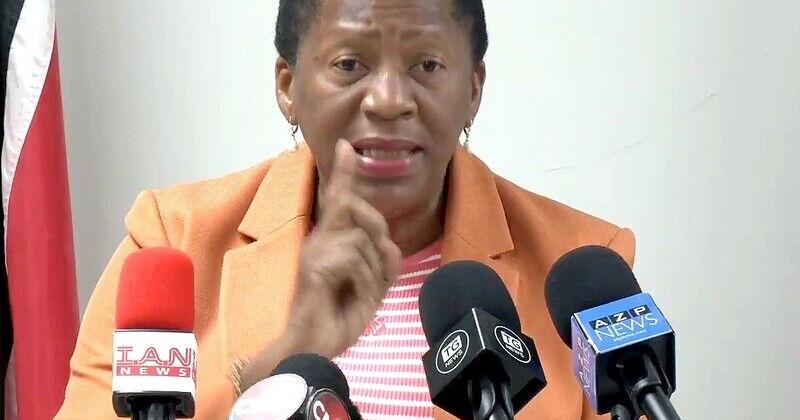
Trevor Sudama
She added that at that time the nation had a well-organised legal and governance structure, advanced oil exploration and refining industry, an expansive agricultural industry, a developed railway system, a low crime rate and a very clean environment.“The fact is that the British left us a very prosperous functioning country in 1962. After 64 years, it’s time we grow up and stop blaming our problems on our colonial past to escape accepting responsibility for bad decisions we made post independence that have resulted in negative consequences for ourselves and our nation,” she continued.In a telephone interview with the Sunday Express on Friday, Sudama said the Prime Minister’s statement suggested that the nation’s inability to develop from Independence status was brought upon by the governance of the People’s National Movement (PNM).“What she’s inferring is that when we got Independence to the present, to develop our full potential as a people, was a failure of the PNM administrations, which were in office for 47 of the 64 years. So, it is essentially a political statement,” he explained.He opined that the nation, given its resources, perhaps should have had a higher level of development than what has been achieved, particularly in the further diversification of the economy and securing alternative sources of foreign income and fiscal revenues.He admitted that a major shortfall occurred in the development of a skilled, resilient and productive labour force.However, he said Persad-Bissessar did not portray ‘the whole picture’, resulting in an unbalanced statement.“We did have a level of development in the energy sector, the Petrochemical Industrial Complex at Pt Lisas was established, as well as a viable manufacturing sector and a services sector was established since Independence. So, we cannot say that nothing was achieved as she’s implying. We did achieve something, perhaps not to our full potential,” he continued.He described Persad-Bissessar’s comparison of T&T’s per capita income to other countries, as ‘a false comparison to make’, as many of these countries had existing infrastructure, which we didn’t have at Independence.He questioned how much of the failure post-independence was due solely to political leadership, and how much was due to the propensities and inclinations of our people.“What we had over the period was an erosion of the work ethic. Maybe that was facilitated by the political leadership, but was it also a weakness of the people themselves? The lack of perseverance and dedication and self development?“How much of that is due to the failure of the people themselves to take control of their destiny, as against the political leadership, which should have provided the whole frame of reference. So, we are a little undecided on that as to where the full blame should lie,” he said.He asserted that beyond economic development, since Independence the nation had expanded its secondary and tertiary education facilities and physical infrastructure.“I think it is not accurate to say we had no development, and certainly it is a gross exaggeration to say at Independence we had what she called a ‘prosperous functioning country’. That is a serious exaggeration,” he continued.He pointed to the oil industry being almost wholly owned by foreign nationals in 1962, and with locals having very little say in the senior levels of the oil industry.He also challenged her reference to expansive agriculture industry and rice plantations in 1962, arguing that workers survived on minimal wages due to concessionary export earnings from the British.“What I’m trying to say is it is an exaggerated statement trying to paint a picture that the people who were in charge politically from Independence did very little to improve standards in this country.“Not that we don’t have shortfalls; we are efficient in very many areas, but to paint this kind of picture is totally inaccurate and merely trying to score political points as far as I’m concerned,” he continued.Emotional and rabid appealReferring to Persad-Bissessar’s second Independence message, delivered to the ‘UNC family’ last Monday, Sudama described it as ‘a pure emotional and rabid appeal’ with ‘many inconsistencies’.He criticised her calling the UNC membership as ‘the most important people’ to her.“You can’t at the same time talk about the most important people to me and you’re talking to the country, right? The most important people to you have to be the whole country. It can be just the UNC family, comprised mainly of Indo-Trinidadians, and as a national leader, I think it’s out of place to make that kind of statement,” he said.He added that in her referring to the political party as ‘a belief system’, she came to the crux of the matter.“That is she wants to be able to be in a position to determine the leadership of the party,” he continued.This, he added, was seen in her declaration that ‘the leadership of our party must never fall into the hands of weak men and women’.“And, therefore, you have to ‘be backed up with steeliness and savagery when required to defend the UNC membership’,” he said.“I can’t conceive of any other political leader talking to their party members and saying that you must fight back with steeliness and savagery, which is a kind of invitation to violence, in my view, in defence of the party,” he continued.Sudama, who founded the UNC with Basdeo Panday and Rampersad Parasram in 1989, said at the onset of the party, Persad-Bissessar was ‘a virulent critic of the UNC and its leadership’.“So now having inherited this party, she wants to develop a fanatical following, which wouldn’t question her leadership, and then she will of course determine who the next leadership would be,” he continued.This message, he said, was a raw appeal to the emotive sentiment of the Indo-Trinidadian population to prepare the membership for which is to come and to accept her bidding.He said that this was the first instance where a political leader, and a prime minister, had issued two messages on Independence Day; one to the general public, and one to the party membership.“So, it must have something behind that, must have some reason for that, and the fact that you already are supported by the vast majority of Indo-Trinidadians, why it is that you’re focusing only on that support, because you want to consolidate that support for a certain purpose. And that is my, that is my view. I may of course be wrong, but this is how I see it,” he continued.Agenda of divisionAlso speaking about the Prime Minister’s messages on Independence Day was former Independent Senator, Sunity Maharaj.In an interview with political head of the Movement for Social Justice, David Abdulah, last Tuesday, Maharaj said the statements issued by Persad-Bissessar are inaccurate, full of dog whistles and its language is coded.