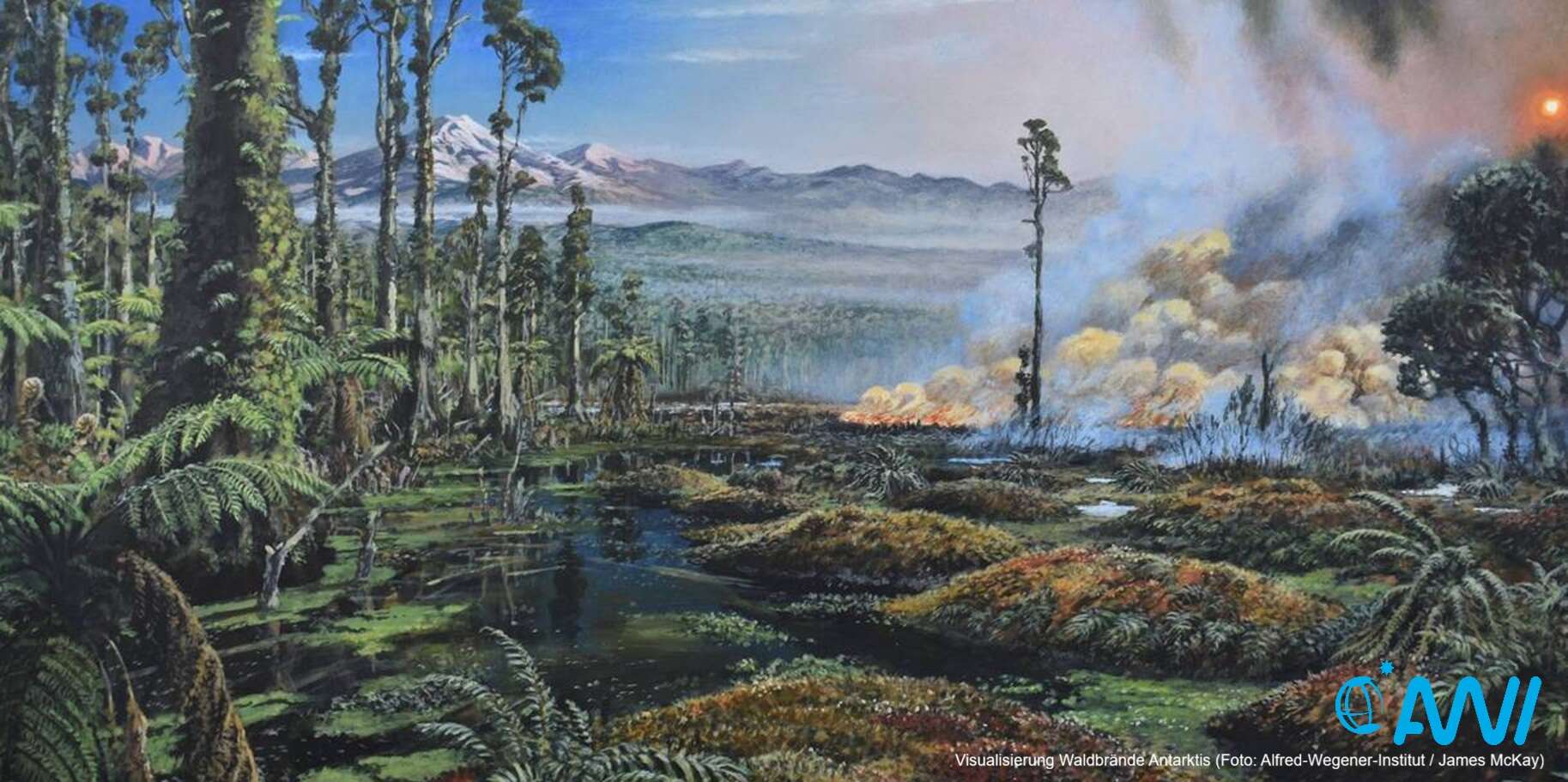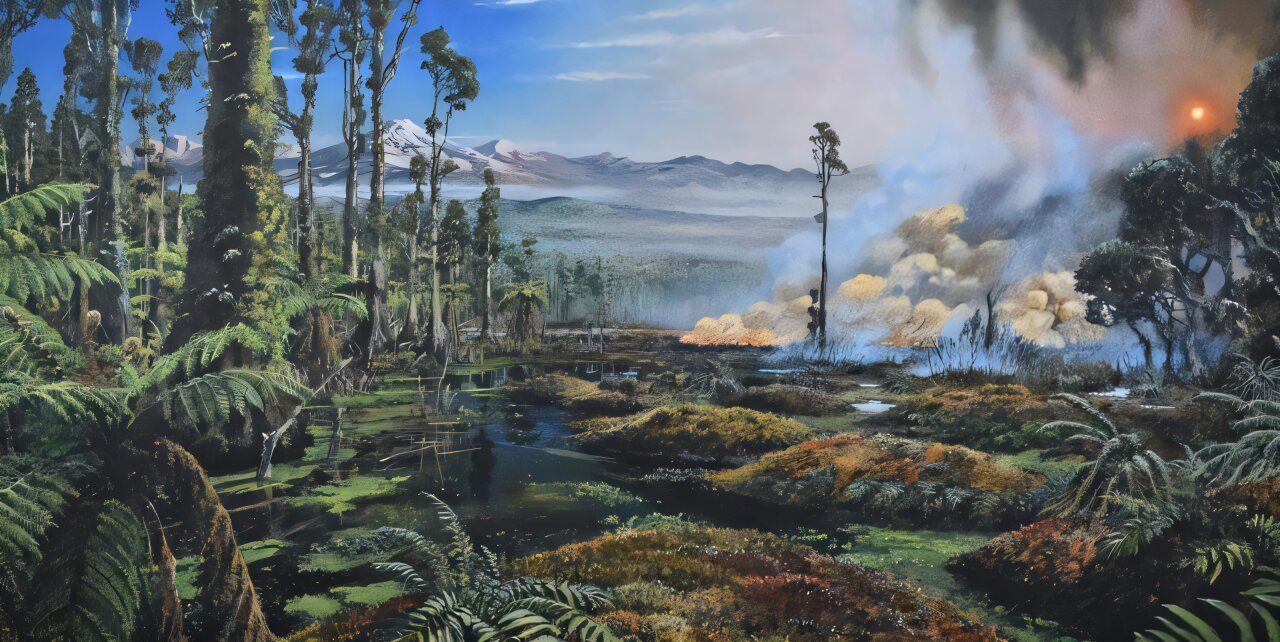
A visualization of the Antarctic ecosystem around 90 million years ago. Research shows that forest fires occurred regularly near the South Pole at that time. Credit: James McKay
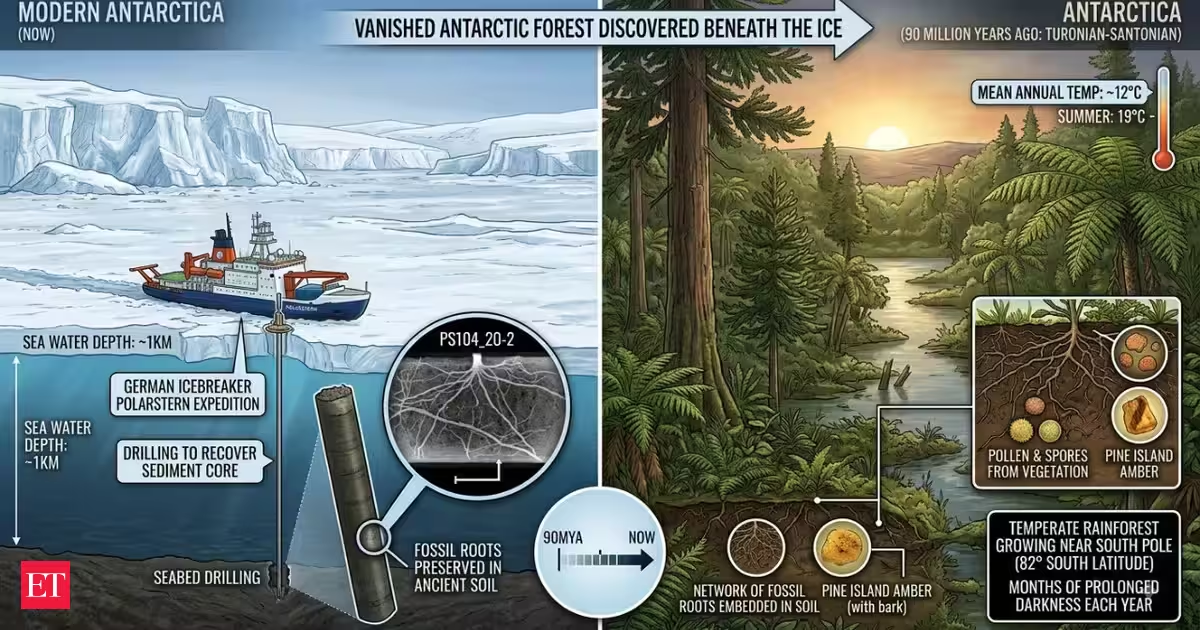
A journey back in time to the Late Cretaceous: A swampy rainforest with conifers and tree ferns stretches as far as the eye can see, dinosaurs roam through the misty wetlands, and the climate is mild and warm. The average annual temperature is 12°C (54°F)—around two degrees higher than in present-day Germany. There is plenty of water, too, as dry periods are regularly followed by monsoon-like rainy seasons.
Just one thing seems unusual: For around four months of the year, the forest is shrouded in continuous darkness. This is because the ecosystem described here lies close to the South Pole, in what is now West Antarctica, where the polar night also occurred during the Late Cretaceous.
Forest soil near the South Pole
When the international team led by marine geologist Dr. Johann Klages of the Alfred Wegener Institute, Helmholtz Centre for Polar and Marine Research (AWI), published the results of a Polarstern expedition in Nature in 2020, the discovery caused quite a stir.