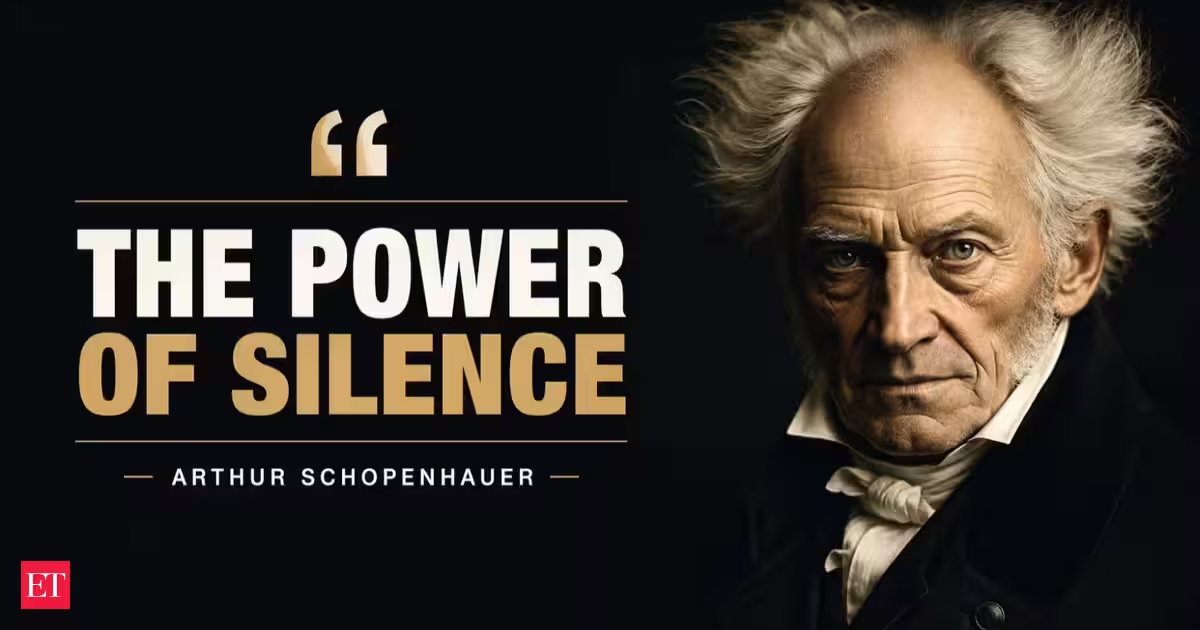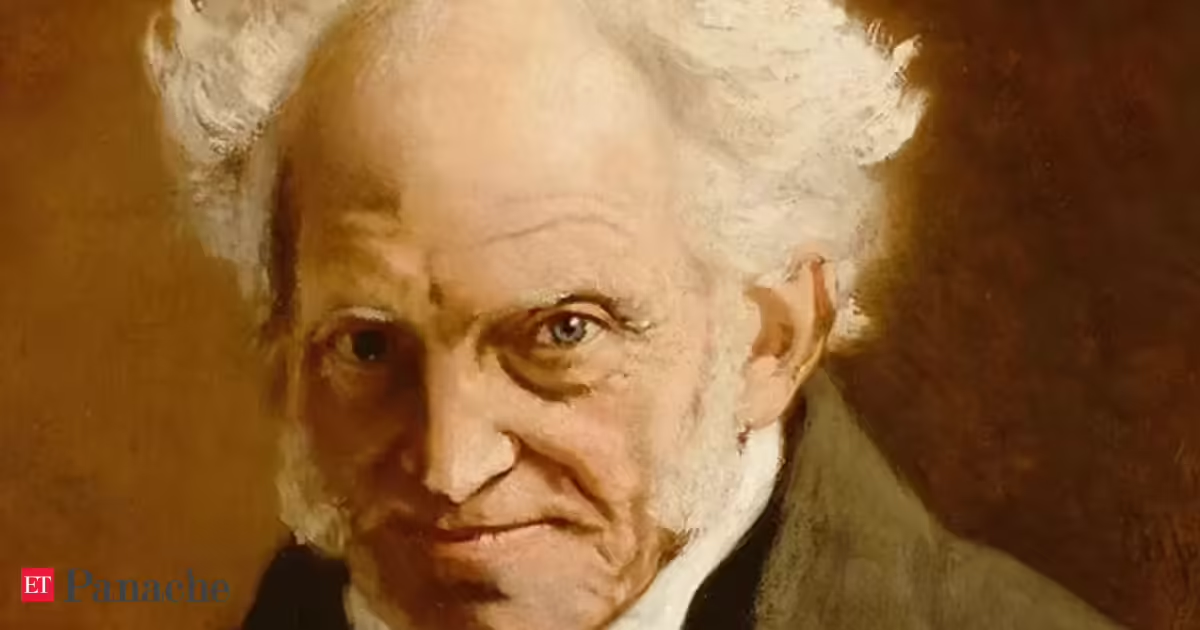
Quote of the day by Arthur Schopenhauer: What happens when a person becomes so disappointed by life that there is no longer anything left to lose? Fear is often strongest when there is something we desperately want to protect — a relationship, a career, financial security, reputation or a dream for the future. But when hope disappears completely, the possibility of losing that future can also lose its power over us. Today’s quote of the day by German philosopher Arthur Schopenhauer explores this unsettling relationship between hope and fear, offering a striking reflection on why people can sometimes become fearless when they stop expecting a particular outcome.Arthur Schopenhauer quote: ‘He who has lost all hope has also lost all fear’The quote captures a paradox about human behaviour. Hope gives people something to work towards, but it can also create fear because there is now something that might be lost. A person hoping to succeed may fear failure, while someone deeply invested in a relationship may fear rejection or heartbreak.Schopenhauer turns that relationship around. If a person has genuinely lost all hope, there may be nothing left for fear to protect. The statement is bleak, but it also raises an important question about how much of our anxiety comes from our attachment to a particular future.The quote is associated with Schopenhauer’s 1851 collection Parerga and Paralipomena, a volume of philosophical essays and aphorisms that helped bring the philosopher wider recognition later in his life. The work includes shorter reflections on psychology and human behaviour, including a section titled “Psychological Observations.”The observation fits naturally into Schopenhauer’s larger philosophical outlook. He argued that human beings are driven by an underlying “will” — a constant force of striving and wanting. Because desires continually arise, people can remain trapped in a cycle of pursuit, temporary satisfaction and renewed wanting. His philosophy therefore placed considerable attention on suffering, desire and the possibility of reducing attachment to the things that keep us perpetually dissatisfied.Arthur Schopenhauer quote of the day: Deeper meaningAt its heart, Schopenhauer’s quote suggests that fear can be closely connected to hope. People fear losing things because they value them and expect them to remain part of their future. The greater the emotional importance of an outcome, the greater the fear surrounding its possible loss can become.Imagine someone who has spent years building a career. Their ambition may give them purpose, but it can also make every setback frightening. A missed promotion, criticism from a manager or the possibility of losing a job can feel devastating because the person has invested so much hope in professional success.The same pattern can appear in personal relationships. Someone who deeply hopes that a relationship will last may constantly worry about losing the other person. The fear is not separate from the hope; it exists partly because the relationship matters so much.Schopenhauer's statement suggests that when hope disappears, fear can lose its foundation. If someone no longer believes that a particular future is possible, they may stop being afraid of failing to achieve it. That can create a strange kind of freedom — but it is a freedom born from despair rather than confidence.This distinction is important. The quote does not necessarily mean that losing hope is a healthy way to overcome fear. Instead, it exposes how strongly expectations and attachments can influence our emotional lives.Why the Arthur Schopenhauer quote matters todayModern life gives people countless reasons to fear falling behind. Careers, relationships, money, social status and personal achievements can all become measures against which people judge themselves. Social media can intensify this pressure by constantly exposing users to other people's apparent successes and carefully presented lives.That makes Schopenhauer’s observation surprisingly relevant. People may spend years worrying about outcomes that are not entirely within their control. They fear failing an exam, losing a job, being rejected, disappointing family members or not reaching a particular version of success.The quote encourages a different question: What exactly are we afraid of losing?That question can reveal the hope underneath the fear. Someone terrified of career failure may be protecting a dream of financial independence. Someone afraid of rejection may be protecting the hope of being loved or accepted. Someone afraid of making a mistake may be trying to preserve an image of being successful.Recognising these connections does not mean abandoning ambition or becoming indifferent. Instead, it can help people understand their fears rather than allowing those fears to quietly dictate every decision.Life lessons from Arthur Schopenhauer quoteUnderstand what your fear is protecting:Fear often points towards something that matters deeply to you. Identifying what you are afraid of losing can reveal the hopes, ambitions and attachments behind your anxiety.Do not make one outcome the condition for happiness:A goal can provide direction, but believing that life will have no value unless one particular outcome happens can make every setback feel catastrophic. Keeping more than one possibility open can make disappointment easier to handle.Accept that some things cannot be controlled:People can work hard, prepare carefully and make sensible choices, but they cannot control every outcome. Accepting that uncertainty is unavoidable can reduce the pressure to make life perfectly predictable.Do not confuse fearlessness with hopelessness:Schopenhauer describes fear disappearing after hope has been lost, but that is not the only path to courage. A healthier form of courage comes from having something to hope for while accepting that failure remains possible.Learn to detach from a single version of the future:Sometimes fear becomes overwhelming because people become attached to one specific idea of how their lives should unfold. Being willing to adapt when circumstances change can make it easier to move forward.Who was Arthur Schopenhauer?Arthur Schopenhauer was a German philosopher born on February 22, 1788, in Danzig, now Gdańsk, Poland. He came from a prosperous merchant family, and his father, Heinrich Floris Schopenhauer, expected him to follow a commercial career. The family moved to Hamburg when Arthur was five, and he travelled extensively through Europe during his youth.His early experiences exposed him to different cultures and social conditions. After his father died in 1805, Schopenhauer gradually moved away from the commercial future planned for him and turned towards academic study. He eventually pursued philosophy at the universities of Göttingen and Berlin, where he encountered the ideas of thinkers including Plato and Immanuel Kant.Schopenhauer’s philosophy of desire and sufferingSchopenhauer is often described as one of the great philosophers of pessimism because of his argument that suffering is deeply connected to the structure of human desire. His central concept was the will, which he viewed as a constantly striving force operating throughout life.In The World as Will and Representation, Schopenhauer argued that people are driven by desires that can rarely remain permanently satisfied. Once one desire is fulfilled, another tends to emerge, keeping people in a continuous cycle of wanting and striving. His pessimism therefore did not simply come from believing that life contains suffering; it came from his view that dissatisfaction is built into the human condition.Yet Schopenhauer also explored ways of escaping or reducing this cycle. He gave an important role to aesthetic experience, compassion and forms of ascetic self-denial, arguing that these could provide relief from the relentless demands of individual desire.This philosophy helps explain the darker force behind his quote about hope and fear. If wanting creates attachment, attachment creates something to lose, and something to lose creates fear, then the disappearance of desire or expectation can weaken fear as well.
Quote of the day by Arthur Schopenhauer: 'He who has lost all hope has also lost all fear' - German philosopher’s powerful words explain why those who have nothing to lose have nothing to fear in life
Quote of the Day by Arthur Schopenhauer: “He who has lost all hope has also lost all fear” offers a striking reflection on the connection between hope, fear and human nature. The German philosophers words suggest that fear often comes from having something to lose, while complete hopelessness can remove that fear. The quote also reflects Schopenhauers wider philosophy, which examined suffering, desire and the struggle to find freedom from the pressures of human existence.
1,234 words~6 min read