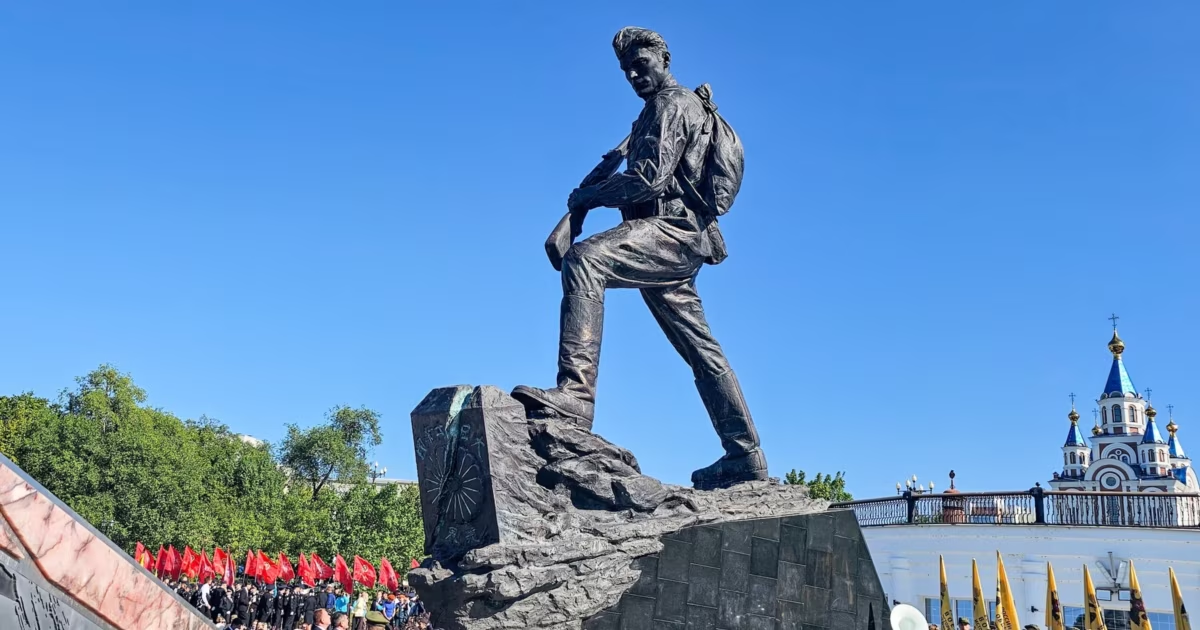
The Khabarovsk monument to Soviet victory over Japan in World War II being unveiled on September 4.
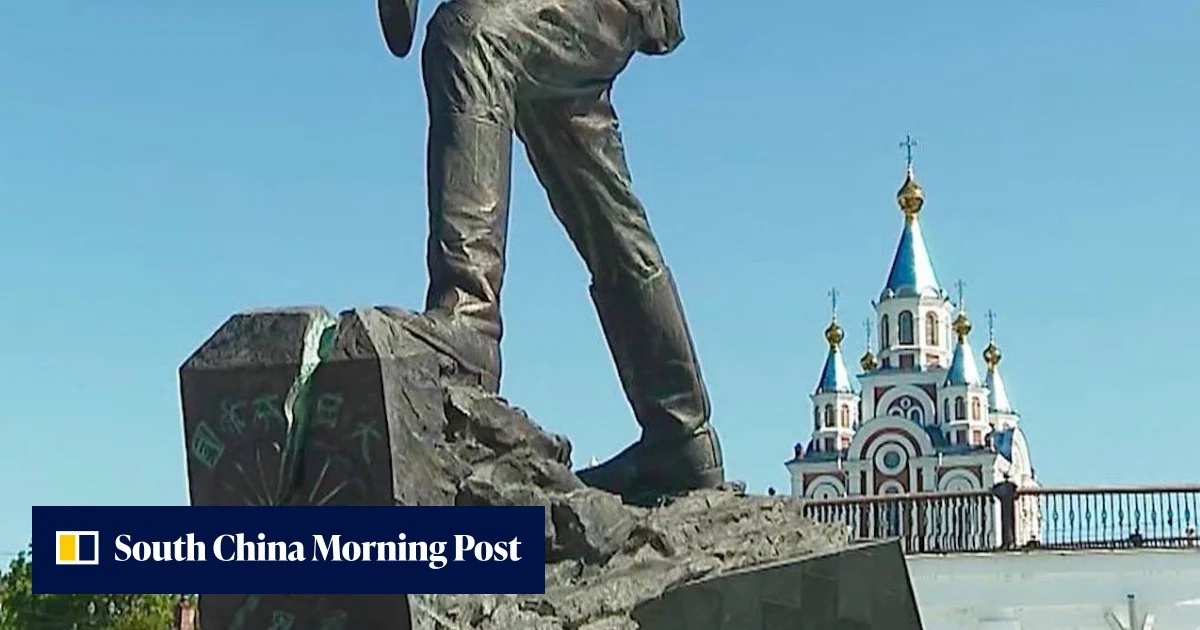
One day before the unveiling of a World War II memorial in the Siberian city of Khabarovsk on September 4, Japan's Consulate General urgently requested an amendment.The 15-meter-high monument to the Soviet victory over Japan depicts a granite border post being shattered under the rifle butt of an advancing Soviet soldier. Across the broken marker is a cracked imperial crest of Japan.The chrysanthemum flower emblem was used during World War II by Nazi-allied Japanese forces, but it remains a de facto emblem of Japan in lieu of a formal coat of arms. Today the 16-petalled flower symbol is used by the Japanese emperor and features on the country's passports.
A detail of the monument during its unveiling on September 4 shows the broken Japanese emblem.
Response to the Japanese appeal to remove the symbol ahead of the monument's unveiling was swift and unbending."In my view, this request is highly inappropriate," Nikolai Ovsienko, a senior figure of the Russian Military Historical Society, declared on the same day as the Japanese outreach. "The chrysanthemum is not only a symbol of Japan's imperial house but also a symbol of militarism responsible for horrific crimes," he said.The historical society created the monument jointly with the Khabarovsk regional government.