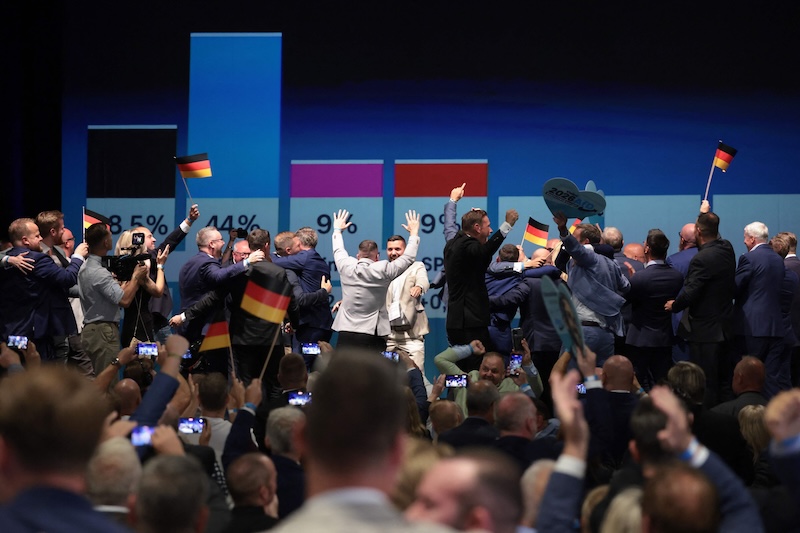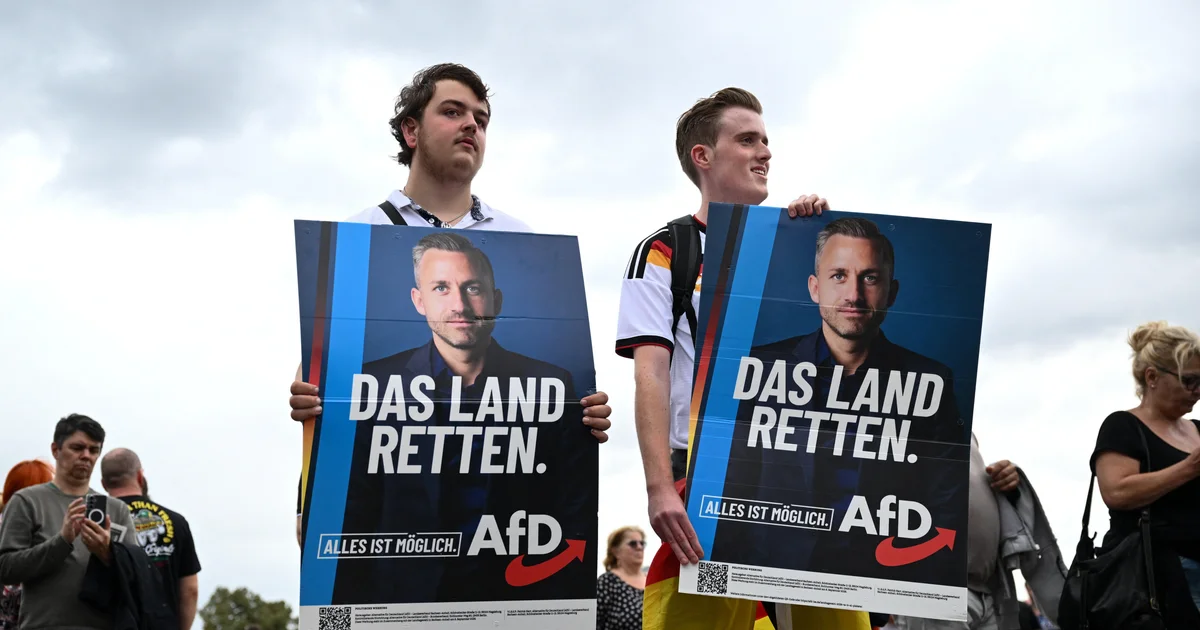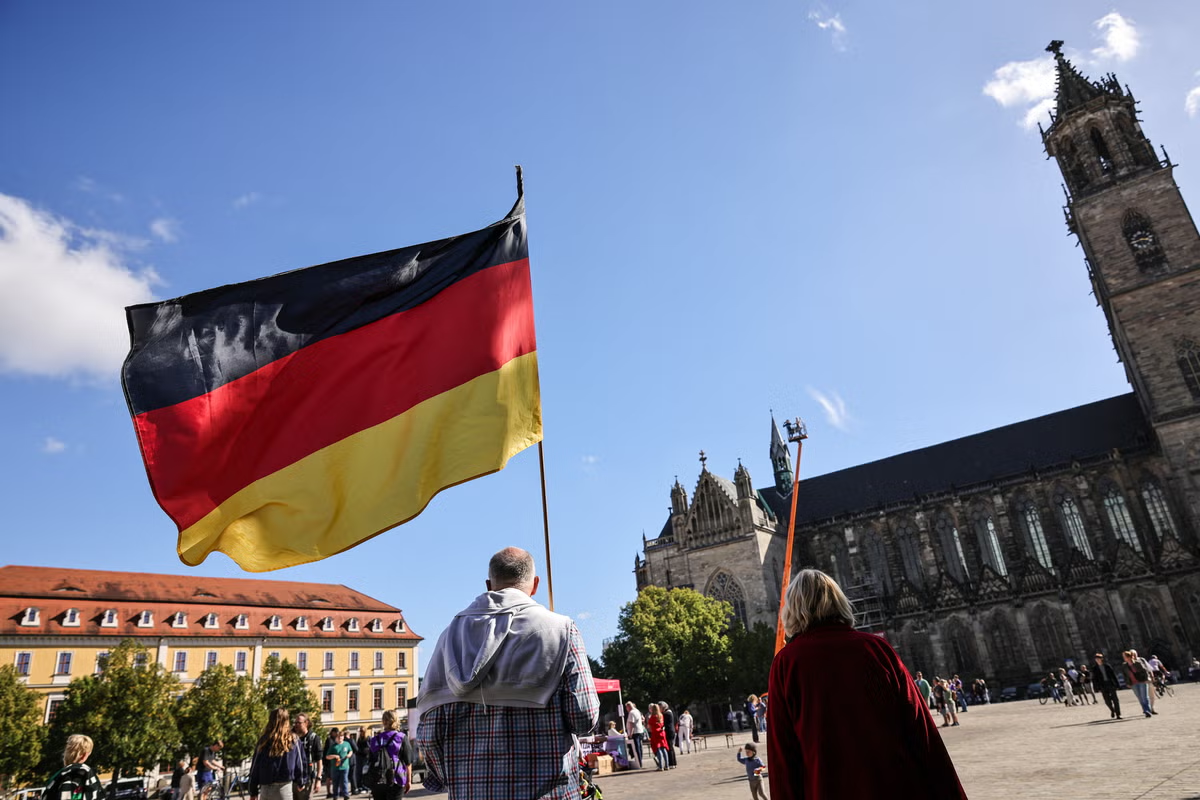
The Alternative for Germany (AfD) has surged to first place in state elections in Saxony-Anhalt, winning 44% of the vote. But the anti-immigrant, pro-Russian party fell three seats short of an absolute majority, meaning it must either find a coalition partner or try to rule from a minority position.
Both options mean many of their manifesto ideas may never come to fruition, as mainstream parties in Germany have for years refused to work with the party, creating what has been dubbed a “firewall” against the far-right.
One route might be a deal with the left-wing populist BSW party, which on Monday criticized the firewall and which shares some of the AfD’s criticism of Germany’s policies on immigration and Ukraine. AfD leaders in Saxony-Anhalt are also courting the more right-wing factions of the mainstream conservative Christian Democrats (CDU) – though Germany’s Chancellor Friedrich Merz has vehemently ruled out any cooperation.
Discussions over potential alliances in the coming days will be critical for the future direction of the state, as Germany’s federal system gives its 16 states significant control over areas including education, culture, policing and public broadcasting.
The AfD – a party German domestic intelligence has classified as “confirmed right wing extremist” – has made no secret of its desire to use power in Saxony-Anhalt as a blueprint for the rest of the nation. Its candidate for state premier, Ulrich Siegmund, told CNN on the campaign trail he hoped a victory for the party would spell the end of some of the “crazy” federal policies.