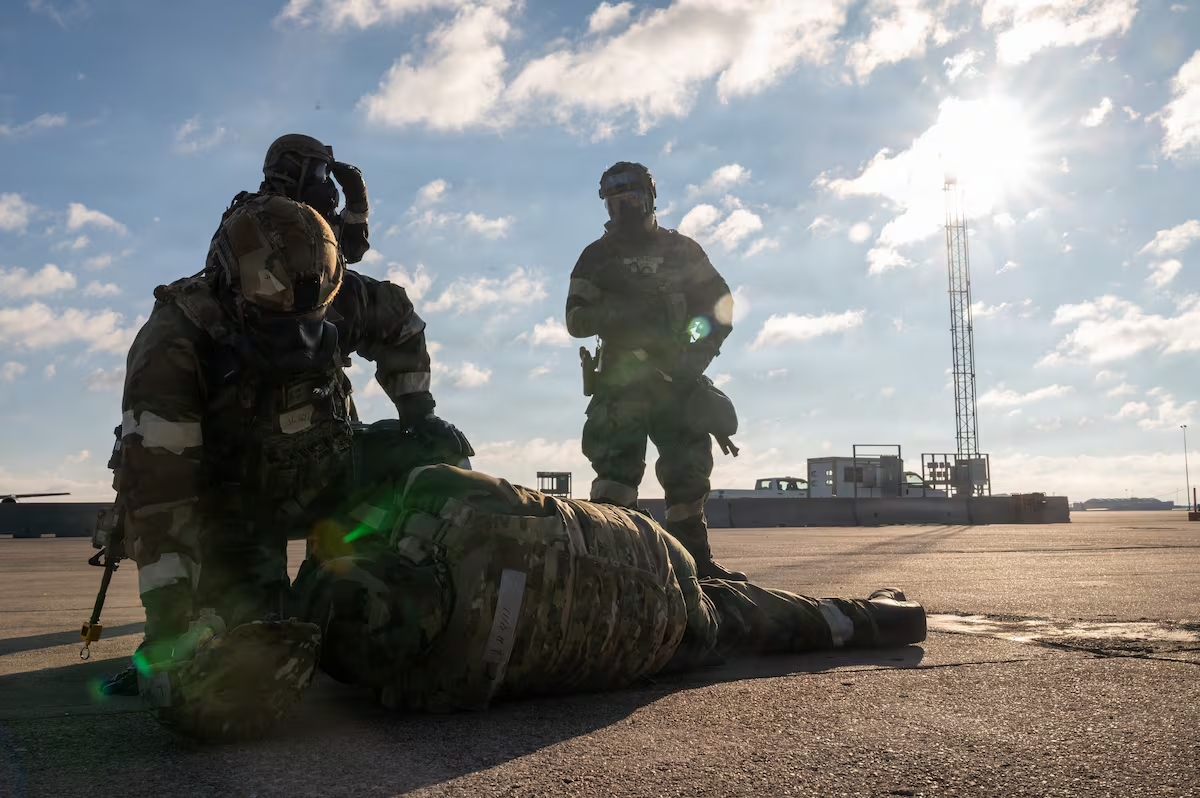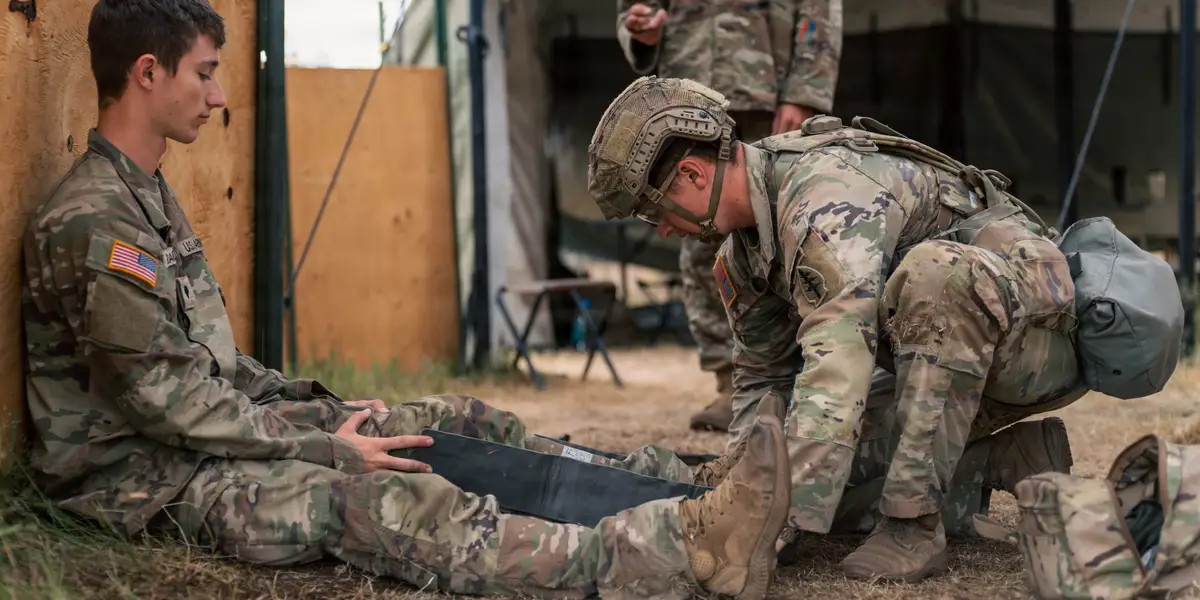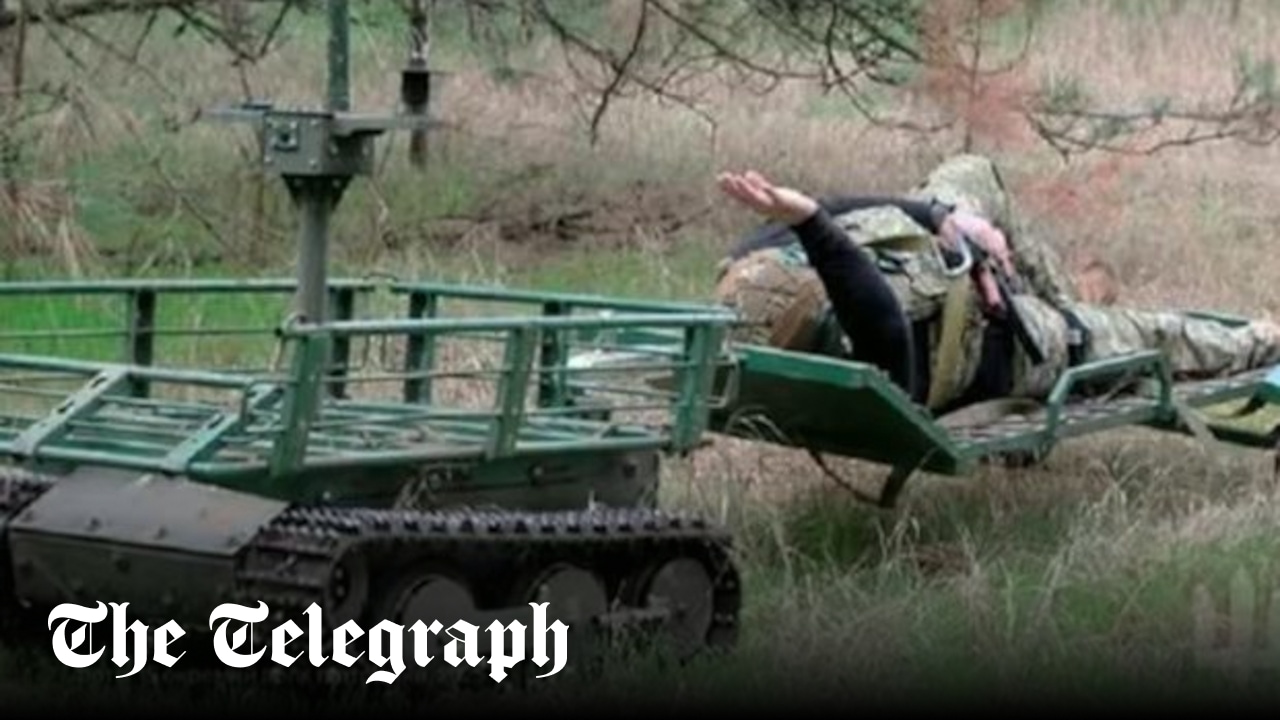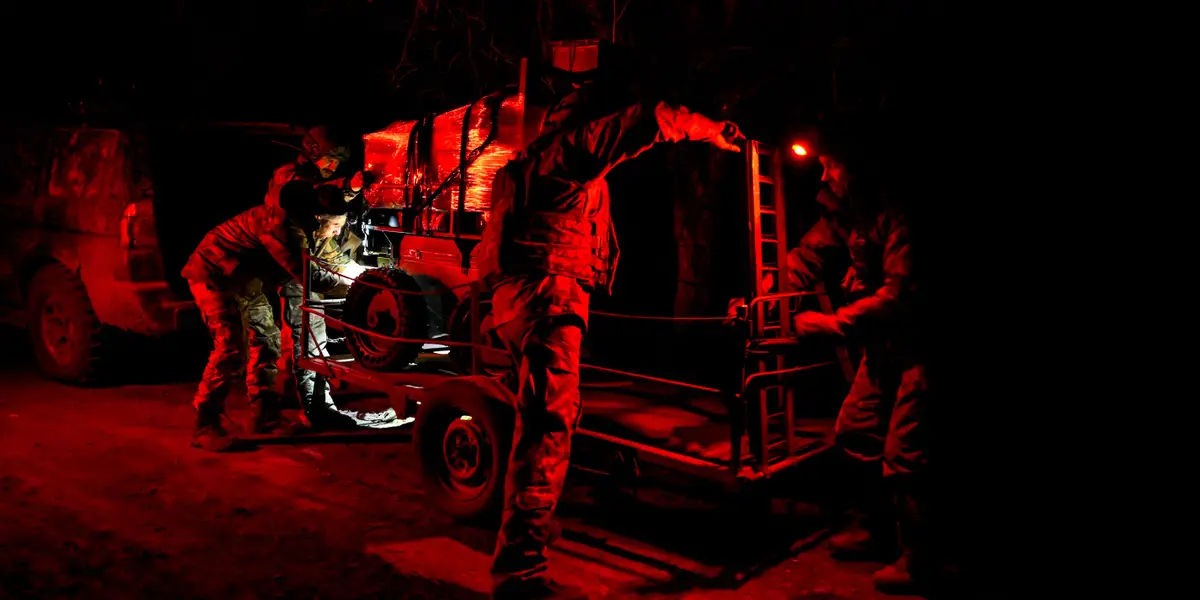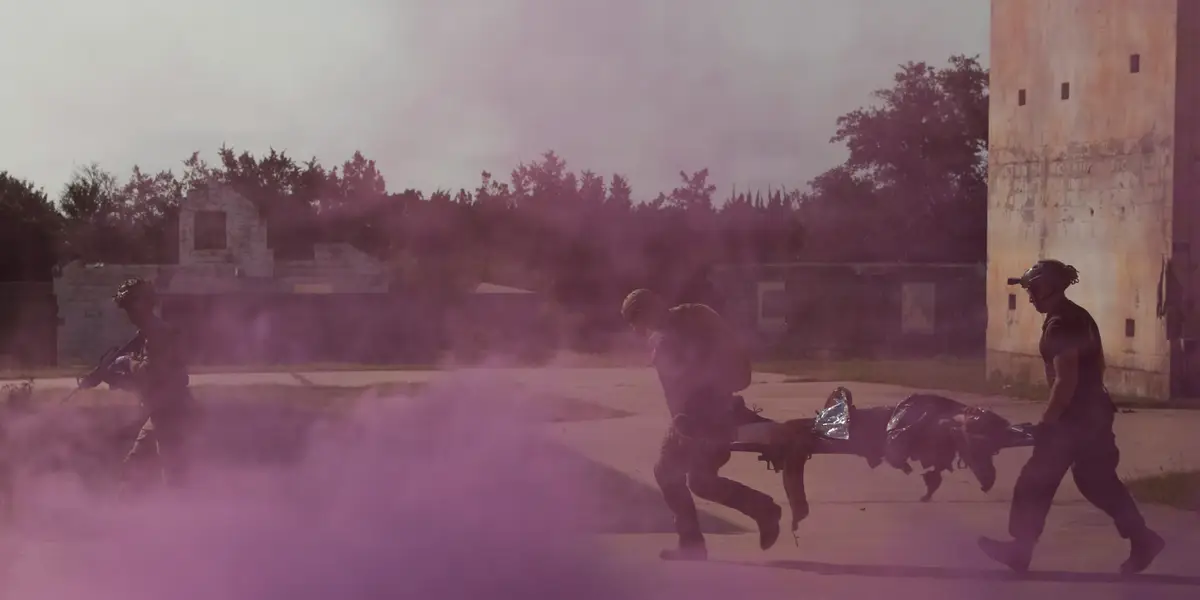
Service members simulate moving a wounded teammate during a medical exercise at Fort Hood, Texas.
Spc Josefina Garcia/US Army
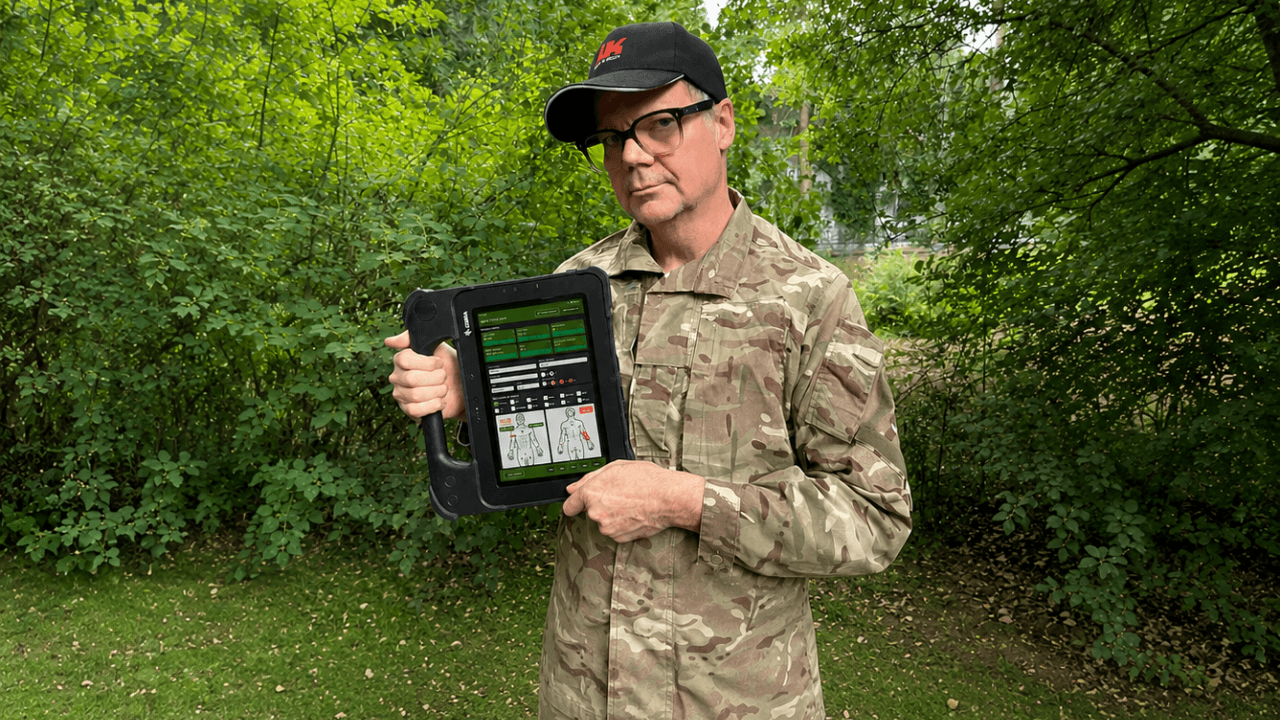
For years, troops relied on handwritten cards and bulky manuals for battlefield medical guidance. Now, Ukrainian and US developers are building and testing AI tools to help when there isn't a medic nearby and evacuation isn't an option.Battlefields increasingly shaped by drones have pushed troops into small, dispersed teams that may be far from medical care when someone is wounded."As the tactical environment limits the ability to move, then we have to provide care wherever we are," said retired military trauma surgeon Travis Polk, who leads the University of Pittsburgh's Center for Military Medicine Research. His team has developed a tool to address what he called a "tactical mismatch," where wounded troops may be far from the medical care they desperately need.Another tool, the Tactical Aid Assistant app known as ALICE, was developed by Ukrainian trauma surgeon Roman Kuziv, the commander of the eastern Medical Forces and Sustainment Group, and is now being tested by medics at facilities near the front.Kuziv told Business Insider the app uses Google's Gemini platform to guide a user through a trauma response. A soldier can photograph an injury, answer follow-up questions, and immediately receive relevant tactical combat casualty care protocol."Many times under the stress and under the environment of the war, they make the mistakes about how to treat themselves or how to treat their friends," Kuziv said.