The sheer beauty of pulling off a score-altering dummy in a football game will always grab fans’ attention.So the quick thinking from Kai Havertz to set up Martin Odegaard’s winner in Arsenal’s 2-1 defeat of Chelsea on Sunday understandably got more airtime than his own first-half goal from the edge of the penalty box, which made it 1-1.
Perfectly in sync 🔗 pic.twitter.com/UxvmNkDydX
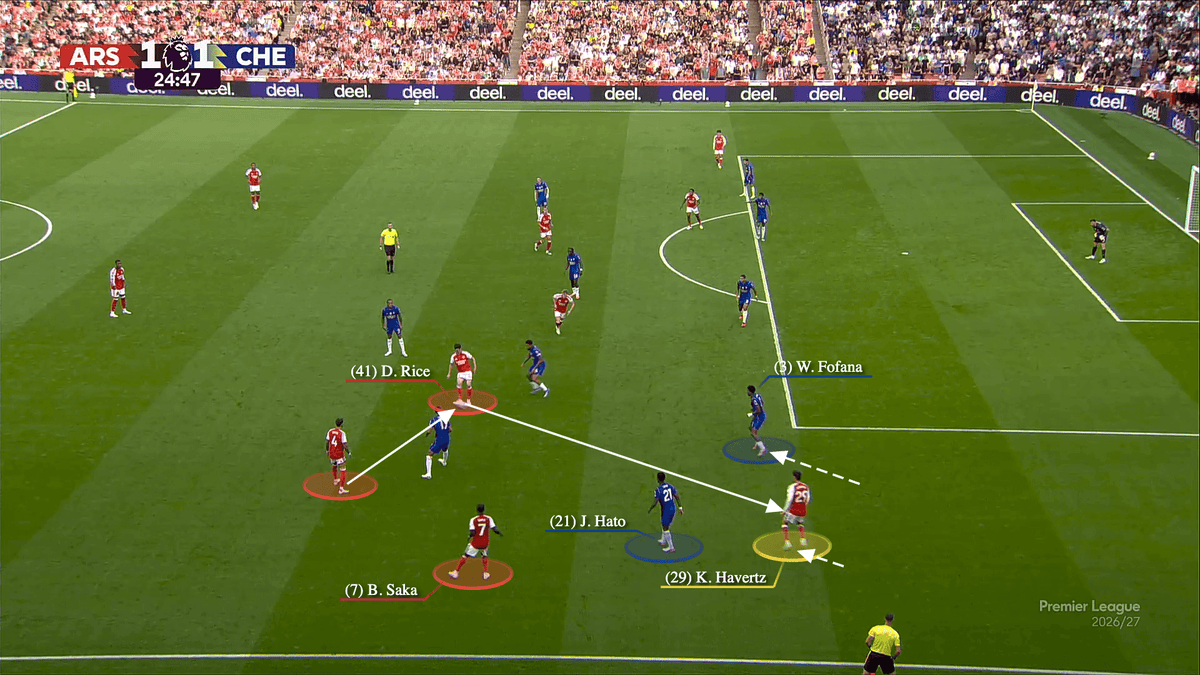
— Arsenal (@Arsenal) September 7, 2026Yet the German’s strike was the culmination of his efforts to consistently overload Arsenal’s right wing, something that was vitally important in them taking the three points.This type of movement isn’t new to Havertz, who has done it in previous seasons and has been consistently operating on the right side in these early weeks of 2026-27, as seen below.Even if Xabi Alonso’s visiting side were aware of how dangerous this made their opponents, they couldn’t stop it because of the timing of Havertz’s movement and his chemistry with the rest of Arsenal’s right-side personnel.In the example below, from the game’s opening minutes, Havertz is positioned between Maxence Lacroix, at the heart of Chelsea’s back three, and their left centre-back, Wesley Fofana, as Riccardo Calafiori comes across the pitch from his left-back position and attacks the space between the lines.Havertz knows that Fofana has to keep an eye on Calafiori, and makes a run in behind him as Ezri Konsa plays the ball to Ben White. The timing of Havertz’s movement allows him to push into this area before Lacroix can shift across to cover.White finds his centre-forward, and from this move Arsenal win a dangerous free kick. It’s also important to note how Havertz’s run has created space for Calafiori to attack before Havertz is brought down.In another example, Havertz roams to the touchline and Bukayo Saka moves inside, forcing Fofana and left wing-back Jorrel Hato to exchange positions.