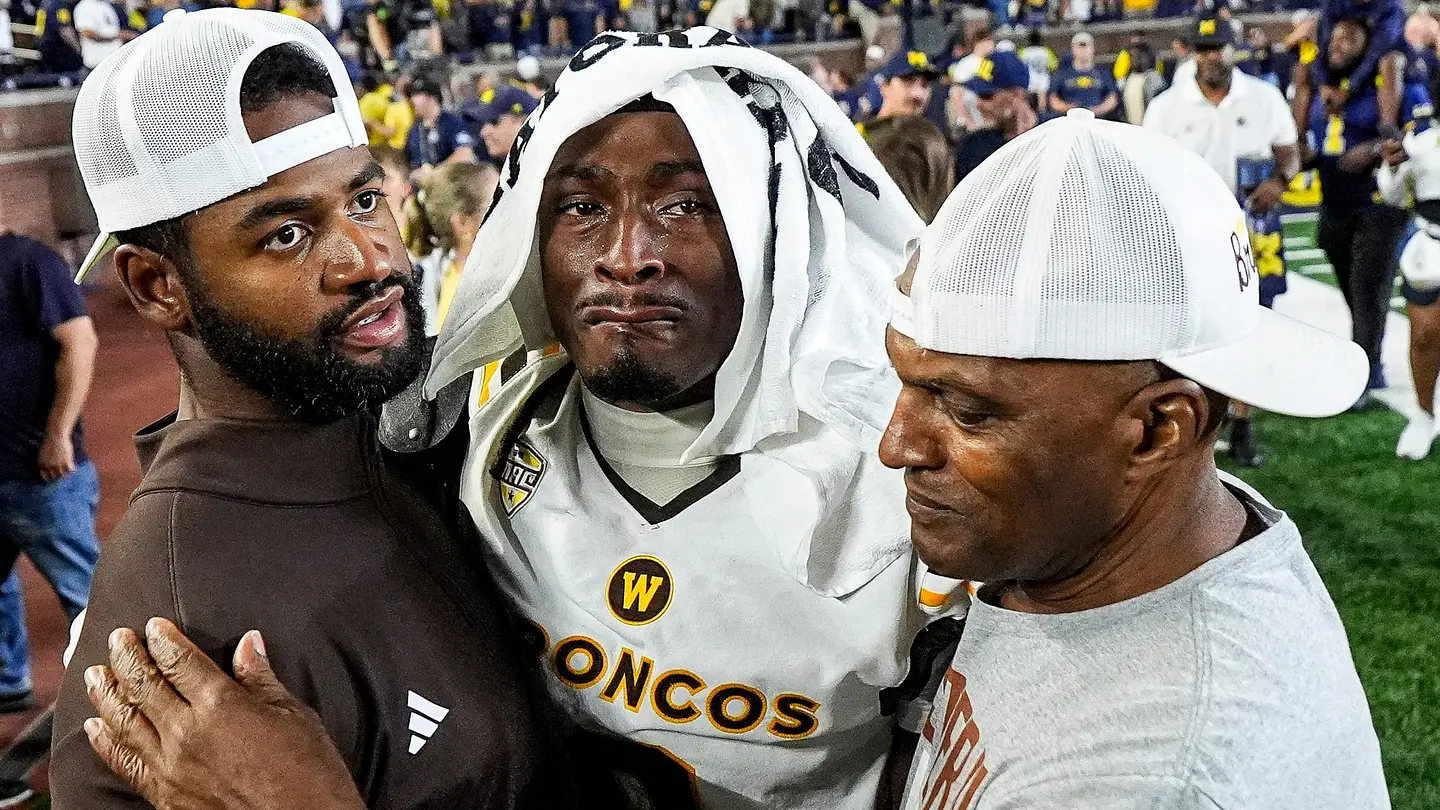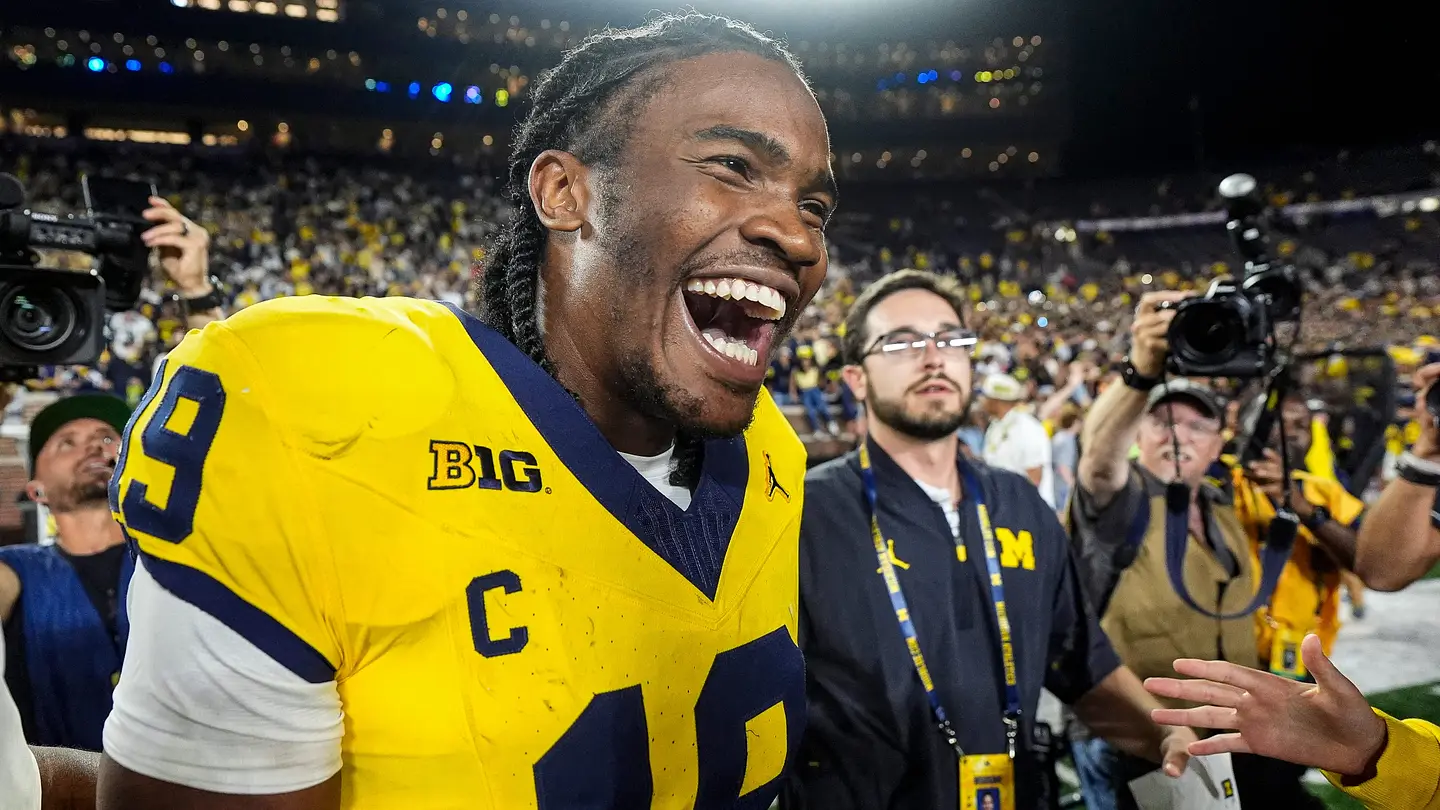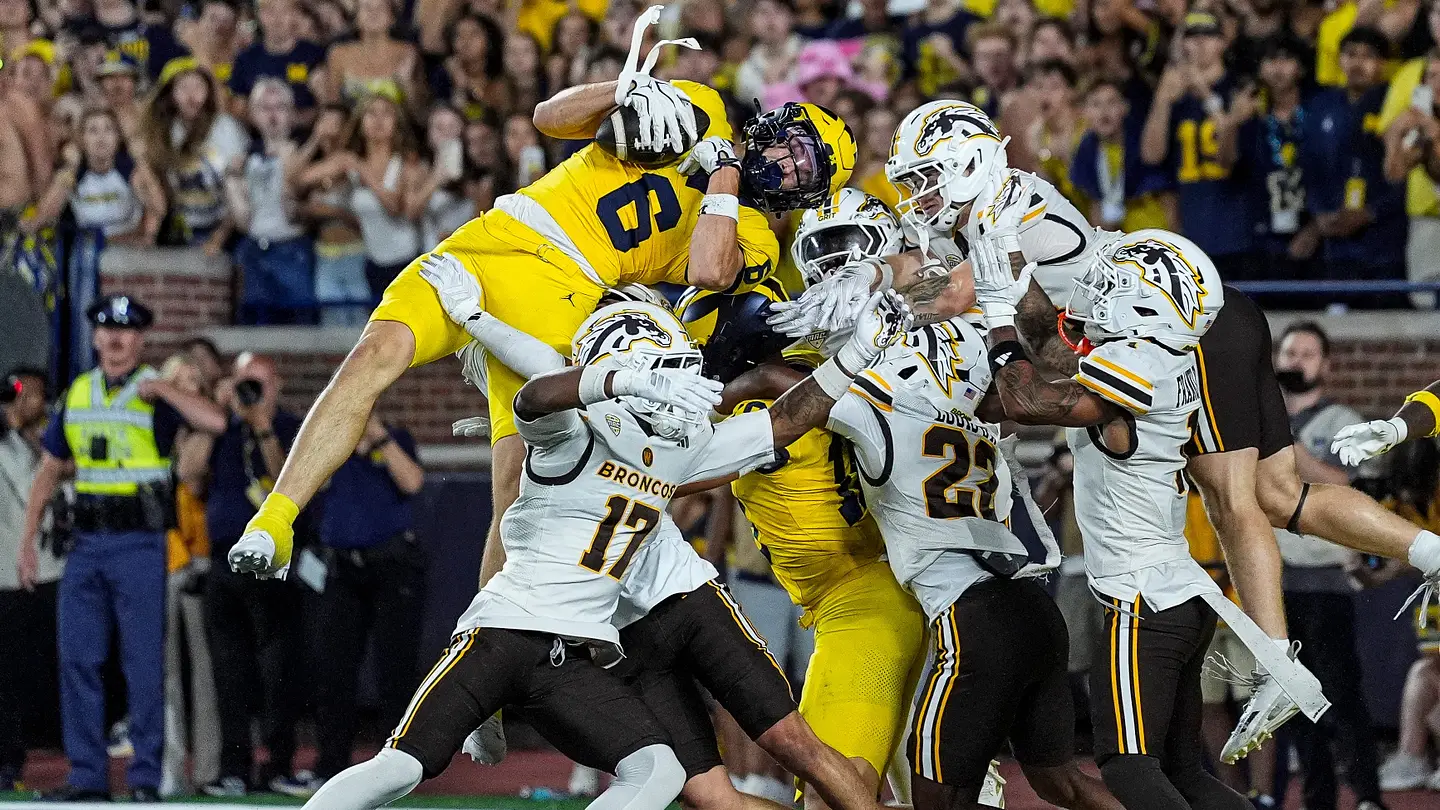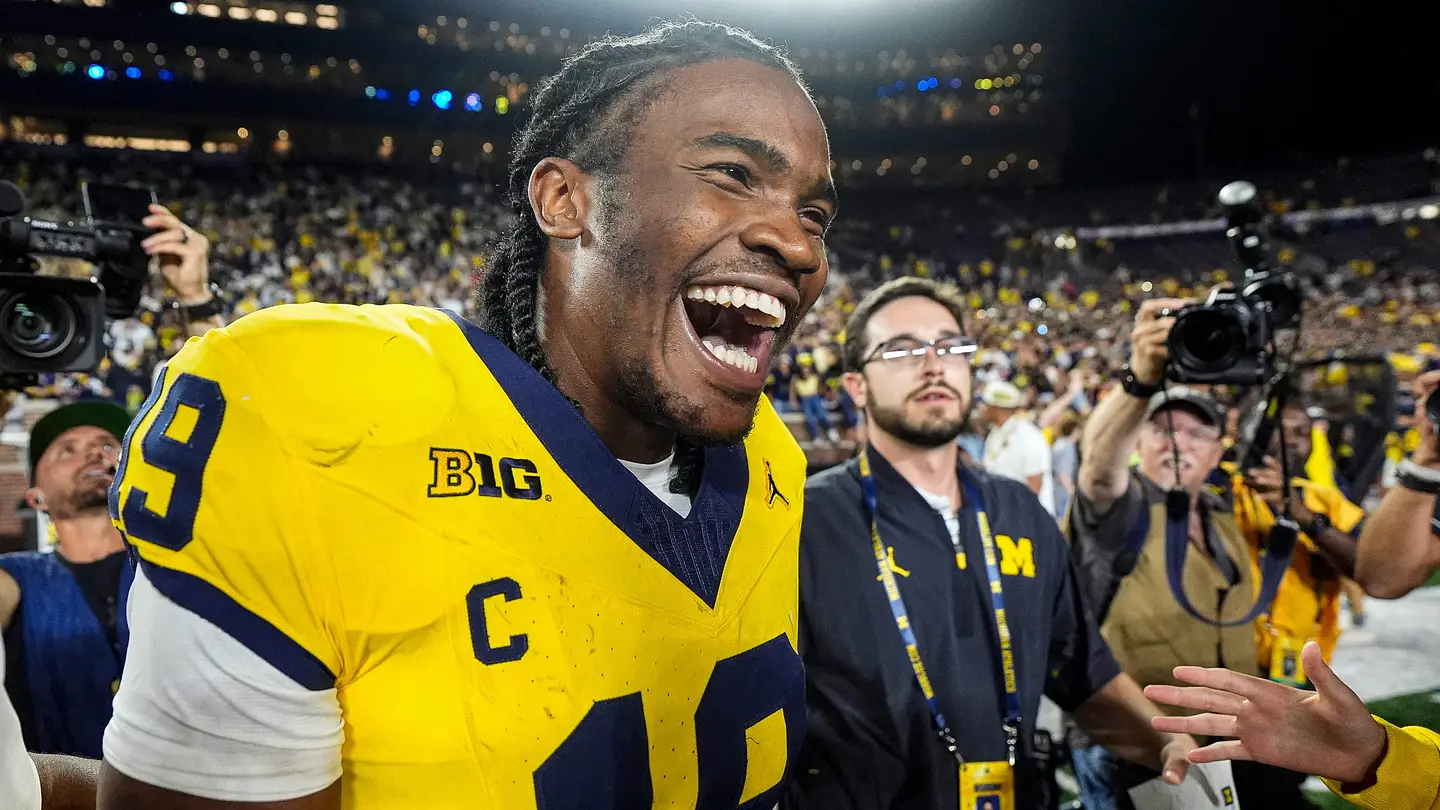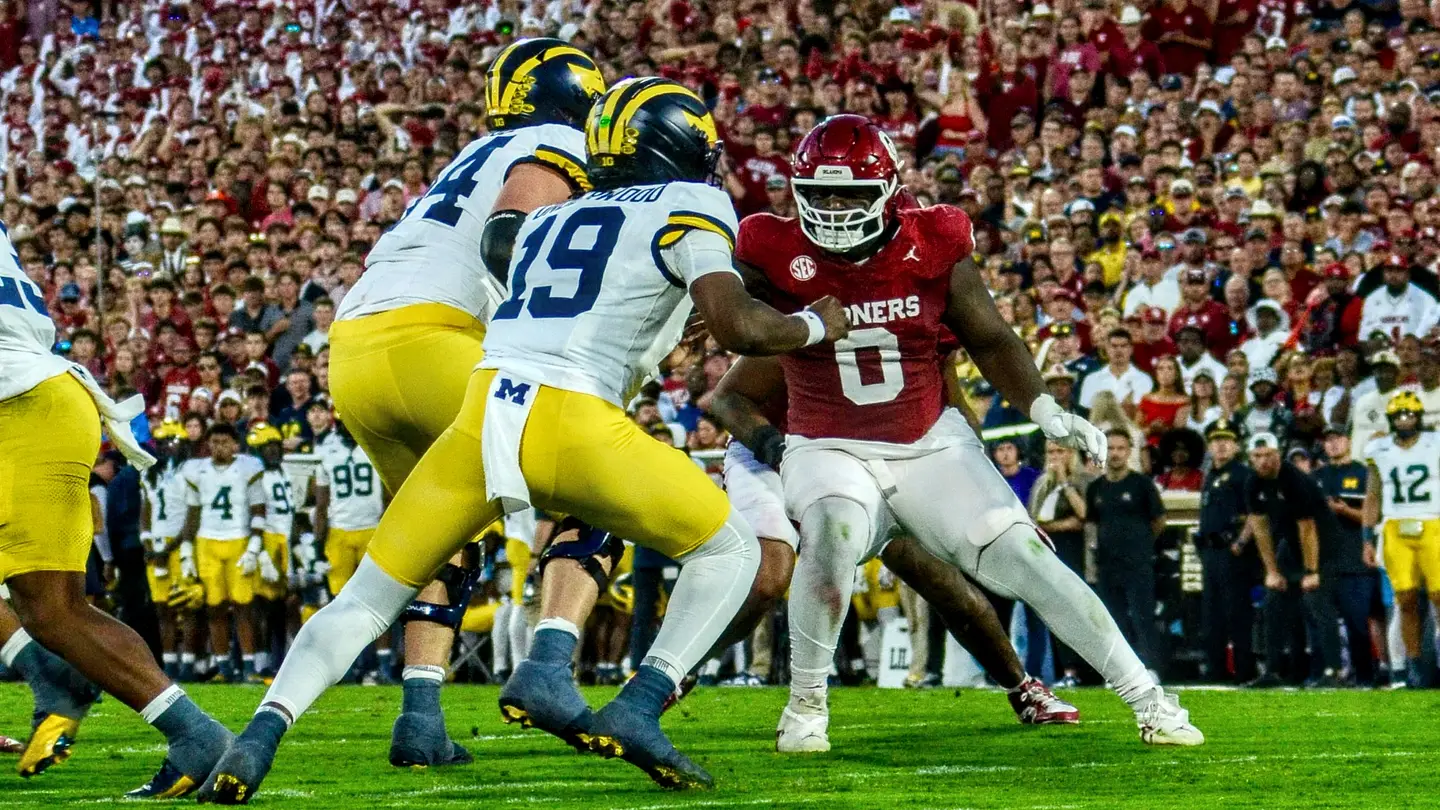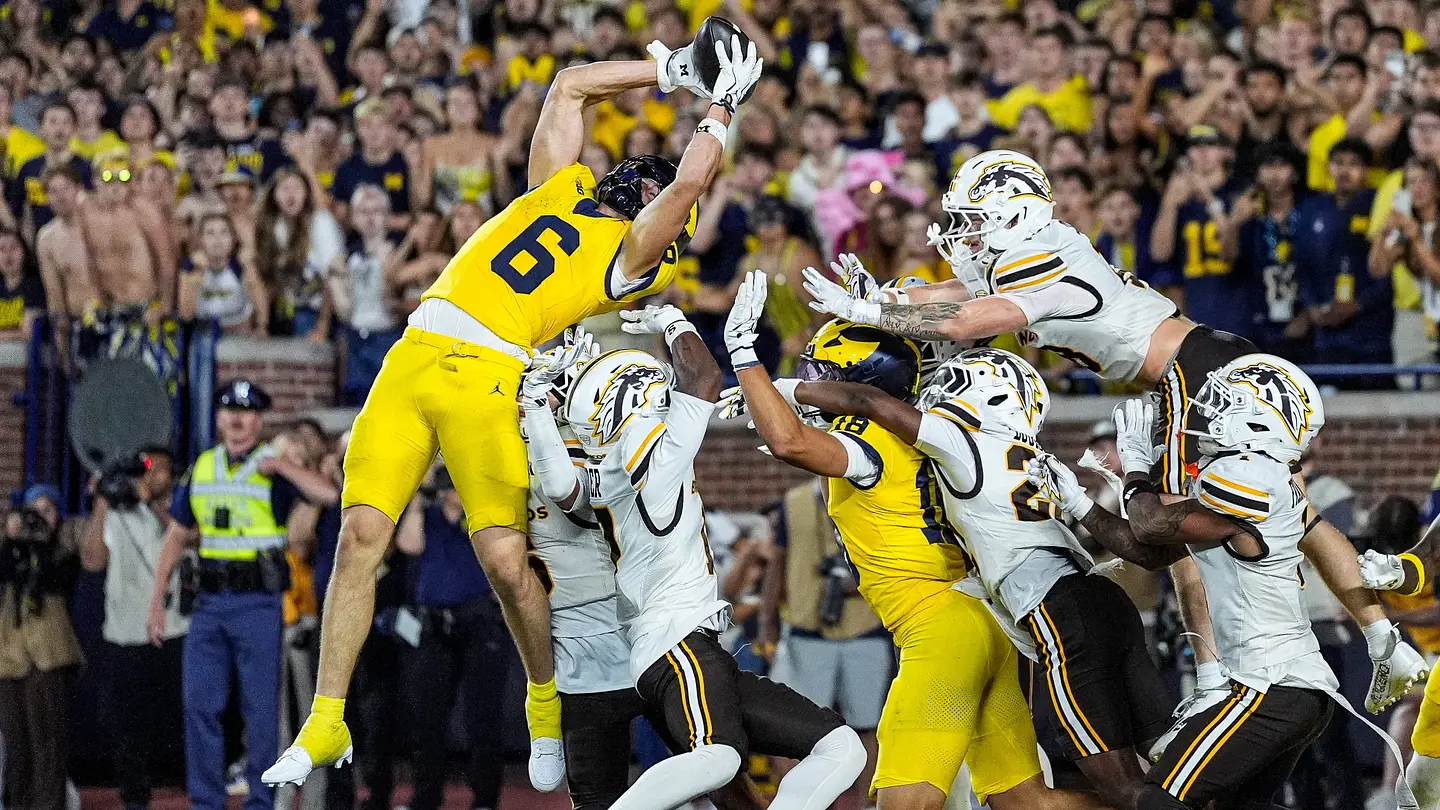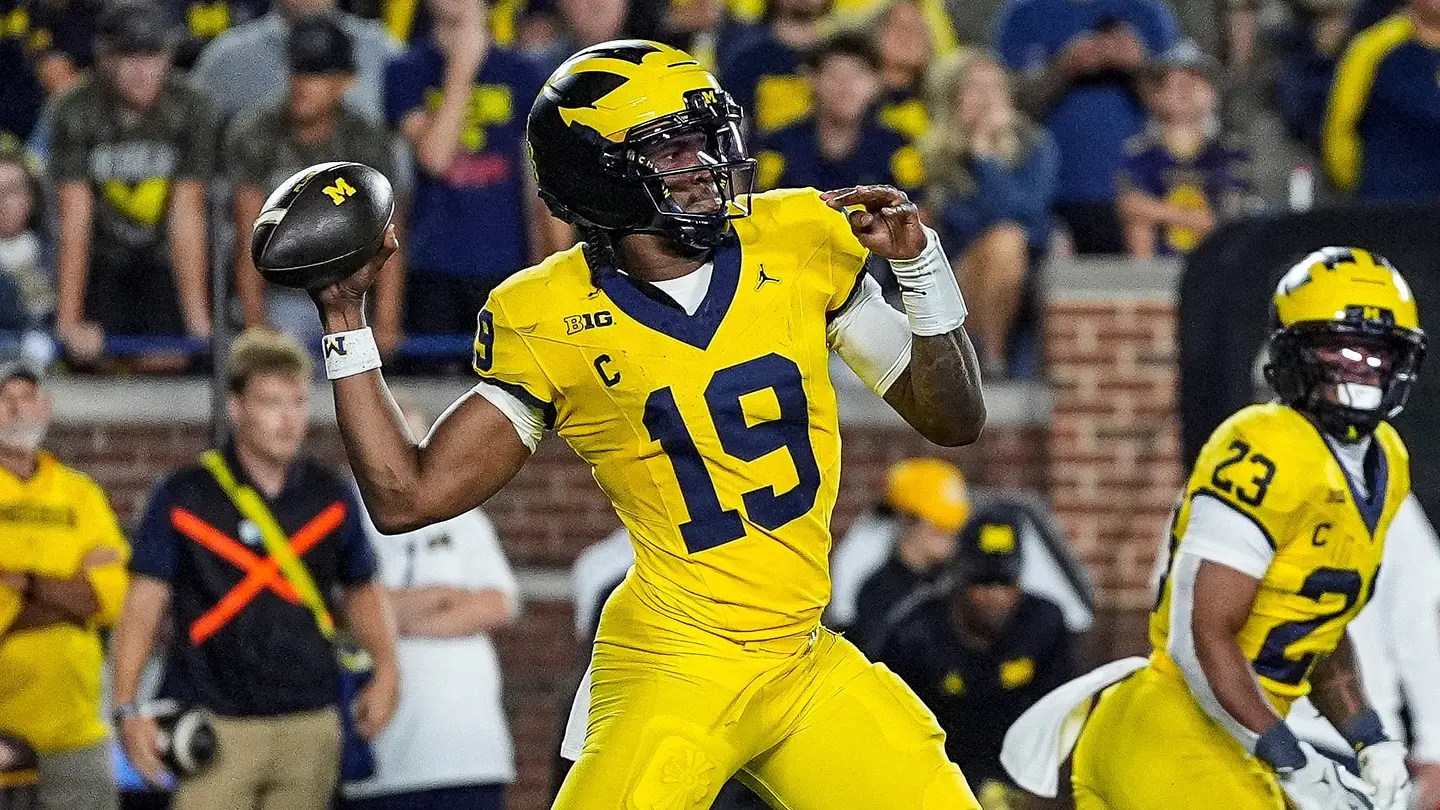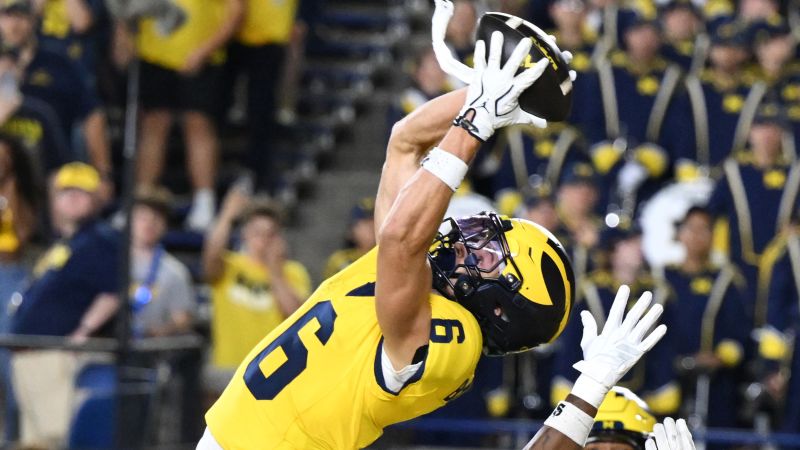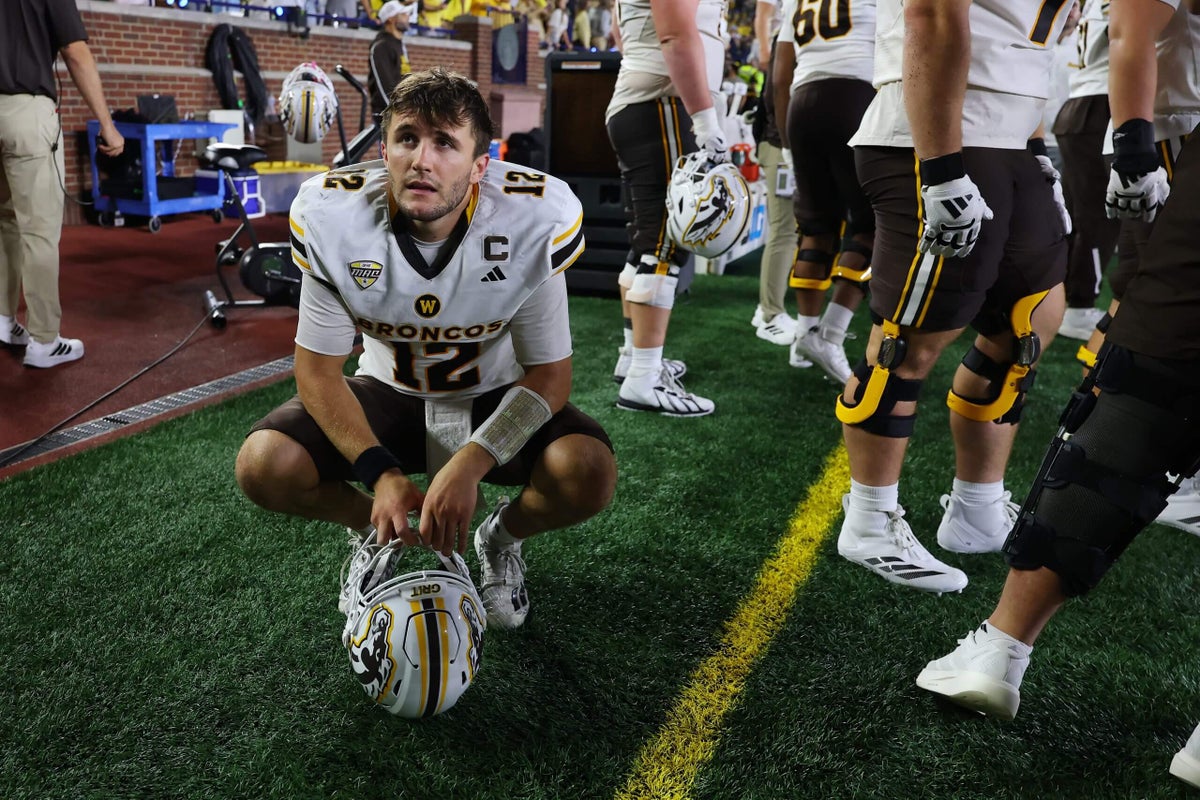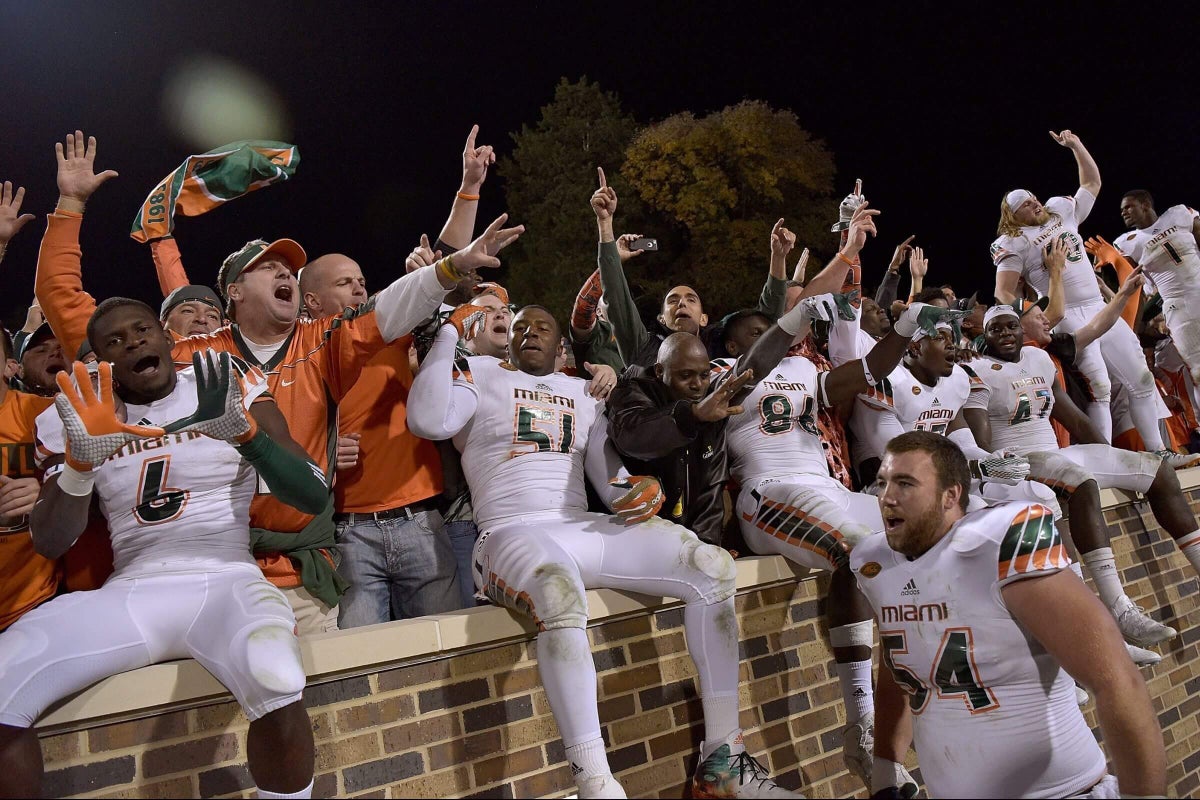
Nearly every college football season, last-second officiating decisions influence outcomes, championships and legacies. Every fan has moments when they felt their team got screwed by the officials or encountered a conspiracy by the opponent to ruin fair and honest competition. It happened again Saturday night.Michigan shocked Western Michigan 13-12 on a game-winning 47-yard Hail Mary touchdown pass. For most watching at home, it looked like the play should not have taken place. Time seemed to have expired on the Wolverines’ previous play when quarterback Bryce Underwood’s heave sailed out of the back of the end zone with zeros on the clock. Instead, Big Ten replay officials determined the ball was touched by an out-of-bounds defender with one second left. But NBC’s game clock was not synced with the Big Ten’s official time clock, which allowed Michigan to have one final and controversial chance at an epic conclusion.The list below, in no particular order, recalls 10 more college football games altered in the final seconds by penalties and no-calls. It doesn’t include officiating fiascos like what took place in 2006 when a Pac-10 crew completely botched an onside kick that led to Oregon’s win against Oklahoma. Let debate reign.Oct. 6, 1990: Colorado 33, Missouri 31Perhaps the college game’s most infamous controversy took place in Columbia, Mo., when Colorado received five downs from the Mizzou 3-yard line on its way toward a national championship. The Buffaloes clocked the ball on first down, and running back Eric Bieniemy ran for 2 yards to the Tigers’ 1-yard line on second down. Colorado called its final timeout, but the chain crew did not change the marker.Bieniemy ran again up the middle, where he was stopped outside the goal line. Referee J.C. Louderback briefly stopped the clock with eight seconds left when Missouri defenders did not exit the pile in a timely manner. Colorado quarterback Charles Johnson then clocked the ball with three seconds left on what was supposed to be fourth down but was listed as third down on the field. On fifth down, Johnson ran an option to the right and appeared just short of the goal line. After a pregnant pause lasting four seconds of real time, the line judge’s hands went up, and the stunned Missouri crowd swarmed the field in disbelief. Two days later, the Big Eight Conference announced it had suspended the officiating crew. Previously, all suspensions were handled internally.“Through the entire episode, the coaches and players were very professional,” Louderback said in a statement after the suspension was announced. “It’s always a tough feeling when a rule or an error in a rule becomes a factor in the game. (We) are human. We erred. And we feel terrible in regards to the circumstances at the end of the game.”Jan. 3, 2003: Ohio State 31, Miami 24The No. 2 Buckeyes trailed by a touchdown and faced fourth down in the first overtime of the BCS title game. Ohio State quarterback Craig Krenzel threw toward receiver Chris Gamble, and Miami defender Glenn Sharpe broke up the pass. Fireworks shot into the Arizona air, and the Hurricanes stormed the field. Then, in about the time it took you to read that sentence, field judge Terry Porter pulled a flag from his pocket and hit Sharpe with pass interference.Ohio State tied the score to send the game into double overtime, where it scored another touchdown and held off No. 1 Miami for the victory.“The University of Miami Hurricanes did not give away their college-football throne Friday night,” wrote then-Miami Herald columnist Dan Le Batard. “No, they had it taken from them.”Dec. 5, 2009: Texas 13, Nebraska 12The 2009 Big 12 championship game will be remembered for two reasons: Nebraska defensive tackle Ndamukong Suh’s dominant performance and Texas coach Mack Brown waving his finger. With eight seconds remaining, the Huskers led No. 2 Texas by 2 points. Longhorns quarterback Colt McCoy rolled right, fired deep toward the right sideline, and the ball sailed out of bounds. The clock struck zero.Nebraska coach Bo Pelini raised his arms in celebration. Brown said “No, no, no” and stuck out his index finger, indicating there was one second left. After a video review, one second was put back on the clock, and Texas kicker Hunter Lawrence sliced in a 46-yard field goal as time expired. Despite howls from the Nebraska sidelines, the final score sent Texas to the BCS championship game.“No comment,” Pelini said afterward.Sept. 10, 2016: Central Michigan 30, Oklahoma State 27No. 22 Oklahoma State had this game wrapped up in Stillwater. Leading by 3 points with four seconds left, Cowboys quarterback Mason Rudolph launched the ball out of bounds as time expired for an apparent victory. But no Oklahoma State receiver left the line of scrimmage, which caused officials to flag Rudolph for intentional grounding. In traditional situations, intentional grounding calls for loss of down, which the officials applied and gave the ball to Central Michigan for one untimed down at the Cowboys’ 42-yard line.On the ensuing snap, Central Michigan quarterback Cooper Rush threw a Hail Mary pass, which was caught by receiver Jesse Kroll at the 9-yard line. Kroll pitched the ball to Corey Willis, who raced across the field and lunged across the goal line for the game-winning touchdown. The problem was the MAC officiating crew misapplied the rule. Because Oklahoma State had possession when the clock expired, the game was over. Instead, Central Michigan received a gift victory.“I feel like we should have our officials in our games, in Power 5 conference games,” Oklahoma State coach Mike Gundy told reporters two days later when comparing the crew to Double-A umpires.Coincidentally, Kyle DuBuse, who became a MAC official in 2011 and later moved up to the Big Ten in 2018, served as field judge in this game and Saturday night for Michigan-Western Michigan.Nov. 21, 1953: Notre Dame 14, Iowa 14Hall of Fame coaches Frank Leahy and Forest Evashevski clashed in South Bend, and controversy cost the “Fainting Irish” a national championship. No. 1 Notre Dame had no timeouts, the clock was running with 32 seconds left, and the Hawkeyes led 14-7. Two Notre Dame players ran to the officials and hit the ground, prompting the clock to stop. The players then jogged off the field, and the Irish huddled. Notre Dame attempted three passes after the clock stoppage, the third of which became the score-tying touchdown with six seconds left.“I consider it a complete violation of the spirit and ethic of football and was sorry to see Notre Dame, of all teams, using this method,” said legendary sportswriter Grantland Rice in a speech to the New York Football Writers two days later. A frustrated Evashevski paraphrased one of Rice’s great writings, “When the one great scorer comes to write against our name, He won’t ask that we won or lost, but how we got (ethnic slur deleted) at Notre Dame.”With the tie, Notre Dame fell to No. 2 and lost out to Maryland for the national title.Nov. 26, 2016: Ohio State 30, Michigan 27This game in “The Game” simply is known by some as “The Spot.” The Wolverines led by a field goal in double overtime, and the Buckeyes faced fourth-and-1 at Michigan’s 16-yard line. Ohio State quarterback J.T. Barrett kept the ball on a zone read, received a hard hit from Michigan safety Delano Hill and slammed into tight end A.J. Alexander’s backside around the 15-yard line.The head linesman marked Barrett down at the 15 for a first down. Barrett fell to the turf about a foot shy of the 15, but forward progress was ambiguous. After a lengthy review, the spot remained in place. On the next play, Ohio State’s Curtis Samuel took the handoff, ran left and raced into the end zone to send Ohio State to the four-team College Football Playoff.“It wasn’t a first down, by that much,” then-Michigan coach Jim Harbaugh told reporters, holding his hands about a half-foot apart.Dec. 7, 1963: Navy 21, Army 15Barely two weeks past President John F. Kennedy’s assassination, America’s rivalry featured a solemn opening and an epic conclusion. Facing fourth down at the Navy 2-yard line, Army trailed by 6 points with only seconds remaining. Cadets quarterback Carl Stichweh asked for quiet, which was granted in those days, and officials stopped the clock.Army went back into its huddle, thinking the clock was stopped until the ball was snapped. Instead, officials wound the clock, and by the time the Cadets lined up, the game was over. No. 2 Navy, led by Heisman Trophy-winning quarterback Roger Staubach, earned the Cotton Bowl invitation over Army.“I’m not sure, but I think the clock shouldn’t have started again until the ball went off,” Army coach Paul Dietzel said.Oct. 31, 2015: Miami 30, Duke 27Duke was six seconds from a clash with North Carolina between ACC unbeatens. The No. 22 Blue Devils led by 3 points, kicked off with six seconds remaining and swarmed to the football. Miami players proceeded to lateral the ball eight times and scored with no time remaining for a stunning Halloween upset in Durham. However, it should not have counted.Officiating marred Miami’s miracle return, which caused the ACC to suspend the crew. Before the fifth lateral, the Miami ball carrier was down. A conference review concluded there were three penalties on the return, and one was correctly called, but the flag was picked up. The ACC did not change the game’s outcome.“The NCAA should have a process to reverse the outcome of the game,” Duke coach David Cutcliffe told reporters the next day.Jan. 8, 2026: Miami 31, Ole Miss 27In a College Football Playoff semifinal at the Fiesta Bowl, Ole Miss trailed by 4 points and had time for one final play. With the ball at Miami’s 35-yard line, quarterback Trinidad Chambliss threw deep toward receiver De’Zhaun Stribling, who was hand fighting with Miami defensive back Ethan O’Connor starting around the 5-yard line. But as the ball reached the end zone, O’Connor grabbed Stribling’s left shoulder pad, twisted him as he attempted to locate the ball and was pulled down as it fell just past his freed and outstretched left arm.Typically, officials are wont to call pass interference on Hail Mary plays, which feature a lot of contact as players position themselves to rebound the ball as much as catch it.“Yeah, there was contact,” Ole Miss coach Pete Golding said, “but that happens a lot. That’s not why we lost the game.”Sept. 18, 2010: Michigan State 34, Notre Dame 31In the game that launched Mark Dantonio’s run toward the College Football Hall of Fame, the Spartans trailed the Irish 31-28 in overtime. Kicker Dan Conroy lined up for a 46-yard field goal to send the game into a second frame. At the snap, holder Aaron Bates stood straight up, and upback Le’Veon Bell and tight end Charlie Gantt headed for the end zone. Bell was tackled just as he got past the line of scrimmage, but Gantt was unguarded, and Bates — the Spartans’ punter and a three-year starting high school quarterback — hit him in stride for the game-winning score.But there was some controversy. Shortly before the ball was snapped, the play clock hit zero. It was never reviewed.“What was that?” Notre Dame coach Brian Kelly asked, but that question wasn’t directed toward the officials; it was pointed toward Dantonio’s gutsy call. Afterward, Dantonio told reporters he’d “rather the pressure be on us or me.” A few hours later, Dantonio suffered a mild heart attack but made a complete recovery and led the Spartans to his first of three Big Ten titles.
College football history is rich with controversial endings. Welcome to the club, Michigan-WMU
Here are 10 more college football games altered in the final seconds by penalties and no-calls.
1,929 words~9 min read