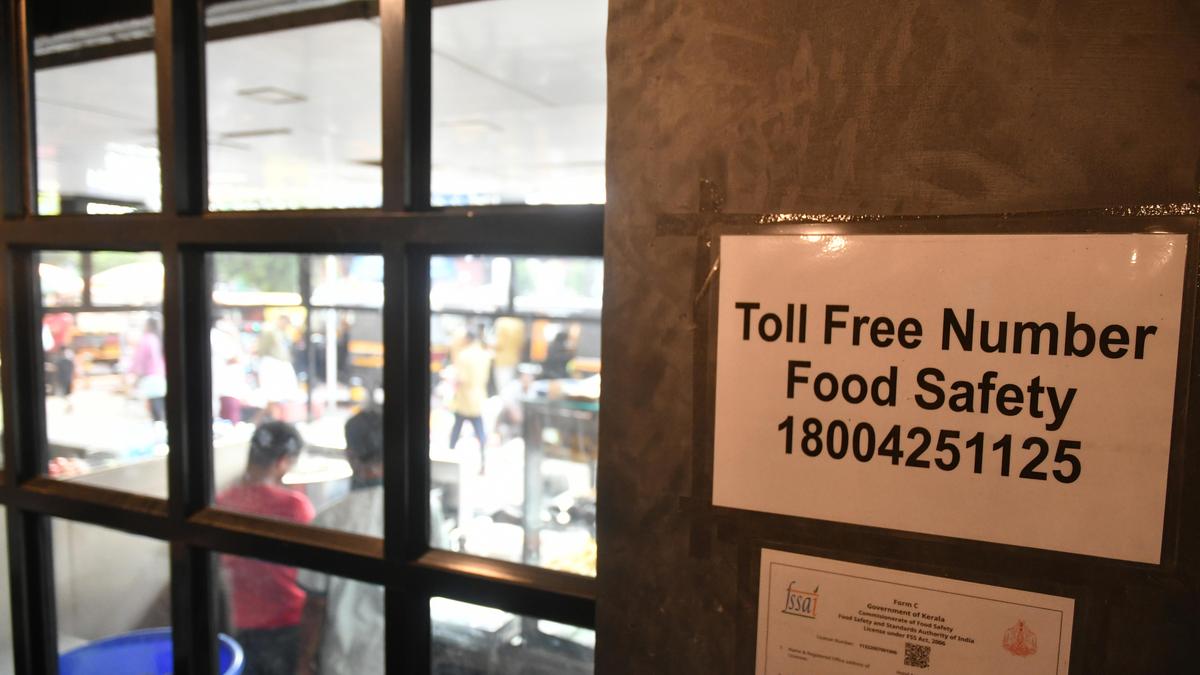
CALLING OUT. Making it easy for consumers to report food safety issues
| Photo Credit:
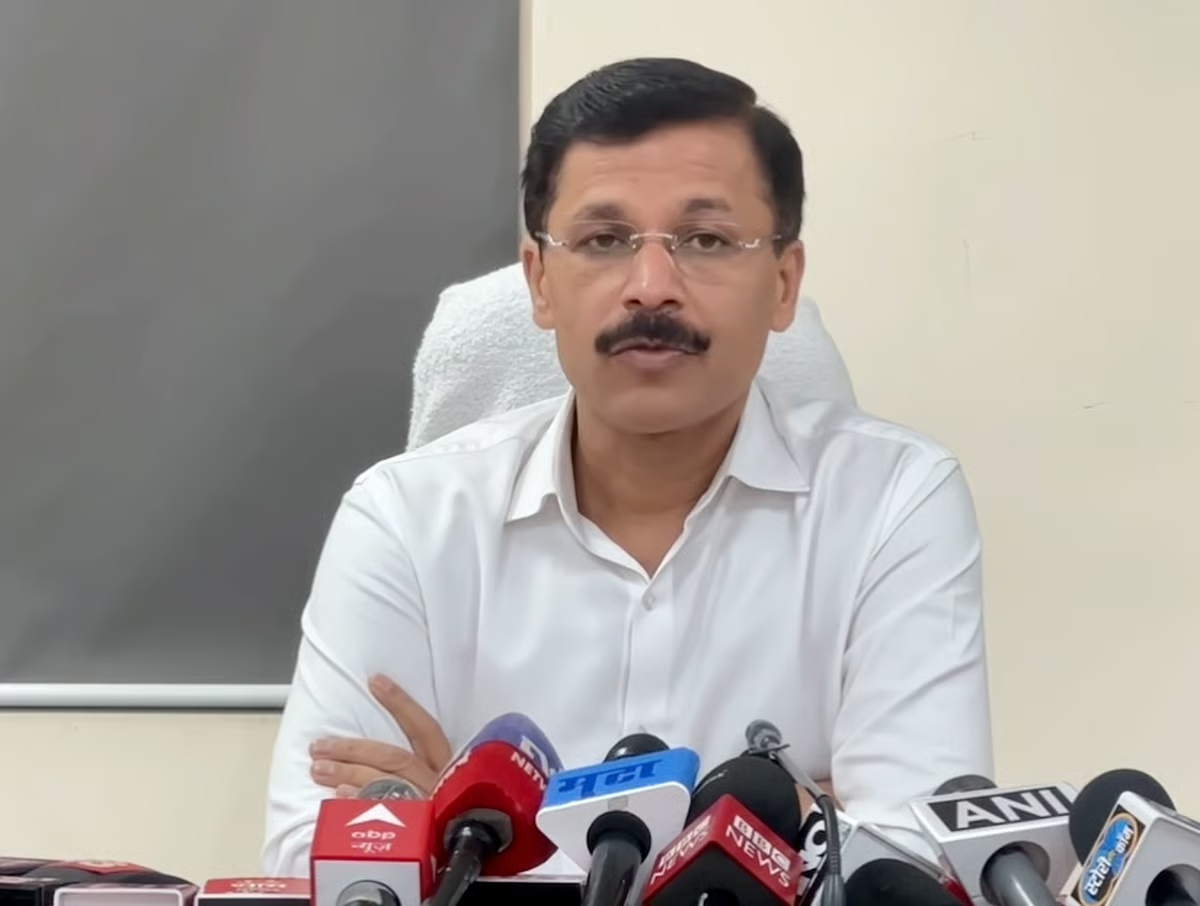
Between May and July this year, Tukaram Mundhe, a 2005 batch IAS officer from Beed, Maharashtra, reportedly walked into 3,137 restaurants, issued 764 improvement notices, and shut down 165 of the eateries. And became a Singham-style folk hero in the process, celebrated on social media and news channels as the bureaucrat who finally did what the system was supposed to do all along.The thing is, Maharashtra’s Food and Drug Administration has FoSCoS — the Food Safety and Standards Authority of India’s integrated digital platform — which is supposed to track licensing, inspections, lab results and penalties, with the whole chain digitised and connected.So you don’t really need a vigilante — it should be quiet, boring, predictable and effective work. There’s information, but no enforcement, not until Mundhe shows up.In theory, FoSCoS is elegant. Violation found lab test ordered results analysed audit conducted adjudication penalty issued restaurant closed. Clean. Logical.The system has too many blockers and not enough doers, however. Violations sit in audit, then in adjudication, then in enforcement — with each step a checkpoint that can delay matters indefinitely.How others fixed thisSingapore has inspections and rules just like we do, but here’s the critical difference: When a restaurant fails inspection, the rating gets published right there on the storefront, online, everywhere customers see it. The owner doesn’t fear the inspector or worry about fines — he fears customers who see “Failed” and go somewhere else instead. Revenue drops the same week, the owner fixes the problem immediately, and market pressure does what bureaucracy never could.In Denmark and Australia, violations go public within days, the media picks it up… And if one district is lenient, the neighbouring district looks clean by comparison, so officials can’t hide.What India shouldn’t doIndia needs to stop building systems for bureaucrats and start building systems for customers. Publication of violation data should be automatic — not locked in a database, but online within 48 hours, in food delivery apps, on restaurant windows, so customers know before they eat.Celebrating Mundhe is basically admitting the system doesn’t work. A folk hero in regulatory enforcement is like a folk hero in water supply — it means something fundamental is broken.Singapore doesn’t have headlines about its food safety commissioner, neither does Denmark, or Australia, because when a system works, it’s invisible. So the question isn’t where to find the next Mundhe but how to build a system that doesn’t need him.Many Mundhes…Also, I realised while I was writing this — the ‘Mundhe principle’ is portable.Let’s take a quick look at some other industries and categories.Real estate: Buyers have no idea if a building was flagged for structural issues. But if property listings showed municipal violation history, demand drops for sketchy buildings and developers would rush to fix.TV channels: There’s official data on complaints against news channels for promoting fake news, hate speech, bias and so on. But if that data appeared where you were choosing what to watch...Schools: Education Department inspects and finds violations, but parents don’t see it. Imagine school violation data published where you’re comparing institutions — suddenly, principals would move faster.Hospitals: There is data on doctor complaints, disciplinary actions, malpractice cases. Patients don’t see any of it. You pick a doctor on reputation or luck. But if that data appeared in the public domain…The lesson isn’t that India needs more heroes. It’s that India needs to stop hoarding regulatory data.(Shubho Sengupta is a digital marketer with an analogue past)Published on September 7, 2026