Next.js 16 Form Component: Built-In Progressive Enhancement and Why It Replaces Your Custom Wrappers
This article was written with the assistance of AI, under human supervision and review.
Most form handling problems in Next.js applications stem from misunderstanding what the framework provides versus what teams must build themselves. The gap between native HTML forms and production-grade form handling created an entire ecosystem of custom wrapper components, validation libraries, and progressive enhancement polyfills. Next.js 16 introduced a first-party Form component that narrows this gap significantly, but developers continue building abstractions they no longer need while missing the patterns the component actually requires.
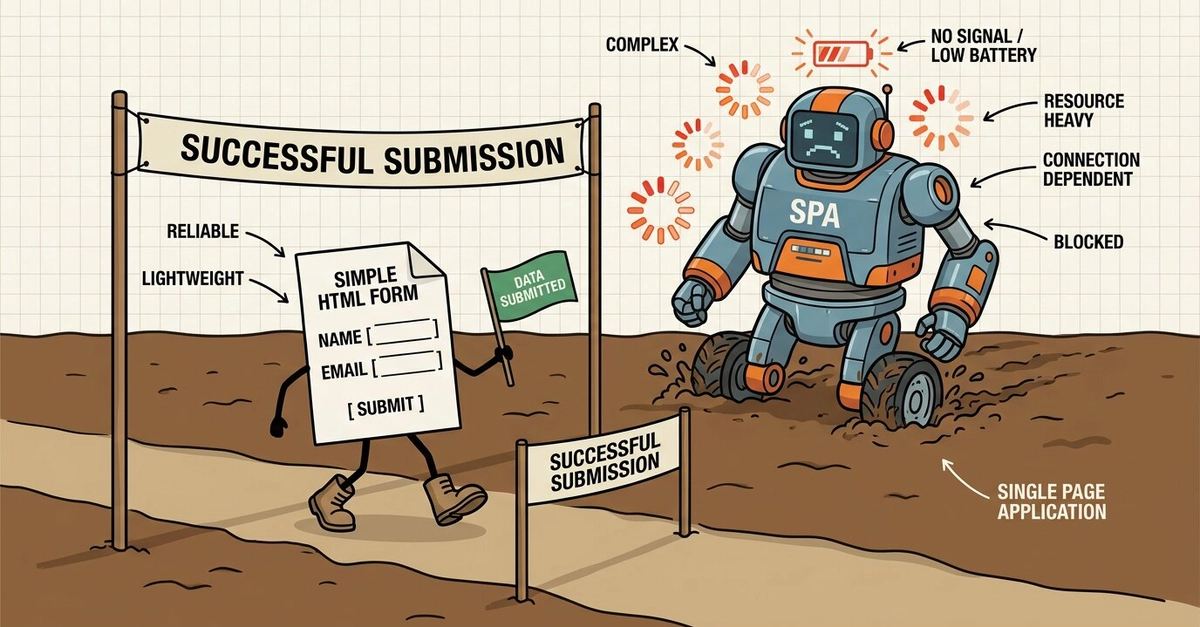
The typical approach treats forms as purely client-side concerns. Teams reach for controlled inputs, complex state management, and client-side validation before considering server actions or progressive enhancement. When JavaScript fails to load or executes slowly, these forms become unusable. The Form component inverts this pattern by making the server-first path the default and enhancing it progressively when client capabilities are available.
The correct pattern treats the HTML form as the foundation and JavaScript as an enhancement layer. Next.js 16 makes this the default by handling navigation state, preventing double submissions, and managing the form lifecycle without requiring client-side framework code. When JavaScript loads, the experience improves with instant feedback and optimistic updates. When it does not, the form still works through standard browser submission.