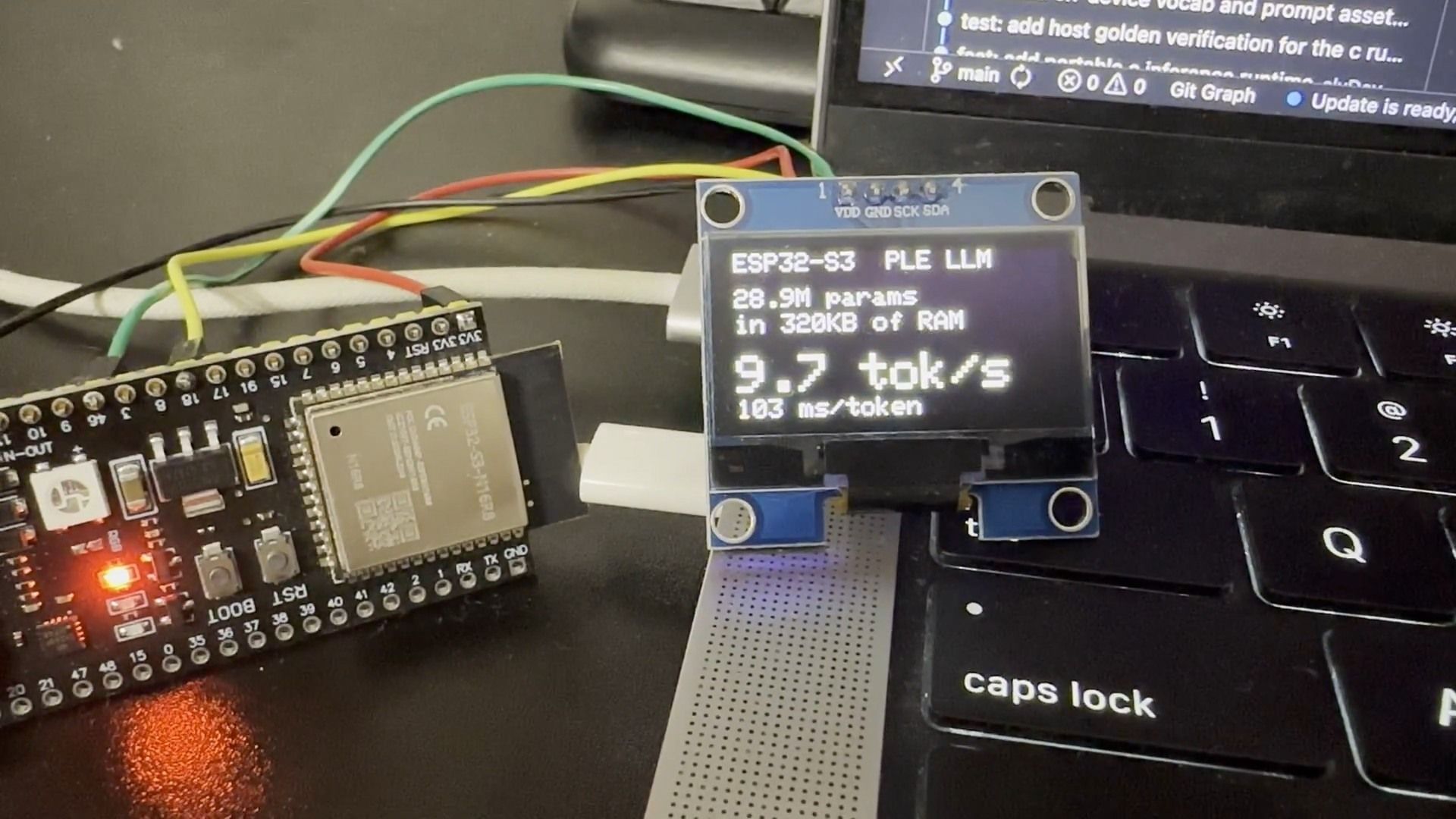
This month a developer ran a working language model on a Sony PSP-2000. That is a 333 MHz MIPS handheld from 2007 with 64 MB of RAM, and it is streaming English text onto its LCD at one to two tokens per second. The model is Karpathy's stories15M, int8-quantized down to about 17 MB, running on roughly 1,100 lines of pure C. A 64-token completion takes about a minute.
I have no plans to buy a PSP, and you probably do not either. But I keep seeing the same failure pattern in developer threads: people pick a model first, usually whatever is trending, then discover it does not fit their hardware, then OOM at inference time after a 45-minute download. The PSP experiment is the extreme version of the right way around. Start from the hardware you actually have, then find the biggest model that fits it with headroom. This article is that process, with real numbers.
One disclosure: I have not run a model on a PSP myself. I do run local GGUF models on my own servers for summarization and embedding work, and everything below about quantization sizing comes from published docs and benchmarks I link as I go. Where a claim comes from a project's own marketing, I say so.
The small-model wave is not one gimmick, it is a trend