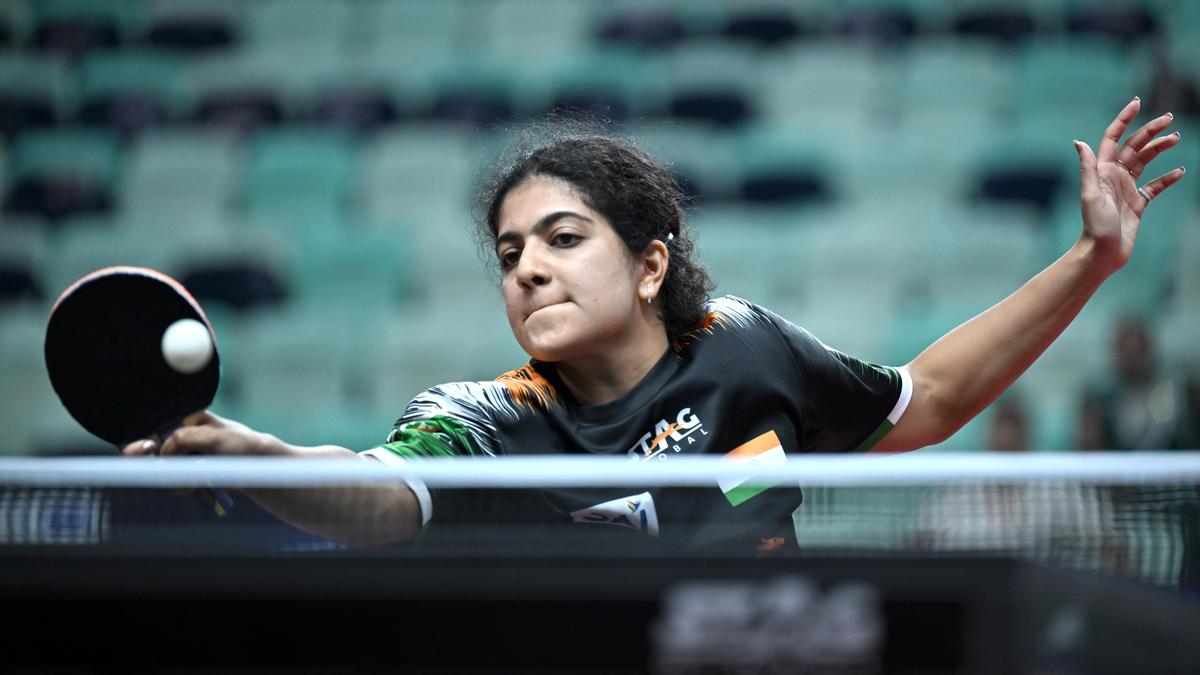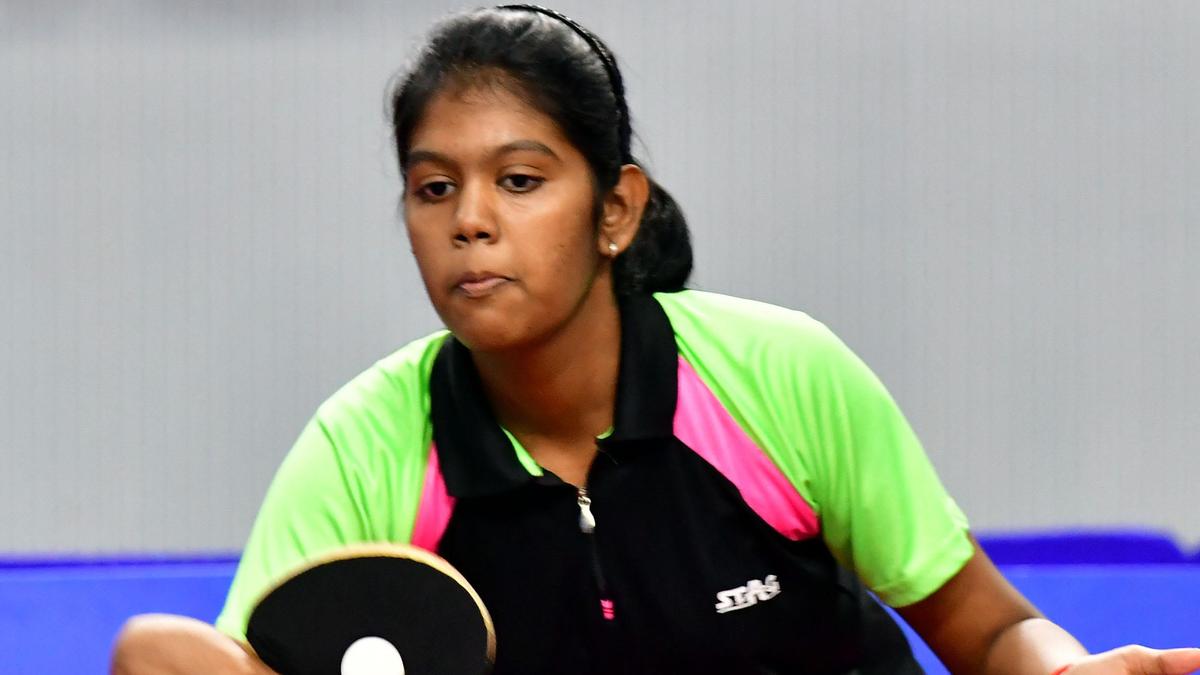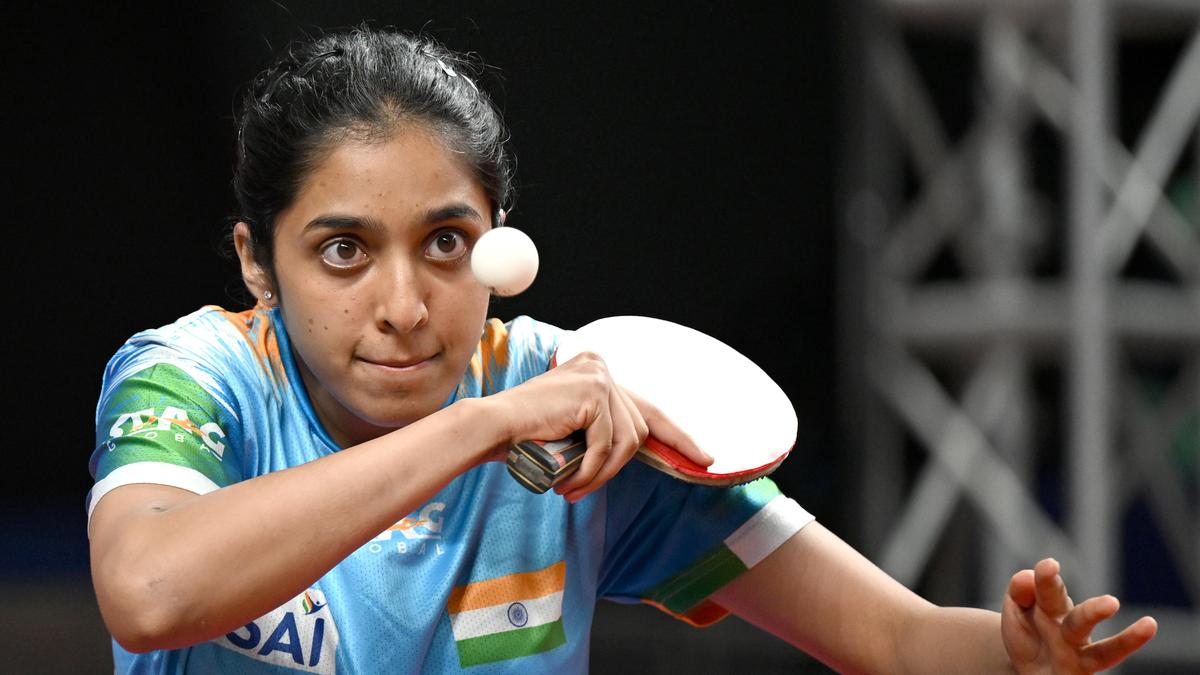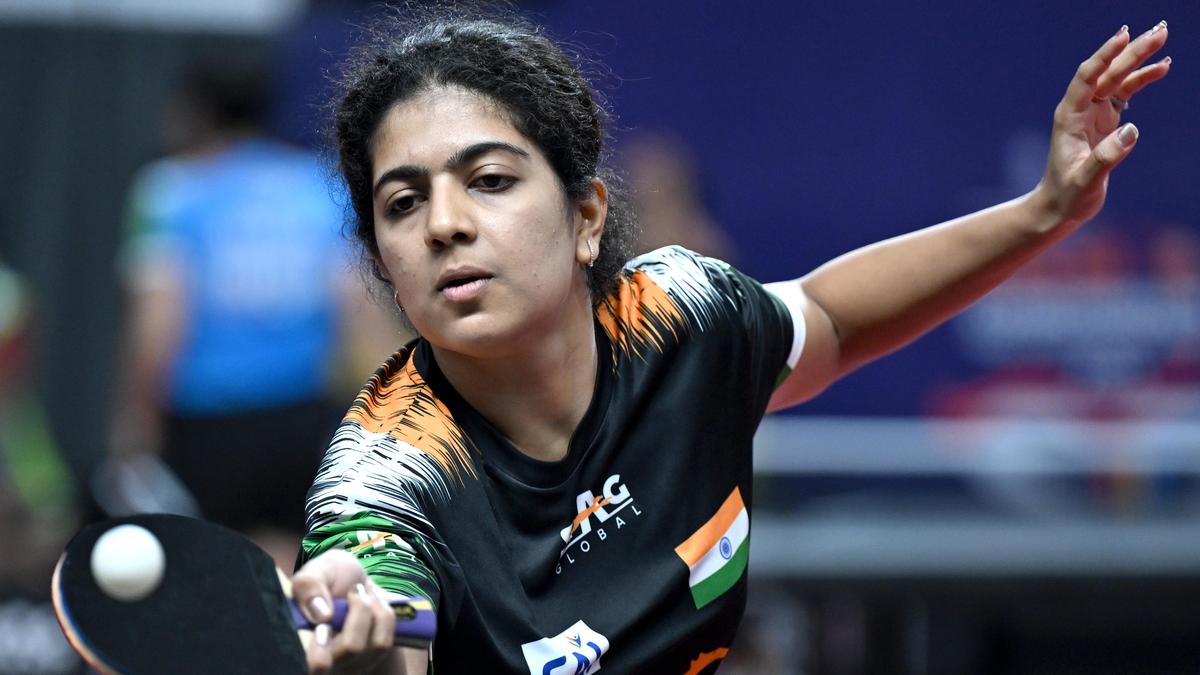
Swastika Ghosh, Indian table tennis player, in action during the 22nd Commonwealth Table Tennis Championships at the Thyagaraj Sports Complex in New Delhi on Friday, July 31, 2026.
| Photo Credit: FILE PHOTO: SHASHI SHEKHAR KASHYAP
Swastika Ghosh produced one of the biggest upsets of her international career before bowing out in the Round of 16 at the WTT Contender in Almaty, Kazakhstan, on Thursday.The 23-year-old Indian paddler, ranked 149th in the world, defeated second seed Miyuu Kihara of Japan on Wednesday, the World No. 25, 3-1 in the opening round. Swastika’s run ended against Russia’s Vlada Voronina, who beat her in straight games in Thursday’s pre-quarterfinal.“This is one of the most significant moments of my journey so far. I hope I can build on it and keep improving my game, performance and ranking,” Swastika told The Hindu.The victory came after a difficult period in which a medical problem disrupted her progress. Swastika was diagnosed with an ovarian cyst in 2024 after undergoing a routine sports-medicine check-up prompted by a bleeding issue and an unusually high resting heart rate.She managed the condition and bouts of pain for nearly a year before undergoing surgery earlier this year. The procedure forced her to withdraw from the singles events at the National Table Tennis Championship and also affected her Asian Games prospects.Back on court after more than 2 months ❤️🏓First tournament after surgery. It wasn't easy, felt slow at moments, but happy to compete again and slowly getting back step by step 💪The comeback journey starts now ✨#swastikaghosh#TableTennis#IndianAthlete#comebackstrongerpic.twitter.com/K71gW31Ejj— Swastika Ghosh (@swastikatt) May 16, 2026Since returning to competition, however, Swastika has steadily rebuilt her form. She was part of India’s gold-medal-winning team at the Commonwealth Table Tennis Championships in August, is the first standby for the Asian Games and reached the semifinals of the season-opening National Ranking tournament in Kanpur last week.The win over Kihara was another significant step, particularly against an opponent ranked more than 100 places above her.s