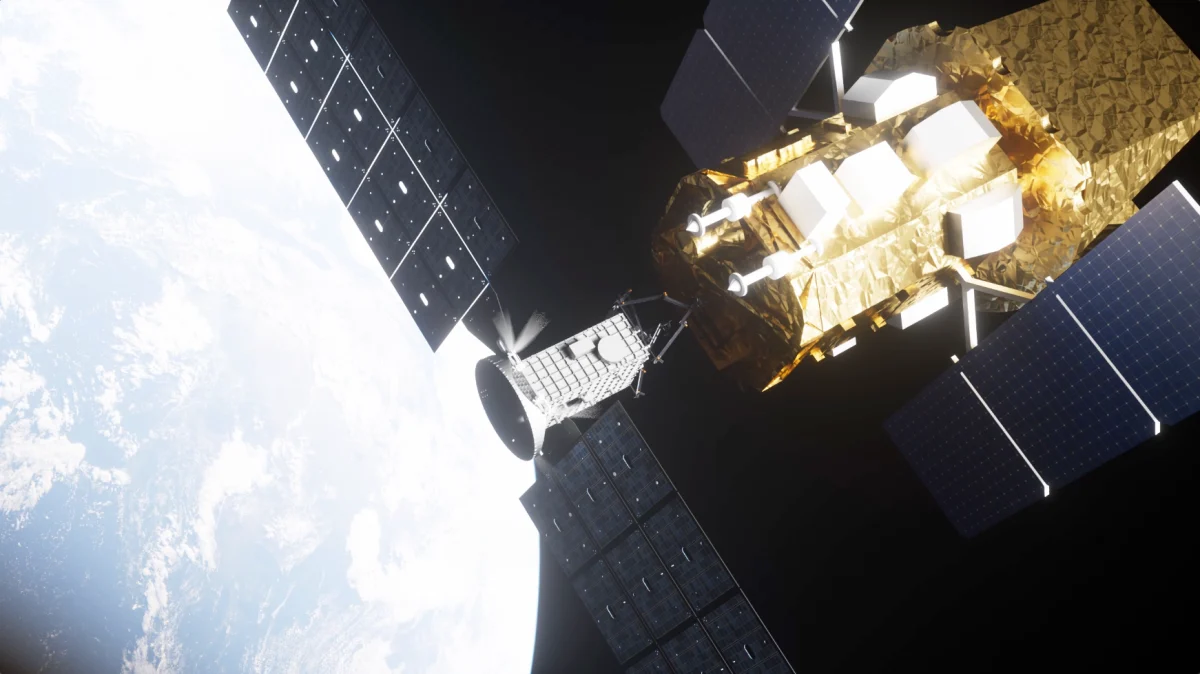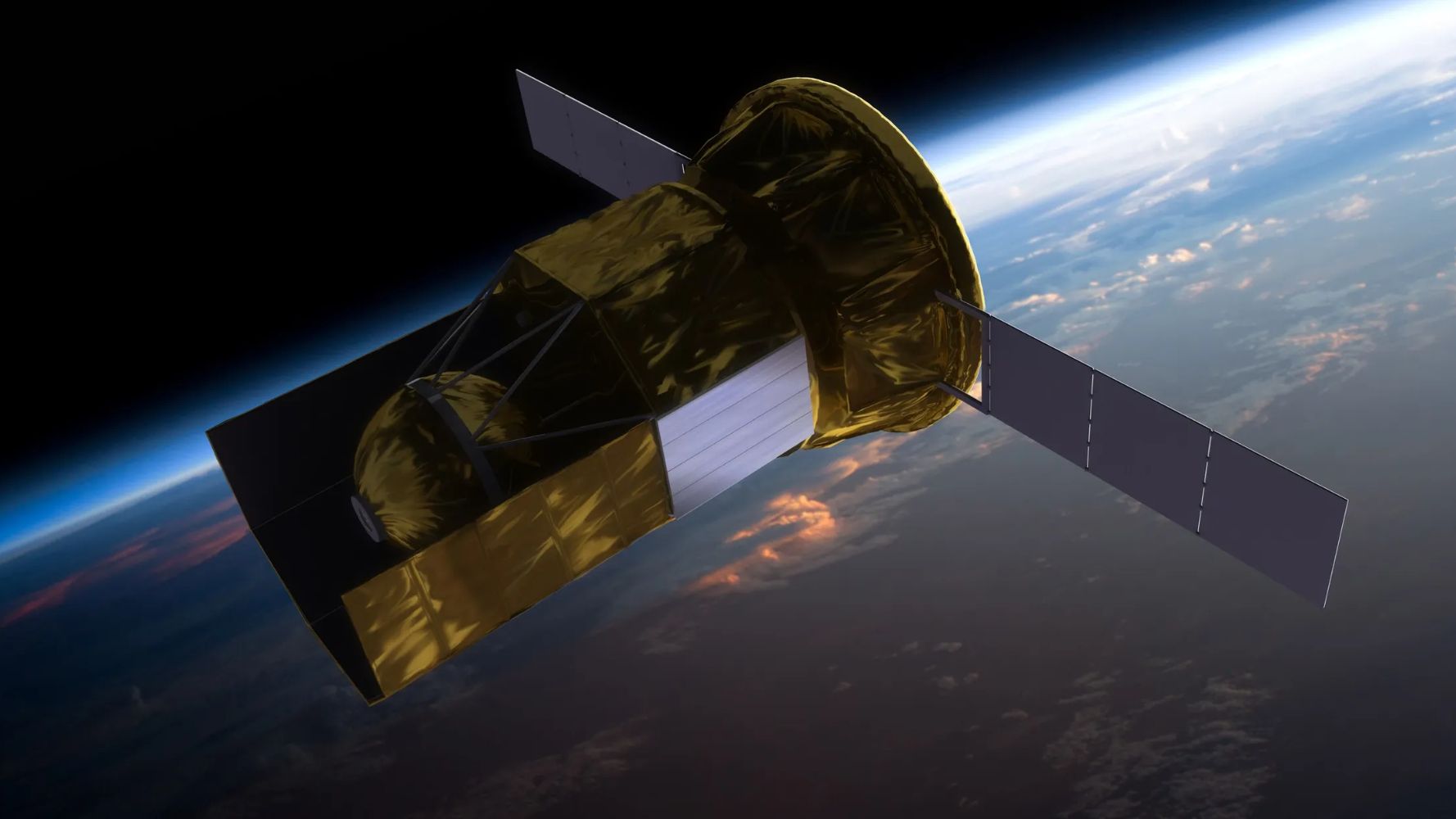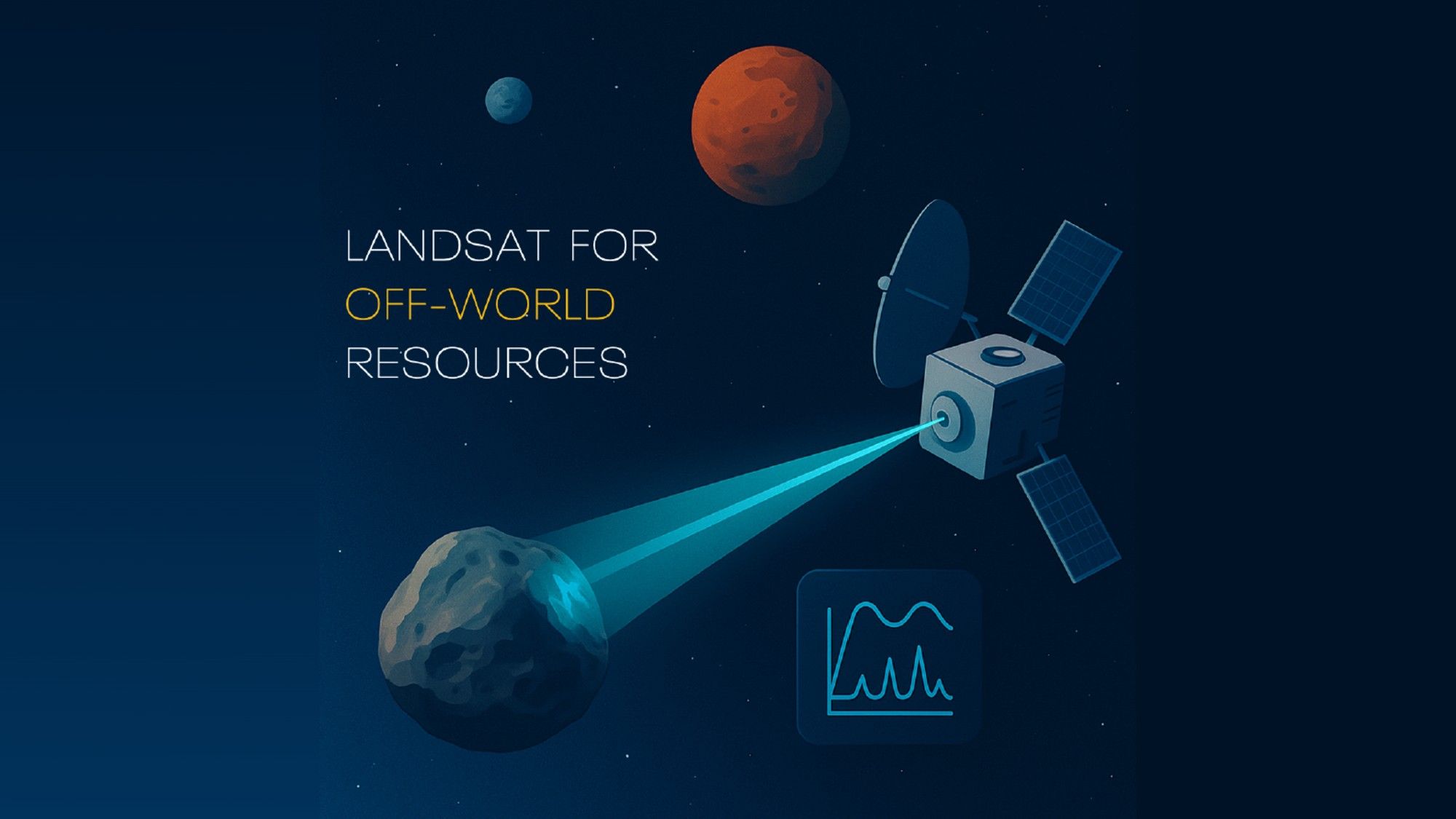
A graphic depiction of the Interworld Slingshot Resource Surveys concept.
(Image credit: Pablo Sobron/SETI)
Nearby Earth, an iconic series of orbiting U.S. government satellites called Landsat have collectively been charting minerals and climate change for more than 50 years.What if we can do the same thing in space? A new NASA early-stage project, whimsically named "Interworld Slingshot Resource Surveys", aims to bring "Landsat-style mineral intelligence" to other worlds, including the moon. NASA is aiming to put a moon base on the lunar surface in the 2030s that would be staffed by astronauts, as the U.S. tries to secure access to helium-3 and other minerals on the surface ahead of China. Being able to scout for minerals ahead of landing and setting up a base would be a huge boon for the United States' lunar ambitions.The newly funded concept — which doesn't appear to have an official nickname or acronym, so we will call it "Slingshot" for short — isn't meant to address that big task all at once, but to be a Phase 1 study for a far-future Discovery-class (large) mission. The spacecraft could fly from world to world, scanning destinations such as the moon, an asteroid near Earth, or a target like the Mars moon Phobos, said principal investigator Pablo Sobron, a research scientist at the SETI (Search for Extraterrestrial Intelligence) Institute, in a statement."The thing most likely to stop space mining may be that we cannot afford to prove there is anything worth mining," Sobron said. "Land in the wrong place and you can lose an entire exploration program or a company, and nobody has enough money to keep sending spacecraft and hoping for the best."The overall aim is to not only prove a spacecraft could make it that far, but also to see if Raman spectroscopy — which is commonly used close up to look for minerals or water by NASA's Perseverance mission on Mars, for example — could work from orbit or a flyby. The technique uses reflected light from a laser popped at a target to see the molecular structure of a mineral, which in turn reveals the mineral's composition."The main challenge for Interworld Slingshot Resource Surveys is the distance involved," SETI stated. "Raman scattering is very faint and hard to detect. The project team says that only about one photon in 10 trillion is Raman-scattered. Sobron's earlier long-distance Raman tests reached about 120 meters [393 feet]. This study is looking at whether useful measurements can be made from much farther away, around 30 to 50 kilometers [19 to 31 miles]."