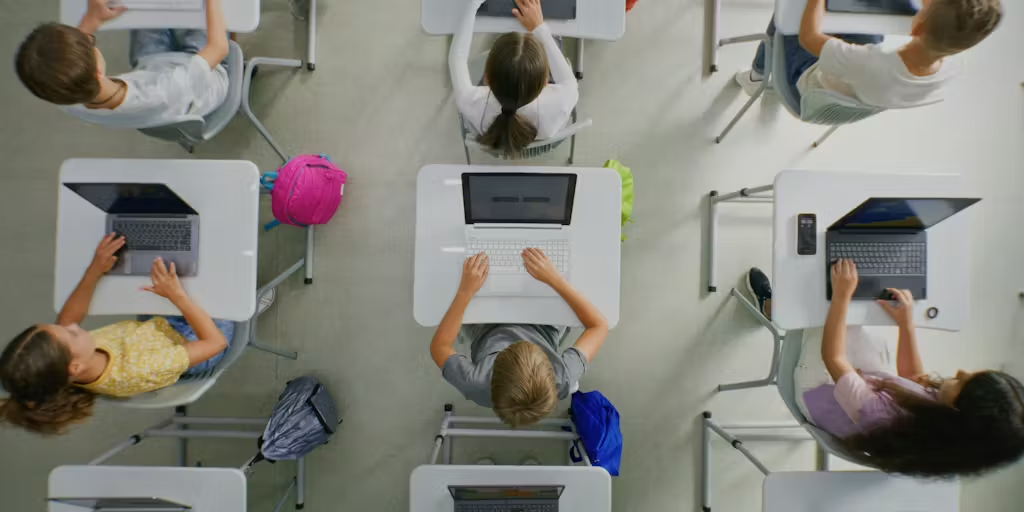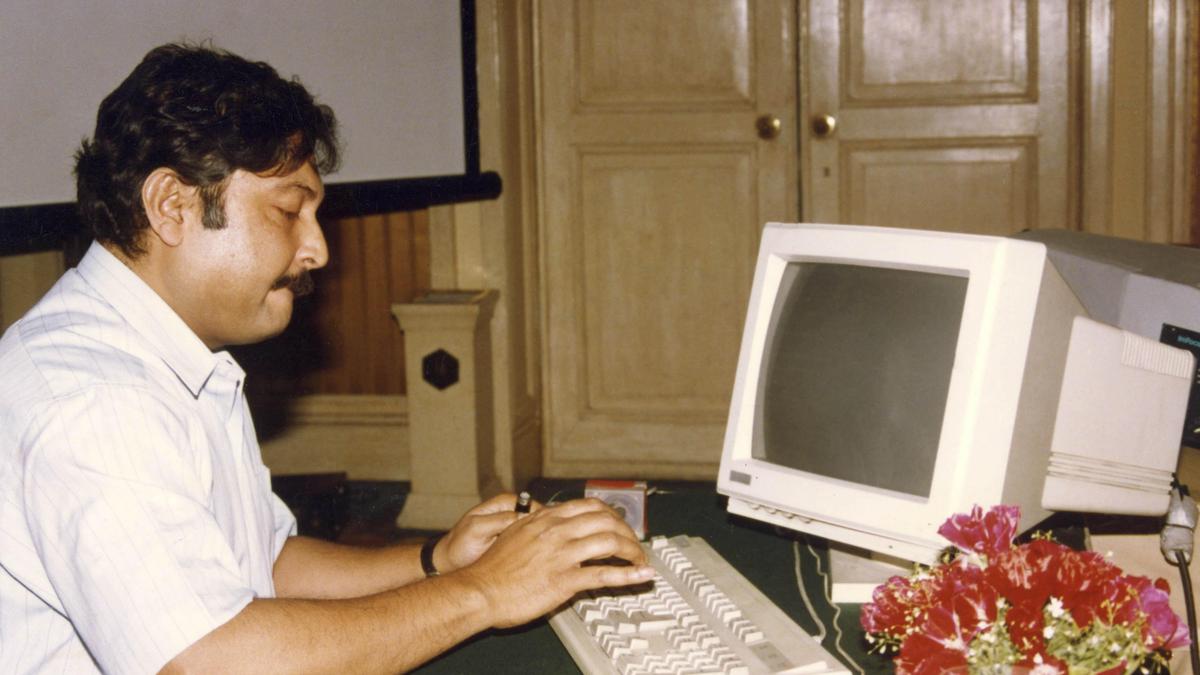
Imagine a classroom where you are given the space to explore and understand concepts on your own with the guidance of a teacher and the internet. Imagine the amount of knowledge which will open up if this non-traditional education style is adopted. That is exactly what Professor Sugata Mitra, a computer scientist and educational theorist, envisioned in his idea of how educational systems can become better equipped for the future. At a time when conversations are moving more towards banning phones and social media, here’s a glimpse into the conversation I had with Sugata Mitra on various things from his works and life to his idea being implemented worldwide.A Hole in the WallThe idea began as a question of curiosity in Mitra’s mind. The question was whether all children — without knowing English or being financially stable — would be able to understand the functioning of a computer as quickly as others. This led to the ‘Hole in the Wall’ educational experiment, which was conducted in 1999 by Sugata Mitra.
The ‘Hole in the Wall’ experiment.
| Photo Credit:
Special Arrangement
Mitra embedded a free, internet-connected computer inside a brick boundary wall separating his office and a poor slum in Kalkaji, New Delhi. He wanted to know whether, without teachers or instructions, the neighbourhood children would be able to learn to browse the web and teach each other within hours.“What the experiment showed was that groups of children using the Internet can learn almost anything by themselves, and I think young people will say, ‘What’s the big deal?’ But older people keep telling me, ‘That can’t be true because we must be required. We have to teach the children things. Otherwise, how will they learn?’” Sugata Mitra said with a laugh.This is the core concept followed by the SOLE or Self-Organized Learning Environment method created by Mitra after the experiment. Basically, an educational approach which allows students to use internet-connected devices to explore big, open-ended questions together, SOLE helps foster self-discovery, teamwork, and independent critical thinking.