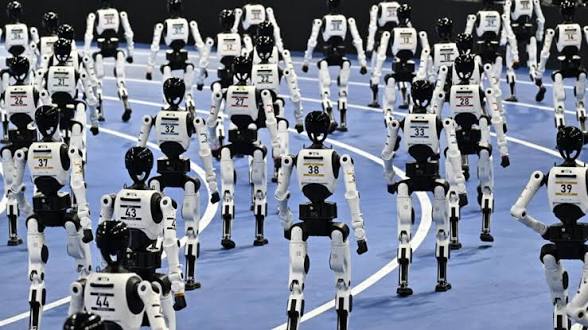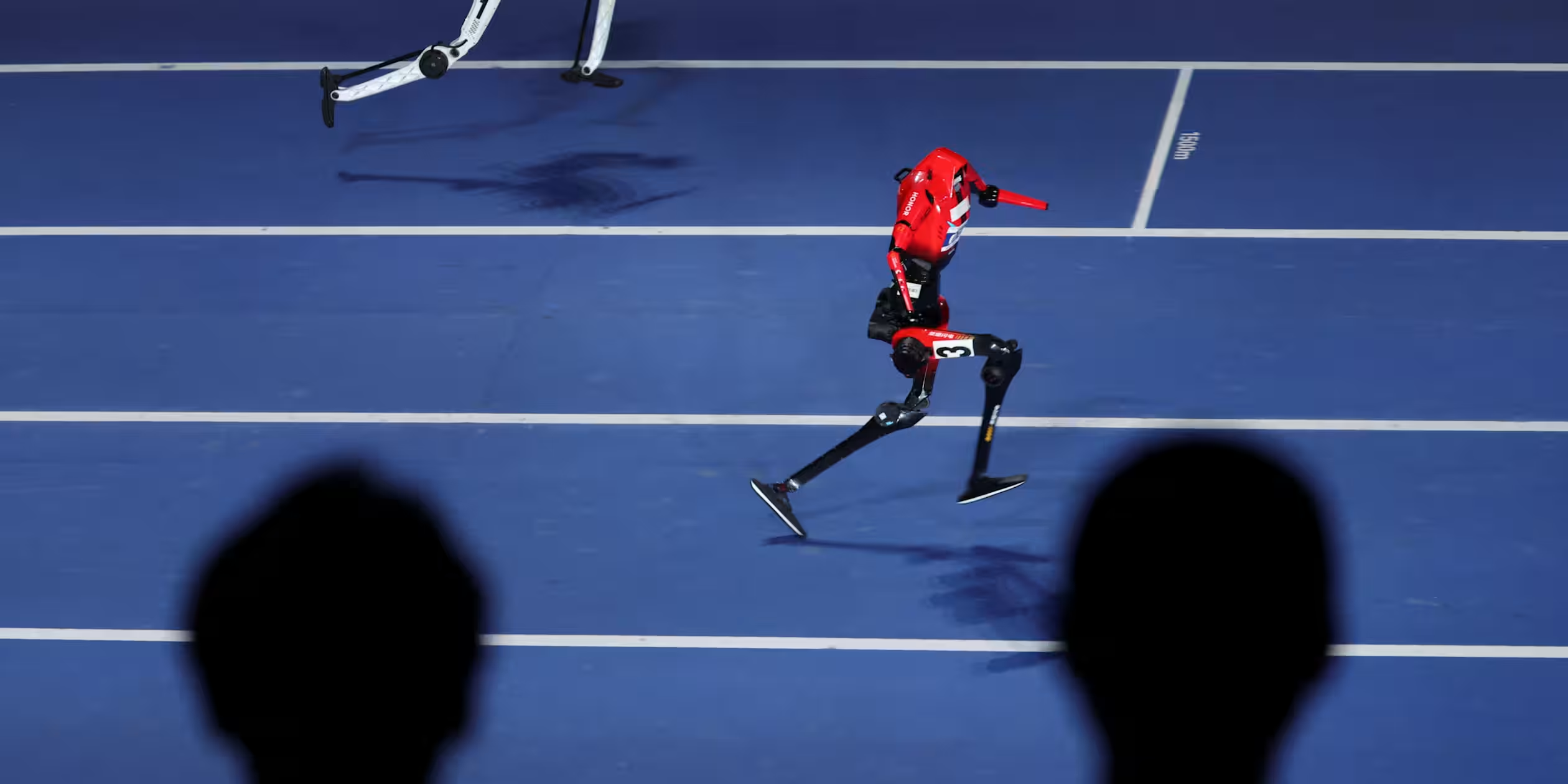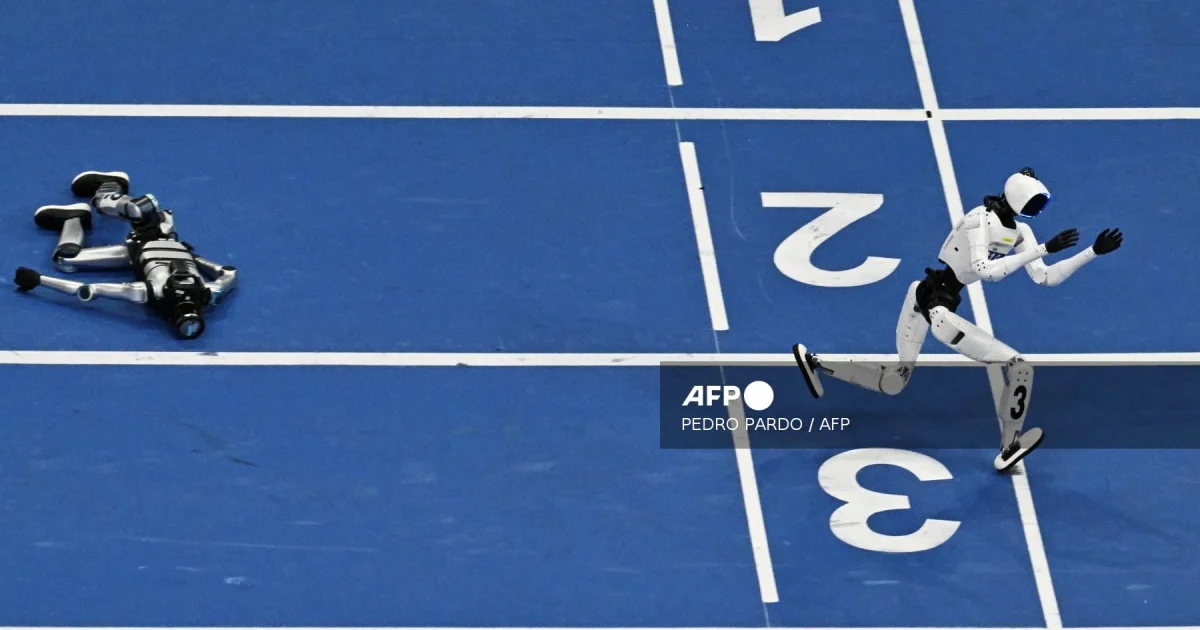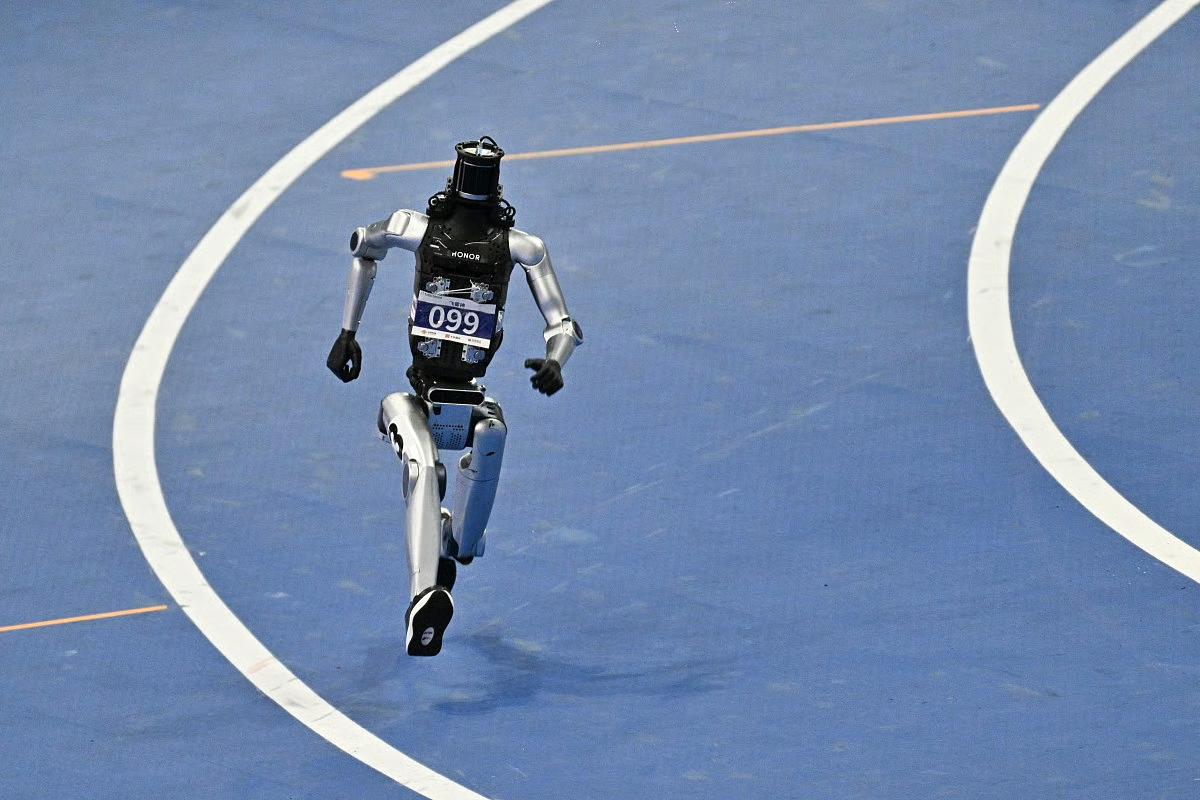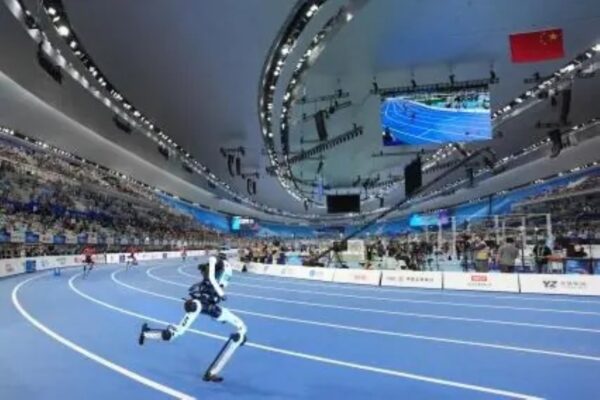
The robots lined up on the track. For a moment, it looked almost like an ordinary athletics meet. Then the race started. The machines lurched forward, their metal legs struggling to keep their balance as they sprinted toward the finish line. One of them, a Chinese humanoid robot called Tiangong Ultra, finished the 100 meters in 8.64 seconds – faster than Usain Bolt’s human world record.
The scene took place this August at the World Humanoid Robot Games in Beijing, where more than 2,000 robots competed in 51 events. Some ran and boxed. Others performed household chores or industrial tasks. Some simply fell over. It was part sporting event, part technology demonstration, and part vision of the future.
And the way that future was described was revealing. In Western coverage, the event was often framed as a spectacle, a demonstration of Chinese state power or even propaganda.
Chinese state media had a different emphasis. The focus was less on the event itself and more on what the robots might eventually do: work in factories, move through warehouses, assist in homes or become part of everyday life.
Neither interpretation is necessarily wrong. Beijing clearly wants to showcase China’s technological progress, and the World Humanoid Robot Games was designed to do exactly that. But the difference in emphasis is striking. The same robots can be seen as a technological achievement, an industrial strategy, or a piece of political theater. Reducing the event to the latter risks missing what is happening on the technological side.