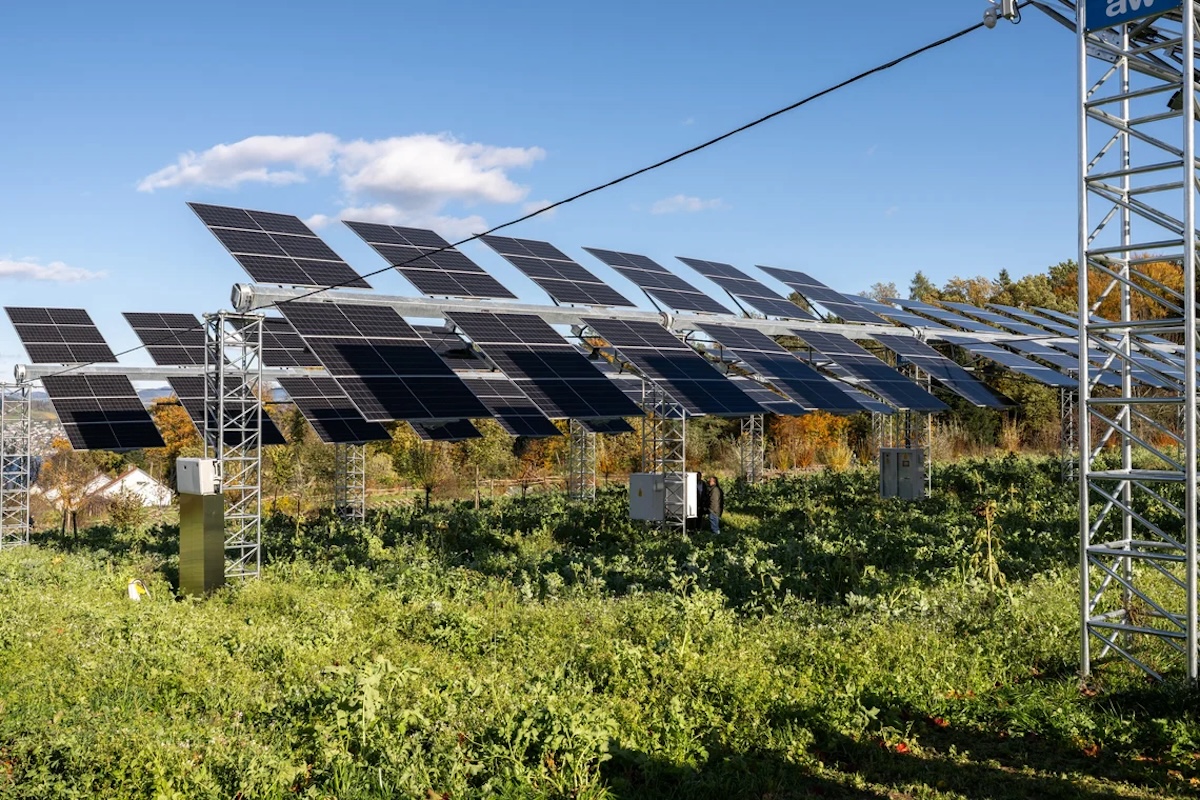
Agrivoltaics account for virtually none of Switzerland’s installed solar capacity, despite having the potential to generate far more electricity than the country currently consumes. A new ZHAW report identifies legal and administrative hurdles as key barriers and calls for regulatory reform, greater investment certainty, and lessons from neighboring markets.
“Ground-mounted systems currently account for 0.1% of installed capacity, while agri-PV systems account for 0.0% (rounded).”
This sentence from a technical report by the ZHAW Zurich University of Applied Sciences, essentially sums up the state of ground-mounted PV in Switzerland in general, and agri-PV in particular.
However, with the country’s Energy Act mandating an increase in renewable electricity generation, excluding hydropower, to 35 TWh per year by 2035 and 45 TWh by 2050, it will be difficult to continue excluding open-field sites.
In 2025, Switzerland’s 8.2 GW of installed PV capacity generated around 8.2 TWh of electricity. Meeting the country’s renewable energy targets, with PV expected to play a pivotal role, would require annual capacity additions of 2 GW to 2.5 GW.