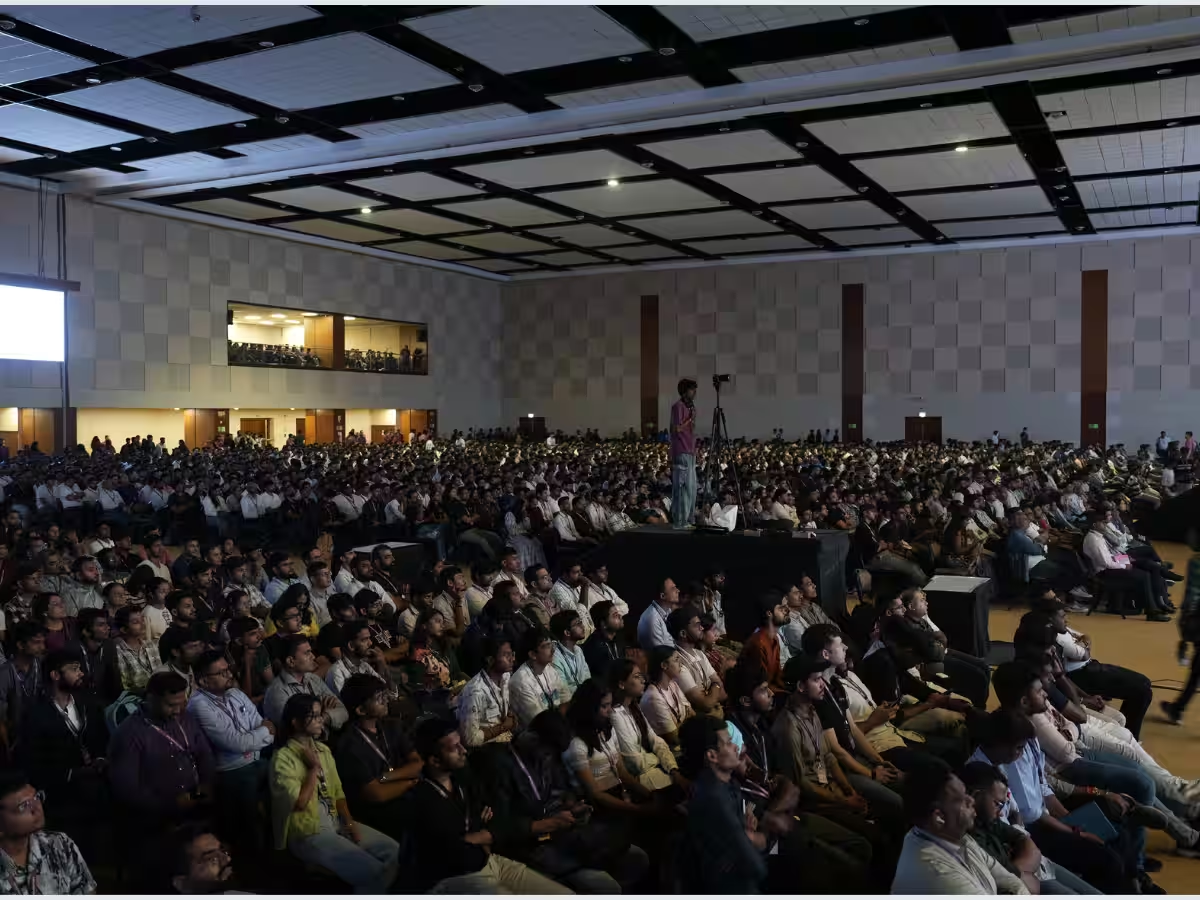
Despite Digital India, GST formalisation, and UPI, most Indian MSMEs still run on WhatsApp groups, spreadsheets, and whatever tool someone in the office happened to find first. That is slowly changing, and open-source, modular ERP(Enterprise Resource Planning) is a big reason why. Odoo Experience India 2026, scheduled for 11 and 12 September at Mahatma Mandir in Gandhinagar, looks like the clearest sign of that shift yet, with roughly 25,000 attendees expected and more than 200 talks on the schedule. The scale matters because of who has been left out of the digitisation story so far. India has more than 59 million MSMEs1.They contribute close to a third of GDP and employ hundreds of millions of people, and yet most of them are still working with software built for a completely different kind of business, or with no software at all. While the rest of the world argues about agentic AI, a large share of Indian small businesses is still trying to get its basic bookkeeping in order. Cost is the easy explanation, but that isn’t the whole picture. Enterprise ERP is priced for enterprises. The deeper issue is fit. A ten-person garment unit and a fifty-person online retailer share almost nothing operationally, yet most ERP rollouts still force both through the same template built for a company ten times their size.Customising that template back down can eat a big chunk of a small business's turnover. AI adds its own pressure. Many vendor pitches mention it now, whether the business asked for it or not. AI is only as good as the data underneath it, and plenty of small businesses are still cleaning up basic bookkeeping habits. No amount of AI polish fixes a business that does not yet have consistent numbers to feed it. MSMEs need tools they can afford and grow into. What they usually get instead is an expensive legacy product with an AI feature bolted on.This is where Odoo Experience 2026 sits as an outlier, especially with a zero rupee ticket price. A software company that fills a convention centre without charging for entry is telling you exactly who it wants in the room, and it is not the enterprise accounts that already have a vendor. It is the smaller businesses that may not have access to affordable business software. Odoo's pitch to them is modular and pay-as-you-go: Start with accounting or inventory, and add manufacturing or e-commerce only once the business is actually ready for it. The speaker list makes that pitch obvious in a way the agenda alone does not.Dr Arokiaswamy Velumani, a former BARC scientist who built Thyrocare into one of India's largest diagnostic chains starting from a single lab, is one of the speakers at the summit, followed by Ghazal Alagh, who took Mamaearth from a personal need for safer baby products to a listed company; and Viraj Bahl, who built Veeba into an Indian F&B brand and is now a familiar face on Shark Tank India. Suniel Shetty, an actor who has spent the last decade quietly backing fitness, wellness and F&B startups as an investor and mentor, rounds out that group.ET Spotlight
Suniel Shetty, Ghazal Alagh, and many serial Entrepreneurs to visit Odoo Experience, championing MSME digitisation. - The Economic Times
Odoo Experience India 2026 underscores a transformative approach to ERP accessibility for Indian MSMEs. The prevalent reliance on antiquated systems limits growth. By embracing open-source, modular ERP, small businesses can implement scalable and budget-friendly solutions. The event emphasizes actionable strategies and fostering a supportive ecosystem, an essential step as enhancing MSME productivity plays a pivotal role in boosting India's economy.
738 words~3 min read